 A quiet but significant shift is taking place in international law, one that could redefine how countries such as Ghana protect their natural resources and hold polluters accountable.
On December 1, 2025, the Prosecutor of the International Criminal Court (ICC) released a new Policy on Addressing Environmental Damage through the Rome Statute.
For the first time, the ICC formally establishes that severe environmental destruction may amount to international crimes, including crimes against humanity and war crimes.
This development represents a historic expansion of international criminal justice. The ICC, traditionally associated with prosecuting genocide, crimes against humanity, war crimes and the crime of aggression, now recognises that environmental harm can reach the threshold of the gravest crimes of concern to the international community.
The shift moves environmental destruction beyond regulatory fines and civil liability into the realm of individual criminal responsibility.
For Ghana, a country endowed with gold, cocoa, timber and offshore oil resources, the implications are far-reaching. Natural resources remain central to national development, but they also place the country on the frontline of environmental risks and governance challenges.
It is against this backdrop that Ghana’s leadership has already taken notable steps to strengthen national responses to environmental crimes. In October 2025, President John Dramani Mahama, working with the Acting Chief Justice at the time, Justice Paul Baffoe-Bonnie, announced plans to establish specialised financial courts to prosecute cases involving illegal mining, popularly known as galamsey, and other environment-related crimes.
This initiative reflects a recognition that environmental degradation requires focused judicial attention. The proposal to decentralise specialised adjudication across the country acknowledges that environmental crimes often have local impacts but national consequences, and that justice must be visible and accessible to affected communities.
The approach also aligns with a core principle of the ICC framework, known as complementarity, which emphasises that states should take the lead in investigating and prosecuting international crimes at the national level.
By strengthening domestic capacity, Ghana positions itself not merely as a rule-taker but as a regional example of how national legal systems can respond proactively to emerging international standards.
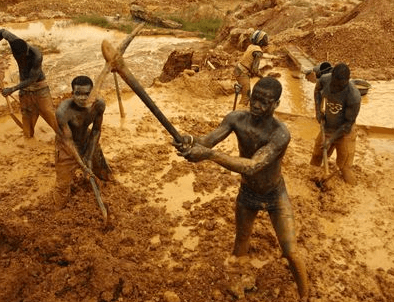
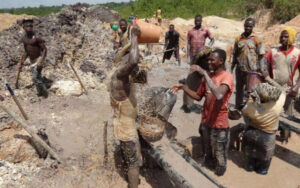
In practical terms, the ICC policy reframes how environmental harm is understood within Ghana’s context. Illegal mining activities that contaminate major rivers such as the Ankobra, Pra and Birim with mercury and cyanide are no longer viewed solely as regulatory or environmental breaches. Where such acts are widespread, systematic and result in severe harm to communities, including illness or loss of access to clean water, they may fall within the scope of crimes against humanity under international law.
Similarly, Ghana’s offshore oil and gas operations, while economically significant, carry environmental risks that now attract heightened legal scrutiny. Practices such as gas flaring, oil spills and marine ecosystem degradation could, under certain conditions, engage international criminal responsibility, particularly where civilian populations are adversely affected.
Deforestation and land-related conflicts present another area of concern. Ghana has lost a significant proportion of its primary forest cover over the past two decades, often linked to illegal logging and mining concessions.
Beyond the ecological damage, such activities may intersect with forced displacement, loss of livelihoods and social disruption, factors that elevate environmental harm into broader human rights and justice considerations.
One of the most consequential aspects of the ICC policy is its message on corporate accountability. Corporate executives may be held personally responsible under international criminal law for environmental crimes committed through corporate operations.
The policy signals that company structures can no longer serve as shields where business activities cause severe and widespread environmental harm.
For companies operating in Ghana’s extractive sectors, this represents a decisive shift. Environmental and human rights due diligence moves from being a voluntary standard to a legal necessity.
Ghana’s proposed specialised courts would reinforce this message locally, demonstrating that environmental compliance is a matter of legal responsibility rather than corporate discretion.
The principle of complementarity further strengthens Ghana’s strategic position. The ICC intervenes only where states are unwilling or unable to prosecute serious crimes genuinely. By proposing specialised courts, Ghana demonstrates both willingness and capacity to address environmental crimes domestically, reinforcing national sovereignty while meeting international expectations.
Concerns about sovereignty often arise when international institutions expand their reach. In Africa, debates around the ICC have historically been shaped by questions of fairness and external interference. Ghana’s response, however, reflects a different posture. By developing its own judicial mechanisms, the country asserts sovereignty through institution-building rather than resistance.
Ghana’s voluntary decision to join the ICC in 1999 was rooted in a commitment to accountability for grave crimes. Extending that commitment to include protection against severe environmental harm is consistent with national values and long-term development goals.
The proposed specialised courts offer a foundation for further action. They create space for reviewing domestic laws to ensure alignment with evolving international standards, particularly in areas of corporate liability and community rights.
They also provide a framework for building judicial and prosecutorial expertise in complex environmental cases.
Beyond national borders, Ghana’s approach has the potential to influence regional cooperation within ECOWAS, contributing to harmonised standards for addressing environmental crimes across West Africa.
The ICC’s new policy arrives at a moment when Ghana is already charting a forward-looking path in environmental governance.
The convergence of international legal developments and national judicial reform presents an opportunity for the country to position itself as a regional leader in environmental justice.
Rather than responding to external pressure, Ghana is shaping its own solutions to environmental harm. In doing so, it affirms that protecting the environment is inseparable from protecting communities and safeguarding the future.
By Justice Sedinam Awo Kwadam
Source: GNA

 Farida Sultana is the third runner-up of Big Brother Naija Season 10 (BBNS10)