2.3 C
London
Tuesday, December 30, 2025
Home Blog

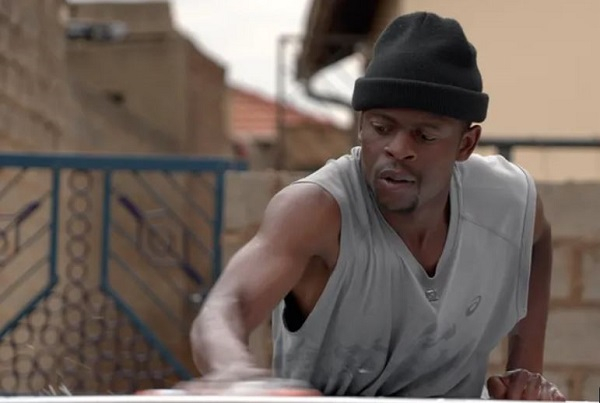
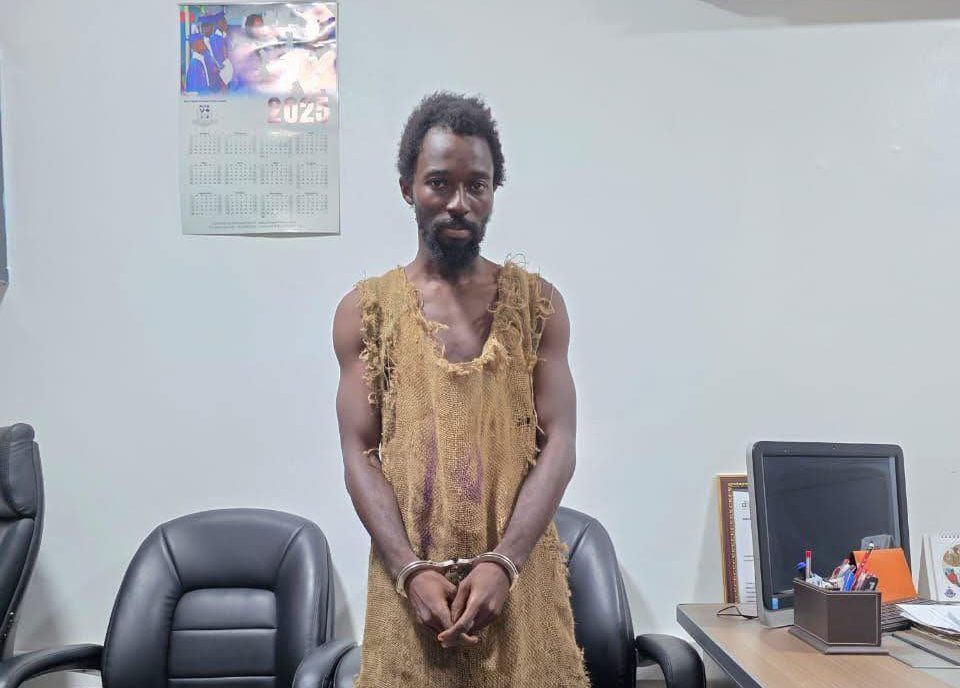
Watch the viral video that led to the arrest of ‘Cyborg’

0

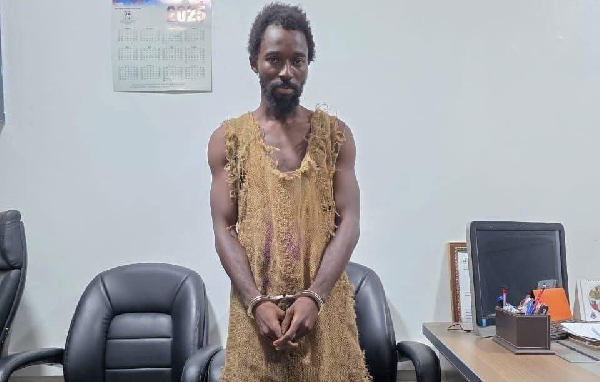
The suspect was captured firing warning shots into the air with a Derya MK-12 firearm The suspect was captured firing warning shots into the air with a Derya MK-12 firearm

The Ghana Police Service on Tuesday, January 30, 2025, announced the arrest of a suspect identified as Abubakari Sadick, popularly known as ‘Cyborg,’ for unlawful possession and discharge of a firearm.

According to the police, Cyborg discharged a firearm at a public event held at the El-Wak Stadium in Accra on December 28, 2025.

GhanaWeb has now sighted the viral video, in which the suspect was captured in the act.

The video showed the accused person firing warning shots into the air with a Derya MK-12 firearm.

Before firing the shots, he was heard pleading with the authorities of the country over his actions.

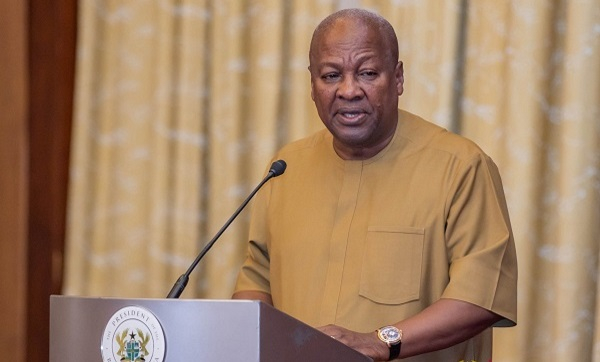
He mentioned the President of the Republic, John Dramani Mahama, and the Minister of the Interior, Muntaka Mubarak Mohammed, among other authorities.

Police arrest suspect seen in viral video discharging firearm at public event

“Keep your voice down! It is not allowed in Ghana now to give a warning shot. But I’m pleading for my (sic) John Dramani Mahama and Ibrahim… and Muntaka that my brother from another mother come, so I just want to give a gunshot for him, please,” he said while pointing at an artiste at the event.

He then proceeded to cock the gun before firing several shots into the air to the amusement of the crowd.

Man captured discharging firearm at Jamestown arrested – Police

Watch the video below:

BAI

GRA to implement new VAT reforms from January 1, 2026

0

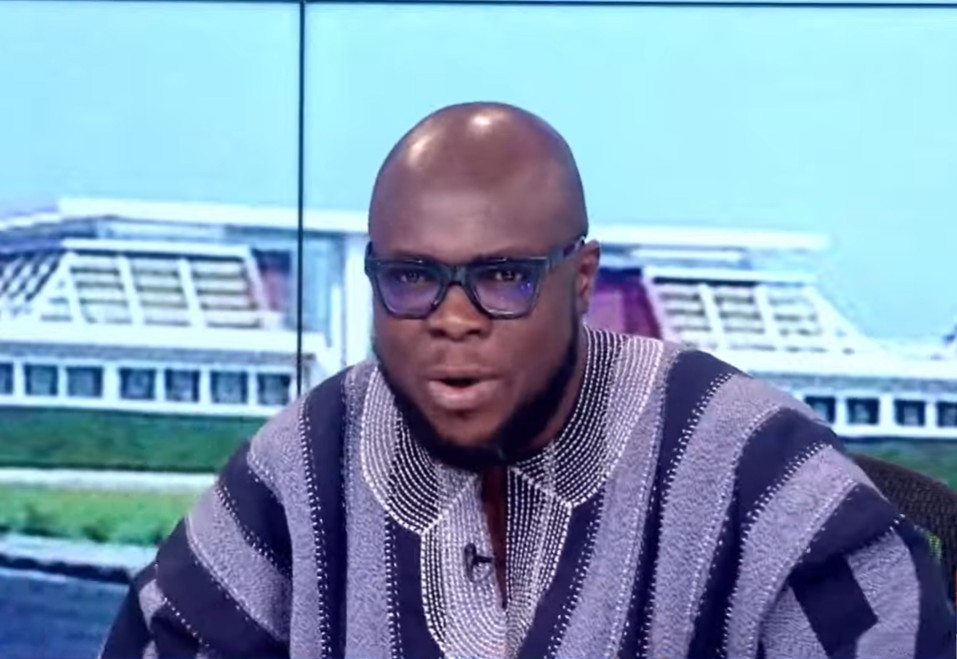
Acting Commissioner-General of the Ghana Revenue Authority, Anthony Sarpong Acting Commissioner-General of the Ghana Revenue Authority, Anthony Sarpong

The Ghana Revenue Authority (GRA) has confirmed that it will begin implementing the Value Added Tax (VAT) reforms from January 1, 2026.

This follows the passage and subsequent presidential assent to the VAT Bill, 2025.

The development marks a significant overhaul aimed at simplifying the country’s tax system, consolidating tax laws, abolishing the COVID-19 Levy and improving compliance through digitisation in revenue administration.

The law also seeks to promote greater fairness and economic growth as the country intensifies efforts to enhance domestic tax mobilisation.

The reform forms part of recommendations from the International Monetary Fund (IMF) to reduce bureaucratic bottlenecks in tax collection.

Key changes include the unification of the flat-rate system, reduction in effective tax rates, allowance for the deduction of GETFund and NHIL as input tax, and improvements in revenue efficiency.

The reforms will also include the deployment of digital platforms such as the E-VAT system to ensure accurate tax collection.

TAGG raises alarm over Parliament’s approval of GRA-TRUEDARE deal

Speaking to journalists on the new VAT regime, the Commissioner for the Domestic Tax Revenue Division, Dr Martin Kolbil Yamborigya, explained that customers will now be required to pay 20 percent instead of 21.9 percent on goods and services.

“There will be a lot of benefits for the taxpayer because we have now re-coupled the National Health Insurance Levy and the Ghana Education Trust Fund (GETFund). This will bring down the amount to be paid.

“It means some savings will be made by businesses, and the levies have also become input taxes to be claimed at the end of the day,” he said.

The bill was passed in November this year after it was presented to Parliament during the 2026 Budget Statement and Economic Policy presentation.

The presidential assent further empowers the Ghana Revenue Authority to proceed with the implementation of the reforms contained in the law.

AM

Also, watch below Amnesty International’s ‘Protect the Protest’ documentary as the world marks International Human Rights Day 2025

Senegal beat Benin to claim AFCON group, as DR Congo set up Algeria tie | Africa Cup of Nations News

0

Senegal beat Benin 3-0 to top AFCON 2025 group, while DR Congo beat Botswana, setting up a mouth-watering Algeria tie.

Senegal saw off Benin on Tuesday to go through to the last 16 of the Africa Cup of Nations as winners of Group D, leaving the Democratic Republic of the Congo (DRC) to settle for second place, which means they will play Algeria in a heavyweight tie in the next round.

Sadio Mane’s Senegal, the 2022 African champions, came into the final round of group games needing to beat Benin in Tangier, and hope their Congolese rivals have not managed to move above them on goal difference.

Recommended Stories

list of 4 itemsend of list

Senegal ran out 3-0 winners against Benin, with Abdoulaye Seck and Habib Diallo scoring before skipper Kalidou Koulibaly was sent off in the second half. Cherif Ndiaye then added a late penalty.

The DRC beat the already-eliminated Botswana 3-0 at the same time in Rabat, meaning the leading duo both finished with seven points from three games, but Pape Thiaw’s Senegal topped the section by a difference of two goals.

As a result, Senegal have a far kinder path in the knockout phase and will remain in Tangier for a last-16 tie on Saturday against the third-place finisher in Group E.

That will be either Burkina Faso or Sudan, who play each other in Casablanca on Wednesday.

The Leopards, in contrast, must play the 2019 champions Algeria in the last 16 next Tuesday, with the winner of that potentially having to face Nigeria in the quarterfinals.

Benin’s three points, courtesy of a solitary 1-0 win over Botswana, are enough for them to go through as one of the best third-placed teams.

It will be just their second appearance in the AFCON knockout stages, and their reward is a meeting with Mohamed Salah’s Egypt in Agadir on Monday.

Israel-based centre-back Seck headed Senegal into the lead from Krepin Diatta’s free kick on 38 minutes, and their second goal arrived just after the hour, when a superb cutback by Mane was turned in by Diallo.

Skipper Koulibaly was then sent off after a yellow card was upgraded to red following a VAR review, leaving the Lions of Teranga to play out the final 19 minutes plus stoppage time a man down.

Ndiaye’s 97th-minute penalty made it 3-0 and ended any doubt about Senegal’s final position in the group.

Playmaker Gael Kakuta, once of Chelsea and now playing in Turkiye, was in outstanding form for the DRC against Botswana at Al Medina Stadium, as his back heel set up Nathanael Mbuku for the opener.

Kakuta then converted a penalty shortly before half-time and got his second and his team’s third on the hour mark from Theo Bongonda’s assist.

Another goal at that point could have left the DRC and Senegal with identical records and facing a possible drawing of lots to determine their final group positions.

The DRC thought they had it when Fiston Mayele put the ball in the net on 64 minutes.

Galamsey cuts off farm access, tonnes of cocoa left to rot in Mfantseman

0

Several tonnes of harvested cocoa are being left to rot on the farms in Mfantseman in the Upper Denkyira East District of the Central Region due to the destruction of the main access route leading to the farms by illegal miners.

Farmers face the dangers of drowning in open pits filled with large volumes of water while carrying loads of cocoa and therefore find it safe to only carry minimal amounts of their produce leaving the larger share to go waste on the farms.

“The farmers previously relied on manual labor to cart their produce from the farm but many of the youth have now developed high taste for galamsey and no longer available for hiring and so a greater share of our produce is left to rot on the farm” Osei Yaw, a farmer who spoke to Citi News said.

When the youth abandoned farm work and manual carting of produce in exchange of galamsey, the use of tricycles became the next option for farmers.

But since last year, that option has become unreliable due to the activities of illegal miners.

Ben Yorke, a former assemblyman for the area who is also a cocoa farmer said “the tricycles are no longer able to access the farms, so we are left with no option but to leave the cocoa on the farm. We are really incurring huge losses”.

“Very soon our cocoa trees may even wither because all major rivers and streams that we depended on to tend our farms have all been heavily polluted. Some of them can no longer even be traced,” he added.

While state security apparatuses conduct anti-galamsey operations in various parts of the country the farmers wonder why the area has never been visited to clamp down on the illegal mining activities.

“We really don’t know why any of the operational teams haven’t stormed here to deal with the galamseyers. This is far beyond security threat. Our livelihoods are at stake and so we are calling on the government to come to our aid,” Kwasi Ameyaw, another farmer who is also extremely worried, told Citi News.

Citi News’ sources in the community suggest an individual only identified as IGP is responsible for the illegal mining activities.

GTA to host “Ghana in Praise” Jan 3

0

The Ghana Tourism Authority (GTA) will host a landmark faith and cultural gathering, “Ghana in Praise – One Nation, One Praise,” on Saturday, 3rd January 2026, at 6:00 pm at The Palms Convention Centre, La Palm Royal Beach Hotel, Accra.

The event forms part of GTA’s faith, culture, and tourism initiatives, and will bring together Gospel ministers, cultural leaders, creatives, and worshippers from across Ghana and the African diaspora for a night of thanksgiving, worship, and spiritual reflection as the nation welcomes the new year.

“Faith, culture, and heritage are pillars of Ghana’s identity and soft power. ‘Ghana in Praise’ is an opportunity for the nation to come together, give thanks, and commit the year ahead into God’s hands,” said GTA CEO Maame Efua Houadjeto.

The gathering will feature international gospel stars Mercy Chinwo, Ada Ehi, and Steve Crown, alongside Ghanaian artists Nacee, Empress Gifty, Joyce Blessing, and Noble Nketia, promising an evening of inspiring worship and celebration.

Invited dignitaries include national and faith leaders who have shaped Ghana’s spiritual and moral landscape, including Hon. Elvis Afriyie Ankrah, Presidential Envoy in charge of Interfaith and Ecumenical Bodies. Their participation is expected to provide spiritual guidance, encouragement, and inspiration to attendees.

According to GTA, the initiative aims to strengthen Ghana’s cultural diplomacy, enhance tourism appeal, and foster national cohesion, while also creating a platform for engagement with the Ghanaian diaspora.

“Ghana in Praise – One Nation, One Praise” reflects GTA’s broader mission to position Ghana as a destination rich in history, creativity, faith, and national values, highlighting the country’s commitment to unity, moral leadership, and cultural heritage.

Five Chinese illegal miners arrested as NAIMOS cracks down along Birim river

0

The suspects were caught mining and washing minerals directly into the Birim River The suspects were caught mining and washing minerals directly into the Birim River

The National Anti-Illegal Mining Operations Secretariat (NAIMOS) has arrested five Chinese nationals following a targeted operation against illegal mining activities along the Birim River in the Akyem Oda area of the Birim Central Municipality.

The operation, conducted on Monday, December 29, 2025, began at about 1:40 PM and formed part of a series of coordinated raids on illegal mining sites in the area.

The suspects were apprehended while actively mining and washing mineral materials directly into the Birim River, causing significant environmental harm.

During the operation, two excavators discovered at the site were immobilised, while a Toyota Hilux pickup and a Toyota Land Cruiser allegedly used by the suspects were seized by the task force.

NAIMOS personnel also dismantled several makeshift structures erected at the mining sites and destroyed water pumping machines and other mining equipment.

NAIMOS says the exercise is part of an intensified nationwide crackdown on illegal mining activities, particularly along major water bodies, during the festive season, to curb pollution and protect Ghana’s water resources.

The suspects are expected to be handed over to the appropriate authorities for further investigations and prosecution.

NDC gov’t has shown renewed commitment in galamsey fight

0

The Deputy General Secretary of the National Democratic Congress (NDC), Mustapha Gbande, says the government has shown renewed commitment and energy in the fight against illegal mining, popularly known as galamsey.

Speaking on Channel One Newsroom on Tuesday, December30, he said since the NDC assumed office, efforts have been intensified to streamline mining activities, particularly those that pollute water bodies and degrade forest reserves.

He noted that the government has moved with a united front, with the President, ministers, and state agencies all working together to address public concerns about environmental destruction.

According to him, strong attention has also been placed on regulating artisanal and alluvial mining to ensure that mining activities are carried out responsibly and in line with the law.

Touching on the issue of foreign nationals involved in illegal mining, Mr. Gbanda said deportations have been consistently enforced.

He explained that in early 2025, several foreign nationals engaged in galamsey were deported through the coordinated efforts of the Ministry of the Interior, the Ghana Immigration Service, and other security agencies.

Mr. Gbanda stressed that authorities have remained firm on the issue, adding that there has not been any instance where foreign nationals arrested for illegal mining were allowed to remain in the country.

He said the government remains determined to protect Ghana’s natural resources and ensure that mining activities do not come at the expense of the environment and public health.

“For us as a party and I believe a government ever since we came into power, there has been a considerable amount of renewed energy and commitment and first of all streamlining mining relaed activities in this country relative to pollution and what in one accord what the people of Ghana has demonstrated discomfort towards.

“So if you check the president, the ministers, everybody has come together to fight mining particularly in the water bodies and then the forest reserves and also streamlining the artisanal and alluvial mining activities.

“When it comes to the issues of deportation and all of that, I know that in the beginning of 2025 a lot of foreign nationals who have been engaged in or caught up in these things have been deported facilitated by the Minister for the Interior, the immigration and all other agencies involved. I do not think that there has been an occasion where such people were caught and they were not deported.”

Read also

Group petitions AG, OSP, EOCO over unlicenced actors in GoldBod scheme

Kenyan Dancehall Artist Elly Wee Drops New Single ‘Djibouti’

0

Kenyan Dancehall Artist Elly Wee Drops New Single ‘Djibouti’
Elly Wee

Kenyan dancehall sensation Elly Wee might have struck out with long-time crush Tanasha Donna, but it looks like his love life is back on track, and the romance has crossed borders! Word on the street is that the “People’s Choice Dancehall Artist of the Year 2024” has found his “resting place” in the arms of stunning Djiboutian fashion model, Ayanita Moutah.
The Addis Ababa Sighting

Rumours have been swirling, and sources close to the duo have given us plenty to talk about. The pair were most recently spotted together in Ethiopia, reportedly attending a high-profile fashion gala. While a gala is certainly an appropriate venue for a fashion model and an award-winning musician, the recent sightings suggest a relationship that goes beyond professional networking.

‘Djibouti’ – The Ultimate Confirmation?

Elly Wee has since dropped a brand-new track, aptly titled “Djibouti,” and guess who the star of the show is? None other than Ayanita Moutah herself!

This collaboration strongly fuels the speculation. Late last year, Ayanita had already hinted at a trip to Kenya and a feature in a music video with a Kenyan artist. Her prominent role in Elly Wee’s latest release seems to be the smoking gun that confirms their rumored romantic connection.

The Road to ‘Thesis ‘

“Djibouti” isn’t just a potential love song; it’s the first single off Elly Wee’s highly anticipated debut album, ‘Thesis’.

The 13-track compilation is scheduled for release on January 10, 2026, and features a star-studded lineup. Fans can look forward to major collaborations with notable names in the industry, including:

Petrooz
Krugar gush
Attara
Jave Samson
Exile the 93rd
Gathoni
Whether this cross-continental romance will be the muse for more tracks on ‘Thesis’ remains to be seen.


Four killed as police foil robbery at Afienya-Mataheko

0

The Tema Regional Police Command has foiled an attempted armed robbery at Afienya-Mataheko, resulting in the death of four suspected robbers following a gun battle with police.

Addressing a press briefing on Tuesday, December 30, 2025, the Head of Public Affairs of the Command, Assistant Superintendent of Police (ASP) Dede Dzakpasu, said the operation formed part of sustained efforts to dismantle a notorious robbery gang believed to have operated in Tema and its surrounding areas for several years.

She disclosed that on December 27, 2025, police received intelligence that a group of ex-convicts was planning to carry out armed robbery attacks within the metropolis. Based on the information, officers were deployed to the area and placed under surveillance.

ASP Dzakpasu said in the early hours of December 29, at about 1:00 a.m., four suspects were spotted attempting to break into a residential property at Afienya-Mataheko. According to her, the suspects opened fire upon detecting the presence of police, prompting officers to return fire.

Three of the suspects, identified as Kwabena Azuwebi, also known as Lastman; Yaro Bawku; and Faisal, were gunned down and rushed to the Police Hospital but were pronounced dead on arrival.

She added that the fourth suspect, Kassim Hussein, initially escaped despite sustaining gunshot wounds but was later arrested. He subsequently died while receiving medical treatment.

ASP Dzakpasu noted that all four deceased suspects were on the police wanted list and had been linked to several robbery cases within the region.

“It would be recalled that one of the suspects, Kwabena Azuwebi alias Lastman, was recently granted bail by a court in a robbery case after a long period on remand,” she said.

Police retrieved an AK-47 rifle, a Taurus pistol loaded with six rounds of ammunition, two cutlasses, and two Royal motorbikes, one unregistered and the other bearing registration number M-25-GT-4243, believed to have been used by the suspects.

ASP Dzakpasu said all exhibits have been retained for further investigations, while the bodies of the deceased suspects have been deposited at the Police Hospital Mortuary pending autopsy.

She added that investigations are ongoing to identify possible accomplices and establish links to other criminal activities.

Dafeamekpor chairs Kenpong Travel’s 2026 World Cup Travels management team

0

Lawyer and Member of Parliament for South Dayi in the Volta Region, Rockson-Nelson Etse Dafeamekpor, has been appointed Chairman of the Kenpong Travel and Tours’ 2026 FIFA World Cup Travels Management Team.

Speaking on his long-standing association with the Kenpong Group and bearing testimony to the company’s reputation as a most trusted partner for international sports travel, Mr Dafeamekpor recalled that his professional journey with the organisation dates back more than two decades.

He served as Administrative Manager of the company between 2002 and 2004 before enrolling in law school in 2005.

After qualifying as a lawyer in 2009, he returned to Kenpong Travel and Tours in a consulting role, where he assisted in setting up the company into its current form.

Since then, Kenpong Travel and Tours has successfully managed travel arrangements for nearly all of Ghana’s international tournament appearances, earning a reputation for efficiency, reliability, and flawless execution.

Mr Dafeamekpor said his appointment as Chairman of the 2026 World Cup Travels Management Team is built on this history of trust and proven delivery.

“Kenpong Travel and Tours has, over the years, handled Ghana’s international tournament travels without blemish. For the 2026 World Cup, we are raising the bar even higher,” he said.

According to him, the company’s 2026 World Cup travel package goes beyond logistics to deliver a truly memorable experience for fans.

“As Chairman of the Kenpong Travels’ 2026 World Cup Travels Management Team, we are not only promising a hassle-free journey, but a World Cup travel experience of a lifetime,” he stated.

With matches to be hosted across the United States, Canada and Mexico, he said Kenpong Travel and Tours will offer comprehensive travel solutions that combine comfort, convenience, and unforgettable moments for Ghanaian football fans.

The company has unveiled a simple but powerful slogan for the tournament: “Book with Kenpong & Travel with Kenpong.”

Mr Dafeamekpor said preparations are already underway to ensure that supporters who choose Kenpong Travel and Tours for the 2026 FIFA World Cup enjoy seamless travel arrangements and a world-class experience worthy of the global showpiece.

DISCLAIMER: The Views, Comments, Opinions, Contributions and Statements made by Readers and Contributors on this platform do not necessarily represent the views or policy of Multimedia Group Limited.

DISCLAIMER: The Views, Comments, Opinions, Contributions and Statements made by Readers and Contributors on this platform do not necessarily represent the views or policy of Multimedia Group Limited.

Afia Schwarzenegger Shares Alleged Cause of Singer’s Death and Location of Burial Site

0

  • Afia Schwarzenneger has publicly alleged the exact cause of the late Daddy Lumba’s death days after his funeral service in Kumasi
  • In a video, the controversial media personality also alleged the location of the late highlife music icon’s resting place
  • Afia Schwarzenegger’s allegations concerning Daddy Lumba’s death and burial has triggered mixed reactions from netizens online

Ghana’s top stories, now easier to find. Discover our new search feature!

Controversial Ghanaian comedienne and media personality Afia Schwarzenegger has made new allegations regarding the cause of Daddy Lumba’s death and the location of his burial site.

Daddy Lumba, Afia Schwarzenegger, Daddy Lumba Afia Schwarzenegger, Daddy Lumba funeral, Daddy Lumba death, Daddy Lumba burial site
Afia Schwarzenegger shares the alleged cause of Daddy Lumba’s death and the location of his burial site. Photo source: DADDY LUMBA, Valentina Nana Agyeiwaa Source: Facebook

Daddy Lumba died at the Bank Hospital in Cantonments, Accra, at the age of 60 on July 26, 2025, after a short illness.

Several important Ghanaian dignitaries, including Nana Acheampong, Dr Osei Kwame Despite, Dr Ernest Ofori Sarpong, Kennedy Agyapong (Kenpong), Johnson Asiedu Nketia, Chairman Wontumi, Lil Win and Dr Frank Amoakohene, attended the solemn event.

Some family members of the late Daddy Lumba, including his children, younger sister Faustina Fosu, Abusuapanin Victor Kofi Owusu Banahene, and second wife Odo Broni, were present to bid farewell to the late singer.

The late musician’s elder sister, Ernestina Fosu, his first wife, Akosua Serwaa, Papa Shee, and other members of the immediate family did not attend the funeral service due to their dispute with the Abusuapanin over the funeral arrangements and their court cases.

Following the solemn event, speculations about the exact location of the late Daddy Lumba’s burial place have emerged on social media.

The YouTube video of Daddy Lumba’s funeral is below:

Afia also alleged that the late highlife legend was buried at his plush residence in East Legon, Accra, in accordance with his dying wish.

Papa Shee, Despite, Osei Kwame Despite, Papa Shee defends Dr Despite, Akosua Serwaa, Odo Broni
Evangelist Papa Shee defends Dr Osei Kwame Despite amid rumours of interfering in the Akosua Serwaa vs Odo Broni beef. Image credit: @kellymensa, @gh.facts Source: TikTok

In response to questions about the late Daddy Lumba’s autopsy reports, the controversial social media personality alleged that the late singer died from a cardiac arrest.

She said:

“He was buried at his residence in East Legon, which was his dying wish. Do you know what killed him? He died from a cardiac arrest.”

Afia also claimed that he had previously advised the late singer’s Abusuapanin to publicly share the cause of his death.

The Instagram video of Afia Schwarzenegger speaking about the alleged cause of Daddy Lumba’s death and location of his burial site is below:

Daddy Lumba’s family dispute after his death

Akosua Serwaa, filed a lawsuit against her husband’s family head, Kofi Owusu, and his Ghana-based wife, Odo Broni.

The suit asked the court to declare her the only legal surviving spouse of Daddy Lumba and also bar his second wife, known privately as Priscilla Ofori, from being declared the deceased’s wife.

After about a month of proceedings, the Kumasi High Court declined to name Akosua Serwaa the sole legal wife of the late highlife legend, as she had sought.

Why was Akosua Serwaa’s case dismissed?

The judge, Justice Dorinda Smith, is reported to have ruled that Akosua Serwaa could not prove that she was Daddy Lumba’s sole legal wife, while Odo Broni was able to prove that she was married traditionally.

According to reports, the judge was not convinced by the marriage certificate presented by Serwaa to support her claims of marrying under the Ordinance with Lumba in Germany.

The judge further directed that the Germany-based Serwaa and Odo Broni be recognised as the spouses of Daddy Lumba and be allowed to perform the widowhood rites.

The court’s decision did not satisfy the late musician’s first widow, who has since filed an appeal at the Court of Appeal in Ghana.

Afia Schwarzenegger’s allegations stir reactions

YEN.com.gh has gathered some comments from social media users below:

IIV commented:

“So now it’s cardiac arrest? One person’s death, so many stories.”

Babylast said:

“If it’s cardiac arrest, then why did Freda Afriyie say it was sodium, and others said it was human error? Also, why will 2pac come to lie to us, the people, that it was DL in the lying state during the funeral, right?”

Aracelisergio13 wrote:

“If that was true, then what was stopping them from allowing the real siblings to do another postmortem or see the body.”

Papa Shee responds to Despite’s statement

Earlier, YEN.com.gh reported that Papa Shee responded to Despite’s statement denying his involvement in the dispute between the late Daddy Lumba’s family after his death.

In a video, the evangelist defended the business mogul, denying claims of his involvement in the court disputes and the daily operations at his various media platforms.

Evangelist Papa Shee also urged the public to disregard the numerous accusations against Despite.

Afcon 2025: Botswana 0-3 DR Congo – Leopards settle for second in group

0

After drawing with Senegal 1-1 on Saturday, DR Congo needed the Teranga Lions to drop points or better the West Africans’ margin of victory over Benin by three goals to top the group.

Boss Sebastien Desabre made seven changes to his starting XI, with playmaker Bongonda and striker Cedric Bakambu among those dropping out.

The Leopards briefly moved to the summit after taking the lead, but Abdoulaye Seck’s goal for the Teranga Lions in Tangier restored the West Africans’ advantage.

At 3-0 ahead, the Leopards had an identical record to the Senegalese, which would have entailed the drawing of lots to decide top spot, while Mayele’s potential fourth, which was disallowed after another intervention by VAR, could have won them the group.

In the end, Cherif Ndiaye’s late penalty for Senegal settled matters, sparing Bongonda’s blushes after he sent a header over, missed his kick with the goal gaping and then had a low effort saved by the outstretched leg of Botswana goalkeeper Goitseone Phoko in stoppage time.

The Congolese upset continental heavyweights Cameroon and Nigeria in continental play-offs for the 2026 Fifa World Cup last month, and Algeria will be wary of their opponents as Desabre looks to better their fourth-placed finish from the 2023 edition.

Botswana, meanwhile, end their second appearance at the finals both goalless and pointless, having also exited in the group stage on their Afcon debut in 2012.

I will be retiring as MP soon

0

Samuel Okudzeto Ablakwa is the Minister of Foreign Affairs and North Tongu MP Samuel Okudzeto Ablakwa is the Minister of Foreign Affairs and North Tongu MP

The Member of Parliament for North Tongu, Samuel Okudzeto Ablakwa, has hinted at his impending retirement from Parliament.

According to him, he is preparing a new generation of leaders to take over as he continues to invest in education through his annual scholarship scheme.

Ablakwa surprises Embassy driver with all-expense-paid dream trip to Ghana

Addressing beneficiaries at a scholarship presentation ceremony in his constituency on December 29, 2025, Ablakwa said the support he offers students is part of a broader vision to groom future professionals and leaders who will help sustain Ghana’s development long after he leaves public office.

“… We are producing engineers, lawyers, aeronautical engineers, and future MPs who will take over from me because I’ll be retiring soon.

“Then future ministers, presidents, teachers who will come and help us to maintain the high standards that we are laying over here,” he said.

Ablakwa, who has consistently used part of his resources to support students in his constituency, expressed excitement about the scholarship programme.

He described it as one of the most fulfilling aspects of his public service.

“I am always excited to hand out these scholarships,” he told the students, urging them to use the funds strictly for their intended purpose.

“These are cash amounts, please don’t be tempted, no diversions. Go straight to your institutions and pay the fees,” he advised the students.

He further cautioned beneficiaries that continued support depends on accountability, insisting that proof of payment must be submitted to qualify for future assistance.

Ablakwa inaugurates SMART classrooms for STEM education

“If you want to receive another round of scholarship, make sure your evidence of payment is with us. If we don’t see the evidence of payment, then you are disqualifying yourself for the next academic year,” he said.

MAG/AM

#TrendingGH: Mixed reactions greet church members on 2025 Christmas celebration

Group petitions AG, OSP, EOCO over unlicenced actors in GoldBod scheme

0

A group calling itself Concerned Citizens of Ghana has petitioned the Attorney-General (AG), the Office of the Special Prosecutor (OSP), and the Economic and Organised Crime Office (EOCO) over alleged irregularities in the operations of the Ghana Gold Board (GoldBod).

In the petition shared with Citi News on Tuesday December 30, the group raised concerns about the alleged involvement of individuals and companies said to be unlicensed and currently under investigation for financial loss to the state in key GoldBod activities, including gold assaying, smelting, pricing, and refinery-related operations.

The petition specifically mentions Mr. Roger Frimpong Kwakye, who is reportedly under investigation in connection with the Mineral Income Investment Fund’s Gold for Forex programme, which ended in 2024. According to the group, intelligence suggests he has been linked to GoldBod operations through Goldstrom Ghana and BAWA-ROCK Limited, despite not being licenced or certified under the GoldBod Act.

The group questioned the legal basis for Mr. Kwakye’s alleged involvement in GoldBod activities, including the organisation of traceability training programmes for license holders and the assaying and smelting of gold through a foreign-owned refinery operating at Kotoka International Airport. They argued that such actions, if confirmed, would violate provisions of the GoldBod Act, which restrict these activities to certified and licensed entities.

The petitioners further expressed concern that Goldstrom, which they claim is foreign-owned, may have been engaged in refinery-related activities without meeting the local ownership and licensing requirements set out in the law. They warned that any deviation from these requirements could undermine national interest, transparency, and state revenue.

The group is calling for an immediate and comprehensive investigation by the Attorney-General, the Office of the Special Prosecutor, and EOCO into the alleged roles of the individuals and companies mentioned. They also want any unlicenced persons or entities involved in GoldBod operations to be suspended pending investigations.

In addition, the petition demands full disclosure of all contracts awarded by GoldBod, as well as details of the due diligence processes used in selecting service providers.

The petitioners say they remain ready to cooperate with state institutions and civil society groups to ensure accountability and protect Ghana’s gold value chain from abuse.

Read also

Traders reject GSA’s Smart Port Note, call for policy reassessment

Group petitions OSP, EOCO,AG, over alleged unlawful role of unlicensed firm in GoldBod operations

0

A group calling itself Concerned Citizens of Ghana has petitioned state investigative bodies to probe the alleged unlawful involvement of an unlicensed and investigated individual in Ghana’s GoldBod operations, warning of potential abuse and financial loss to the state.

In a petition addressed to the Office of the Attorney-General, the Office of the Special Prosecutor (OSP), and the Economic and Organised Crime Office (EOCO), the citizens raised “grave concerns” about the activities of one Mr. Roger Frimpong Kwakye.

The petition alleges that Mr. Kwakye, who is reportedly under active investigation by the OSP for matters relating to “financial loss to the State,” is playing a central role in critical GoldBod activities despite his company, Goldstrom, not being a licensed entity under the GoldBod regime.

According to the petitioners, this constitutes a clear violation of the GoldBod Act, which restricts key functions like assaying, smelting, and pricing of gold strictly to certified and licensed entities.

“How does an individual under serious criminal investigation, including matters relating to financial loss to the State, meet the fit-and-proper standard required to participate, influence, and shape GoldBod operations?” the petition asks.

Allegations of Contract Irregularities

The document details that Mr. Kwakye, as Managing Director of Goldstrom Ghana, has allegedly contracted his foreign-based refinery to assay and smelt gold for BAWA-ROCK LTD on behalf of Ghana GoldBod. It further claims he has been facilitating fund distribution for license holders via WhatsApp and was engaged to organise traceability training without proper tendering.

“The GoldBod Act was enacted to prevent precisely this kind of capture, manipulation, and abuse,” the petitioners stated, arguing that the alleged arrangements undermine Parliament’s intent to protect national interest, prevent capital flight, and ensure transparency.

They expressed alarm that an individual linked to previous investigations into the alleged squandering of approximately USD 90 million of MIIF Gold for Forex (G4F) funds is now embedded in the sensitive national gold value chain.

Formal Demands for Action

The Concerned Citizens have made three key demands from the state agencies. They are calling for an immediate investigation into Mr Kwakye’s role, Goldstrom’s involvement, and the legality of all related contracts.

They also demand the suspension of any individual or entity operating within GoldBod without the requisite license or employment status under the Act.

Finally, they seek full disclosure of all relevant contracts and the due diligence processes used in selecting vendors.

The petition suggests evidence can be gathered from CCTV footage at GoldBod premises, traders’ WhatsApp pages, and Zoom meeting records.

DISCLAIMER: The Views, Comments, Opinions, Contributions and Statements made by Readers and Contributors on this platform do not necessarily represent the views or policy of Multimedia Group Limited.

DISCLAIMER: The Views, Comments, Opinions, Contributions and Statements made by Readers and Contributors on this platform do not necessarily represent the views or policy of Multimedia Group Limited.

Ghana’s Christmas before the advancement of technology

0

Throwback image of Ghanaian ladies in their Christmas attires Throwback image of Ghanaian ladies in their Christmas attires

The melodious Christmas songs, the warm season’s greetings, thunderous sounds of fire crackers, the joyous screams of children, the smell of jollof and chicken are how you know Christmas is here.

Way before the advancement of technology, families gathered, dressed in their colourful and specially-sewn Christmas attire: “Kaba and slit” for women, shirt and trousers for men, with children wearing styles similar to those of their parents.

Christmas was an occasion for the whole community; neighbours shared homemade meals like fufu, jollof, chicken, amongst others as a form of unity, familiarity, bonding and feasting.

The sounds of Highlife from radios set the tone for the celebrations, as children played under shade trees and the elderly shared stories of past Christmases while planning for the following year’s farming season and crop growth.

As the night fell and the stars twinkled like diamonds in the clear skies, the sounds of crackling firewood accompanied laughter and chatter.

“Ananse” stories were not left out, as the elderly entertained children with stories of the cunning trickster.

Though the advancement of technology has limited these experiences, Ghanaians still embrace the tranquillity of Christmas.

It is a time of love, joy, love, togetherness; a time when people take a pause away from work and their busy schedules to relax and soak in the vibrant celebrations.

PA/AE

Watch Ofori Amponsah discuss interesting issues surrounding Lumba’s death, career path on this episode of Talkertainment:

Subin MP Slams President Mahama Over Soaring Prices of Cement, Rice and Kenkey

0

  • Subin MP Kofi Obiri Yeboah has criticised President John Mahama’s administration for rising prices of essential commodities
  • He said despite the NDC’s claims of economic stability, items like cement, rice, and kenkey have become more expensive
  • The lawmaker also questioned the rationale behind pumping millions into stabilising the cedi while ordinary Ghanaians feel no impact

The Member of Parliament for Subin in the Ashanti Region, Kofi Obiri Yeboah, has slammed President John Mahama’s administration over soaring prices of commodities in the country.

He said despite claims by elements in the ruling National Democratic Congress (NDC) that the Ghanaian economy has stabilised under their watch, prices of essential commodities like cement, rice, and kenkey have increased.

Subin MP., Kofi Obiri Yeboah, Ashanti Region, President John Mahama, Ghana'e economy, price of cement, keny, coconut, cost of living.
The MP for Subin, Kofi Obiri Yeboah, slams President John Mahama over soaring prices of cement, rice and Kenkey. Photo credit: Kofi Obiri Yeboah & John Dramani Mahama/Facebook. Source: Facebook

Giving his end-of-year review of the NDC’s administration in an interview with Kumasi-based Oyerepa Radio, the Subin MP claimed the first year of President Mahama’s presidency has been a “complete disaster and failure.”

In an excerpt of the interview sighted on Oyerepa Radio’s Facebook page, Kofi Obiri Yeboah, who is a lawyer by profession, questioned the rationale of the President Mahama-led government in pumping millions of cedis into stabilising the cedi against the major international trading currency when the average Ghanaian does not feel the impact.

“Mahama’s first year has been a disaster, total failure. Because, you see, we joined politics to better the lot of the youth, and so anybody that joined politics without having the youth in mind is selfish. So I’m against any decision that will not inure to the benefit of the youth,” he said.

“Since they assumed office, they have pumped Ghanaian taxpayers’ money, which could have been used for building hospitals, just to maintain the dollar. When we [NPP] were in power, cement was selling at GH¢85, but they campaigned against us. Now, what is the price of a cement bag? It’s over GH¢100. The price of kenkey has gone up, fresh coconut water has also gone up,” he lamented.

Watch the Facebook video below:

Netizens slam Subin MP, question his claims

Some Ghanaians who chanced on the interview of the Subin MP thronged the comment section to slam him, with many questioning his claims on the rising cost of living under President Mahama.

YEN.com.gh compiled a few of the reactions below:

@Alee Joe said:

“8yrs of corruption can make an old man looks dumb in the face of reality.”

@Evang E A Ayiisi also said:

“Why won’t you lose the highly educated people with these barefaced lies.”

“We blame those who voted for this man. They voted a disaster.”

Isaac Owusu-Bempah, Glorious Word Power Ministries, President John Mahama, economy stabulity, Christmas.
Rev Issac Owusu-Bempa praises President Johb Mahama for steering Ghana to the right path. Photo credit: Issac Owusu-Bempa/Facebook. Source: Facebook

Owusu-Bempa says Ghana is prohressing under Mahama

Meanwhile, YEN.com.gh reported that the founder and leader of the Glorious Word Power Ministries Reverend Isaac Owusu-Bempah had praised President John Mahama for leading Ghana towards economic stability.

The popular preacher cited the strong performance of the cedi and a joyful Christmas season as signs of divine favour.

He credited the president and vice president’s dedication to prayer as key to the country’s recent progress.

Prophet Roja drops ‘scary’ death prophecy ahead of 2026

0

Controversial Ghanaian prophet, Samuel Henry, popularly known as Prophet Roja Controversial Ghanaian prophet, Samuel Henry, popularly known as Prophet Roja

Controversial Ghanaian prophet, Samuel Henry, popularly known as Prophet Roja, has shared a prophecy which he claims will occur in Ghana in the year 2026.

Speaking during an interview on Nhyira FM, excerpts of which have since circulated on social media, the cleric said the prophecy was revealed to him in the spiritual realm and is linked to a chieftaincy matter.

According to Prophet Roja, the vision involved a kingdom where a vacancy would emerge for a chief to occupy the throne, resulting in intense chaos and disputes before a leader is eventually installed.

He explained that although a chief would be installed, the individual would not complete his tenure, as death would cut the reign short, forcing the kingdom to search for a replacement.

“In a certain kingdom, there will be a vacancy for a chief to sit on the throne. There will be a lot of chaos but despite all the confusion, someone will be installed as chief,” he said.

‘Dr Bawumia will win NPP presidential primary’ – Prophet Roja

“However, the chief will not be able to complete his tenure. The person will die and they will have to find another person to replace him after his death.”

Prophet Roja stressed that the prophecy was profound and urged Ghanaians to be vigilant.

“This is deep. Ghanaians should watch out. This will happen in 2026. Write it down, it will happen in Ghana,” he added.

@nhyira1045fm

🔥😨 Prophet Roja Shares a Spine-Tingling Vision for 2026… Could History Be Repeating Itself?

♬ original sound – Nhyira 104.5 FM

AM

Also, watch below Amnesty International’s ‘Protect the Protest’ documentary as the world marks International Human Rights Day 2025

Ghana in Praise 2026 set to open new year with national worship gathering

0

Ghana is set to usher in the new year with a major national worship event as the Ghana Tourism Authority presents Ghana In Praise 2026, a large-scale gospel gathering aimed at uniting the country through music, faith and thanksgiving.

The event will take place on Saturday, 3 January 2026, at the Palms Convention Centre, starting at 6pm, and is expected to attract worshippers, gospel music lovers, families and visitors from across Ghana and the diaspora.

Themed “One Nation, One Praise”, Ghana In Praise seeks to create a shared space for reflection and celebration as the country begins a new year. Organisers describe the event as a national moment of gratitude, unity and spiritual renewal, with gospel music serving as a unifying force.

The night will feature performances and ministrations from a strong line-up of renowned gospel artistes. Scheduled to minister on one stage are Mercy Chinwo, Steve Crown, Joyce Blessing, Empress Gifty, Ada Ehi, Nacee and Noble Nketsiah. The blend of local and international acts is expected to deliver a range of worship styles, from contemporary gospel to traditional praise.

Ghana In Praise forms part of Ghana’s broader cultural and tourism calendar, extending festive activities into January and offering visitors additional experiences beyond the December season. The event aligns with ongoing efforts to promote Ghana as a destination where culture, music, faith and hospitality intersect.

The programme is powered by the Ghana Tourism Authority and supported by the Black Star Experience, reinforcing its national significance and connection to Ghana’s cultural promotion agenda.

Attendance is strictly by invitation.

Organisers are encouraging early ticket purchase due to limited seating and anticipated high demand.

Ghana In Praise 2026 is expected to be one of the first major gospel events of the year, bringing together people of different backgrounds under one roof to begin the year in worship.

DISCLAIMER: The Views, Comments, Opinions, Contributions and Statements made by Readers and Contributors on this platform do not necessarily represent the views or policy of Multimedia Group Limited.

DISCLAIMER: The Views, Comments, Opinions, Contributions and Statements made by Readers and Contributors on this platform do not necessarily represent the views or policy of Multimedia Group Limited.

Ghana Creative Sector Risks Collapse Without Regulatory Enforcement, Safo Warns

0

Ghana Creative Sector Risks Collapse Without Regulatory Enforcement, Safo Warns
Socrate Safo

Filmmaker and creative industry advocate Socrate Safo has issued a stark warning that Ghana’s creative markets are dying due to chronic failure to enforce existing statutory protections, calling for immediate action to reverse what he describes as a culture of regulatory admiration without implementation.

Safo argued that Ghana already possesses adequate legal frameworks to protect creative rights, but enforcement remains absent. “Ghana’s statutory laws already provide a framework for protection,” he stated. “What is missing is enforcement.” He specifically challenged the Copyright Office of Ghana to abandon passive advocacy and activate its full regulatory powers, particularly concerning digital platforms operating in the country.

The filmmaker warned that theoretical copyright protections mean nothing while markets collapse in practice, advocating for mandatory licensing systems and penalties targeting unregulated mass free distribution. He emphasized that regulatory inaction has created conditions where creative rights exist only on paper, leaving rights holders exposed and revenue streams dangerously unstable.

Safo also directed criticism at collective management organizations, particularly the Ghana Music Rights Organisation (GHAMRO), insisting that public music performance must always generate royalties regardless of ticketing or sponsorship arrangements. “Music used in public spaces is not a donation,” he stressed. “It is intellectual property.” He proposed that royalties be calculated using verified playlists submitted by performers, with enforcement extending across concerts, festivals, and corporate sponsored events.

The creative industry critic identified free distribution as the sector’s fundamental structural weakness, noting it has evolved from occasional exception to market foundation with devastating consequences for artists, promoters, and investors alike. “Creative work has a price,” Safo declared. “Free distribution must return to its rightful place as an exception, not the foundation of the market.”

He challenged the widespread practice of hosting concerts, film premieres, and major creative events without admission fees simply because corporate sponsorship has been secured. Safo maintained that sponsorship was designed to support value creation, not eliminate it, arguing that even modest ticket pricing reinforces the economic dignity of creative labor while training audiences to sustain the industry financially.

“Without this discipline, the industry continues to train its audience out of the habit of supporting it,” Safo added, warning that the sector’s problems are now fully diagnosed and visible. What remains missing, he concluded, is decisive corrective action backed by law, discipline, and collective restraint. “Regulation must be enforced, not admired,” he stated.

Traders Urge Suspension of Smart Port Note Rollout

0

Traders Urge Suspension of Smart Port Note Rollout
Tema Port

A coalition of exporters, importers and traders in Ghana has called for the immediate suspension of the Smart Port Note (SPN), warning that the policy risks increasing costs and duplicating existing customs systems.

In a statement issued on December 29, the Coalition of Concerned Exporters, Importers and Traders said the Ghana Shippers’ Authority (GSA) should halt implementation of the mandatory scheme, scheduled to begin in February 2026, until it is fully reassessed.

The group said the policy had been introduced without a publicly available position paper explaining its necessity or benefits. “The initiative lacks justification and was developed without adequate stakeholder consultation,” the coalition said.

The coalition questioned whether the GSA has the legal authority to introduce a pre-shipment notification system, arguing that inspection and compliance functions fall under the Ghana Revenue Authority’s (GRA) destination inspection framework.

It warned that introducing the SPN without alignment with the GRA could create regulatory overlap and weaken accountability within the port and customs system.

According to the group, while importers may be compelled to submit shipping data, suppliers at ports of origin would not be legally required to comply, creating what it described as a “verification gap” that undermines the system’s effectiveness.

The traders’ group said the SPN duplicates functions already performed by Ghana’s Integrated Customs Management System (ICUMS), which provides cargo data, inventory history and risk profiling. The ICUMS, introduced in June 2020, processes documents and payments through a single window and allows users to create a Unique Consignment Reference for easy identification and tracking of all cargo.

The coalition rejected assurances that the scheme would not impose additional costs on traders, arguing that fees charged to exporters would ultimately be passed on to Ghanaian consignees. “This represents a new financial burden rather than a trade facilitation measure,” the statement said.

The statement argued that the initiative appears primarily designed to generate revenue for the service provider, Inter-Ocean Maritime and Logistics Institute (IOMLI), contrary to the GSA’s core mandate of protecting shippers from avoidable costs.

The coalition further warned that the SPN could conflict with the government’s broader digitalisation agenda, including plans to deploy artificial intelligence tools within customs operations to curb revenue leakages.

The coalition urged the GSA to suspend the policy and return to its core mandate under the Ghana Shippers’ Authority Act, 2024 (Act 1122), which includes protecting traders from exploitative shipping practices and reducing the cost of doing business.

Act 1122 transformed the GSA from an advocacy body into a regulatory authority, empowering it to approve or reject charges proposed by shipping service providers, including shipping lines, freight forwarders, terminal operators, and clearing agents, before they take effect.

The coalition said it remained open to working with the Ministry of Transport, the Ministry of Finance, the GRA and the GSA to develop reforms that genuinely improve trade efficiency.

Kobby Mensah Slams Kojo Oppong-Nkrumah Over Alleged $214M GoldBod Loss

0

  • Professor Kobby Mensah has criticised the NPP for calling a press conference to demand a probe into the alleged $214 million loss at GoldBod
  • He claimed the NPP failed to implement practical economic solutions during its eight-year rule and labels the press conference as needless
  • His comments was in response to the a press conference held by the Minority in Parliament, demanding a probe into the operations of GoldBod

A lecturer at the University of Ghana, Professor Kobby Mensah, has slammed the New Patriotic Party (NPP) over its recent press conference, demanding a probe into the alleged $214 million loss by the Ghana Gold Board (GoldBod).

In a post on X, Professor Kobby Mensah, who was recently appointed by President Mahama to helm the Ghana Tourism Development Company as chief executive, suggested the press conference addressed by Ofoase-Ayirebi MP Kojo Oppong-Nkrumah was needless.

Professor Kobby Mensah, UG lecturerer, Ghana Tourism Development Company, Ghana Gold Board, GoldBod, Kojo Oppong-Nkrumah, Minority in Parliament, NPP.
Prof Kobby Mensah slams the Minority in Parliament over Kojo Oppong-Nkrumah’s recent press conference. demanding a probe into GoldBod operations. Photo credit: UGC. Source: UGC

He added that the NPP failed to demonstrate practical ideas in the management of Ghana’s economy when it ruled the country for eight years.

“Which of your ‘old’ ideas reduced the pound sterling from 23 cedis to 14? Dollar from 16 to 11 cedis? Or reduced fuel from 20/litre to 10.37? Talk Talk Party,” he wrote on X.

Minority demands investigations into GoldBod operations

Addressing the press on Monday, December 29, 2025, on behalf of the Minority, Kojo Oppong-Nkrumah demanded a bipartisan committee to probe the GoldBod, led by Sammy Gyamfi.

He stated that the committee should be tasked with demanding that the Bank of Ghana (BoG) and the GoldBod explain their fee structure, pricing mechanisms, aggregator selection criteria, and foreign exchange arrangements in connection with the Gold-for-Reserves programme.

“Under this bipartisan enquiry, we will be expecting the BoG and the GoldBod to publish the fee structure, the pricing formula, the aggregator selection criteria, and all foreign exchange arrangements that they have tied to this scheme, which has led to this loss,” he was reported to have said.

GoldBod CEO welcomes Minority’s probe demands

Meanwhile, Sammy Gyamfi, the CEO of the GoldBod, has welcomed the Minority’s demand for a probe into how the alleged $214 million loss was incurred.

In a social media post on Monday, December 29, 2025, Sammy Gyamfi dismissed claims that GoldBod has incurred a $214 million loss, arguing that the losses had rather been reduced significantly compared to previous years.

“What is even more revealing is that when the BoG, under the NPP in 2023 and 2024, made total G4O and G4R losses of GHS2.15 billion and GHS4.84 billion respectively, the Ghana cedi cumulatively depreciated against the U.S. dollar by 27.8% in 2023 and 19.2% in 2024, while inflation for 2023 and 2024 stood at 22.3% and 23.8% respectively,” he wrote.

“Today in 2025, the NPP is complaining about the fact that the BoG, working in conjunction with the GoldBod, has reduced their recurring G4R and G4O losses to GHS3.3 billion (according to the NPP), and yet, inflation has declined over 11 consecutive months from 23.8% to 6.3%, while the Ghana cedi has cumulatively appreciated by over 35% against the U.S. dollar (the first time the cedi is appreciating since the year 2007),” he added.

Watch the X video below:

Prof Mensah’s criticism of NPP sparks reactions

Prof Kobby Mensah’s criticism of the NPP’s demand for a probe into GoldBod’s operations has sparked mixed reactions online.

YEN.com.gh has compiled a few of the reactions below:

“So long as Ghana is a member of the IMF, the IMF will always be here. It is called Article IV consultations.”

@margin_ofsafety also said:

“There was a clear downward trajectory of the exchange rates before you took over and every gain now was already projected. NDC na chop chop parry oo.”

@obiba_jk2 commented:

“I’m just hearing rebranding rebranding. Lame minority!”

University of Ghana, UGBS, UG, Legon, Apps in Ghana, App Developer, Admissions Checker, Prof Kobby Mensah.
Prof Kobby Mensah of UGBS builds an app to help SHS students with university admissions. Photo credit: @ugbsofficial Source: UGC

Prof Kobby Mensah creates innovative app

YEN.com.gh reported that Prof. Kobby Mensah had developed a software tool to simplify university admissions for SHS students.

The platform uses WASSCE grades, high school courses, and demographic details to generate personalised reports on students’ admission chances.

It also helps SHS 1 students assess their progress early, adjust study strategies, and prepare for WASSCE exams effectively.

NPC calls for sustained financing for ASRH policy  

0

By Linda Naa Deide Aryeetey

Accra, Dec. 24, GNA – The National Population Council (NPC) has called for stronger coordination and sustained financing to ensure effective implementation of Ghana’s Adolescent Sexual and Reproductive Health (ASRH) Policy. 

Mrs Angelina Osei Kodua-Nyanor, Acting Executive Director of the NPC, made the call at a high-level multi-stakeholder meeting in Accra to review population and ASRH policies and their implementation progress. 

She said while Ghana had made commendable progress in developing policies, strategic plans and frameworks, the real challenge remained effective implementation at national and decentralised levels. 

“Ghana is good at policy development, but implementation is what determines success or failure, the real benefits of our development agenda depend on how policies are implemented on the ground,” she said. 

The meeting, convened by the NPC and the United Nations Population Fund (UNFPA), aimed to enhance collaboration, reduce duplication of efforts and develop a unified advocacy agenda for improved adolescent sexual and reproductive health outcomes. 

It brought together development partners, civil and non-governmental organisations to discuss how population and demographic issues were mainstreamed into national and sectoral development planning and investment decisions.  

The meeting also served to review existing policies, programmes and interventions, identify implementation bottlenecks, and explore ways to align efforts to maximise impact. 

Mrs Kodua-Nyanor emphasised the need for youth-focused stakeholders to align their programmes with national priorities and report interventions to the NPC to avoid duplication and fragmentation. 

“We need to be sure that the little resources we have are used judiciously, equitably and transparently across regions, the government’s commitment would be strengthened where there is a clear, unified advocacy agenda supported by strong evidence,” she said. 

Mrs. Kodua-Nyanor noted that while progress had been made in policy formulation and programme rollout, adolescent pregnancy and new HIV infections among young people remained high, particularly in rural and underserved areas. 

“Statistics indicated that about 15 per cent of girls aged 15–19 had ever been pregnant, with higher concentrations in deprived communities,” she said. 

Ms Adjoa Yenyi, Programme Specialist Adolescent and Youth Development at UNFPA, reiterated the fund’s commitment to supporting Ghana through policy and technical assistance to ensure universal access to comprehensive, youth-friendly sexual and reproductive health services. 

Dr Angela El-Adas, Board Chair of the NPC, said adolescent sexual and reproductive health was not only a health concern but a critical population and development issue affecting education, labour force participation, maternal health, population growth and national productivity. 

She said the NPC recognised persistent gaps between policy intent and outcomes. 

“Fragmentation of efforts, uneven implementation across regions, limited financing and persistent socio-cultural barriers continue to undermine the impact of otherwise well-designed policies,” she said. 

Dr El-Adas noted that, given its cross-cutting nature, ASRH could not be addressed by a single institution, as it spanned health, education, gender, local government, social protection and youth development sectors. 

“The ASRH Policy, developed by the NPC, provides a comprehensive framework to guide interventions that promote the health, wellbeing and empowerment of adolescents, but its effective implementation required strong coordination among stakeholders across sectors,” she said. 

GNA 

Edited by Kenneth Sackey

Traders Urge Suspension of Smart Port Note Rollout

0

Traders Urge Suspension of Smart Port Note Rollout
Tema Port

A coalition of exporters, importers and traders in Ghana has called for the immediate suspension of the Smart Port Note (SPN), warning that the policy risks increasing costs and duplicating existing customs systems.

In a statement issued on December 29, the Coalition of Concerned Exporters, Importers and Traders said the Ghana Shippers’ Authority (GSA) should halt implementation of the mandatory scheme, scheduled to begin in February 2026, until it is fully reassessed.

The group said the policy had been introduced without a publicly available position paper explaining its necessity or benefits. “The initiative lacks justification and was developed without adequate stakeholder consultation,” the coalition said.

The coalition questioned whether the GSA has the legal authority to introduce a pre-shipment notification system, arguing that inspection and compliance functions fall under the Ghana Revenue Authority’s (GRA) destination inspection framework.

It warned that introducing the SPN without alignment with the GRA could create regulatory overlap and weaken accountability within the port and customs system.

According to the group, while importers may be compelled to submit shipping data, suppliers at ports of origin would not be legally required to comply, creating what it described as a “verification gap” that undermines the system’s effectiveness.

The traders’ group said the SPN duplicates functions already performed by Ghana’s Integrated Customs Management System (ICUMS), which provides cargo data, inventory history and risk profiling. The ICUMS, introduced in June 2020, processes documents and payments through a single window and allows users to create a Unique Consignment Reference for easy identification and tracking of all cargo.

The coalition rejected assurances that the scheme would not impose additional costs on traders, arguing that fees charged to exporters would ultimately be passed on to Ghanaian consignees. “This represents a new financial burden rather than a trade facilitation measure,” the statement said.

The statement argued that the initiative appears primarily designed to generate revenue for the service provider, Inter-Ocean Maritime and Logistics Institute (IOMLI), contrary to the GSA’s core mandate of protecting shippers from avoidable costs.

The coalition further warned that the SPN could conflict with the government’s broader digitalisation agenda, including plans to deploy artificial intelligence tools within customs operations to curb revenue leakages.

The coalition urged the GSA to suspend the policy and return to its core mandate under the Ghana Shippers’ Authority Act, 2024 (Act 1122), which includes protecting traders from exploitative shipping practices and reducing the cost of doing business.

Act 1122 transformed the GSA from an advocacy body into a regulatory authority, empowering it to approve or reject charges proposed by shipping service providers, including shipping lines, freight forwarders, terminal operators, and clearing agents, before they take effect.

The coalition said it remained open to working with the Ministry of Transport, the Ministry of Finance, the GRA and the GSA to develop reforms that genuinely improve trade efficiency.

Group petitions AG, OSP, EOCO over unlicenced actors in GoldBod scheme

0

A group calling itself Concerned Citizens of Ghana has petitioned the Attorney-General (AG), the Office of the Special Prosecutor (OSP), and the Economic and Organised Office (EOCO) over alleged irregularities in the operations of the Ghana Gold Board (GoldBod).

In the petition shared with Citi News on Tuesday December 30, the group raised concerns about the alleged involvement of individuals and companies said to be unlicensed and currently under investigation for financial loss to the state in key GoldBod activities, including gold assaying, smelting, pricing, and refinery-related operations.

The petition specifically mentions Mr. Roger Frimpong Kwakye, who is reportedly under investigation in connection with the Mineral Income Investment Fund’s Gold for Forex programme, which ended in 2024. According to the group, intelligence suggests he has been linked to GoldBod operations through Goldstrom Ghana and BAWA-ROCK Limited, despite not being licenced or certified under the GoldBod Act.

The group questioned the legal basis for Mr. Kwakye’s alleged involvement in GoldBod activities, including the organisation of traceability training programmes for license holders and the assaying and smelting of gold through a foreign-owned refinery operating at Kotoka International Airport. They argued that such actions, if confirmed, would violate provisions of the GoldBod Act, which restrict these activities to certified and licensed entities.

The petitioners further expressed concern that Goldstrom, which they claim is foreign-owned, may have been engaged in refinery-related activities without meeting the local ownership and licensing requirements set out in the law. They warned that any deviation from these requirements could undermine national interest, transparency, and state revenue.

The group is calling for an immediate and comprehensive investigation by the Attorney-General, the Office of the Special Prosecutor, and EOCO into the alleged roles of the individuals and companies mentioned. They also want any unlicenced persons or entities involved in GoldBod operations to be suspended pending investigations.

In addition, the petition demands full disclosure of all contracts awarded by GoldBod, as well as details of the due diligence processes used in selecting service providers.

The petitioners say they remain ready to cooperate with state institutions and civil society groups to ensure accountability and protect Ghana’s gold value chain from abuse.

Read also

Traders reject GSA’s Smart Port Note, call for policy reassessment

Afcon roundup: Nigeria stay perfect as 10-man Uganda use three goalkeepers | Africa Cup of Nations 2025

0

Raphael Onyedika scored twice and Paul Onuachu netted his first international goal in four years as Nigeria beat 10-man Uganda 3-1 in Fes on Tuesday to record a third win in Group C at the Africa Cup of Nations and send the east African side home.

Nigeria finished top of the group with nine points followed by Tunisia and then Tanzania, who drew 1-1, with the latter reaching the last 16 as one of the four best third-placed sides.

It was a dominant performance from Nigeria despite resting several regulars having already been assured of top spot in the group. Uganda netted a consolation through Rogers Mato and used three goalkeepers in the game following an injury to Denis Onyango and a red card for Salim Magoola, who was replaced by Nafian Alionzi – another mishap in a chaotic tournament for Paul Put’s side.

Nigeria have impressed in the group stage having been losing finalists two years ago, and following the shock of missing out on 2026 World Cup qualification. After Onuachu had missed a simple chance midway through the first half, he found the back of the net after 28 minutes. Fisayo Dele-Bashiru showed quick feet on the left and his pass into Onuachu was perfect for the big forward to finish.

Nigeria scored their second goal in the 62nd minute when Onyedika took Samuel Chukwueze’s pass and drilled his shot low through the legs of Alionzi. Onyedika netted his second five minutes later with a side-footed finish, Chukwueze again the provider with a pass from the right. Uganda got a consolation goal with 15 minutes left as the Nigerian defence momentarily went to sleep and Mato lifted the ball over the keeper and into the net.

Tanzania grabbed a second-half equaliser to hold Tunisia to a 1-1 draw and book a place in the last 16.

Dickson Job celebrates after Tanzania’s qualification for the knockout stage. Photograph: Paul Ellis/AFP/Getty Images

Tanzania’s second point of the tournament proved enough for them to advance as one of the four best third-placed finishers. Feisal Salum’s powerful shot three minutes into the second half secured the draw after Tunisia had gone ahead through a 43rd-minute penalty converted by Ismaël Gharbi.

Tunisia will meet Mali in Casablanca on Saturday in the last 16 while Tanzania will face the hosts, Morocco, in the first knockout round in Rabat on Sunday.

Later on Tuesday, Benin take on Senegal and Botswana play the Democratic Republic of the Congo (DRC) in the conclusion to Group D. Senegal kick off top of the group, level on four points with the DRC but ahead on goal difference. Those two sides and Benin, who have three points, are all guaranteed places in the last 16, at worst as one of the four best third-placed teams. Botswana, who have lost both their matches, must win in order to progress.

This story will be updated.

Traders Urge Suspension of Smart Port Note Rollout

0

Traders Urge Suspension of Smart Port Note Rollout
Tema Port

A coalition of exporters, importers and traders in Ghana has called for the immediate suspension of the Smart Port Note (SPN), warning that the policy risks increasing costs and duplicating existing customs systems.

In a statement issued on December 29, the Coalition of Concerned Exporters, Importers and Traders said the Ghana Shippers’ Authority (GSA) should halt implementation of the mandatory scheme, scheduled to begin in February 2026, until it is fully reassessed.

The group said the policy had been introduced without a publicly available position paper explaining its necessity or benefits. “The initiative lacks justification and was developed without adequate stakeholder consultation,” the coalition said.

The coalition questioned whether the GSA has the legal authority to introduce a pre-shipment notification system, arguing that inspection and compliance functions fall under the Ghana Revenue Authority’s (GRA) destination inspection framework.

It warned that introducing the SPN without alignment with the GRA could create regulatory overlap and weaken accountability within the port and customs system.

According to the group, while importers may be compelled to submit shipping data, suppliers at ports of origin would not be legally required to comply, creating what it described as a “verification gap” that undermines the system’s effectiveness.

The traders’ group said the SPN duplicates functions already performed by Ghana’s Integrated Customs Management System (ICUMS), which provides cargo data, inventory history and risk profiling. The ICUMS, introduced in June 2020, processes documents and payments through a single window and allows users to create a Unique Consignment Reference for easy identification and tracking of all cargo.

The coalition rejected assurances that the scheme would not impose additional costs on traders, arguing that fees charged to exporters would ultimately be passed on to Ghanaian consignees. “This represents a new financial burden rather than a trade facilitation measure,” the statement said.

The statement argued that the initiative appears primarily designed to generate revenue for the service provider, Inter-Ocean Maritime and Logistics Institute (IOMLI), contrary to the GSA’s core mandate of protecting shippers from avoidable costs.

The coalition further warned that the SPN could conflict with the government’s broader digitalisation agenda, including plans to deploy artificial intelligence tools within customs operations to curb revenue leakages.

The coalition urged the GSA to suspend the policy and return to its core mandate under the Ghana Shippers’ Authority Act, 2024 (Act 1122), which includes protecting traders from exploitative shipping practices and reducing the cost of doing business.

Act 1122 transformed the GSA from an advocacy body into a regulatory authority, empowering it to approve or reject charges proposed by shipping service providers, including shipping lines, freight forwarders, terminal operators, and clearing agents, before they take effect.

The coalition said it remained open to working with the Ministry of Transport, the Ministry of Finance, the GRA and the GSA to develop reforms that genuinely improve trade efficiency.

Individuals on trial by the A-G linked to a potential NPP flagbearer – Rosemond Obeng alleges

0

Senior Presidential Staffer Rosemond Obeng has alleged that several individuals currently on trial by Attorney-General Domic Ayine for causing financial loss to the state and other alleged crimes are closely associated with a potential New Patriotic Party (NPP) flagbearer.

Speaking on JoyNews’ AM Show on Tuesday, December 30, Ms Obeng urged those implicated to come forward and disclose any relevant information, suggesting that doing so could influence their legal outcomes.

Traders Urge Suspension of Smart Port Note Rollout

0

Traders Urge Suspension of Smart Port Note Rollout
Tema Port

A coalition of exporters, importers and traders in Ghana has called for the immediate suspension of the Smart Port Note (SPN), warning that the policy risks increasing costs and duplicating existing customs systems.

In a statement issued on December 29, the Coalition of Concerned Exporters, Importers and Traders said the Ghana Shippers’ Authority (GSA) should halt implementation of the mandatory scheme, scheduled to begin in February 2026, until it is fully reassessed.

The group said the policy had been introduced without a publicly available position paper explaining its necessity or benefits. “The initiative lacks justification and was developed without adequate stakeholder consultation,” the coalition said.

The coalition questioned whether the GSA has the legal authority to introduce a pre-shipment notification system, arguing that inspection and compliance functions fall under the Ghana Revenue Authority’s (GRA) destination inspection framework.

It warned that introducing the SPN without alignment with the GRA could create regulatory overlap and weaken accountability within the port and customs system.

According to the group, while importers may be compelled to submit shipping data, suppliers at ports of origin would not be legally required to comply, creating what it described as a “verification gap” that undermines the system’s effectiveness.

The traders’ group said the SPN duplicates functions already performed by Ghana’s Integrated Customs Management System (ICUMS), which provides cargo data, inventory history and risk profiling. The ICUMS, introduced in June 2020, processes documents and payments through a single window and allows users to create a Unique Consignment Reference for easy identification and tracking of all cargo.

The coalition rejected assurances that the scheme would not impose additional costs on traders, arguing that fees charged to exporters would ultimately be passed on to Ghanaian consignees. “This represents a new financial burden rather than a trade facilitation measure,” the statement said.

The statement argued that the initiative appears primarily designed to generate revenue for the service provider, Inter-Ocean Maritime and Logistics Institute (IOMLI), contrary to the GSA’s core mandate of protecting shippers from avoidable costs.

The coalition further warned that the SPN could conflict with the government’s broader digitalisation agenda, including plans to deploy artificial intelligence tools within customs operations to curb revenue leakages.

The coalition urged the GSA to suspend the policy and return to its core mandate under the Ghana Shippers’ Authority Act, 2024 (Act 1122), which includes protecting traders from exploitative shipping practices and reducing the cost of doing business.

Act 1122 transformed the GSA from an advocacy body into a regulatory authority, empowering it to approve or reject charges proposed by shipping service providers, including shipping lines, freight forwarders, terminal operators, and clearing agents, before they take effect.

The coalition said it remained open to working with the Ministry of Transport, the Ministry of Finance, the GRA and the GSA to develop reforms that genuinely improve trade efficiency.

Ghana Cedi Ends 2025 With Strongest Rally in Nearly a Decade

0

Ghana Cedi Ends 2025 With Strongest Rally in Nearly a Decade
Cedi

The Ghana cedi is closing 2025 with its strongest year-end performance in nearly a decade, breaking a longstanding pattern of fourth-quarter depreciation that has historically weighed on the local economy.

The currency has steadily appreciated in recent weeks, reversing the traditional seasonal trend of heightened foreign exchange pressure ahead of the festive period. The turnaround has brought relief to importers, manufacturers, and businesses across the private sector who typically face elevated costs during this time of year.

For decades, the final quarter has been marked by intense demand for dollars as businesses stock up for Christmas and year-end operations. This year, however, the cedi has gained ground instead, supported by robust diaspora remittances, improved export earnings, and a sustained trade surplus.

Market data from the interbank segment underscores the shift. On December 30, the cedi was trading around GHC10.65 to the US dollar according to Bank of Ghana figures, with the British pound at approximately GHC14.38 and the euro at around GHC12.55.

The improvement stands in stark contrast to the close of 2024, when the cedi faced severe pressure. At that time, the dollar traded around GHC14.70 to GHC14.72 on the interbank market, with the pound at approximately GHC18.42 and the euro at around GHC15.29, driving inflation higher and undermining business confidence.

Economists attribute the current stability to improved foreign exchange supply, disciplined demand management, and renewed investor sentiment. Sustained inflows from Ghanaians abroad and stronger commodity exports have helped insulate the market from the shocks typically associated with year-end trading, they say.

While analysts warn that currency stability depends on continued prudent fiscal and monetary policy, the cedi’s performance in the closing days of 2025 is being seen as a rare encouraging sign for Ghana’s macroeconomic outlook as the country enters the new year.

Galamsey: Arrests not enough, prosecute suspects

0

The Convener of the Media Coalition Against Galamsey, Ing. Kenneth Ashigbey, has called for sustained prosecution of individuals arrested for engaging in illegal mining, warning that arrests alone will not end the menace.

According to him, while security task forces mandated to clamp down on galamsey are making significant strides, the lack of consistent prosecutions and convictions continues to weaken efforts to combat illegal mining.

His comments follow recent operations by the Forestry Commission’s Rapid Response Team, which led to the arrest of 31 suspected illegal miners in the Apampama Forest Reserve, as well as a separate operation by the National Anti-Illegal Mining Operations Secretariat (NAIMOS) that resulted in the arrest of five additional suspects.

Speaking to Citi News on Tuesday, December 30, 2025, Dr Ashigbey commended the work of NAIMOS and other task forces but questioned the outcomes of the numerous arrests made over time.

“The arrests by the rapid response teams are commendable. NAIMOS continues to do its work in various areas, and that is encouraging. The challenge, however, is what happens after the arrests,” he said.

He expressed concern that many suspects are granted bail without any clear progress on their cases, citing past instances where alleged kingpins were released after arrest.

“How many prosecutions have we seen? How many convictions have we had? People are arrested, granted bail, and we don’t know where the cases end up,” he noted.

Dr Ashigbey warned that without decisive legal action, the country risks repeating the shortcomings of past interventions such as Operation Vanguard, where arrest rates were high but prosecution levels remained low.

He therefore appealed to the Chief Justice and the Judiciary to closely monitor galamsey-related cases and ensure that prosecutions are pursued to their logical conclusion.

“This is a crime that is destroying our environment and affecting all of us. The judiciary must pay particular attention to it if we are serious about winning the fight against galamsey,” he added.

Energy Ministry Urges Calm as Workers Protest ECG Private Sector Plan

0

Energy Ministry Urges Calm as Workers Protest ECG Private Sector Plan
Ecg

The Ministry of Energy and Green Transition has called for calm and restraint following nationwide protests by workers of the Electricity Company of Ghana (ECG) over government plans to introduce Private Sector Participation in the utility’s operations.

The statement, released on Tuesday, December 30, stressed that the Private Sector Participation (PSP) framework for ECG is not a sale but a strategy to strengthen operations. The Ministry called for calm and restraint as engagements continue in good faith, explaining that selection of a transaction advisor is a technical and procedural step to properly structure the PSP framework and does not in any way constitute or imply an outright sale of ECG.

The Ministry outlined government commitment to protecting the interests of ECG workers while ensuring the utility becomes more reliable, efficient, and sustainable. Government remains committed to protecting the interests of workers, strengthening ECG, and ensuring a reliable, efficient, and sustainable power sector for all Ghanaians, the statement added.

The clarification follows symbolic nationwide protests on December 29 led by the Public Utilities Workers Union (PUWU) of the Trades Union Congress (TUC). Staff hoisted red flags and wore red bands at ECG offices across the country to express strong opposition to government intention to appoint a transaction adviser for ECG’s transition into PSP.

Speaking to the media, PUWU General Secretary Timothy Nyame said the hoisting of red flags marked the beginning of a series of staff actions aimed at reinforcing the union’s position that ECG could be revived through internal reforms. We see this appointment as being influenced by external interests seeking to take control of a strategic national asset for the benefit of a few individuals, rather than in the interest of Ghanaians, he stated.

The union expressed surprise at reports suggesting government intends to appoint a transaction adviser before year end, noting that it comes at a time when an agreed turnaround programme for ECG is already underway. According to PUWU, the turnaround programme was jointly agreed with the Ministry of Energy and is being implemented collaboratively by ECG management and workers under union leadership.

PUWU highlighted what it described as significant gains made over the past five months through exceptional commitment, discipline, and dedication from ECG workers. The union cited improved revenue collection, drastic reduction in system losses, and stabilisation of power supply for consumers across the country. General Secretary Nyame revealed that in fulfillment of the turnaround programme, ECG workers achieved a record 90 percent improvement in revenue alongside reduced system losses.

These achievements have been publicly acknowledged by senior government officials. PUWU referenced commendations by Finance Minister Dr Cassiel Ato Forson during presentation of the 2026 Budget on November 13, 2025, comments by Majority Leader Mahama Ayariga on the floor of Parliament on November 27, and remarks by Energy and Green Transition Minister John Abdullai Jinapor.

In its response, the Ministry explained that Cabinet under President John Dramani Mahama approved PSP in ECG in April 2025 as part of a broader reform agenda. The objective is to improve billing and revenue collection, enhance service delivery, and reduce aggregate technical and commercial losses within the company.

While there has been significant improvement in ECG’s overall performance since January 2025, critical challenges still persist, the Ministry noted, warning that these challenges could threaten the company’s financial sustainability and the stability of the power sector if left unresolved.

The Government of Ghana does not intend to, and will not, sell ECG, the statement stressed. The approved Private Sector Participation framework is not a sale or divestiture. Rather, it involves the strategic deployment of private sector expertise through multiple concession arrangements to support and improve specific operational areas of ECG.

The Ministry emphasized that the PSP framework is aimed at operational improvements, deploying private sector expertise in strategic areas to enhance service delivery. The statement was signed by Richmond Rockson, the Ministry’s Spokesperson and Head of Communication.

PUWU is urging government to immediately halt all actions toward PSP, allow the turnaround programme agreed with the Ministry of Energy, ECG management and workers to run its full course, and ensure outcomes of the programme are evaluated and aligned with national energy distribution policy. The union insists that any decision on ECG’s future must be guided by due process, transparency, and broad stakeholder consultation.

The controversy over private sector involvement in ECG comes years after the collapse of the Power Distribution Services (PDS) concession in 2019. That failed privatization attempt resulted in Ghana forfeiting approximately 190 million US dollars in Millennium Challenge Corporation compact funding and triggered lengthy arbitration proceedings that concluded in Ghana’s favor.

Richmond Rockson described the PDS episode as arising from weak decisions and lapses in the selection and approval processes undertaken under the previous administration. Those missteps contributed to significant financial losses for the country and damaged confidence in private sector participation frameworks for state utilities.

According to Rockson, government insistence on 51 percent local ownership during the PDS process discouraged several experienced international firms from participating in the deal. We had a lot of international companies from Germany, France, and the United States with the requisite expertise, he explained. But because government insisted that the Ghanaian partners must hold 51 percent, many of these companies pulled out.

The local and Angolan partners lacked the financial capacity to raise the required 250 million dollars, leading to several unmet conditions, including a fraudulent insurance guarantee that ultimately collapsed the deal. An arbitration tribunal dismissed all claims made by PDS and ruled that the guarantee underpinning the concession was void.

ECG is wholly owned by the Government of Ghana and is responsible for electricity distribution in the southern half of the country. The Northern Electricity Distribution Company handles distribution in the northern regions. Both utilities face persistent challenges including high technical and commercial losses, revenue collection difficulties, and aging infrastructure requiring substantial investment.

The Ministry’s statement acknowledged that while ECG has recorded some improvements since January 2025, the company continues to face significant operational and financial challenges that could threaten its future and the stability of Ghana’s power sector if left unresolved. Government intervention is aimed at strengthening ECG, not weakening it, the Ministry stressed.

PUWU maintains that ECG has demonstrated capacity to recover and remain sustainable through local expertise, strong management support, worker commitment, and absence of political interference, without the need for a rushed transfer of the utility into private hands. The union reaffirmed its commitment to protecting the public interest, safeguarding jobs, and ensuring a reliable and affordable electricity supply for Ghanaians.

The Ministry concluded by calling on traditional authorities and worker representatives to channel requests and complaints through proper administrative procedures to ensure timely resolution. It encouraged continued engagement in good faith as government works to structure the PSP framework in a manner that protects worker interests while addressing ECG’s operational challenges.

‘I’m not Davido’s wife’ – Sophia Momodu tells fans

0

Sophia Momodu, entrepreneur and mother of Davido’s first child Imade, has cautioned fans and content creators against addressing her as the singer’s wife, stressing that such references are inaccurate and disrespectful.

Speaking in a recent video broadcast, Momodu said that although she and Davido ended their relationship years ago and the musician is now married, some members of the public still refer to her as his spouse.

She noted that the label makes her uncomfortable and urged people to respect personal decisions and boundaries, adding that she has long moved on from the relationship.

According to her, continued association with a past chapter of her life ignores the reality of the present and undermines the need to respect existing marriages.

“I once met a content creator who started hailing me as ‘Mama Imade, OBO [Davido’s] wife’ upon seeing me. I was shocked because I am not his wife.

“Stop referring to me as Davido’s wife. Let’s respect people’s marriages and rules. If people have moved on, allow them to move on in peace. Allow me to move on in peace. Everyone is happy and doing what they are supposed to do,” Momodu said.

Last year, Davido filed for joint custody of their daughter, Imade, but later withdrew the suit after Momodu responded with a counterclaim. She argued that Davido and his wife, Chioma, were unfit parents following the death of their son, Ifeanyi, who drowned in a swimming pool while under their care.

Newborn Mothers In Sekondi-Takoradi Get MTN Xmas Hampers

0

MTN staff presenting a hamper to one of the newborn mothers


Newborn mothers in the Sekondi-Takoradi Metropolis who received this year’s baby hampers from MTN Ghana have praised the telecommunication company for the annual tremendous support.

MTN Ghana has been donating hampers to new born mothers in some selected health facilities in the metropolis every year to show love during Christmas festivities.

This year, the company donated 40 hampers to babies born on Christmas Day and their mothers at the Effia-Nkwanta Regional Hospital and the Essikado Hospital, all within the metropolis.

The gesture formed part of MTN Ghana’s annual Corporate Social Responsibility (CSR) programme.

Each hamper was packaged with essential baby items such as diapers, toiletries, feeding bottles and toys to support mothers during the critical early days.

Speaking to journalists later, the Corporate Services Advisor for MTN Ghana’s South-West Business District, Kennedy Ofosuhene, explained that the initiative was aimed at welcoming the Christmas babies and easing the burden on their families.

“This initiative began in 2011 and has been sustained over the years because of the impact it continues to make,” he said.

” Beyond welcoming the babies, it is our way of deepening and strengthening our relationship with the communities we serve,” he pointed out.

Mr. Ofosuhene noted that the beneficiaries were selected from mothers who were still admitted at the time of MTN’s visit to the hospitals.

He explained that the experiences from previous years, including encounters with mothers who arrived at health facilities without basic baby items, have reinforced the importance of the programme.

“Sometimes, you meet mothers who have absolutely nothing. When we present these items, you can see the relief and happiness on their faces, and that alone motivates us to continue,” he added.

A Senior Midwife at the Essikado Hospital, Veronica Inkoom, said the hampers would go a long way in supporting the mothers and reducing some of the financial pressures associated with childbirth.

She appealed to MTN Ghana to support the health facility construct an additional maternity block to help manage the increasing number of expectant mothers who visit the facility.

“During peak delivery periods, space becomes a challenge, and we are sometimes forced to refer expectant mothers elsewhere”.

“An additional maternity block would help us cater for more mothers and ease the pressure on the existing one,” she indicated.

From Emmanuel Opoku, Takoradi

Analyst Links Ghana Fiscal Crisis to Decade of Ignored IMF Tax Exemption Warnings

0

Analyst Links Ghana Fiscal Crisis to Decade of Ignored IMF Tax Exemption Warnings
Tax

Policy analyst Sitsofe Mensah has attributed Ghana’s persistent fiscal challenges to a tax exemption regime that successive governments have refused to reform despite repeated warnings from the International Monetary Fund (IMF) spanning more than a decade.

Mensah stated that IMF country reports have consistently identified tax waivers as a major source of revenue leakage, with Ghana losing billions annually through exemptions granted to firms that do not require fiscal support. The analyst argues that promised reviews have never materialized because the exemption framework serves political interests rather than economic necessity.

Successive governments have responded to IMF concerns with pledges to review the system, according to Mensah. However, these commitments have not translated into meaningful reform. The analyst described the exemption regime not as an oversight but as a deliberate feature of Ghana’s political economy.

Mensah characterized the system as functioning like state sanctioned tax avoidance, authorized through legal processes but disconnected from public interest outcomes. According to his assessment, it represents legalized tax evasion for politically connected entities, signed and sealed by the institution meant to protect the public purse.

The analyst questioned why successive IMF programmes continue focusing on austerity measures affecting ordinary citizens while structural causes of revenue loss remain unaddressed. When exemptions are granted, national expenses do not disappear but are instead shifted onto those least able to pay, Mensah noted.

World Bank estimates show that value added tax exemptions result in a two to three percent reduction in the tax to GDP ratio. Ghana’s tax exemptions from Value Added Tax (VAT), Personal Income Tax (PIT), and import duties generate a loss of 3.9 percent of GDP, creating leakages, complexity and distortions in the revenue system.

Ghana’s tax policy design suffers from widespread tax expenditures estimated around four percent of GDP, especially in VAT. The country’s tax to GDP ratio stood at 13.8 percent in 2022, significantly below the IMF Extended Credit Facility (ECF) programme target of 18 to 20 percent by 2027.

Mensah linked declining public services directly to revenue lost through tax exemptions, arguing that waived taxes affect healthcare, education and infrastructure delivery. He urged citizens to reframe how they understand tax waivers, suggesting people should think of missing incubators in district hospitals and textbooks children never received when they hear the term.

Taxes waived by Parliament represent funds that were legally owed to the state and budgeted for national development, the analyst emphasized. That money existed, was owed to the state, and was waived away with a signature, he stated. The resulting funding gaps explain why essential services remain under resourced despite consistent tax collection from consumers.

The IMF recommends that Ghana reduce costly and poorly targeted tax incentives to close the gap between potential and actual revenue collections. The global financial institution argues that many existing tax breaks fail to deliver intended economic benefits while undermining overall tax system efficiency.

During 2024, imports valued at 204 billion cedis entered Ghana, yet only 85 billion cedis qualified as taxable. This discrepancy points to widespread misclassification and under invoicing practices that deprive the government of billions in potential revenue, according to Finance Ministry data.

The value of exempted and zero rated imports decreased from 22.3 billion cedis in 2022 to 20.2 billion cedis in 2023, representing a modest decline of 10.3 percent. However, this still reflects substantial revenue foregone.

Ghana loses over five billion cedis every year through tax exemptions, according to the Institute of Economic Affairs (IEA). The research body has urged Parliament to pass comprehensive tax exemption legislation that has been pending since 2019 to plug what it describes as a big hole in the tax system.

Large tax exemptions made reversing revenue shortfall more difficult, according to IMF assessments of Ghana’s fiscal challenges dating back to 2015. Institutional rigidities in the public finance system, including widespread earmarking of revenues and large spending by agencies, have constrained expenditure reduction efforts.

Mensah also criticized the tendency to spiritualize economic hardship, especially during religious events. You cannot pray away a tax exemption signed in Parliament, he wrote. God provides the harvest, but policy determines who eats.

The analyst concluded by urging citizens to shift from passive acceptance to political scrutiny, particularly of parliamentary voting records on tax exemptions. He called on Ghanaians not to simply say Amen but to demand accountability by requiring their representatives to show their hands on these decisions.

Ghana’s Tax Exemptions Act of 2022 provides clear criteria and guidelines for granting exemptions. However, other legislation introduces further tax incentives that deviate from the notional tax benchmark, creating complexity in the system. The largest source of foregone VAT revenue comes from exemptions on the supply of dwellings and land, accounting for 33 percent of the overall cost.

The revenue challenge extends across Sub Saharan Africa, where similar gaps frequently exceed five percent of GDP. These shortfalls stem from structural obstacles including high levels of informal economic activity, administrative inefficiencies and weak enforcement mechanisms.

'Mr President, go into exile or be overthrown’ – Amoako Atta drops Venezuelan coup prophecy

0

Video | ABN Boxing Day With Apostle Francis Amoako Attah Live on Angel TV and Radio (PART 2) || 26-12-25

<!– –>

<!–
(function(w, d) {
var s = d.createElement(‘script’);
s.src=”//cdn.adpushup.com/45999/adpushup.js”;
s.crossOrigin=’anonymous’;
s.type=”text/javascript”; s.async = true;
(d.getElementsByTagName(‘head’)[0] || d.getElementsByTagName(‘body’)[0]).appendChild(s);
w.adpushup = w.adpushup || {que:[]};
})(window, document);

–>


<!– –>

NPC calls for sustained financing for ASRH policy  

0

By Linda Naa Deide Aryeetey

Accra, Dec. 24, GNA – The National Population Council (NPC) has called for stronger coordination and sustained financing to ensure effective implementation of Ghana’s Adolescent Sexual and Reproductive Health (ASRH) Policy. 

Mrs Angelina Osei Kodua-Nyanor, Acting Executive Director of the NPC, made the call at a high-level multi-stakeholder meeting in Accra to review population and ASRH policies and their implementation progress. 

She said while Ghana had made commendable progress in developing policies, strategic plans and frameworks, the real challenge remained effective implementation at national and decentralised levels. 

“Ghana is good at policy development, but implementation is what determines success or failure, the real benefits of our development agenda depend on how policies are implemented on the ground,” she said. 

The meeting, convened by the NPC and the United Nations Population Fund (UNFPA), aimed to enhance collaboration, reduce duplication of efforts and develop a unified advocacy agenda for improved adolescent sexual and reproductive health outcomes. 

It brought together development partners, civil and non-governmental organisations to discuss how population and demographic issues were mainstreamed into national and sectoral development planning and investment decisions.  

The meeting also served to review existing policies, programmes and interventions, identify implementation bottlenecks, and explore ways to align efforts to maximise impact. 

Mrs Kodua-Nyanor emphasised the need for youth-focused stakeholders to align their programmes with national priorities and report interventions to the NPC to avoid duplication and fragmentation. 

“We need to be sure that the little resources we have are used judiciously, equitably and transparently across regions, the government’s commitment would be strengthened where there is a clear, unified advocacy agenda supported by strong evidence,” she said. 

Mrs. Kodua-Nyanor noted that while progress had been made in policy formulation and programme rollout, adolescent pregnancy and new HIV infections among young people remained high, particularly in rural and underserved areas. 

“Statistics indicated that about 15 per cent of girls aged 15–19 had ever been pregnant, with higher concentrations in deprived communities,” she said. 

Ms Adjoa Yenyi, Programme Specialist Adolescent and Youth Development at UNFPA, reiterated the fund’s commitment to supporting Ghana through policy and technical assistance to ensure universal access to comprehensive, youth-friendly sexual and reproductive health services. 

Dr Angela El-Adas, Board Chair of the NPC, said adolescent sexual and reproductive health was not only a health concern but a critical population and development issue affecting education, labour force participation, maternal health, population growth and national productivity. 

She said the NPC recognised persistent gaps between policy intent and outcomes. 

“Fragmentation of efforts, uneven implementation across regions, limited financing and persistent socio-cultural barriers continue to undermine the impact of otherwise well-designed policies,” she said. 

Dr El-Adas noted that, given its cross-cutting nature, ASRH could not be addressed by a single institution, as it spanned health, education, gender, local government, social protection and youth development sectors. 

“The ASRH Policy, developed by the NPC, provides a comprehensive framework to guide interventions that promote the health, wellbeing and empowerment of adolescents, but its effective implementation required strong coordination among stakeholders across sectors,” she said. 

GNA 

Edited by Kenneth Sackey

Jefferson Sackey rallies support for Dr. Bawumia

0

Former Deputy Director of Communications under the Akufo Addo administration, Jefferson Sackey, has mounted a vigorous campaign in support of former Vice President and NPP Flagbearer aspirant, Dr. Mahamudu Bawumia, describing him as a leader of principle, discipline and unmatched political pedigree within the New Patriotic Party.

Mr. Sackey, who was the New Patriotic Party Parliamentary Candidate for Ablekuma Central in the 2024 general elections and currently serves as an special aide to Dr. Bawumia, made the remarks while addressing NPP Delegates in Ablekuma Central aimed at mobilising grassroots backing for the Vice President.

According to him, Dr. Bawumia’s political journey and personal character clearly set him apart as the most prepared and credible figure to lead the country.

He stressed that the former Vice President’s consistency, loyalty to the party and calm leadership style have been evident throughout his years of public service.

“This is a man of principle. This is a man of discipline,” Mr. Sackey told the delegates. He traced the electoral history of the New Patriotic Party, recalling the party’s resilience through challenging election cycles and its firm belief in the rule of law, particularly its decision to seek redress at the Supreme Court following the 2012 elections.

Mr. Sackey highlighted Dr. Bawumia’s instrumental role in the party’s eventual victory in 2016, which brought Nana Addo Dankwa Akufo Addo to the presidency, with Dr. Bawumia as Vice President.

He described this achievement as a defining moment in the history of the Fourth Republic and a testament to Dr. Bawumia’s strategic thinking and commitment to democratic governance.

“In the history of our republic, you are a Vice President of the Republic of Ghana who has remained consistent, focused and loyal to party ideals,” he said, adding that no political opponent has been able to diminish Dr. Bawumia’s credibility or national appeal.

The former deputy director of communications also emphasised Dr. Bawumia’s broad national support, noting that his message resonates across regions and ethnic lines.

He said the former Vice President’s ideas and leadership style appeal to Ghanaians from the north to the south and from the east to the west, reinforcing his image as a unifying figure.

Mr. Sackey assured supporters that the New Patriotic Party would once again reward Dr. Bawumia’s dedication and sacrifice with overwhelming backing, expressing confidence in a victorious outcome when party processes and national elections are concluded.

He called for humility, unity and renewed commitment among party members, urging them to rally behind Dr. Bawumia out of conviction and love for the party and the country. “We believe in you, and we will stand with you,” he further said.

DISCLAIMER: The Views, Comments, Opinions, Contributions and Statements made by Readers and Contributors on this platform do not necessarily represent the views or policy of Multimedia Group Limited.

DISCLAIMER: The Views, Comments, Opinions, Contributions and Statements made by Readers and Contributors on this platform do not necessarily represent the views or policy of Multimedia Group Limited.

Women Empowerment Conference Distributes GH₵150k in Business Support

0

Women Empowerment Conference Distributes GH₵150k in Business Support
Founder Of Emerge New Woman Lady Mae

Emerge New Woman founder Lady Mae positioned women’s mental and emotional renewal as a driver for national productivity at the 6th Renewed Woman conference held Monday, December 30, 2025.

The event, conducted under the theme Recharge at the Emmanuel Event Enclave in Labone, attracted over 700 attendees and featured media personality Nana Ama McBrown as guest speaker.

Various elements anchored the message of recharge, including a session with clinical psychologist Dr. Abra Dziedorm. Lady Mae framed the annual conference not merely as a motivational event but as a necessary intervention for promoting wellness that translates to peak performance and productivity, indicating how burnout impedes professional and entrepreneurial output.

Renewed Woman is a transformative gathering where women come to reflect, share their stories, and draw strength, Lady Mae stated. It provides a safe, empowering space for mental, emotional, and personal renewal, reminding women that restoration is part of growth. The organization’s founder emphasized the business oriented philosophy behind the non governmental organization’s (NGO) work, connecting the theme of Recharge directly to sustained performance.

Recharge is about recognizing that need and choosing restoration before exhaustion sets in, she explained. Many of us feel lost or that we are failing, but we are simply running on empty batteries, highlighting how burnout impedes professional and entrepreneurial output. The three pillars that underpin Emerge New Woman’s ethos are Healing, Empowerment, and Re-integration.

To date, the NGO has invested in excess of one million cedis across psycho education, seed funding, business skills training, and various support services. The event also served as a platform for partnership appeals and a showcase of the organization’s financial footprint. Lady Mae announced the launch of her second book, Save You First, which underscores the principle of conscious self investment.

According to her, to expand the foundation’s impact, they are actively seeking sponsorship and partnerships from government institutions, corporate bodies, and other NGOs. This call for investment was punctuated by tangible action during the conference, directly linking the day’s themes of renewal to concrete business advancement. A total of 30 seed fund beneficiaries were supported, with five seed fund beneficiaries exhibiting products from their skills.

Twelve beneficiaries received a share of 50,000 cedis, while 18 others received products worth about 100,000 cedis, including appliances, equipment, and supplies for their businesses. Combined, the direct financial and in kind support provided to beneficiaries at the conference totaled approximately 150,000 cedis, reflecting Emerge New Woman’s commitment to translating wellness conversations into economic empowerment.

Special guest speaker Nana Ama McBrown reinforced the necessity of recharging for peak performance. Sharing her own life’s journey, she charged the audience with a mandate not to give up and keep pushing. You can’t sit at the same place and expect things to move in your favor in 2026. As you enter into 2026, always be on the move and God’s favor will locate you, she said.

The conference was attended by dignitaries including Founder of the Solid Rock Chapel International, Rev. Dr. Christie Doe Tetteh, Apostle Felicia Acheampong of Aroma of Christ, Rosemund Obeng representing the Deputy Chief of Staff from the Office of the President, veteran actress Akofa Edjeani Asiedu, guest artist Obaapa Christy, Ark Band, and media personalities Kwesi Ernest and AJ Pounds who served as master of ceremonies for the event.

Lady Mae, whose real name is Marian Assibi, founded Emerge New Woman as a platform addressing the mental health, economic empowerment, and social reintegration needs of Ghanaian women. The organization operates on the principle that women’s wellness directly correlates with national productivity, positioning psychological and emotional health as economic imperatives rather than luxury concerns.

The NGO’s three pillar approach of Healing, Empowerment, and Re-integration reflects a comprehensive strategy addressing both immediate crisis intervention and long term capability building. Healing focuses on trauma recovery and mental health support, Empowerment provides business skills and seed capital, while Re-integration helps beneficiaries establish sustainable livelihoods and community connections.

The conference format combines inspirational messaging with practical support mechanisms. Unlike purely motivational events that end with participants feeling inspired but lacking concrete resources for change, the Renewed Woman conference pairs wellness messages with tangible economic interventions through seed funding, equipment provision, and business skills training.

Dr. Abra Dziedorm’s clinical psychology session provided evidence based perspectives on burnout, stress management, and the physiological impacts of chronic exhaustion. Her participation reflects Emerge New Woman’s commitment to grounding wellness conversations in scientific understanding rather than relying solely on motivational rhetoric.

The choice of Nana Ama McBrown as guest speaker carried strategic significance. The actress, television presenter, and entrepreneur brings both celebrity appeal and authentic struggle narratives that resonate with audiences. Her journey from modest beginnings to becoming one of Ghana’s most recognized media personalities provides a compelling case study in resilience and sustained performance management.

McBrown’s emphasis on continuous movement and positioning for opportunity aligns with Lady Mae’s framework connecting self care to productivity. The message challenges cultural narratives suggesting that rest represents laziness, instead framing strategic restoration as essential infrastructure for sustained high performance.

The presence of government representation through Rosemund Obeng from the Deputy Chief of Staff’s office signals potential institutional interest in women’s empowerment programming. Such connections could facilitate future partnerships enabling Emerge New Woman to scale its impact through access to government resources, policy influence, or collaborative programme delivery.

Religious leaders including Rev. Dr. Christie Doe Tetteh and Apostle Felicia Acheampong attending the conference reflects the significant role faith communities play in Ghana’s social support ecosystem. Many women access initial help through churches before connecting with formal NGO or government services, making religious leaders important referral partners for organizations like Emerge New Woman.

The exhibition component featuring five beneficiaries showcasing products from their skills provided tangible evidence of program effectiveness. Seeing fellow participants successfully launching enterprises through seed funding validates the organization’s model while inspiring current beneficiaries about possibilities for their own ventures.

The distinction between the 12 beneficiaries receiving cash shares versus 18 receiving in kind support likely reflects different business needs. Start up enterprises may require cash for initial inventory or licensing, while established ventures benefit more from equipment, appliances, or supplies that reduce overhead costs and improve operational capacity.

Lady Mae’s second book launch at the conference, Save You First, extends her message beyond the annual gathering into literature accessible year round. The title encapsulates the core philosophy that women must prioritize their own wellbeing before effectively supporting others, challenging cultural expectations that women should perpetually sacrifice personal needs for family, community, or national demands.

The book launch also represents revenue diversification for Emerge New Woman. Beyond donations and grants, book sales can provide sustainable income streams supporting organizational operations. Author platforms also amplify founder visibility, potentially attracting larger donors, corporate sponsors, or government partnerships.

The call for sponsorship and partnerships during the conference reflects pragmatic recognition that expanding impact requires resources beyond founder contributions and small donor bases. Lady Mae’s explicit appeal to government institutions, corporate bodies, and other NGOs demonstrates sophisticated understanding of funding ecosystem navigation.

Corporate sponsorships could provide substantial capital while offering companies visible association with women’s empowerment initiatives beneficial for corporate social responsibility positioning. Government partnerships could enable service delivery at scale through existing institutional infrastructure and budgets. Collaborations with other NGOs could facilitate resource sharing, technical expertise exchange, and coordinated service delivery avoiding duplication.

The timing of the conference in late December positions it as both year end reflection and new year preparation. Participants can process lessons from 2025 while setting intentions and accessing resources for 2026 ventures. This liminal timing capitalizes on natural human tendencies toward retrospection and forward planning during year transitions.

However, late December scheduling also presents challenges. Holiday commitments, travel, and year end work pressures could reduce attendance despite the 700 participant turnout suggesting strong interest. The organization may need to evaluate whether alternative timing would enable even greater participation while maintaining the symbolic power of new year transitions.

The 700 attendee figure represents significant growth for an NGO founded relatively recently. Sustaining and expanding this audience requires consistent value delivery, strategic marketing, and continuous innovation in programming. As the Renewed Woman conference enters its seventh year in 2026, maintaining participant enthusiasm while attracting new audiences will test organizational creativity and resource management.

Looking forward, Emerge New Woman faces questions about sustainability and scale. The organization has invested over one million cedis to date, but expanding to reach more women across Ghana’s diverse geography requires multiples of current resources. Building institutional partnerships, diversifying revenue streams, and demonstrating measurable impact through rigorous monitoring and evaluation become increasingly important as the organization matures.

The emphasis on women’s mental health and economic empowerment reflects growing recognition in Ghana and across Africa that development strategies ignoring women’s psychological wellbeing inevitably underperform. Women comprise significant portions of agricultural labor forces, dominate informal sector trade, and bear primary responsibility for child rearing. Their exhaustion, trauma, or mental health challenges ripple through families, communities, and national economies.

By positioning wellness as productivity infrastructure rather than individual luxury, Lady Mae and Emerge New Woman contribute to shifting narratives about women’s health from private concern to public investment priority. Whether this framing successfully attracts the government and corporate partnerships sought remains to be seen, but the organization’s growth trajectory and conference scale suggest resonance with target audiences.

God Is Watching – Laide Bakare Calls Out Colleagues Creating Content With Allwell Ademola’s Death

0

Actress Laide Bakare has spoken out against the way some fans and Nollywood colleagues are using social media after the passing of actress and filmmaker Allwell Ademola.

Naija News reports that she said many people appear more focused on creating content online than showing respect for the late actress.

Rapper Dadie Opanka Narrates Near-Death Experience After Surviving Harrowing Accident

0

  • Ghanaian rapper-turned-financial advisor Opanka stirred concern after recounting how he narrowly escaped a terrifying accident in Ghana
  • Speaking on Adom FM’s Dwaso Nsem on December 30, 2025, the former hitmaker blamed poor road conditions for the constant road accidents in the country
  • The rapper relocated to the United States after pausing his music career and spoke about the massive infrastructure developments abroad

Ghanaian rapper turned financial advisor, Armstrong Affum, popularly known as Opanka, has stirred concern on social media after narrating how he narrowly survived an accident.

Opanka news, Opanka accident, Ghana rap scene, Ghana road conditions, financial advisor career, Ghanaian celebrities, Opanka relocates to US
Rapper Opanka narrates his terrifying ordeal after surviving a road accident in Ghana. Image credit: OPANKA Source: Facebook

The Taste hitmaker appeared on Dwaso Nsem on Adom FM on Tuesday, December 30, 2025, to speak about his life and career.

In an interaction with the host, Omanhene Kwabena Asante, Opanka opened up on the differences between Ghana and the United States, where he relocated a few years ago.

According to the rapper, the major difference between the two countries was the lack of good roads, which affected everything in the country.

“The roads [in Ghana] are very bad. After I travelled outside, I realised that in the evening, they always have road construction ongoing. This is because we use roads for everything we do; when you’re going to work, or you’re going to the hospital, everything you do, you need to use the road,” Opanka said.

He added that due to good roads, people abroad can easily honour time commitments because you can generally tell how long it would take to get to your destination, while a trip that should take 20 minutes can take hours in Ghana due to the bad roads.

Opanka concluded by sharing vivid details of a moment when he narrowly survived an accident in Ghana, describing it as one of the scariest moments of his life.

Below is the Facebook video of Opanka speaking about surviving an accident in Ghana.

Dadie Opanka relocates abroad

Opanka rose to fame in the early 2010s as part of an era of the golden age of hip-hop in Tema, which led to the rise of several stars, including Sarkodie and D Cryme.

He churned out multiple hit songs and landed features with Sarkodie, Patoranking, Okyeame Kwame, and more.

Opanka abruptly disappeared from the music scene at the height of his career, sparking bewilderment among Ghanaians.

He later said that he had moved to the United States to further his education, after which he announced that he was putting his rap career on hold.

“For the time being, I have paused my music career to explore a different path. I’ve taken on the role of a financial advisor, where I help individuals achieve their financial goals with tax-free services. It’s a fulfilling role that aligns with my passion for guiding people toward success,” he said in an interview in January 2025.

Below is the Facebook post of Opanka speaking about his career switch.

Opanka, Opanka sister, Opanka mourns, Ghanaian rapper, rapper loses sister, Ghana
Ghanaian rapper Opanka mourns the sad loss of his sister on January 27, 2024. Image credit: Opanka Source: Facebook

Opanka sadly loses sister

Previously, YEN.com.gh reported that Opanka announced the death of his sister in a heartbreaking social media post.

In the January 30, 2024, post, the rapper lamented the loss of his best friend and confidante and said the entire year had been ruined by her death.

5 Ghanaian creatives ‘giants’ who died in 2025

0

Apostle Kantanka, Daddy Lumba, and Dada KD are among those who died in 2025 Apostle Kantanka, Daddy Lumba, and Dada KD are among those who died in 2025

Despite the growth, the achievements, the milestones and the discoveries, it has also been a rather grim year for the Ghanaian creative industry.

With the loss of some prominent creative players, the year was a melancholic time for the industry.

GhanaWeb, in reflecting on the year in retrospect, looks at a list of 5 Ghanaian creatives who were unfortunately lost in 2025.

1. Dada KD – Ghanaian Highlife maestro Dada Kweku Duah or Dada KD died on May 16, 2025, in Accra, at the Gbawe SDA hospital.

He died at the age of 56 after a short illness, according to reports.

Known for connecting lovers with his soulful lyrics and songs like “Fatia fata Nkrumah,” “Odo mu anigye,” and many others, Dada KD earned multiple accolades, including Best Male Vocalist at the 2004 Ghana Music Awards UK.

His legacy as a gifted vocalist and composer will continue to inspire generations of musicians.

2. Daddy Lumba – Charles Kwadwo Fosu also known as Daddy Lumba was one of the pioneers of Ghanaian Highlife music.

He unfortunately passed on the July 26, 2025, at the Bank Hospital in Accra, after battling undisclosed health complications for years.

For over four decades, Daddy Lumba received many accolades, including Artiste of the Year at the 1999 and 2000 Ghana Music Awards.

His legacy continues to inspire generations of music lovers.

3. Apostle Kwadwo Safo Kantanka – Apostle Kwadwo Safo Kantanka was a pastor and businessman who passed on the September 11, 2025.

He founded the Kantanka Automobile, a Ghana-based automotive company, and the Kristo Asafo Mission, a religious and industrial organization.

Safo is known for his contributions to local manufacturing and technological innovation in Ghana, particularly through vehicles like the Omama SUV and Onantefo pickup truck, designed for African markets.

4. William Addo – Known popularly as Akpatse, he sadly passed on November 22, 2025, at age 72.

William had an industrious career as a producer, director and actor through which he got the name “Akpatse.”

Before his passing, William battled health issues, including blindness.

5. Aseibu Amanfi – Just when everyone thought news of deaths of people in the creatives had ceased for the year, the industry and Ghana as a whole received yet another grim news about the demise of another Highlife maestro, Aseibu Amanfi.

Aseibu Amanfi passed in the early hours of December 28th, 2025, after a brief illness.

With his soulful rhythms, Aseibu Amanfi impacted generations of music lovers and has written his name in the sands of time.

These souls may no longer be here, but their names and legacies cannot be erased from the sands of time and will continue to inspire generations.

PA/AE

Watch Ofori Amponsah discuss interesting issues surrounding Lumba’s death, career path on this episode of Talkertainment:

Police arrest suspect seen in viral video discharging firearm at public event

0

The suspect was arrested on the orders of theIGP The suspect was arrested on the orders of theIGP

The Ghana Police Service has arrested a suspect captured in a viral video discharging a firearm at a public event held at the El-Wak Stadium in Accra on December 28, 2025.

According to the police, the arrest was carried out by the Cyber Vetting Team at the Criminal Investigation Department (CID) Headquarters.

The suspect, identified as Abubakari Sadick, popularly known as ‘Cyborg,’ was apprehended on December 29, 2025, at Adenta for unlawful possession and discharge of a firearm.

“The suspect, identified as Abubakari Sadick, popularly known as ‘Cyborg,’ was arrested on 29th December 2025 at Adenta for possession and discharging of firearm,” the statement said.

Man captured discharging firearm at Jamestown arrested – Police

In a press release dated December 30, 2025, the police said a Derya MK-12 firearm, bearing registration number 22-GHA-1162, was retrieved from the suspect and secured as evidence.

The suspect is currently in police custody, assisting with investigations, and is expected to be arraigned before court to face justice.

The Ghana Police Service has cautioned the public that possession of a registered firearm does not grant the holder the right to discharge it indiscriminately, especially at public events.

The police further warned that firearm licenses can be revoked and offenders prosecuted in accordance with the law.

Read the full statement below:

MRA/AE

Acting Defence Minister Ato Forson inaugurates 9-Member Ministerial Advisory Board

Nigeria smashes Uganda to qualify for knockout stage

0

The Nigeria national team squad The Nigeria national team squad

The Super Eagles of Nigeria have cemented their excellent start to the 2025 Africa Cup of Nations (AFCON) with a commanding 3–1 win over Uganda.

The game, played on December 30, 2025, saw Nigeria dominate despite resting almost nine regular starters and fielding mostly fringe players.

Paul Onuachu scored the opener in the first half, separating the two sides as they went into the break.

2025 AFCON: Late Appollis penalty fires South Africa into knockout stages

After the restart, the Cranes suffered a setback when their first-choice goalkeeper, Denis Onyango, sustained an injury and was substituted. His replacement, Jamal Magoola, was later shown a red card.

Following the incident, Uganda’s game plan collapsed, leading to defensive lapses that allowed Nigeria’s Raphael Onyedika to score a brace and extend the lead.

Uganda managed a consolation goal when Mato placed a precise shot past the Nigerian goalkeeper, sparking hopes of a comeback.

However, their subsequent efforts proved futile as they failed to mount a serious challenge.

In the other Group C fixture, Tunisia drew 1–1 with Tanzania.

After three games, Nigeria topped Group C with 9 points, Tunisia followed with 4, Tanzania placed third with 2, while Uganda finished bottom with 1 point.

The Super Eagles have qualified for the knockout stage, while Tanzania await results from other groups to determine if they progress as one of the best third‑placed teams.

SB/AE

Meanwhile, watch as Acting Defence Minister Ato Forson inaugurates 9-Member Ministerial Advisory Board

Police thwart robbery attempt at Afienya-Mataheko, four suspects killed

0

The Tema Regional Police Command on Monday thwarted an armed robbery attempt at Afienya-Mataheko, resulting in the death of four suspected robbers.

At a press briefing on Tuesday [Dec 30, 2025], the Head of Public Affairs of the Tema Regional Police Command, Assistant Superintendent of Police (ASP) Dede Dzakpasu, said the operation formed part of sustained efforts to dismantle a notorious robbery gang of about 15 members that has been terrorising Tema and its environs over the years.

ASP Dzakpasu said that on December 27, 2025, the police received intelligence that a group of ex-convicts were planning to carry out armed robbery attacks in the metropolis.

Based on the information, officers were deployed to the area and placed on surveillance.

She said in the early hours of December 29, at about 1:00 a.m., four suspects were spotted attempting to gain entry into a residential property at Afienya-Mataheko.

According to her, the suspects opened fire upon seeing the police, leading to an exchange of gunfire.

ASP Dzakpasu said three of the suspects, identified as Kwabena Azuwebi, alias Lastman, Yaro Bawku, and Faisal, were taken to the Police Hospital but were pronounced dead on arrival.

She added that the fourth suspect, Kassim Hussein, initially escaped after sustaining gunshot wounds but was later arrested.

He subsequently succumbed to his injuries while receiving medical treatment.

“It must be noted that the deceased robbers, Kwabena Azuwebi alias Lastman, Yaro Bawku, Faisal, and Kassim Hussein, have all been involved in a series of robberies within the region and have all been on the Police wanted list for their involvement in several robberies. It would be recalled that the deceased suspect, Kwabena Azuwebi, was recently granted a court bail in a robbery case after a long remand,” she said. 

Police recovered an AK-47 rifle, a Taurus pistol loaded with six rounds of ammunition, two cutlasses, and two Royal motorbikes, one unregistered and the other bearing registration number M-25-GT-4243, believed to have been used by the suspects.

ASP Dzakpasu said all the exhibits had been retained by the police to aid further investigations.

She said the bodies of the deceased suspects had been deposited at the Police Hospital Mortuary pending autopsy, while investigations continued to identify possible accomplices and establish links to other criminal activities.

Present at the press briefing were senior police officers including Chief Superintendent Ferdinand Amengor, Tema Metro Divisional Commander; Superintendent Kwasi Kwarteng, Tema Regional Crime Officer; Chief Superintendent Isaac Forson, Tema Community One District Commander; DSP Gerhard Ekey, Tema Newtown District Commander; ASP Mark Yeboah, Tema Community Two District Commander; ASP Frances Martey, Tema Community Two District Crime Officer, and ASP Joseph Kyei-Mensah, FPU Commander.

Writer’s email: [email protected] 

Ghana Police Arrest Abubakari Sadick After Viral Gunfire Video During Asake’s Accra Visit

0

This blog is managed by the content creator and not GhanaWeb, its affiliates, or employees. Advertising on this blog requires a minimum of GH₵50 a week. Contact the blog owner with any queries.

Attractive News Blog of Tuesday, 30 December 2025

Source: Andre Mustapha NII okai Inusah

The Ghana Police Service has arrested Abubakari Sadick, popularly known as “Cyborg,” after a viral video showed him firing a high-calibre firearm in public during the visit of Nigerian Afrobeats star Ahmed Ololade, known professionally as Asake.

Sadick was apprehended on December 29 at Adenta following public outrage over the footage, which circulated widely on social media. Police say his actions violate the Firearms Act, 1962 (Act 118) and the Public Order Act, 1994 (Act 491).

The video captured Sadick discharging live rounds into the air while standing next to Asake, who was in Accra ahead of his AfroFuture 2025 concert. The incident occurred as the singer toured some neighbourhoods in the capital, drawing large crowds of fans.

Before firing the weapon, Sadick was heard shouting enthusiastically, describing Asake as his “brother from another mother,” and making a direct appeal to authorities, including President John Dramani Mahama, for leniency.

Sadick is currently in police custody assisting with investigations and is expected to be arraigned before court to face charges.

The Ghana Police Service has cautioned that owning a licensed firearm does not permit reckless discharge, warning that offenders risk losing their licenses and facing prosecution.

Mining Consultant Questions GoldBod Losses Amid Monopoly Status and High Gold Prices

0

Mining Consultant Questions GoldBod Losses Amid Monopoly Status and High Gold Prices
Goldbod

Mining consultant Ing. Wisdom Gomashie has questioned the justification for reported losses at the Ghana Gold Board (GoldBod), arguing that a state institution with monopoly powers in gold trading should not be recording deficits. Speaking on the Asaase Breakfast Show Monday, December 29, Gomashie said GoldBod’s mandate goes beyond supporting the Bank of Ghana’s (BoG) gold for reserves programme and includes buying, selling, and exporting gold, activities that should ordinarily generate value for the state.

Gomashie stated that Gold Board is not a new concept, noting that before its establishment, BoG was already buying gold through the Precious Minerals Marketing Company (PMMC) while private traders were exporting gold, paying taxes, and making profits. According to him, private exporters previously paid up to 1.5 percent of the value of gold exports to the state, a revenue stream that has disappeared following GoldBod’s monopoly.

The mining consultant noted that under previous administration, Ghana added 22 tonnes of gold to its reserves, which he said yielded a net benefit estimated at 17 billion cedis based on current gold prices. Gomashie argued that one cannot demonize past gold for reserves activities and then justify today’s losses when gold prices are at historic highs. He further disputed claims that all gold purchased by GoldBod had been added to national reserves, insisting that a significant portion had been exported as part of trading operations.

Ghanaians must be told how much of the gold bought is sitting at BoG and how much has been exported, Gomashie emphasized. The narrative that all 100 tonnes are in the vaults is misleading, he stated. The consultant also criticized GoldBod leadership, accusing Chief Executive Officer Sammy Gyamfi of misunderstanding the core mandate of the institution.

Public claims that GoldBod was not established to make profits are not only misleading but scandalous, according to Gomashie. He bluntly stated that Sammy Gyamfi does not know his job at the Gold Board, arguing that the Gold Board Act clearly mandates the institution to buy, sell, and export gold, activities that are inherently commercial. According to Gomashie, no entity involved in gold trading anywhere in the world is set up to operate at a loss, especially when gold prices have surged by over 60 percent in the past year.

Gomashie questioned how GoldBod could record losses in a period of historic gold price increases, describing the situation as economically unjustifiable. He warned that continued mismanagement could result in massive future losses that would burden the Ghanaian economy, calling on government to tame the leadership of GoldBod and return to sound policy foundations.

The consultant has rejected assertions that GoldBod was not created as a profit making institution, insisting such claims contradict the law establishing the body. Appearing on the same broadcast, Gomashie said the Gold Board Act, 2025 (Act 1140) gives GoldBod explicit authority to regulate, trade, export, and support Ghana’s gold reserve accumulation, functions that require commercial viability. Nobody establishes a gold trading entity with the intention of making losses, he stated.

Gomashie explained that Ghana’s earlier Domestic Gold Buying Programme implemented by BoG proved successful, increasing the country’s gold reserves from about 8.7 tonnes to over 22 tonnes within two years at a time when gold prices were significantly lower. He also criticized what he described as excessive state control of small scale gold trading, warning that monopolistic pricing could distort the market and fuel smuggling.

If state pricing becomes unattractive, smugglers will pay more, and gold will leave through illegal routes, Gomashie cautioned. He urged authorities to adopt a balanced pricing strategy that protects state revenue while remaining fair to small scale miners. The consultant warned that any attempt to recover losses by suppressing local gold prices could backfire by increasing smuggling. If the state buyer offers 9,000 cedis when the market price is 12,000 cedis, smugglers will fill the gap. You cannot legislate your way out of that, he said.

Central to Gomashie’s concerns is the role of the sole aggregator model. He stated there is no justification for handing Ghana’s entire gold aggregation process to one company in a country of over 30 million people. According to Gomashie, monopolizing aggregation creates opportunities for price manipulation, inefficiency, and hidden losses, particularly in a sector historically vulnerable to corruption.

When losses are reported, they are often not purely operational losses. Inefficiencies usually hide other things, he warned. The consultant added that single aggregator systems in other jurisdictions had been linked to money laundering and illicit financial flows, citing experiences from parts of Latin America. He called on Parliament and the media to demand clarity on aggregation arrangements.

On Tuesday, December 30, Gomashie escalated environmental concerns, stating that GoldBod is unable to trace even 20 percent of the gold it purchases to licensed mining operations, raising serious questions about the source of gold feeding into the state system. Mining starts at the pit, not at the gold shop. Traceability must begin from the mine, he stated on the Asaase Breakfast Show.

Gomashie referenced official data indicating that 63 tonnes of gold were exported from small scale mining in 2024, a sector he said is historically difficult to regulate. He questioned how gold production could rise further in 2025 when government insists it has not issued new small scale mining licenses. Where is the gold coming from? From rivers, forest reserves, and behind schools and police stations, he stated.

According to him, Section 42 of the Gold Board Act requires disclosure of gold sources, a provision he believes has not been complied with. He warned that continued opacity could turn GoldBod into what he described as a state sponsored vehicle for environmental destruction while delivering no economic benefit to citizens.

The consultant has gained public attention after reportedly predicting in August 2025 that the Ghana Gold Board would record massive losses based on its business model. In a Facebook post dated August 5, 2025, Gomashie wrote that Ghana GoldBod shall soon declare losses and also the foreigners that have been banned are now operating freely than ever. He urged Sammy Gyamfi to return the gold trade to natural market dynamics.

Since the release of the International Monetary Fund (IMF) report on December 17, 2025 showing losses of approximately 214 million dollars from operations between January and September 2025, Gomashie has been receiving wide acclaim online for his August prediction. The IMF disclosed in its fifth review report that operational costs from GoldBod alongside trading shortfalls drove losses under the gold for reserves programme to 214 million dollars within the first nine months of 2025.

However, GoldBod has rejected these findings, clarifying that the board does not charge off taker fees and that its mandate is limited to purchasing, assaying, and exporting gold on behalf of the central bank. Gyamfi emphasized that all gold trading and sales decisions remain the sole responsibility of BoG, with GoldBod functioning purely as a procurement and logistics intermediary.

GoldBod Chief Executive Officer Sammy Gyamfi has announced plans to publicly address allegations surrounding the IMF’s reported loss beginning Monday, January 5, 2026. In a December 29 statement, Gyamfi released what he described as audited figures showing BoG losses from artisanal small scale gold purchases under both gold for reserves and Gold for Oil programmes during New Patriotic Party (NPP) administration.

Gyamfi stated that for 2023, Gold for Oil gold component losses recorded 1.18 billion cedis while gold for reserves losses reached 973 million cedis, bringing total losses for the year to 2.15 billion cedis. In 2024, audited figures showed Gold for Oil losses of 667.79 million cedis and gold for reserves losses of 4.18 billion cedis, producing total losses for 2024 at 4.84 billion cedis, according to the GoldBod chief executive.

Describing the situation as a paradox, Gyamfi questioned why the NPP, under whose administration cumulative losses of about seven billion cedis were recorded between 2023 and 2024, was now calling for a probe into what he claims represents a significant reduction in losses. He emphasized that gold for reserves is designed to generate foreign exchange and strengthen Ghana’s reserves, not to operate as a profit making venture.

Parliamentary Minority Ranking Member on the Economy and Development Committee, Kojo Oppong Nkrumah, criticized Gyamfi’s response as unfortunate, saying if a CEO presides over significant losses, the response should not focus on comparative losses under previous administrations but rather address the scale of the issue. The Minority has called for a bipartisan parliamentary investigation into the reported 214 million dollar loss.

Professor Isaac Boadi, speaking on the Asaase Breakfast Show Monday, December 29, said while central banks are not profit driven institutions, the consistency, transparency, and justification of losses remain critical. The problem is not that losses occurred; the problem is the lack of transparency, governance weaknesses, and unclear pricing mechanisms, he explained.

Professor Boadi noted that the IMF had flagged operational, pricing, and governance concerns related to the gold for reserves programme, warning that these weaknesses had reduced the net macroeconomic gains. He questioned why GoldBod has been relying on funds from BoG to purchase gold despite parliamentary approval of seed capital and budgetary allocations that were never released. Where is the approval for BoG to fund Gold Board operations? he asked.

Policy analyst Dr. Emmanuel Steve Asare Manteaw has defended losses reported under gold backed programmes, arguing that economic policy must be judged by macroeconomic outcomes rather than isolated financial figures. He characterized criticism of GoldBod as politically motivated attacks rather than substantive institutional assessment. Dr. Manteaw stated that benefits from GoldBod activities currently outweigh operational losses.

Economist Dr. Theo Acheampong’s recent econometric analysis using nearly three years of official BoG data demonstrated that reserve accumulation follows programmatic decisions rather than reactive price driven strategies. His research showed that while gold prices and Ghana’s reserves show strong correlation over time, when examining month to month movements, correlation becomes negative, confirming that purchases follow policy rather than prices.

Gomashie’s intervention adds a technical dimension to debates that have often been conducted through political lenses. His mining sector expertise and August prediction lend credibility to current criticisms, though defenders argue operational costs should be evaluated within the context of macroeconomic stabilization achieved during 2025, including inflation declining from 23.8 percent to 6.3 percent and the cedi appreciating over 35 percent.

The coming days leading to Gyamfi’s January 5 exposé will test whether detailed responses can address growing concerns about GoldBod’s operational efficiency, transparency, and environmental safeguards. As Parliament prepares to reconvene in the new year, questions about whether a bipartisan investigative committee will be established to examine gold aggregation arrangements remain unresolved.

Ecobank Secures Multiple Global Banking Awards During Milestone 40th Anniversary Year

0

Ecobank Secures Multiple Global Banking Awards During Milestone 40th Anniversary Year
Ecobank

Ecobank, the leading pan African banking group, has been recognized with multiple prestigious international awards in 2025, marking a standout year for the institution as it celebrates four decades of continental financial services. The breadth of recognition across trade finance, small and medium enterprise (SME) banking, digital innovation, cash management, capital markets, and institutional excellence underscores Ecobank’s position as a leading African financial institution.

In a milestone year reflecting both legacy and momentum, Ecobank received top honors from leading financial services platforms including Global Finance, Euromoney, African Banker, All Africa Business Leaders Awards (AABLA), and other respected opinion formers. The pan African lender secured prestigious titles including Best Bank in Africa from Global Finance announced May 27, 2025, Best Bank for SMEs in Africa from Euromoney announced August 28, 2025, and multiple subsidiary recognitions from The Banker magazine.

Global Finance named Ecobank Best Trade Finance Bank in Africa, Best Bank in Africa, and Best Bank for Cash Management in Africa during its various award ceremonies throughout 2025. The publication’s editorial panel evaluated factors including growth in assets, profitability, strategic relationships, geographic reach, new business development, and product innovation when selecting winners.

Euromoney Awards for Excellence 2025 recognized Ecobank as Best Bank for SMEs in Africa, Best Digital Bank in Africa, Africa’s Best Cash Management Bank 2025, and named Isaac Kamuta as Africa’s Transaction Banker of the Year 2025. Euromoney highlighted Ecobank’s robust digital transformation including accelerating digital onboarding and enhancing cross border payment capabilities to over 100 countries through strategic partnerships.

African Banker Awards designated Ecobank as the African Women in Finance Access to Finance (AFAWA) Bank of the Year for supporting women led enterprises. Global Banking and Markets Africa Awards 2025 recognized the institution’s 400 million dollar senior bond issuance as Financial Institutions Bond Deal of the Year, while All African Business Leaders Awards named Ecobank Company of the Year.

These accolades recognize Ecobank’s ability to connect markets, unlock trade, and deliver integrated financial solutions at scale across Africa. They reflect the group’s leadership in trade finance and transaction banking, its market leading support for SMEs and women led enterprises, and its continued investment in digital platforms that expand access to finance and improve efficiency for businesses and consumers alike.

Complementing group level recognition, several Ecobank affiliates were recognized for performance in their respective markets. Global Finance named Ecobank Ghana as Best SME Bank in Ghana, recognized Ecobank as Best Trade Finance Provider in Burkina Faso, Côte d’Ivoire, and Rwanda, and designated Ecobank as Best Bank in Gambia and Togo.

The Banker magazine, a Financial Times publication, named six Ecobank subsidiaries as Bank of the Year 2025 in their respective countries: Ecobank Cameroon, Ecobank Equatorial Guinea, Ecobank Gabon, Ecobank Gambia, Ecobank Guinea, and Ecobank Togo. The awards, widely regarded as a leading global benchmark for the banking industry, assess institutions on financial strength, operational performance, service quality, and capacity for innovation within their respective markets.

These national awards highlight the strength of Ecobank’s local franchises and the group’s ability to deliver consistent excellence across diverse markets, combining global standards with deep local insight. Together, the awards reflect Ecobank’s distinctive role in powering intra African trade, financing development, advancing financial inclusion, and supporting entrepreneurs and SMEs across the continent.

Jeremy Awori, Group Chief Executive Officer of Ecobank, stated that the awards represent a powerful endorsement of the pan African model and progress made under the Growth, Transformation and Returns strategy. Receiving this recognition in the 40th anniversary year makes it especially meaningful, according to Awori. It speaks to the dedication of teams across the continent and to a bank that has spent four decades building the financial infrastructure Africa needs to trade, grow, and compete.

Looking ahead, Awori emphasized remaining focused on building a technologically enabled, future fit institution that continues delivering exceptional outcomes for clients and for Africa. The group reported profit before tax of 657 million dollars for the first nine months of 2025, representing a 34 percent increase from the previous year. This performance, according to Awori, is driven by the success of the Growth, Transformation and Returns strategy.

Founded in 1985 with the vision of creating a bank for Africans, by Africans, Ecobank Transnational Incorporated (ETI) has expanded its footprint to 35 countries including 34 African nations plus France, the United Kingdom, United Arab Emirates, and China. The institution serves over 32 million customers across the continent through nearly 15,000 employees from 43 nationalities, reflecting the diverse continent it was built to serve.

From pioneering longer banking hours and opening on weekends, considered radical at the time, to navigating political upheavals and civil conflicts, Ecobank has consistently been at the forefront of transformation while becoming synonymous with banking in Africa. The group offers Consumer, Commercial, Corporate, and Investment Banking products, services, and solutions across multiple channels including digital platforms.

Ecobank Kenya Managing Director Josephine Anan Ankomah, who also serves as Regional Executive for the Central, Eastern and Southern Africa (CESA) region, recently celebrated the group’s 40th anniversary in Nairobi, emphasizing the bank’s resilience and innovation. Ecobank’s transformation is proof that the dream of the founders not only endured but thrived, she stated. As of August 31, 2025, Ecobank Kenya Limited reported an asset base of 110 billion Kenyan shillings, operating through a network of 16 branches and a growing number of digital access points.

Technology and pan African expertise remain central to Ecobank’s strategy, enhancing customer value and delivering an exceptional seamless banking experience across all touchpoints. Through its One Bank approach, Ecobank delivers consistent banking solutions across and beyond its pan African network, enabling customers to access services wherever they are located.

The group’s strategic focus aligns with ambitions across multiple African countries to become regional financial hubs and gateways for pan African commerce. Ecobank’s emphasis on trade finance, recently recognized with the Best Trade Finance Provider in Africa award, appears particularly relevant. The bank’s innovative Ecobank Single Market Trade Hub digitally connects buyers and suppliers across the continent, a tool that directly benefits businesses looking to expand into wider African markets under the African Continental Free Trade Area (AfCFTA).

The 40th anniversary celebrations reached a high point December 4, 2025, with two major events at Ecobank group headquarters in Lomé, Togo. The institution unveiled a commemorative plaque honoring the 70 visionaries who created the bank four decades ago, followed by an exceptional gala evening that brought together distinguished guests from across Africa and beyond.

Speaking at the plaque unveiling ceremony, which featured some of the bank’s founding members, Awori highlighted the deep significance of the monument. This plaque is a lasting tribute to the 70 founders who dared to imagine a pan African bank when such a vision seemed impossible, he stated. The ceremony paid tribute to their bold vision and determination.

As Ecobank celebrates its 40th year, its focus extends to corporate social responsibility. The 13th annual Ecobank Day, held October 11, 2025, centered on championing inclusive education with a goal of establishing 40 information technology laboratories and training 40,000 young people in digital skills across Africa. This initiative reflects the bank’s commitment to developing human capital alongside financial infrastructure.

The group has announced strategic partnerships advancing its technological capabilities. In July 2025, Ecobank and Google Cloud announced a partnership to accelerate financial inclusion and innovation across Africa. Google Cloud technologies will strengthen Ecobank’s platform for enhanced digital banking, SME support, and economic development on the continent.
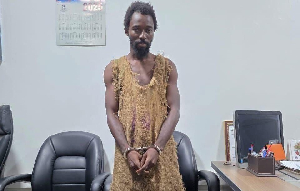
In March 2025, Ecobank Côte d’Ivoire launched West Africa’s first gender bond to accelerate financial inclusion for women entrepreneurs, demonstrating the institution’s commitment to innovative financial instruments supporting inclusive growth. The sustainability linked debt issuance aligns with broader efforts to advance women’s economic participation across the continent.

Ecobank has also focused on nurturing financial technology innovation through its flagship Ecobank Fintech Challenge. In 2024, Ivorian fintech Daba Finance won the grand prize of 50,000 dollars after 12 innovative fintech startups competed before a panel of five judges. Kenyan startup Melanin Kapital finished as runner up winning 10,000 dollars, while Guinean fintech YMO took third place with 5,000 dollars.

The group has executed significant capital market transactions supporting its growth trajectory. In June 2025, Ecobank Transnational Incorporated appointed Ayo Adepoju as Group Executive Director. Over the years, Adepoju has led numerous strategic initiatives including landmark capital market transactions such as Eurobonds, Basel III compliant instruments, and sustainability linked debt.

The 2025 awards add to Ecobank’s extensive recognition history. In 2024, the institution won a record number of 14 awards at Euromoney Awards for Excellence, Global Finance Best Investment Banks and Sustainable Finance Awards 2024, Global Finance Best Bank Awards, and Global Finance Transaction Banking Awards. These previous awards recognized the bank’s unrivaled commitment to innovative financial services and superior customer experience across Africa.

Ecobank’s consistent recognition across multiple award platforms demonstrates sustained excellence rather than isolated achievements. The institution’s ability to win top honors from different evaluators using distinct assessment criteria suggests fundamental strength across key performance dimensions rather than optimization for specific metrics.

Looking forward, the challenge for Ecobank involves maintaining momentum beyond the celebratory 40th anniversary year while navigating an increasingly competitive African banking landscape. Digital transformation by both traditional banks and fintech startups is reshaping customer expectations and service delivery models across the continent.

The institution’s pan African footprint provides competitive advantages through economies of scale, diversified risk exposure, and ability to facilitate cross border transactions. However, this geographic breadth also creates complexity in managing operations across 35 countries with varying regulatory frameworks, economic conditions, political environments, and market maturity levels.

Ecobank’s awards success in 2025 validates strategic choices made in recent years around digital investment, SME focus, trade finance capabilities, and women’s economic empowerment. Whether this recognition translates into sustained market share gains, profitability improvement, and shareholder value creation will determine if the 40th anniversary year represents a peak or a platform for continued advancement.

For now, the institution has demonstrated that four decades after its founding, Ecobank remains central to Africa’s financial sector evolution and continues earning recognition from respected global authorities evaluating banking excellence. As Africa’s economic integration deepens through initiatives like AfCFTA, institutions capable of facilitating continental commerce while maintaining local market relevance will likely capture outsized opportunities. Ecobank’s 2025 awards suggest it is well positioned for this emerging environment.

Virtual Asset Service Providers bill signed into law to regulate crypto in Ghana

0

President Mahama has signed the bill into law to regulate crypto | File Photo President Mahama has signed the bill into law to regulate crypto | File Photo

There is a new law in place, as President John Dramani Mahama has signed the Virtual Asset Service Providers (VASP) bill into law.

This formal exercise ushers in Ghana’s regulated virtual assets ecosystem and marking a significant milestone in the country’s financial sector development.

The Deputy Director-General of the Securities and Exchange Commission, Mensah Thompson, announced this via a post on Facebook, indicating that it follows the passage of the bill by Parliament after an extensive consideration process.

The new law provides a legal framework for the use, trading and provision of services related to virtual assets, including cryptocurrencies, effectively bringing activities in the digital assets space under regulatory oversight.

With the law now in force, the Securities and Exchange Commission and the Bank of Ghana are expected to play central roles in supervising and regulating virtual asset service providers, a move aimed at strengthening investor protection, market integrity and financial stability.

In the post, Mensah Thompson wrote that; “The Bill among other things legalizes the usage, trading and provision of service in the virtual assets (including cryptocurrencies) space. The SEC and the Bank of Ghana wishes to congratulate His Excellency the President, The Minister for Finance, the Governor of the Central Bank and the Director General of the SEC for their foresight in moving Ghana an inch closer towards the next phase of global finance and inclusion.

“Special thanks to VASP market operators including the big exchanges and traders who made immense contributions towards the bill and most important to the Chairman of the Finance Committee of Parliament the Hon Isaac Adongo for his enormous directions and support through out the legislation process.”

The statement acknowledged the role of key stakeholders, including the Presidency, the Ministry of Finance, the Bank of Ghana, Parliament and industry operators, in advancing the legislation.

It also highlighted the bipartisan support the bill received in Parliament and the technical contributions from staff of the SEC and the central bank.

The enactment of the VASP law is seen as part of Ghana’s broader efforts to align its financial system with global trends in digital finance, promote innovation and expand financial inclusion within a clear and robust regulatory framework.

AE

Don’t Cry For Me – Nigerian Influencer, LazyWrita Announces His Own De@th, Shares Regrets In Last Instagram Post

0

Anda, as friends call him, announced his de@th in a scheduled Instagram post. He hinted at being tired and ending it all.

Anderson Damisa, the Nigerian influencer, who is popularly known as LazyWrita, has passed away, sending shockwaves across social media.