



Dealing with Ghana’s narcotic transit trade: The two-way blind spot
Ghana does not grow coca. It does not refine cocaine. It has no poppy fields feeding a heroin trade. Every gram of either drug that has ever moved through this country arrived from somewhere else and, unless it stayed here for domestic use, left for somewhere else again.
That ought to make Ghana’s part in this trade the simplest problem in the entire supply chain to fix. It is not a production problem, not a demand problem, purely a question of control, with the state as the only variable that matters. This is exactly why missing it in both directions stings twice as much.
On September 10, 2026, French customs found 3.9 tonnes of cocaine at Dunkirk, concealed in a container of plastic waste that had shipped out of Ghana. It was missed on the way out, caught in someone else’s port. 10 days later, South African police arrested a man at OR Tambo International Airport carrying roughly $123,000 worth of heroin after he flew in from Accra.
Also missed on departure again, caught on someone else’s arrival. Different drug, different destination, identical shape: Ghana’s own systems saw nothing either time. Everyone downstream did the catching. Don’t forget what came in undetected at some point but caught in 2025 on the cape coast road.
Producing nothing, missing everything
Strip away the politics that usually complicate a country’s drug problem and Ghana is left with an unusually clean diagnosis. There is no domestic cultivation to police, no local cartel controlling supply, no messy question of livelihoods tied up in growing the crop, of the kind that shapes drug policy in producer countries.
There is only cargo, moving through ports and an airport that Ghana already owns and already controls, on its way from one foreign country to another. A state that cannot stop what it neither grows nor consumes in any serious quantity is not fighting an intractable problem. It is failing at something narrower and, in principle, far more solvable: Willing to know what is inside the containers and the luggage passing through its own borders.
What a working system actually looks like
No port or airport anywhere in the world physically inspects everything that moves through it, and none needs to. Tema alone handles well over a million containers a year; Accra International Airport moves millions of passengers. What makes a border control system work is not the volume it inspects but the precision of what it chooses to inspect.
The manifests cross-checked against known risk indicators, passenger data run against a watch list and behavioral flags, a small number of high-probability targets pulled out of an enormous flow of legitimate traffic. That is what “intelligence-led” actually means in an operational sense: not more searching, but smarter selection of what to search.
Missing a multi-tonne cocaine shipment leaving the country and a mule carrying heroin out through the airport, within the same “fortnight”, is not the kind of coincidence a single broken scanner or one distracted shift can explain. It points at something upstream of any individual checkpoint: a targeting layer that either does not exist in any systematic form, or exists on paper without the data, the mandate, or the authority to act on what it finds. Two misses, in two different directions, through two different points of exit, are the signature of an absent system rather than an unlucky day.
A small, telling contrast
It is worth noticing how the South African side of the Johannesburg case was reported. The police there described the arrest as the product of an intelligence-led operation, and placed it explicitly in a pattern: the third suspected drug mule caught at OR Tambo in three weeks. Whatever the limits of that system in practice, the instinct on display is the right one treating each arrest as a data point in a running count, not a standalone story.
Why the symmetry matters
This series has already argued that Ghana lacks a standing national picture of its organised crime exposure, and that the officials meant to guard its ports are, in some documented cases, the ones facilitating what moves through them. The two-way blindness adds a third, harder-to-avoid piece of evidence to both arguments.
It is harder to attribute to any single act of corruption, because it shows up in two entirely different cases; a different drug, a different destination, a different port of departure, each one caught only after it had already left Ghana, on someone else’s soil. And it is harder to explain away as bad luck, because bad luck does not repeat itself in the same shape twice in 10 days.
What it looks like, instead, is the absence of the one thing that would have caught either shipment before it ever cleared Ghanaian territory: a system built to notice what does not belong, moving in either direction; through a country that has no reason of its own to be growing, refining, or consuming any of it.
The two leakage channels
There is a second question hiding inside the first, and it deserves to be kept separate. One is how much of what enters Ghana continues onward undetected, pure transit loss, tonnes that still reach Europe or wherever without anyone, Ghanaian or otherwise, ever catching them. The other is how much gets diverted after it enters undetected and stays inside Ghana rather than moving on.
A local narrative has grown up around the second question: that street prices for cocaine in Accra have fallen, read by some as evidence of a domestic glut spilling over from transit stock. It is worth taking that claim seriously enough to test it, rather than simply repeating it.
On the first question, nobody measures undetected transit directly, if it were caught, it would not be undetected. What serious agencies do instead is model it backward from what does get seized, against an assumed interdiction rate typically put somewhere between one in five and one in ten shipments caught, depending on the route.
Applied to West Africa, the regional numbers alone are sobering: seizures across the region rose from under two tonnes a year between 2012 and 2018 to roughly ten times that annually between 2019 and 2025, reaching a record of about 30 tonnes in 2025, with the Global Initiative Against Transnational Organized Crime and the UN Office on Drugs and Crime estimating that at least three in every 10 kilograms of cocaine now consumed in Western Europe pass through West Africa.
Run even a conservative interdiction assumption against that regional seizure total and the volume moving through undetected is several multiples of what is being caught. Nobody has published the equivalent model run specifically against Ghana’s own seizure record, which can mean nobody in Accra can currently put a number on Ghana’s own share of that undetected flow either.
On the second question; the local price story, a genuine global glut is real and documented. Cocaine’s wholesale price in Europe has fallen even as global volumes rise, with retail purity in some markets climbing above 80 percent in 2026 sampling, more than double the levels recorded a decade earlier. Rising purity alongside falling price is the textbook signature of oversupply, since dealers dilute less when they are not worried about running short.
If Ghana’s local price is genuinely falling, that global pattern could explain it. But there is a second, more specific explanation that fits a maturing transit country just as well, and it deserves equal weight rather than being waved past: payment in product rather than cash. Couriers, local fixers, and facilitators along a trafficking route are frequently compensated with a cut of the shipment itself; because a cash payment leaves a money trail that product does not, until that product is sold locally.
That kind of leakage, paid out as wages rather than lost to interdiction, is exactly how other transit corridors have historically grown their own domestic appetite plus addiction problems over time. If that is what is happening here, a falling street price is not evidence of Ghana being flooded with excess transit stock passing through. It is evidence that a growing share of facilitators are being paid in kind, and that kind is landing on Ghana’s own market.
The uncomfortable truth is that Ghana currently has no way to prove which of these two explanations is right or wrong. Doing so would require monitoring that does not yet appear to exist here in any systematic form: periodic purity testing of seized and street-level samples, wastewater analysis of the kind several European cities already use to estimate real consumption independent of seizures or rumour, treatment-admission data tracked over time, and financial intelligence on the asset growth of known local distributors.
Until one of those exists, “the market is flooded” will remain exactly what it is today, a plausible story, repeated because it sounds right, that nobody in a position to verify it has actually tested.
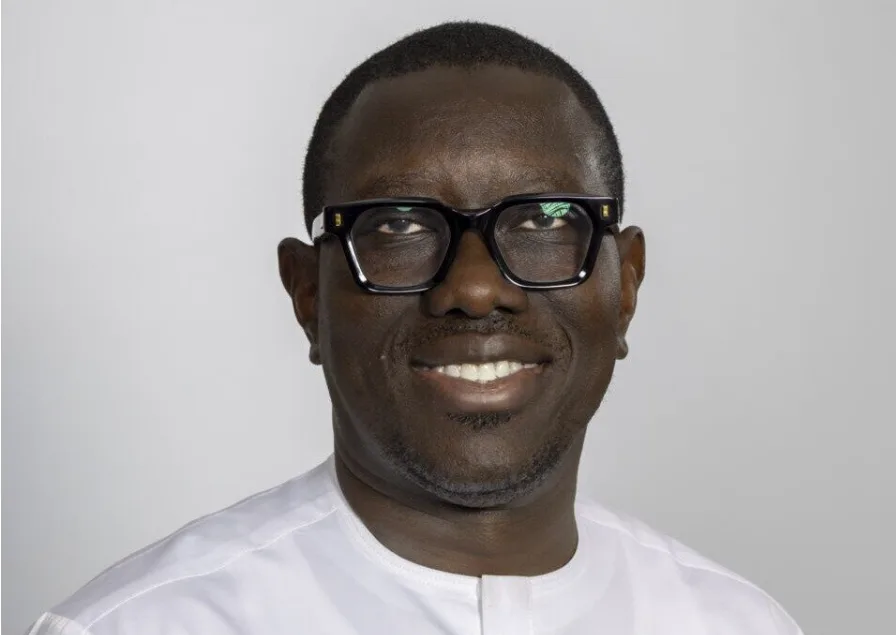
The author, Nana Attobrah Quaicoe, is an Intelligence and National Security Analyst, a former Director General of the Bureau of National Intelligence (2022–2025), and writes on national security and intelligence sector reform, risk, integrity assessment, and institutional governance in the Ghanaian context
 WhatsApp
Comments (0)
No comments yet. Be the first to share your opinion!