



Fidelity Bank urges Ghana to develop agricultural value chains
As MyJoyOnline reports, Fidelity Bank Ghana has called for changes to approaches to financing and organizing Ghana’s agricultural sector. The bank believes that the country’s agricultural self-sufficiency depends not only on increasing production, but also on capturing a larger share of the value of products after harvest.
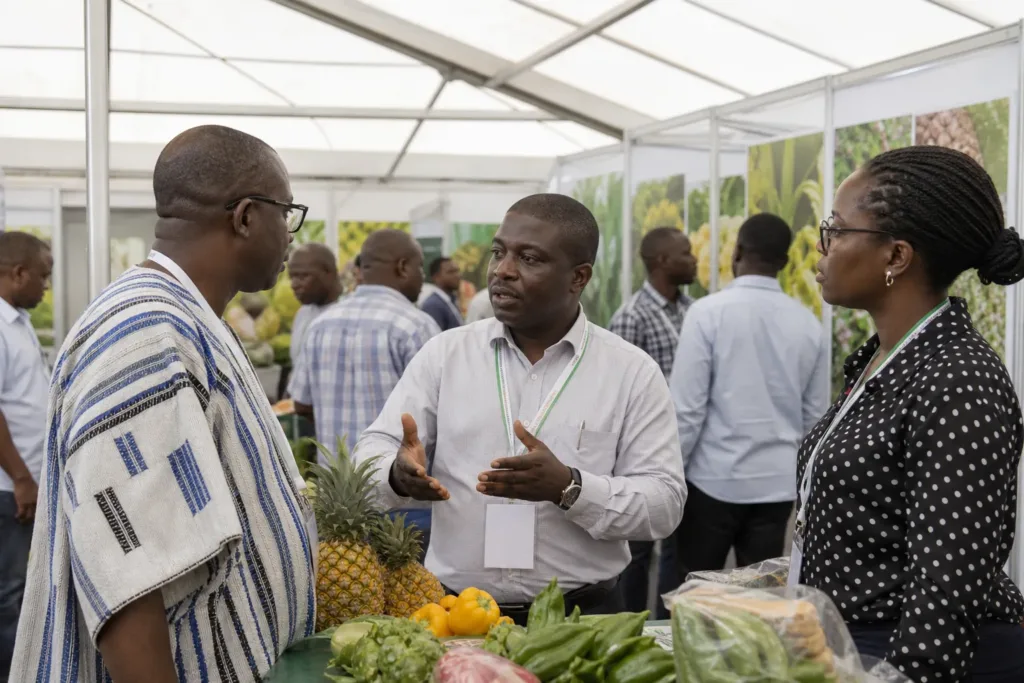
This position was presented at Ghana Horticulture Expo 2026, dedicated to building Ghana’s agricultural self-sufficiency through innovation. John-Paul Taabavi, Director of Corporate and Institutional Banking, spoke on behalf of Managing Director Julian Opuni.
Value after harvest
Taabavi offered a comparison: Ghana’s non-traditional agricultural exports generated about $710 million in 2025, while cocoa paste brought in approximately $789 million during the same period. According to him, the difference is largely determined by processes taking place after products are harvested.
He noted that agricultural self-sufficiency does not mean producing everything within the country. In the bank representative’s view, it means controlling a larger share of the value created, retaining income in the national economy, and ensuring broader participation by Ghanaian companies in agricultural revenues.
More current news is available on the UA.News Telegram channel Telegram.
According to data cited by Taabavi, Ghana’s non-traditional exports reached about $5 billion in 2025, while the country’s products were supplied to 152 states. He named the links between the farmer and the market as the main challenges: cold storage, aggregation of product batches, processing, packaging, logistics, quality standards, certification, reliable energy supply, and access to appropriate financing.
Financing exporters
Taabavi also stated that agricultural sector financing should be structured around production cycles, verified transactions, reliable purchase agreements, and warehouse receipts, rather than traditional collateral alone.
The bank referred to the Fidelity Export Club, established in 2023 jointly with the Federation of Associations of Ghanaian Exporters. The initiative supports more than 400 exporters and farmers. Through the BRIDGE-in-Agriculture programme, in partnership with the Mastercard Foundation, and other channels for small and medium-sized businesses, Fidelity Bank has provided federation members with more than 160 million Ghanaian cedis.
As of the end of July 2026, participants in the bank’s SME portfolio had generated about $40 million in foreign exchange proceeds. Alex Amponsah-Agyei, Director of SME Banking, said that partnerships with GIRSAL, eco.business Fund, Mastercard Foundation, and Development Bank Ghana had made it possible to offer financing at a total cost of 7% under BRIDGE-in-Agriculture and to accept agricultural land as collateral.
Download our app



 WhatsApp
Comments (0)
No comments yet. Be the first to share your opinion!