



Ghana has set its sights on securing a place on the Union Cycliste Internationale (UCI) calendar and opening an Olympic qualification pathway to Los Angeles 2028 as the country dramatically scales up the Tour Du Ghana into its most ambitious international cycling event yet.
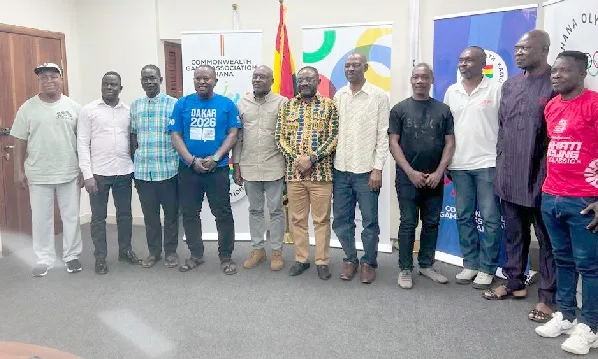
The Ghana Olympic Committee (GOC) President Richard Akpokavie officially launched the Tour Du Ghana 2026 at the GOC headquarters at Ridge, Accra,?? last Thursday unveiling an expanded race over2,401.7 kilometres designed to push Ghanaian cycling onto the international map.
The launch also saw the inauguration of a Central Planning Committee charged with delivering an event that organisers ultimately hope can develop into a globally recognised property in the mould of cycling’s marquee races, including the Tour de France and Giro d’Italia.
The 2026 edition will feature 90 cyclists from 15 teams — up from 12 teams in 2025 — with entries already confirmed from Europe, the United States and the United Kingdom.
For Mr Akpokavie, however, the ambition stretches beyond racing. He described the Tour as a strategic vehicle to develop cycling as an Olympic sport while selling Ghana’s tourism, culture and investment potential to an international audience.
“We are supporting this because we believe that its success would help develop cycling in Ghana and also encourage many more young people to get involved,” Mr Akpokavie said.
He added that the project aligns with the values of Olympism and could significantly strengthen the visibility of the Olympic movement in Ghana.
That sporting objective has potentially bigger implications. Organisers are positioning the Tour Du Ghana as a possible qualification pathway towards the Los Angeles 2028 Olympic Games, provided it secures the coveted UCI calendar status.
There are already encouraging signs on the technical front.
The Ghana Cycling Federation General Secretary and principal organiser, Shaaban Mohammed, revealed that UCI safety managers from Switzerland have reviewed the plans and given preliminary approval. Transport arrangements for the long-haul transfer to Tamale remain the principal logistical issue under discussion.
The scale of the course illustrates the challenge confronting organisers. The Tour will cover 11 stages, comprising 1,406.4km of competitive racing and another 995.3km of transport stages.
Riders will traverse the Northern, Savannah, Bono East, Bono Ahafo, Ashanti, Eastern, Volta and Greater Accra regions.
The expansion also requires a significantly larger organisational footprint.
Mr Akpokavie inaugurated former Member of Parliament and former Chairman of Parliament’s Select Committee on Sports and Culture, Kobena Mensah Woyome, as chairman of the Central Planning Committee.
Its membership draws from the Ghana Cycling Federation, the Ministry of Sports and Recreation, the National Sports Authority, the Ghana Police Service’s Motor Traffic and Transport Department, the Ghana Immigration Service, the Ghana National Fire Service, the National Ambulance Service, the National Road Safety, the Ghana Tourism Authority and the Ghana Revenue Authority, alongside representatives of local destination committees.
Nathaniel Laryea will oversee the media portfolio, while finance and medical responsibilities have also been incorporated into the structure.
Mr Woyome said the committee’s breadth reflected the complexity of staging an international road race across multiple regions.
He challenged members to work with urgency and national purpose, insisting the Tour must combine professional sporting organisation with a compelling showcase of Ghanaian hospitality.
Commercial backing is also beginning to emerge. The GOC boss revealed that Promasidor Ghana Limited, a traditional corporate supporter of cycling, was among the major sponsors already supporting the event, while Presidential Life Insurance has committed to establishing a professional cycling team to compete in the Tour.
Both Messrs Akpokavie and Woyome used the launch to court further investment from corporate Ghana, arguing that an event crossing multiple regions offers sponsors substantial national exposure alongside its growing international reach.
“If you knock at our door, we will receive you so that you share your resources with us,” Woyome said, promising prospective partners strong returns on their investment.
Representatives of security agencies, sporting bodies and media partners attended the launch, underlining the multi-agency effort required to deliver the event.

Comments (0)
No comments yet. Be the first to share your opinion!