


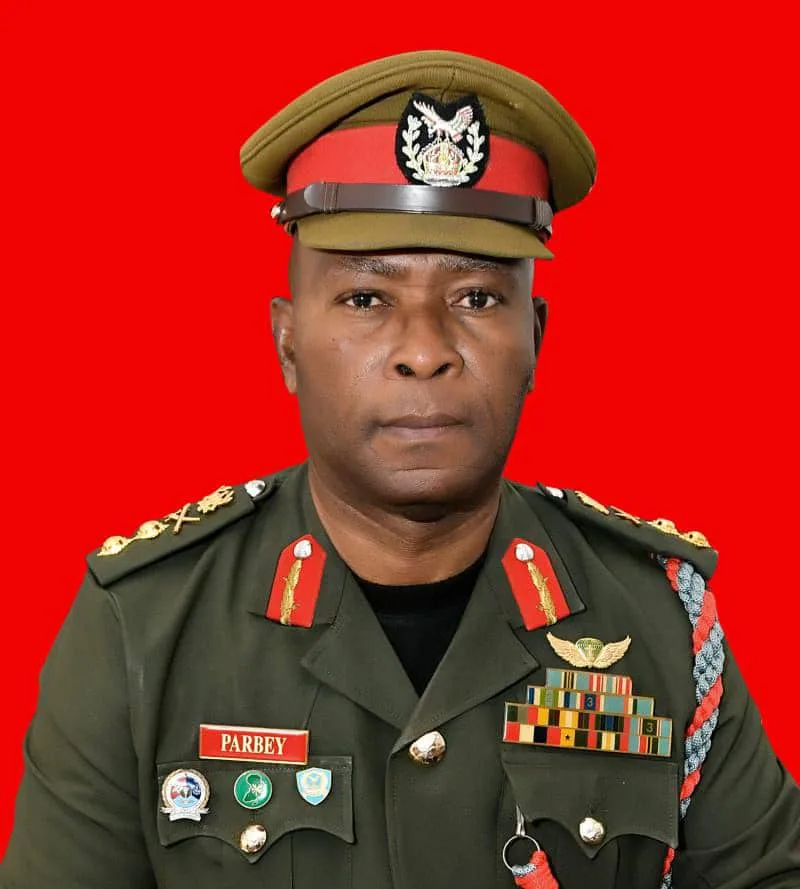
Ghana’s Chief of Defence Intelligence, Major General Stephen Woseadzikpo Kweku Parbey, has warned that unresolved communal conflicts within the country could create vulnerabilities that extremist groups operating in the wider region might exploit, cautioning that no local conflict ever produces a true victor.
He made the remarks at the 2026 Sahel Peace Initiative National Forum held in Accra, an event that also delivered a sobering regional statistic: West Africa recorded more than 2,000 terrorist attacks and over 8,000 deaths in the first half of 2026 alone, a 14 percent rise in fatalities compared to the same period a year earlier.¹
A Warning Rooted in Local Vulnerability
Addressing the forum, Maj. Gen. Parbey argued that internal discord, however localised, carries strategic risk well beyond the communities directly involved. “No conflict situation in this country will produce a victor,” he said, adding that what conflict produces instead is confusion, and that confusion creates room for those who seek to do harm.
His remarks reflect a security doctrine increasingly common among West African defence and intelligence establishments: that extremist groups such as JNIM and Islamic State-affiliated networks operating across the Sahel do not need to manufacture instability from nothing, but can instead exploit pre-existing local grievances, land disputes, and chieftaincy or communal tensions to gain footholds, recruits, or safe passage.
Parbey called on ordinary citizens to play an active role in national security, urging communities to remain vigilant and report suspicious activity as part of Ghana’s early warning framework. “We all have a responsibility. If you see something unusual, tell somebody. Reporting what you observe is an essential part of our early warning system,” he said.
A Deteriorating Regional Picture
Parbey’s warning was delivered against the backdrop of a stark regional disclosure at the same forum. Major General Timothy Baa-Taa-Banah, Director of Ghana’s National Counter-Terrorism Fusion Centre, told the gathering that West Africa recorded over 2,000 terrorist attacks resulting in more than 8,000 deaths in the first half of 2026, with fatalities rising 14 percent compared to the prior year.
Baa-Taa-Banah said extremist groups in the region have grown markedly more sophisticated, moving away from rudimentary tactics toward coordinated operations that draw on technology, artificial intelligence, cross-border networks, and illicit financing channels. “They no longer act in rudimentary ways. They plan, rehearse, coordinate using technology and execute with precision,” he said.
Why This Matters for Ghana
Ghana remains one of the few coastal West African states yet to suffer a major terrorist attack on its own soil, even as neighbouring Sahelian states, Burkina Faso, Mali and Niger, continue to battle entrenched JNIM and Islamic State Sahel Province insurgencies. Security analysts have long flagged Ghana’s northern border communities, and pockets of unresolved chieftaincy and land disputes further south, as potential vulnerabilities should the security architecture fail to keep pace with the sophistication Baa-Taa-Banah described.
Parbey’s intervention signals that Ghana’s Defence Intelligence establishment views internal social cohesion, not just border security or military hardware, as a frontline defence against extremist infiltration.
The 2026 Sahel Peace Initiative National Forum itself reflects a broader push by Ghanaian security institutions to draw explicit links between community-level peacebuilding and national counter-terrorism strategy, a framing that is likely to feature prominently in Ghana’s continued engagement with regional partners as instability persists across the AES bloc and the wider Sahel.
Mustapha Bature Sallama
Medical/ Science Communicator,
Private Investigator, Criminal Investigation and Intelligence Analysis,
International Conflict Management and Peacebuilding. ( USIP)
[email protected]
+233555275880
