


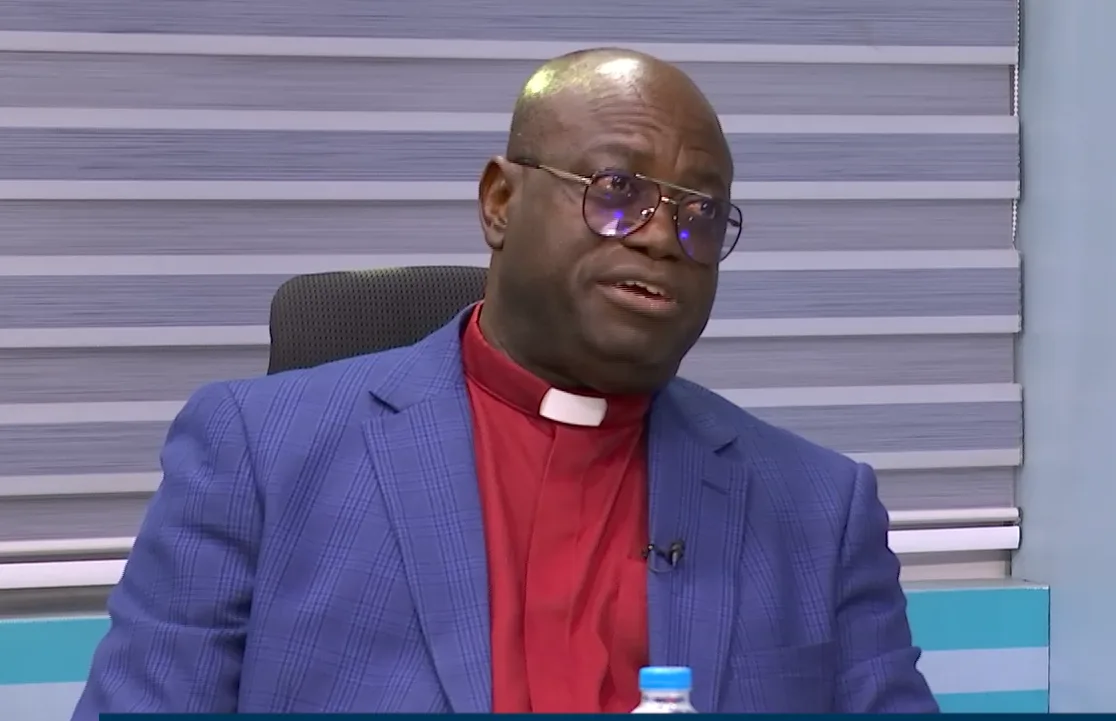
The Moderator of the Presbyterian Church of Ghana, Rt. Rev. Dr Abraham Nana Opare Kwakye, has raised concerns over growing indiscipline and violence in schools, warning that the situation could have serious consequences for the country if not addressed.
He said incidents involving weapons, gang activities, clashes between schools, sexual abuse and attacks on teachers and school authorities were becoming worrying features of the school environment.
Speaking in an interview with Bernard Avle on Channel One TV’s The Point of View on Wednesday, August 26, Rt. Rev. Dr Kwakye said the growing indiscipline in schools reflected broader challenges in Ghanaian society.
“There is a growing indiscipline in our schools. And all of us are witnesses. There’s growing violence in the schools,” he said.
He said some students now went to school with weapons instead of books, while others formed gangs and engaged in violent confrontations with students from other schools.
“I mean, we hear of students who go to school. Instead of carrying books, they carry machetes. They have knives on them. They form gangs,” he said.
According to him, some clashes between students had resulted in serious injuries and deaths.
“And you hear of one school fight against another school. And people are not just injured, but sometimes people die. There are reports of deaths,” he said.
Rt. Rev. Dr Kwakye also raised concerns about sexual assaults involving students, including allegations of teachers taking advantage of female students who are minors.
“We also have heard about sometimes sexual assaults. Some teachers taking advantage of our young ladies. They are minors,” he said.
He further cited attacks on teachers and school authorities as another manifestation of growing indiscipline in schools.
His comments come amid a number of recent incidents highlighting concerns over student behaviour. In August, six students of Obuasi Senior High Technical School were arrested after allegedly assaulting the school’s headmaster over claims that he had buried a baby. Three people were later remanded in connection with the alleged assault and damage at the school.
In June, the Ghana Education Service also condemned the assault of two teachers and the destruction of property at Bawku Senior High School following unrest during the West African Senior School Certificate Examination (WASSCE).
The Presbyterian Moderator said such developments reflected the wider breakdown of discipline in society and required a collective response from parents, schools, religious bodies, government and other stakeholders.
“We believe that it is a reflection of the growing indiscipline in our society itself,” he said.
Concerns over truancy
The Presbyterian Moderator also expressed concern over the level of truancy among students, saying some could stay away from school for extended periods and still return to sit for the West African Senior School Certificate Examination (WASSCE).
“We also know that truancy has reached its highest degree now. There are students who never come to school for a whole year. But because the system allows them, when it is time for their WASSCE, they come to write the exam. And you cannot stop them,” he said.
He acknowledged that corporal punishment, which was previously used as a disciplinary measure in schools, had been abused in some instances but suggested that its removal had also created challenges in maintaining discipline.
“I know that it was abused by some. But sometimes, some of these things have allowed students to do whatever they like,” he said.
However, he said addressing indiscipline should not be left to schools or the Ministry of Education alone but should involve all stakeholders.
He cited the national conference on stemming indiscipline in schools organised by the Minister of Education, Haruna Iddrisu, as an important step towards finding solutions to the problem.
“I was there personally. And we all shared our thoughts. And it is a concern, not only for the ministry. It’s a concern for the church. It’s a concern for everybody,” he said.
Rt. Rev. Dr Kwakye warned that failure to address the problem could have serious implications for the country.
“We know that it is a tangent. If we do not stem it now, we will be in trouble,” he said.
