



BoG pushes for efficient cross-border payments at global fintech meetings in Singapore
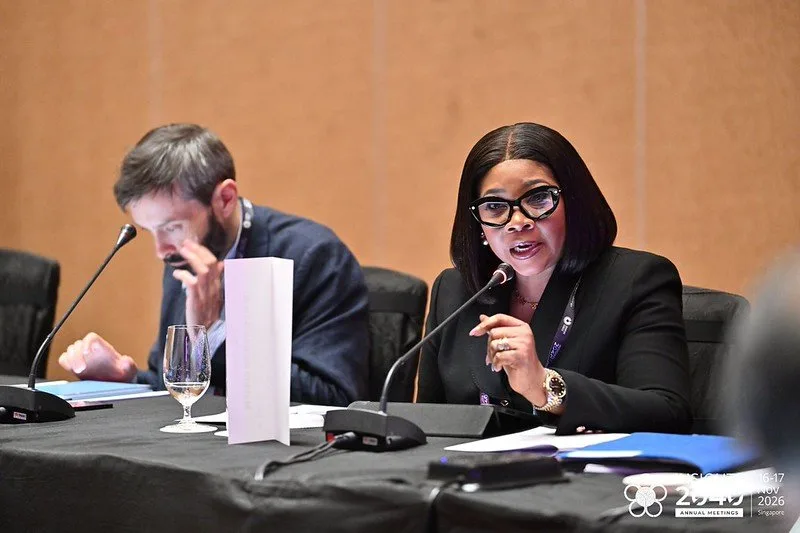
Second Deputy Governor Matilda Asante-Asiedu calls for corridor-specific measures to improve transaction costs, transparency and access to funds across Africa
The Bank of Ghana (BoG) has called for more efficient and affordable cross-border payment systems across Africa, emphasising the need for measurable improvements in transaction costs, transparency and access to funds.
The call was made by the Bank’s Second Deputy Governor, Mrs Matilda Asante-Asiedu, during her participation in the Insights2040 Annual Meetings and the Singapore Fintech Festival 2026.
The two international gatherings, held from November 16 to 20, brought together central bank officials, financial regulators, policymakers, financial institutions and technology innovators to discuss developments shaping the future of global finance.
Delivering opening remarks at the Insights2040 Annual Meetings, Mrs Asante-Asiedu stressed that connecting payment systems alone was not enough to achieve meaningful financial integration.
She said stakeholders must move beyond global averages and assess the performance of individual payment corridors across Africa to identify gaps and improve efficiency.
According to her, monitoring transaction costs, transparency, reliability and the speed at which funds become accessible would help regulators and payment service providers develop targeted interventions.
She noted that improvements in payment infrastructure must translate into practical benefits for households and businesses through more affordable, accessible and reliable transactions.
The position highlights the importance of cross-border payment systems in facilitating trade, remittances, investment and economic integration across African economies.
BoG strengthens Ghana-Singapore financial cooperation
As part of the engagements, Mrs Asante-Asiedu met Singapore’s Minister of State for Foreign Affairs and National Development, Mr Alvin Tan, to explore opportunities for strengthening bilateral cooperation between Ghana and Singapore.
Discussions focused on financial innovation, digital payments, cross-border transactions and the application of artificial intelligence (AI) in financial services.
The meeting also highlighted existing collaboration between the Bank of Ghana and the Monetary Authority of Singapore (MAS), which provides a foundation for further cooperation.
A Singaporean delegation is expected to visit Ghana in January 2027 for further discussions on strengthening bilateral relations and exploring opportunities in the financial technology sector.
Meanwhile, the Bank’s Director of Fintech and Innovation, Mr Owureku Asare, participated in a roundtable discussion on tokenised financial markets.
The session, titled Tokenized Markets: Frictions, Choices and the Path to Interoperability, examined challenges associated with fragmented financial infrastructure, regulatory differences and the need for greater compatibility between emerging digital asset platforms and existing financial systems.
The discussions explored how interoperability could support more efficient, integrated and resilient financial markets.
BoG engages global discussions on stablecoins
The Bank’s Head of Virtual Assets, Mr Philip Kwaw Sebuabe, also participated in a roundtable at the Insights2040 Annual Meetings examining the growing role of stablecoins in global payments infrastructure.
The session, titled Beyond Disruption as Global Payments Infrastructure, explored how stablecoins could potentially reduce transaction frictions, improve settlement efficiency and facilitate the movement of funds across jurisdictions.
Stablecoins are digital assets designed to maintain a relatively stable value by referencing an underlying asset or currency.
Their growing use has attracted attention from financial regulators worldwide, particularly regarding their potential implications for payment systems, financial stability and consumer protection.
Mr Sebuabe’s participation formed part of the Bank’s engagement in international discussions on virtual assets and the regulatory frameworks required to support responsible innovation.
AI dominates discussions at Singapore Fintech Festival
The Singapore Fintech Festival 2026, held from November 18 to 20 at Singapore EXPO, focused on The Coming Rewiring of the Financial System: New Risks. New Rules. New Growth.
The 11th edition of the festival was organised by the Monetary Authority of Singapore and the Global Finance & Technology Network, in collaboration with the Association of Banks in Singapore.
The event attracted discussions on how technology, geopolitics, capital, talent and policy are reshaping the global financial system.
Artificial intelligence emerged as a major focus, with participants examining its growing influence on financial services, payment systems, risk management and regulatory supervision.
Particular attention was given to agentic AI, a developing category of artificial intelligence capable of executing tasks, making certain decisions and initiating actions with varying degrees of autonomy.
Unlike conventional AI systems that primarily analyse information or respond to instructions, agentic AI can undertake multiple steps to complete assigned processes.
Its potential applications in financial services include automating transactions, improving risk assessments, strengthening operational efficiency and enhancing customer experiences.
However, the discussions also highlighted concerns surrounding accountability, cybersecurity, data protection, consumer protection and the reliability of autonomous systems.
For central banks and financial regulators, the challenge will be to establish appropriate governance and supervisory frameworks that encourage technological advancement without undermining confidence and stability in the financial system.
Focus on AI, economic growth and financial inclusion
The festival also examined the wider economic implications of artificial intelligence, particularly its impact on productivity, employment, skills development and competitiveness.
Participants discussed the opportunities AI presents for economic growth while highlighting the risk of widening inequalities where access to technology and its benefits remains uneven.
These considerations are particularly relevant to developing economies such as Ghana, where the adoption of emerging technologies must be accompanied by investments in skills, infrastructure and inclusive digital access.
The broader discussions also reinforced the importance of international regulatory cooperation as digital assets, AI and tokenisation continue to transform financial services.
The Bank of Ghana’s participation in the two international engagements forms part of its efforts to strengthen global partnerships, contribute to financial policy discussions and explore emerging technologies that could support a more connected, inclusive and resilient financial system in Ghana and across Africa.
 WhatsApp

Comments (1)
Hi there to all, for the reason that I am genuinely keen of reading this website’s post to be updated on a regular basis. It carries pleasant stuff.