



Social Historian & Professor Edmond W. Davis Addresses MAGA: “True Leadership Doesn’t Need MAGA Approval”
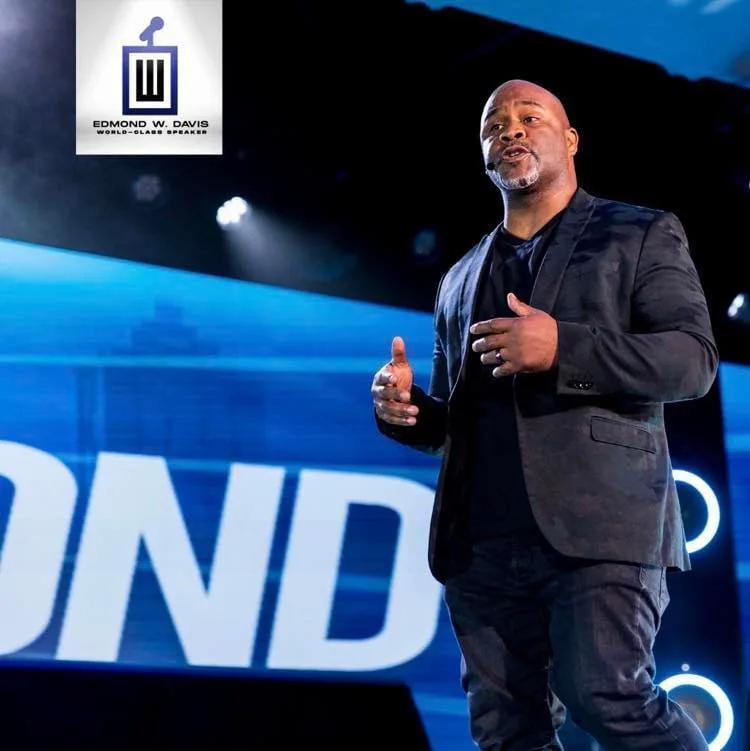
Georgia voters made American history when they electedKeisha Lance Bottoms governor on November 3, 2026. She became the first Black woman elected governor in United States history and the first woman elected to Georgia's highest executive office. Yet before she could take the oath of office, critics aligned with President Donald Trump's MAGA movement began policing the appearance of her leadership. Aviral photograph of Bottoms and members of her transition team ignited complaints that too many Black people and not enough white people were represented. My question is simple: Since when does a historic election victory require MAGA's permission to assemble a transition team?
Apparently, Black political excellence is acceptable only when it includes enough white faces to make certain people comfortable. MAGA opponents who have spent years denouncing diversity, equity, and inclusion suddenly appear to have discovered a passionate commitment to racial representation—provided the beneficiaries are white. Imagine that! The same movement that frequently attacks DEI now seems to demand a special version of it for its own comfort. If this is not political hypocrisy, what exactly should we call it?
According toAtlanta Black Star's November 20 reporting, a social media post complained that the photograph was approximately 73% Black and 16% white, contrasting those figures with Georgia's population demographics. But a photograph is not a government census, a completed hiring roster, or evidence of unlawful discrimination. It captures an occasion, not the qualifications of everyone appointed to public office. Even if the figures accurately describe that photograph, they cannot prove the administration is excluding qualified applicants.
Furthermore, Bottoms'officially announced transition co-chairs include Arthur Blank, Rosalind Brewer, Jason Carter, Carmen Chubb, Michelle Nunn, Tyler Perry and other respected figures. HerNovember 17 transition announcements introduced additional staff and policy committees involving professionals from different backgrounds. In other words, the facts undermine the suggestion that this administration is assembling an exclusively Black governing apparatus.
But here is the larger question: Why must Black leadership constantly defend its legitimacy before it has even had an opportunity to lead?
As a social historian, professor, and international journalist, I have studied how America responds when Black citizens acquire political influence, educational advancement, business ownership, and independent economic power. History demonstrates an unmistakable pattern: Black progress frequently encounters organized efforts to restrict, undermine, or reverse it.
Consider the historical evidence. DuringReconstruction following the Civil War, formerly enslaved Americans entered public office, established institutions, and exercised constitutional rights, only to face intimidation, disenfranchisement, and racial terrorism. InWilmington, North Carolina, in 1898, white supremacists violently overthrew a legitimately elected multiracial local government. InTulsa, Oklahoma, in 1921, a flourishing Black business district known as Greenwood or Black Wall Street was devastated by racist violence.
When the Supreme Court rejected racial segregation in public schools throughBrown v. Board of Education in 1954, organized resistance followed. When theVoting Rights Act became law in 1965, it created essential protections against discriminatory voting practices, yet the Supreme Court's2013 Shelby County v. Holder decision later invalidated its preclearance coverage formula. And as Black neighborhoods built property, businesses, and wealth,highway construction and urban renewal projects demolished or displaced entire communities.
Different centuries. Different institutions. Similar questions about who is allowed to possess power, who receives its benefits, and who determines whether Black advancement is legitimate.
Does that history prove every criticism of a Black official is racist? Absolutely not. But history does require us to examine whether standards are consistently applied. If white governors can appoint trusted colleagues without their photographs becoming a national racial controversy, Black governors deserve the same presumption of legitimacy.
Where was this MAGA passion for racial accountability when Black lives were at stake?
According toAssociated Press reporting published September 17, 2026, approximately half a dozen Black men and women had been found hanged across the American South over the preceding two years. These cases reopened painful historical memories of lynching and racial terror. Some deaths were classified as suicides, while the death of Tasia Fortune in Mississippi resulted in murder charges.
Let me be clear: Not every hanging is a lynching, and responsible journalism must never replace forensic evidence with speculation. However, historical distrust of investigations cannot simply be dismissed, especially when families seek explanations and transparency. Every death deserves careful investigation, regardless of race, and every grieving family deserves factual answers.
What troubles me is the contrast in attention. A photograph of Black professionals can become a national political spectacle while the difficult questions surrounding these deaths receive far less sustained public engagement from the same voices. I am not claiming that every MAGA supporter remained silent. I am challenging those who were more eager to count Black appointees than demand credible answers when Black families were grieving.
The Bible reminds us inProverbs 31:8 (NLT): "Speak up for those who cannot speak for themselves."
Where is that same moral urgency when historically Black colleges and universities continue fighting the consequences of generations of inequitable funding?
Afederal funding analysis covering 1987 through 2020 estimated that historically Black land-grant universities experienced approximately $13 billion in cumulative state funding disparities compared with their predominantly white counterparts. This was not a hypothetical disagreement about who stood in a photograph. It was a measurable financial imbalance affecting institutions responsible for educating generations of Americans.
Fairness also means acknowledging that theTrump administration directed more than $612 million in additional HBCU funding during fiscal years 2025 and 2026.
Those investments deserve recognition. But new funding does not erase decades of inequity, eliminate institutional needs, or relieve state governments of their responsibilities. If racial fairness is suddenly so important to MAGA critics, why not demand transparent audits of historic university funding disparities, competitive grants, research investments, and the economic opportunities afforded to students at HBCUs?
That would be a meaningful national conversation. Instead, we are examining the racial makeup of a governor-elect's photograph. Look at America's newest economic gold rush: artificial intelligence. OnNovember 19, 2026, Anthropic made its historic public-market debut, initially raising approximately $81.3 billion. Reuters subsequently reported thatthe offering's proceeds increased to approximately $93.5 billion on November 20 after underwriters exercised their option to acquire additional shares.
These are extraordinary figures for an industry transforming how Americans work, communicate, learn, and generate wealth. Yet when we look at the celebrations surrounding technological breakthroughs, we should be asking more consequential questions than whether a photograph appears sufficiently diverse.
Who owns the technology? Who controls the capital? Who occupies the executive offices? Which communities receive early access to the opportunities? Where are the Black researchers, HBCU-trained innovators, and African scientists and entrepreneurs participating in the decisions that shape the future?
I cannot determine the racial composition of an entire corporation from a publicity photograph, and neither should anyone else. That is precisely my point. If MAGA critics insist a photograph reveals an institutional failure in Georgia, why are they not applying the same demand for examination to technology companies, financial institutions, corporate boardrooms, and investment firms?
Furthermore, Africa's role in the global technology economy deserves serious attention. The continent provides valuable mineral resources used in electronics, energy storage and advanced technologies, while African researchers and entrepreneurs continue building technological industries of their own. The world should be discussing how the communities contributing to technological development can also share fairly in its ownership, financing, and economic returns.
Economic inclusion must be about access, investment, opportunity, and ownership—not merely appearances. We could extend this conversation into American sports.Black jockeys won 15 of the first 28 Kentucky Derbies before segregation and discrimination drove them from a sport they helped establish. That is one of America's overlooked historical injustices.
Should we now demand that Churchill Downs, Oaklawn, or every major horse-racing institution restore Black representation through mandatory racial quotas? Or should we address the historical barriers and establish meaningful opportunities for qualified competitors?
Consider Major League Baseball. According toMLB's 2026 Opening Day diversity figures, Black players represented approximately 6.8% of players on the relevant Major League rosters and lists, increasing from 6.2% in 2025 and 6.0% in 2024. The recent improvement is encouraging, but Black participation remains well below its historical heights. The success of Latino baseball players should never be blamed for this disparity. They have earned their opportunities through talent, development, and hard work. The important question is whether Black youth receive sufficient access to competitive baseball, quality coaching, equipment, and affordable development pathways.
No demographic group should have to apologize for its success. The objective should be expanding opportunity, not manufacturing resentment between communities. The same principle should guide government appointments.
Black Americans are not demanding that Asian-owned businesses, Latino entrepreneurs, Jewish institutions, Nigerian organizations, or other communities appoint unqualified Black people merely to satisfy our preferences. Those institutions should select people who can perform their responsibilities while maintaining fair, lawful, and nondiscriminatory practices. Why, then, should qualified Black professionals be treated as suspicious simply because other Black professionals selected them?
A Black woman does not become less competent because the person who hired her is also Black. A white man does not become more competent simply because his presence makes someone else comfortable. Merit has no skin color, and mediocrity has no racial monopoly.
I have spent nearly a quarter-century in higher education teaching history, government, and the importance of understanding American institutions. As an emotional intelligence advocate, I recognize the difference between principled disagreement and the discomfort people sometimes experience when traditional hierarchies change. Through founding the National HBCU Black Wall Street Career Fest in Little Rock, Arkansas, I have worked to connect students, graduates, employers, entrepreneurs, and communities with career and economic opportunities. That mission is rooted in a straightforward conviction: people should be able to advance through preparation, competence, access, and opportunity—not because a powerful political movement has permitted them.
Meanwhile, we cannot ignore the federal government's own recent actions. InJanuary 2025, President Trump signed executive orders targeting federal DEI initiatives and certain race-conscious programs. The administration argued that these measures were intended to restore merit and eliminate unlawful preferences. Critics argued that the policies could weaken meaningful efforts to address longstanding discrimination.
Then came thePentagon's 2025 review of approximately 26,000 photographs and online references flagged in its DEI-related content purge. The materials included references to military trailblazers, women in uniform and achievements associated with Black history. President Trump has also faced criticism for his treatment of journalists, includinghis contentious exchanges with Black female journalists at the 2024 National Association of Black Journalists convention.
Whether one supports or opposes these policies, the contradiction warrants examination. How does a political movement declare that race-conscious inclusion is inherently objectionable in one context, then demand a racial head count when Black professionals occupy leadership positions in another? This is the kind of selective outrage that undermines public confidence.
The Bible addresses preferential treatment inJames 2:9 (NLT): "But if you favor some people over others, you are committing a sin."
That standard applies equally to Democrats, Republicans, Black Americans, white Americans, and everyone else. Genuine equality requires consistent principles. It does not require racial exclusion, and it certainly does not require token appointments simply to make political critics comfortable. I would also caution against transforming this controversy into a new governing restriction. Are Republicans now going to propose demographic quotas for gubernatorial transition committees? Will a future state law require a governor-elect to recruit people according to a predetermined racial formula? Will women, Black appointees, Latinos, Native Americans, and Asian Americans face additional political scrutiny whenever their numbers exceed the expectations of partisan observers?
There is no evidence that such legislation is imminent. But the broader question remains: Why is the racial composition of this particular group provoking such a reaction before the team has even had an opportunity to demonstrate its work? Georgia's voters did not elect a photograph. They elected a governor. Bottoms will have to answer difficult questions about education, public safety, healthcare, housing, taxation, economic development, and the future workforce. Her advisers should be measured against the state's needs and the responsibilities entrusted to them. If their performance is inadequate, criticism will be justified.
If her appointments violate the law, those decisions should be challenged. If her administration fails to deliver, voters have every right to hold her accountable. But those legitimate standards should never be replaced with the assumption that a group of Black professionals must be unqualified because they are Black.
The movement that claims to defend merit must be prepared to recognize merit even when it does not resemble its traditional image of authority. As a historian, I understand that America's greatest political struggle has never been merely about who occupies an office. It has been about who is considered worthy of occupying that office—and who gets to establish the qualifications.
For generations, Black Americans were denied access to opportunities, then criticized for lacking the experience those opportunities would have provided. Today, when qualified Black Americans achieve positions of influence, some critics immediately question whether they were selected fairly. This is a contradiction America must confront.
The Bible offers another standard inMicah 6:8 (NLT), calling us "to do what is right, to love mercy."
That obligation extends beyond campaign slogans, partisan loyalty, and racial resentment. It challenges us to examine our motives, uphold fairness, and apply accountability consistently. My message to MAGA critics is simple: You are entitled to your political opinions, but you are not entitled to determine the legitimacy of qualified Black leadership based on the number of white people appearing in a photograph.
If the Republican Party wishes to rebuild public confidence, it should embrace consistent standards, serious policy debates, ethical appointments, and measurable results. That would serve the country far better than another manufactured racial controversy. Governor-elect Bottoms does not need to apologize for assembling experienced advisers. Nor should she appoint an unqualified person of any racial background merely to satisfy someone's preferred demographic appearance. Let the administration demonstrate what it can accomplish. Let the people of Georgia examine the results. Let the Constitution, the law and the public interest—not a partisan photograph controversy—establish the standard.
Black excellence does not require white permission. White excellence does not require Black permission. Qualified leadership, regardless of race or gender, deserves an opportunity to lead. And to those who believe Black leadership must first obtain MAGA's blessing, remember this: True leadership doesn't need MAGA approval. It needs competence, character, courage, integrity, and accountability to the people it serves.
No apologies are necessary for that principle. God bless Georgia. God bless the United States of America. And God bless this world.
Edmond W. Davis is a social historian, media strategist, international journalist, author, and professor specializing in American history and government. A longtime higher education professional and advocate for emotional intelligence, workforce readiness, and educational equity, he founded the National HBCU Black Wall Street Career Fest in Little Rock, Arkansas.
 WhatsApp





Comments (0)
No comments yet. Be the first to share your opinion!