



IUCN distributes 5,000 improved cookstoves to rural households
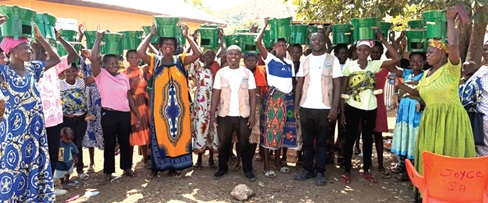
The International Union for Conservation of Nature (IUCN) Ghana has begun distributing 5,000 improved energy-saving cookstoves to households in 14 communities across four districts in the Upper East and Upper West regions.
The initiative seeks to reduce pressure on forest resources by minimising the indiscriminate felling of trees for firewood while promoting environmental sustainability and improving the livelihoods of rural communities through access to efficient energy solutions.
The distribution exercise, which began in the Talensi District, covers four communities: Tongo-Beo, Yamerega, Awaradone and Garre. It will subsequently extend to four communities in the Builsa South District, four in the Sissala East District and three in the Jirapa District.
The intervention forms part of the Sahelian Landscapes of Opportunities (LOGMe II) project, implemented with support from the United Nations Convention to Combat Desertification (UNCCD), through its Global Mechanism, and funded by the Italian Ministry of Environment and Energy Security (MASE), in partnership with IUCN and national stakeholders.
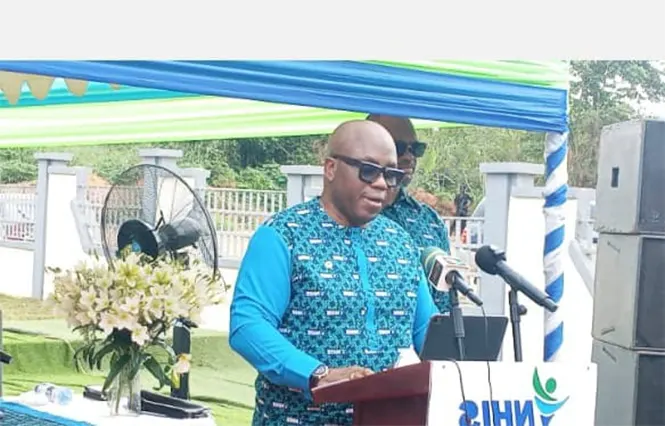
The Project Officer of LOGMe II at IUCN Ghana, Derick Sedenkor, speaking to the media during the distribution exercise at Tongo-Beo said the stoves were being allocated at the household level based on data gathered during an earlier enumeration exercise.
He explained that the exercise was intended to establish the number of households in each beneficiary community to ensure that every household received a stove.
Mr Sedenkor said the improved cookstoves consumed significantly less firewood than the traditional three-stone cooking method, which required large quantities of wood.
He said reducing demand for firewood would help protect vegetation, preserve carbon sinks and improve soil health, particularly in farming communities.
Although the stoves were not a complete solution to deforestation, he said they represented an important intervention in addressing tree felling, a major contributor to land degradation and desertification.
He urged beneficiaries to maintain and use the durable clay-and-metal stoves regularly to maximise their environmental and economic benefits.
The LOGMe II Project, being implemented in Ghana, Burkina Faso, Niger, Benin and Senegal, seeks to address land degradation, climate change and rural poverty through community-led landscape restoration and livelihood interventions.
In Ghana, it operates in the Northern, Upper East and Upper West regions, with activities including climate-smart agriculture, agroforestry, tree planting, woodlot development, farmer-managed natural regeneration and capacity-building initiatives.
Other interventions include solar-powered boreholes to improve access to water for dry-season gardening and agricultural activities.
Mr Sedenkor said the cookstoves would also reduce household members' exposure to smoke and save women time spent gathering firewood, allowing them to engage in productive economic activities.
A beneficiary, Anaba Akabasi expressed gratitude to IUCN and its partners, saying the stoves would ease the burden of searching for firewood and reduce pressure on trees.
She said her previous experience with the improved stoves had demonstrated their benefits and expressed confidence that the intervention would improve household livelihoods.
 WhatsApp


Comments (0)
No comments yet. Be the first to share your opinion!