



Godongwana wants to scrap fuel levies — but there’s an R80bn problem
Orlando Pirates and Durban City progress to CAF group stages
LGE 2026: From promises to plans – who can fix Cape Town's housing crisis?
N12 freeway near Lenasia in final stages of re-opening after protest
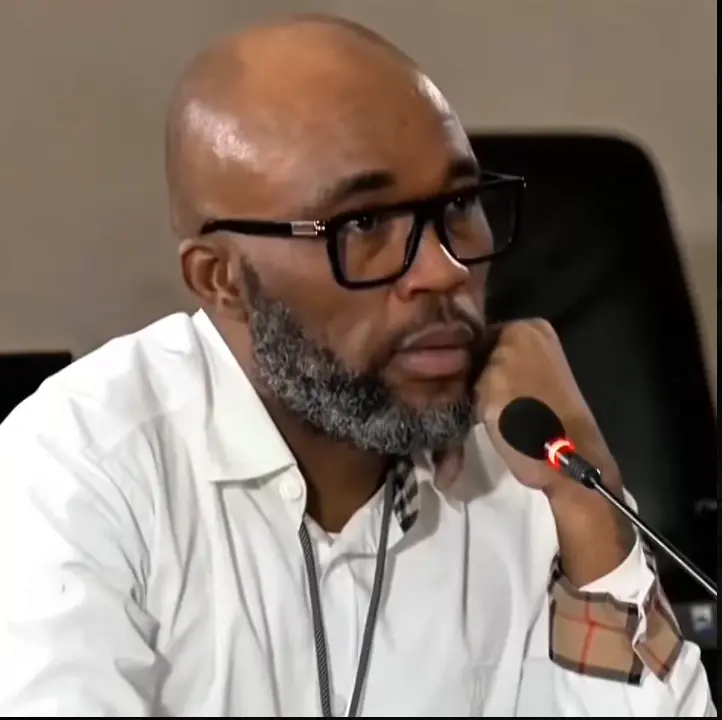
Finance Minister Enoch Godongwana says South Africa’s fuel levy system needs to change, with the long-term goal of removing levies on petrol, a move that could bring significant relief to motorists but would leave the government facing a major revenue shortfall.
Speaking to 702 following last week’s Mid-Term Budget, Godongwana said government needed to find a way to phase out the general fuel levy, which generates about R80 billion in revenue, while also reconsidering how the Road Accident Fund is financed.
“The long-term plan is to remove levies on petrol,” Godongwana said.
The minister’s remarks come as South Africans contend with rising fuel and food costs, with international conflicts and supply chain disruptions continuing to place pressure on the economy.
But while Godongwana acknowledged the need to rethink the country’s fuel levy system, he also highlighted the difficult choices government would face in replacing the revenue those levies generate.
MTBPS 2026: Godongwana reflects on ‘confusion’ at the beginning of his tenure
Godongwana makes big announcements on fuel relief, oversight of municipalities, fiscal anchor
Godongwana expected to announce further reform to municipalities
Treasury plans tougher municipal finance rules, with closer oversight of spending and appointments
Godongwana identified two levies that contribute to the price of petrol.
The first is the Road Accident Fund levy, which he said amounts to R2 per litre.
The minister said government needed to change the way the Road Accident Fund is financed, rather than relying on the levy.
“It’s R2 per litre. Just removing the Road Accident Fund, you’ll realise a major decrease in the price of fuel,” he said.
The second is the general fuel levy, which contributes revenue to the national fiscus.
Godongwana said this levy generates about R80 billion, making its removal a far more complicated proposition.
“We’ve got to find a way of phasing it out. But in doing so, we will be losing about R80 billion,” he said.
He acknowledged that government would need to consider how to make up the shortfall.
“How are we going to close that gap? That’s a discussion we probably will have.”
Godongwana did not announce a timetable for removing the levies or outline a detailed plan for replacing the revenue.
He also expressed support for improving South Africa’s domestic refining capacity, arguing that the country should not have to rely on imports of refined petroleum products.
“Refining capacity is quite important. You can’t be relying on imports of refined products. That’s a security question for the country,” he said.
Why Godongwana is standing firm on fiscal consolidation
The fuel levy debate comes against the backdrop of the government’s broader efforts to stabilise public finances.
Godongwana said the pressure to spend more was a difficult challenge but argued that the country’s revenue and debt levels placed limits on how much government could borrow.
He compared the situation to an individual trying to secure a home loan.
“If you want to buy a house… the bank is going to look at affordability,” he said.
He said government faced a similar reality, with markets reacting to high revenue and debt levels.
The minister acknowledged that the debate around fiscal consolidation was often ideological, particularly among those who believe government should borrow more to fund public services and stimulate economic activity.
But he said practical experience had changed his own thinking.
Godongwana recalled that when he joined government in 1997, he was still critical of the Growth, Employment and Redistribution (GEAR) strategy and its focus on reducing the budget deficit.
At the time, he was fighting against the emphasis on deficit reduction during discussions between national and provincial finance ministers.
He recalled how then finance minister Trevor Manuel challenged provincial representatives over their spending.
“Those days in 1997, it was a big number. Ten billion combined, all provinces have not spent it,” Godongwana said.
“And he asked me the question, ‘Why should I go and borrow money when money is sitting in the bank?’”
Godongwana said the experience taught him that criticism of fiscal consolidation could look very different when confronted with the practical realities of government.
Corruption and waste remain major problems
The minister agreed that corruption and the mismanagement of public money remained significant problems.
He also acknowledged concerns that those responsible for financial mismanagement were not facing sufficient consequences.
But Godongwana argued that government faced challenges beyond simply having insufficient money.
He pointed to departments’ inability to spend the funds allocated to them, saying government was rescheduling R8 billion in infrastructure spending this year because departments could not absorb the money.
“This year, we are rescheduling R8 billion of infrastructure spending, which could not be absorbed by departments,” he said.
“So, what that means is that your problem is not a money issue, as people are trying to suggest. That’s one issue, the capacity to spend. The second issue is corruption. Clearly, it is a major problem.”
Godongwana said responsibility for consequence management rested with the relevant departments and their leadership.
He also pointed to proposed amendments to the Municipal Finance Management Act, saying these were intended to make it possible to hold individuals accountable for financial mismanagement at municipal level.
He said the constitutional structure of government limited Treasury’s ability to intervene directly in municipalities.
The pressure of running South Africa’s finances
Godongwana also offered a glimpse into the personal toll of the budget process.
He described a cycle that begins again in July, shortly after the previous budget has been completed, with the finance minister having to negotiate with colleagues across government over competing spending demands.
He said departments had requested an additional R717 billion over the Medium-Term Framework, including an average of about R226 billion for the following year.
The process of having to reject spending requests and make difficult choices was taking its toll, he acknowledged.
“In the process of trimming and fighting, it’s taking a toll on you because… people think that there’s some money somewhere within a port which we are trying to hide.”
Godongwana said the government was transparent about the money it collected and borrowed.
He also highlighted the cost of servicing the country’s debt, saying government had previously spent more on debt servicing than on any other budget item.
“Almost two billion per week,” he said when asked how much government was borrowing.
Despite the challenges, Godongwana said he remained convinced that government had steered the country in the right direction.
He said the Mid-Term Budget marked a shift towards growth-enhancing activities, while maintaining the country’s fiscal targets.
The minister said government was looking at ways to increase economic growth, including through mining and other sectors.
He argued that South Africa’s improved credibility with financial markets was helping to reduce the cost of borrowing.
Godongwana compared South Africa’s borrowing costs with those of Mexico, which he said remained investment grade, while South Africa was rated below investment grade.
He said South Africa’s borrowing costs were lower because the country had demonstrated credibility with markets.
“That helps because the cost of borrowing also consumes what you have,” he said.
Godongwana said government was now shifting its focus towards social services.
But he acknowledged that South Africa’s economic growth remained far below what was needed to make a meaningful difference to unemployment.
The minister said the government’s ideal was to achieve growth above 3%, which could begin to absorb unemployment.
He also said government was working on a strategy to address municipal infrastructure problems, including ageing water infrastructure.
Godongwana said the country was spending too much time fixing leaks rather than rehabilitating infrastructure, and that government was beginning to consolidate water infrastructure grants into a single fund.
He said the intention was to increase the amount available each year to help municipalities upgrade their ageing infrastructure.
While the minister acknowledged that the challenges facing South Africa remained significant, he said he believed the country was moving towards a more stable fiscal position.
“Look, I’m quite convinced that we have steered the ship correctly,” he said.
Never miss a major story. Get breaking news and the latest developments from South Africa and beyond as they happen.
Take a look at the topic timeline for all related articles.
1 hour ago2 hours ago2 hours ago2 hours ago3 hours ago3 hours ago3 hours ago3 hours ago3 hours ago4 hours ago4 hours agoMore in Business22 October 2026 11:45
SARS eyes VAT automation with R6.9bn special appropriation
SARS expects R17bn more in tax revenue than originally forecast
MTBPS 2026: Godongwana reflects on 'confusion' at the beginning of his tenure
 WhatsApp
Comments (0)
No comments yet. Be the first to share your opinion!