



Ghana: Poor Waste Management Costs Ghana Over GH¢6.2bn Annually – – Report
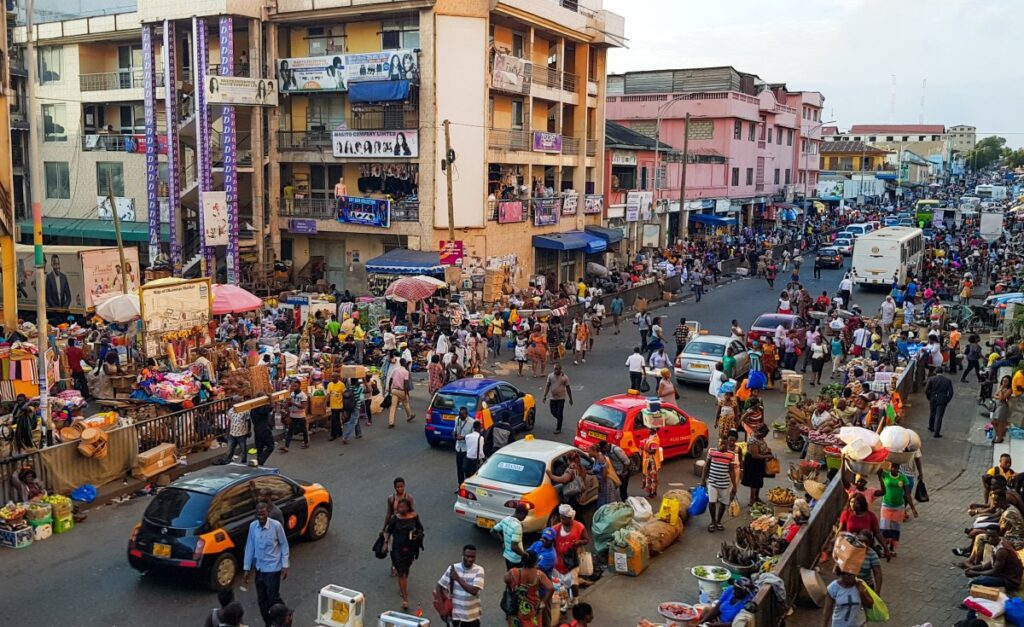
Ghana is losing more than GH¢6.2 billion every year due to poor waste management and sanitation, a new report has revealed.
The report, “Waste or Wealth? The Economic Returns to Sanitation Investment in Ghana,” indicates that the country spends far more treating diseases linked to poor sanitation than it does preventing them.
According to the study, Ghana spends about GH¢5.58 billion annually managing sanitation-related diseases such as malaria, cholera, and typhoid–illnesses often associated with dirty surroundings, choked drains, and uncollected refuse.
Beyond medical costs, the report estimates that the country loses about GH¢650 million in productivity each year as illness keeps people away from work and school. In total, approximately 31.9 million work and school days are lost annually.
Follow us on WhatsApp | LinkedIn for the latest headlines
Related Articles
Speaking at the launch of the report in Accra yesterday, the immediate past Director of the Institute of Statistical, Social and Economic Research (ISSER), Professor Peter Quartey, said sanitation must be treated as a high-return economic investment rather than merely a social obligation.
He stressed that Ghana could no longer afford to neglect the sector in view of the huge financial and human losses recorded each year.
“Sanitation is not just a social service; it is a major economic investment. If we invest properly in waste management and drainage systems, we will reduce disease, save lives and increase productivity,” Prof. Quartey stated.
He disclosed that about 107,222 people die prematurely each year from illnesses linked to poor sanitation.
Despite these enormous losses, he noted, Metropolitan, Municipal, and District Assemblies (MMDAs) collectively spend only about GH¢180.2 million annually on waste management and sanitation.
“This means we are spending far more money treating preventable diseases than preventing them in the first place. That is not sustainable for our economy,” he added.
Prof. Quartey explained that the study analysed the 2025 budgets of MMDAs and included interviews to assess both the cost of inaction and the potential benefits of increased investment.
The findings show that even at the current low level of spending, every GH¢1 invested in waste management generates about GH¢180 in benefits each year.
He added that if Ghana increases spending to match the average level of lower-middle-income countries–about GH¢1,028 per tonne of waste–the returns could be significantly higher.

Sign up for free AllAfrica Newsletters
Get the latest in African news delivered straight to your inbox
“In that case, every GH¢1 invested could generate about GH¢556 in benefits,” he said, noting that if the recommended investments are implemented between 2025 and 2032, Ghana could gain between GH¢58.1 billion and GH¢67.2 billion annually.
According to him, more than half of the projected benefits, representing 55.3 per cent, would come from savings in healthcare costs, while 44.7 per cent would result from improved productivity.
Prof. Quartey further indicated that increased investment in sanitation could reduce sanitation-related diseases by 97.4 per cent and related deaths by 81 per cent.
He warned that rapid urbanisation, population growth, and changing consumption patterns are placing mounting pressure on local assemblies and weakening their capacity to manage waste effectively.
He, therefore, called on government to increase funding for sanitation and drainage systems, prioritise high-risk urban and peri-urban communities, and strengthen institutional support for MMDAs.
BY BENEDICTA GYIMAAH
FOLLEY
Join our WhatsApp Channel now!
Follow the latest videos and updates on the official YouTube channel of Ghanaian Times.
 WhatsApp
Comments (0)
No comments yet. Be the first to share your opinion!