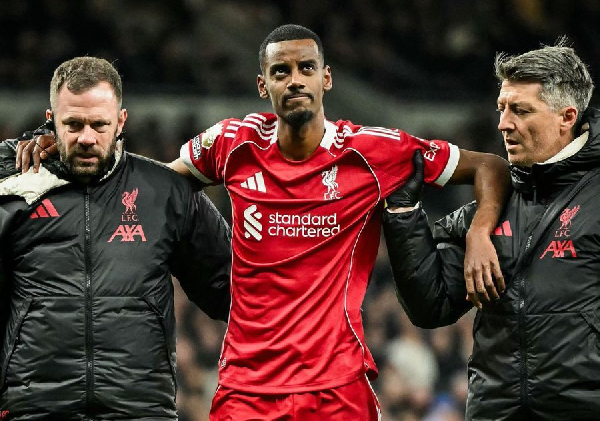
Daka landed on his neck after he tried a backflip celebration
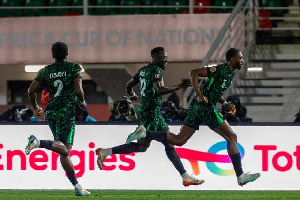
Patson Daka’s dramatic late equaliser for Zambia against Mali at the 2025 Africa Cup of Nations came with a worrying twist after the striker appeared to injure his neck during his goal celebration.
The Chipolopolo looked set for defeat at the Stade Mohammed V in Casablanca on Monday, December 22, 2025, after Lassine Sinayoko’s 61st-minute strike had put Mali in control of the Group A encounter.
Mali dominated long stretches of the match, created the better chances and were moments away from sealing all three points.
But deep into stoppage time, Zambia found a lifeline. A late delivery into the box was met by Daka, who rose highest to power a header past the Mali goalkeeper and silence the Eagles’ supporters.
Bafana Bafana strike late to sink Angola in AFCON 2025 opener
The goal sparked wild celebrations among the Zambian players and fans, knowing it had rescued a vital point.
In the heat of the moment, Daka attempted a backflip celebration, a move he has pulled off before. This time, however, it went wrong. He landed awkwardly, tumbling onto his neck and immediately clutching the area in visible discomfort.
Zambia held on for a 1–1 draw, sending them third in Group A.
Former Minister of Finance Dr Mohammed Amin Adam has maintained that the country’s lack of industrial energy – which makes electricity tariffs unreasonably elevated – could hamper efforts to industrialise the country through government’s 24-hour economy.
This comes on the back of a 9.8 percent increase in electricity tariffs and 15.9 percent increase in water tariffs – effective January 1, 2026 – announced by the Public Utilities Regulatory Commission (PURC).
The tariffs hike has been met with strong resistance from the Trade Union Congress (TUC), which warns that implementing the new rates could erode the earlier-announced 9 percent base pay increment for workers.
The former minister made these comments at the launch of a book, co-authored by a technical adviser at the Ministry of Energy and A former Executive Secretary of Public Utilities Regulatory Commission (PURC), Dr Ishmael Ackah and Dr Charly Gatete.
Speaking at the launch, Dr. Amin Adam asserted that the nation’s current energy architecture is incompatible with government 24-hour economy.
Beyond the focus on residential ‘lights on’ power, the former minister framed energy as the primary input for value addition, job creation and a tool for correcting the ever-widening trade balance.
Therefore, he argued, government’s dream of an export-led economy is “going nowhere” without deliberate policy to increase the country’s baseload and drastically reduce the cost of energy.
The former minister maintained that without an aggressive shift in energy sourcing that complements the energy mix with cost-effective but controversial options like coal and nuclear, Ghana’s dream of becoming an industrial economy will remain an illusion.
“I am not a prophet, but I can stand here and say that it won’t go anywhere. Industrialising Ghana will not be a success if we don’t have industrial energy. Where is that industrial energy?” the former minister quizzed rhetorically.
He noted that: “With coal, people have problems. Nuclear, people have problems”. However, he maintained that achieving industrial-grade baseload power requires these technologies which are environmentally and socially contentious, arguing that coal is still being used globally.
The founder and former Executive Director-Africa Centre for Energy Policy (ACEP) and Deputy Minister of Energy under the erstwhile administration is not unaware of the energy problems the country faces.
He emphasised that Ghana lacks reliable, high-capacity and affordable baseload power required to run factories and large-scale processing plants 24-hours a day. He therefore trashed persistent calls for the addition of renewable energy into the country’s energy mix – saying while it is crucial for climate goals, it is unreliable.
“Everybody is talking about renewable energy. That doesn’t give us industrial energy,” he asserted.
The former minister also maintained that the nation’s gas-to-power ambitions are impacted by infrastructure and supply constraints. “We need to look at sources that guarantee industrialisation so we can exploit the many, many, many resources that we have around the country,” the former minister stressed, pointing to Ghana’s vast mineral and agricultural wealth that remains largely unprocessed for export.
“You cannot achieve this if we don’t produce industrial energy,” he said.
He acknowledged that though Ghana has the technical people its power sector remains in perpetual crisis, threatening the industrial ambition.
“Energy is a very sensitive political subject. It is the only sector that can cause the defeat of a government,” he noted.
Due to this, he said, the system is “politically captured by the uninitiated” – whereby final decisions are made by individuals lacking sector expertise, often overriding technical and commercial advice for short-term political survival.
Former Minister of Energy Dr. Matthew Opoku Prempeh argued that the lack of intelligent, context-driven regulation further compounds the energy situation in Africa, especially Ghana; stating that regulation is not only a bureaucratic end but also a “means” to build investor confidence and earn public trust.
“Africa does not have the luxury of copying and pasting foreign regulatory models,” he stated, calling for regulators who are innovative to come up with homegrown regulations that reflect the African context.
He further urged regulators to be independent and not cave-in to political pressures. “An independent regulator listens but is not captured, consults but is not controlled, respects government policy but must surrender its mandate to seek out the public interest,” he explained, emphasising that independence must be matched with responsibility and transparency.
He took aim at the Trade Union Congress (TUC), criticising them for sitting on the board of PURC and then coming out to publicly condemn it’s decisions after taking part in approving them.
“You cannot be part of the table to make a decision and when that qdecision is made, you quickly go out and shout,” he said.
‘Energy Regulation in Africa: Dynamics, Challenges and Opportunities’ compiles the inputs of 71 energy regulation experts from 40 countries across Africa, including a chapter written by current Minister of Energy John Abdulai Jinapor.
The book offers a deep dive into nuances of Africa’s energy sector regulation with a compelling diagnosis of challenges and opportunities in the sector and proffers workable solutions to the sector’s challenges.
Accra, Dec. 23, GNA – The Constitutional Review Committee has recommended that the Chief Justice should hold the position for a single, non-renewable term of 10 years or upon attaining the age of 70, whichever is earlier.
It proposed that the Chief Justice retires with full entitlements of the office.
It said a Chief Justice whose tenure ends before attaining 70 years could be elected to
continue sitting as a Justice of the Supreme Court.
Touching on other Justices of the Superior Courts, the Committee recommended that all Justices of the Superior Courts should hold their tenure until retirement, death, or resignation, whichever comes first.
It said for Justices of the Supreme Court and Court of Appeal, the mandatory retirement age should be 70 years.
It noted that for High Court Justices, the mandatory retirement age should be set at 65.
With regards to the process for removal of Justices of the Superior Courts, the Committee recommended that the grounds for removal should be the same for all justices.
It said the grounds for removal should include mental or physical incapacity, incompetence, gross misconduct, violation of the judicial code of conduct, or bankruptcy.
With regards to the removal process for the Chief Justice, the Committee proposed that an aggrieved person might submit a confidential petition for the removal of the Chief Justice to the Council of State.
It said within 7 days of receipt, the Council should refer the petition to its Judicial Committee to determine its prima facie merit.
“If insufficient grounds are found, the petition shall be dismissed. If sufficient, the Council shall notify the President and the Speaker of Parliament,” the report said.
“The President may suspend the Chief Justice pending investigation,” saying, the Council of State shall appoint a five-member tribunal made up of one person appointed by the President who shall not be a lawyer or currently holding any public or party office; one person
appointed by the Speaker of Parliament who shall be a former Member of Parliament (MP), not currently holding any public or party office; one person appointed by the Public Service Commission; one person appointed by the National House of Chiefs; and a former justice of the Supreme Court appointed by the Judicial Council.
It said the tribunal shall conduct its hearings in camera and submit its findings within 60 days chaired by the former Justice of the Supreme Court.
With regards to the removal process of other Justices of the Superior Courts, the report said an aggrieved person might submit a confidential petition to the Council of State seeking the removal of a Justice of the Superior Court.
It said the Council shall refer the petition to its judicial committee within seven days to
assess its prima facie merit. If the petition is without merit, it should be dismissed.
It said if it meets the threshold, the Council should notify the President, Speaker of Parliament, and Chief Justice.
It noted that the President might suspend the Justice pending the outcome of the inquiry.
It said the Council of State shall appoint a five-member tribunal with two former Superior Court judges (nominated by the Judicial Council), a non-lawyer (nominated by the President), a former Public Services Commissioner (Council’s nominee), and a nominee from the National House of Chiefs.
The report recommended that in-camera hearings are conducted, and the tribunal submits a report within 60 days.
The Ghana Private Road Transport Union (GPRTU) has urged passengers to resist paying fares above the approved rates, stressing that any unauthorized increase by drivers is illegal and punishable under the law.
Public Relations Officer for the union, Abass Imoro, made the appeal in an interview with Channel One TV on Tuesday, December 23, highlighting the need for both operators and passengers to strictly adhere to fare regulations.
He explained that any adjustment to fares is formally communicated to the public to ensure everyone is informed, and urged security agencies and law enforcement to take action against operators who violate approved rates.
“Each time we adjust fares, either up or down, a formal communiqué is issued by the Ministry of Transport and disseminated through the media. Since the 15 percent reduction, fares have remained unchanged.
“If anybody on their own decides to raise the fare, they are violating the law. It is the duty of law enforcement to take action against such practices. As a union, we do not support this behaviour; it amounts to cheating.
“Passengers must resist paying more than the approved fare. If you refuse to board a vehicle charging beyond the regulated rate, operators will be compelled to comply with the law,” he said.
Imoro’s comments come amid growing complaints from commuters about drivers charging arbitrary fares in several urban areas, raising concerns about monitoring and enforcement of public transport regulations.
Prang in the Bono East Region will once again become the spiritual hub of the Tijannia Muslim community as it hosts the Annual Quranic Recitation, popularly known as the Prang Tilawa, from December 24 to December 26, 2025.
The revered religious gathering, which has been held continuously for over six decades, was instituted in 1963 by the late Sheikh Abdullahi Ahmed Maikano Jallo, the first Chief Imam of the Ghana Armed Forces. Since its inception, the event has grown into one of Ghana’s most significant Islamic assemblies, drawing thousands of participants from across the country and beyond.
The late Sheikh Abdullahi Ahmed Maikano Jallo established the annual Quranic recitation at a time when Ghana was still in its early years as an independent nation. His vision went beyond ritual devotion; it was deeply anchored in national and spiritual aspirations.
The primary objectives of the Prang Tilawa include prayers for lasting peace, security, stability, and prosperity for Ghana, the pleasure and blessings of Allah, and the sanctity, preservation, and promotion of Islam within the Ghanaian context. Over the years, these intentions have remained central to the event, giving it enduring relevance in both religious and national life.
Today, the Prang Tilawa stands as a monumental religious undertaking. During the three-day program, participants collectively recite the entire Holy Quran multiple times, alongside the repetition of specific verses and supplications that run into the millions. These acts of devotion are offered with the belief that collective prayer brings divine mercy, guidance, and protection for the nation.
The event regularly attracts high-profile personalities, including traditional rulers, Islamic scholars, political leaders, and representatives from various faiths, underscoring its national significance.
Following the passing of its founder, the annual recitation has been sustained by his successors, notably Sheikh Ahmad Abul Faidi Maikano Jallo, widely known as Khalifa Rahma. Under his leadership and that of other senior clerics, the event has maintained its spiritual depth while adapting to contemporary challenges facing society.
Tilawa has become a platform for preaching peaceful coexistence and interfaith harmony. Religious leaders consistently emphasize the Quran’s inherent message of peace, tolerance, and mutual respect, calling on Muslims to live harmoniously with people of other faiths.
This message has resonated strongly in Ghana’s multi-religious society, reinforcing the country’s reputation as a beacon of religious tolerance in the sub-region.
As preparations intensify for the 2025 edition, expectations are high that the Prang Tilawa will once again serve as a unifying spiritual force, bringing together diverse communities in prayer for Ghana’s peace and progress.
For residents of Prang and pilgrims alike, the annual Quranic recitation is more than an event—it is a legacy of faith, patriotism, and devotion that continues to shape Ghana’s spiritual landscape.
The Ooni of Ife, Oba Adeyeye Ogunwusi, has hosted Afrobeats star Asake and his mother at the ancient palace in Ile-Ife, describing the singer’s visit as a symbolic homecoming.
In a video shared on his official X handle, the monarch referred to the ‘Lonely at the Top’ hitmaker as “my son,” praising his global success and strong Yoruba identity.
The footage showed Asake performing one of his hit songs for the Ooni and other dignitaries during the visit, after which the traditional ruler presented the artiste with an artwork from his personal collection.
In a caption accompanying the video, the Ooni said the visit brought him great joy, noting that Ile-Ife played a key role in shaping Asake’s formative years.
The post reads: “Today fills my heart with deep joy as I welcome my son, Asake, back home to Ile-Ife. This sacred land is where he spent many of his formative years, moulded by hard work, discipline, and quiet determination.
“To return home after such a journey is a blessing, and I receive him with pride and open arms.”
Ooni also lauded Asake’s mother for her support and resilience, describing her as a pillar behind the artiste’s rise to global prominence.
The monarch further paid tribute to Asake’s team and acknowledged Obafemi Awolowo University for contributing to the development of the musician, whom he described as a cultural ambassador projecting Yoruba heritage on the global stage.
“Asake’s mother has been his steadfast pillar, and I am equally delighted to welcome her back home while extending my heartfelt gratitude to her for nurturing him with love, resilience, and strength to reach this remarkable stage of life.
“Significantly, I pay special tribute to Lala and the entire crew who stood faithfully by my son, your dedication reflects the true spirit of Omoluabi.
“I also express my sincere appreciation to Professor Toyin Ogundeji and Obafemi Awolowo University for nurturing one of the greatest musical icons of our time a cultural ambassador who has carried Yoruba heritage onto the global stage.
“Today, my son has returned home. A global star has come back to his roots. Ile-Ife receives you with pride.”
NPP has formed a committee to review final report of CRC
The opposition New Patriotic Party (NPP) has established a joint committee to examine the final proposals submitted by the Constitutional Review Committee (CRC) to the President and to advise the party’s National Council on its official stance.
The National Organiser of the NPP, Henry Nana Boakye, disclosed the development on his Facebook page on Tuesday, December 23, 2025, following the submission of the CRC’s final report to President John Dramani Mahama on Monday, December 22, 2025.
Read the full report of the Constitutional Review Committee
“As part of participating in the Constitutional Review process, the leadership of the NPP constituted a joint committee led by Anyimadu, Ranking Member of the Constitutional and Legal Affairs Committee of Parliament, and Frank Davies Esq., Chairman of the NPP’s Constitutional & Legal Committee, to present proposals to the CRC,” Nana Boakye stated.
He urged party members to exercise caution in their public commentary on the CRC’s proposals as the internal review process continues.
“All party members are encouraged to be cautious with their commentary on the proposals of the CRC as we await the outcome of the joint committee’s study,” he said.
Nana Boakye further assured that the NPP’s official position on the final proposals would be communicated in due course.
“The position of the party on the final proposals submitted yesterday will soon be made public,” he added.
The joint committee comprises several senior party figures and Members of Parliament, including Hassan Tampuli, OB Amoah, Nana Agyei Baffour Awuah, Kojo Oppong Nkrumah, Gary Nimako Esq., Martin Adjei-Mensah Korsah, Dr Mahama Tiah Abdul-Kabiru, Fati Abubakar, and Hanifa Adjoa Yahaya.
See the post below:
JKB/MA
Attorney General Dr Ayine announces charges in high-profile corruption case
Dr. Bryan Acheampong, a flagbearer hopeful of the New Patriotic Party (NPP), has attributed the party’s defeat in the 2024 general elections to challenges related to both governance and its presidential candidature.
Speaking on Face to Face on Channel One TV on Tuesday, December 23, in an interview with Umaru Sanda Amadu, Dr. Acheampong said the election outcome exposed deeper weaknesses within the party beyond campaign strategy.
“We went to the 2024 elections, and the results that came out portrayed two things. We had a governance challenge, and we also had a candidate challenge,” he said.
According to the Abetifi MP, the governance challenge was evident in the disparity between the performance of parliamentary candidates and that of the party’s presidential candidate in many constituencies.
“And the governance challenge was seen from the performance of the parliamentary candidates’ level. And if you come to the presidential candidate [Dr. Mahamudu Bawumia], in most constituencies of this country, the parliamentary candidates did far better than the presidential candidate in the same constituencies, in the same elections, in the same political party,” he stated.
Dr. Acheampong cited his own constituency as an example of the trend.
“In my case, I did better than my presidential candidate,” he said.
He further pointed to the Okaikwei South constituency, where the party’s parliamentary candidate, Dakoa Newman, lost by about 5,000 votes, while the presidential candidate recorded a wider margin of defeat.
“In Okaikwei South, the parliamentary candidate lost by about 5,000 votes, while the presidential candidate lost by roughly 11,000 votes,” he noted.
According to him, this pattern was replicated across the country and marked an unprecedented development in Ghana’s electoral history.
“And that almost cuts across the whole country. If you put all the parliamentary results together, it beat the presidential candidate by almost 350,000 votes. This has never happened in the country before,” he said.
The NPP lost the 2024 presidential election to former President John Dramani Mahama, marking the party’s return to opposition.
“No anti-media laws under my watch” – Bagbin assures Journalists
The Ghana High Commissioner to the United Kingdom, Her Excellency Sabah Zita Benson, has embarked on a strategic business and market outreach in Birmingham, engaging Ghanaian entrepreneurs as part of efforts to strengthen economic ties and deepen collaboration between Ghana and the UK.
The initiative is aligned with the establishment of the Ghana Trade House in the UK, a platform created to promote Ghanaian goods and services, facilitate investment opportunities, and encourage active participation of the Ghanaian diaspora in national development.
During the visit, Madam Benson held discussions with Ghanaian business owners to gain insights into their experiences, challenges, and aspirations, while exploring practical ways the Trade House can support business growth and improve access to the UK market.
Speaking at the engagement, the High Commissioner underscored the importance of partnership and dialogue, describing the Trade House as a strategic hub for trade promotion and business development.
“This initiative is a testament to our commitment to fostering economic collaboration and ensuring that Ghanaian businesses in the UK have the necessary support to thrive. Through partnership and dialogue, we can build stronger ties and create opportunities for our entrepreneurs to succeed,” she said.
The outreach forms part of a broader strategy by the Ghana High Commission to promote the export of Ghanaian products and services, while creating avenues for investment and collaboration between the Ghanaian and UK business communities.
Mrs. Benson also highlighted the critical role of the Ghanaian diaspora in national development, urging them to take advantage of opportunities offered by the Trade House to grow their businesses and contribute to Ghana’s economic progress.
The Ghana Trade House, inaugurated as a central hub for trade and investment promotion, is expected to improve access for Ghanaian entrepreneurs to the UK market, showcase the diversity of Ghanaian products, culture, and innovation, and further strengthen bilateral trade relations between Ghana and the United Kingdom.
Lands Ministry: 50 large-scale mining companies face license revocation
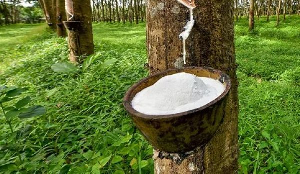
The Rubber Farmers Association of Ghana (RUFAG) has described calls for a complete ban on raw rubber exports as false and misleading.
A recent statement by Ghana Rubber Estates Limited (GREL) – a private company – and the Rubber Processors Association of Ghana (RUPAG) alleged that exports of raw rubber are unchecked and hence undermine local processing capacities, threaten the country’s industrialisation agenda to create jobs and allegedly cause annual losses of up to US$100million.
At a press conference in Accra on December 22, 2025, leadership of RUPAG described the allegations as baseless and not reflecting realities of the country’s rubber industry.
An executive member of RUFAG, Michael Nyarku, told B&FT that the push for an export ban by some persons is not about protecting the national industrialisation agenda but a deliberate attempt to monopolise the market, suppress competition and force farmers to sell rubber cup lumps at artificially low prices.
The narrative that processors are the main drivers of employment in the sector, according to RUFAG, is grossly distorted as over two million dependents rely on incomes generated from rubber farming activities for livelihoods against the fewer than 1,000 workers in the various processing companies.
According to RUFAG, the rubber farming and trading ecosystem comprise over 300,000 rubber tappers, 200,000 carriers and loaders and about 150,000 tricycle operators involved in rubber transport.
Government to restrict raw rubber exports to save industry
Nyarku explained that any policy that leads to monopoly pricing and reduced farm-gate prices will not protect jobs but rather destroy them, deepen rural poverty and undermine social stability in rubber-growing communities across the country.
“RUFAG firmly believes that competition, not protectionism, is what will drive efficiency, fair pricing and sustainable growth in the rubber industry. Ghana’s industrialisation agenda must be inclusive and farmer-centred, not driven by narrow corporate interests,” he said.
The Association said allegations that exports of raw rubber are ‘unchecked’ are not true as the Tree Crop Development Authority (TCDA) requires all exporters of unprocessed rubber, cashew and shea to be registered and licensed, with permits issued before export.
“The TCDA has also established a permanent presence at the ports to monitor compliance in collaboration with GRA and the port authorities, making the ‘unchecked’ narrative an entirely false story.”
According to RUFAG, the export market sustained farmers’ livelihoods during COVID-19 when local processors halted their purchase of rubber.
This situation pushed farmers to the brink of abandoning their farms, but exporters provided an alternative market and prevented near-collapse of rubber farmers’ livelihoods.
“It is evident that multiple markets provide security to farmers and prevent unnecessary hardship and youth unemployment, which are major reasons for the upsurge of illegal mining.”
All you need to know about Ghana’s new vehicle number plates |BizTech:
Amadou Elizabeth Aminata, known as Jarvis of Jadrolita, is a Nigerian TikTok personality.
She has publicly addressed the end of her relationship with fellow content creator Habeeb Hamzat, known as Peller.
The breakup was confirmed by Jarvis following a recent accident involving Peller.
Nigerian TikTok personality Amadou Elizabeth Aminata, widely known as Jarvis of Jadrolita, has spoken publicly about the end of her relationship with fellow content creator Habeeb Hamzat, also known as Peller.
The Member of Parliament for Abetifi and New Patriotic Party (NPP) presidential aspirant, Dr Bryan Acheampong, has vowed to restore discipline within the party if elected flagbearer.
Speaking on JoyNews, Dr Acheampong said the absence of consequences for misconduct has contributed to a breakdown of discipline within the NPP.
“People are now allowed to say whatever they want on any platform, and there are no consequences for those actions. This is breaking down discipline in our party,” he said.
He assured party members that under his leadership, public insults and unrestrained attacks would no longer be tolerated.
“I will restore discipline. I can assure you that those who go around insulting everyone, regardless of whom they support, will no longer find space in our party from 1 February, if I become the candidate on 31 January,” he stated.
The Abetifi MP stressed that discipline within the party must be enforced without delay.
“Leave the details to me, but I can assure you that if I am elected on 31 January, discipline will be restored in the NPP from 1 February. It cannot continue the way it has been,” he added.
He said his first step would be to unite the various factions within the party.
“First of all, we will bring all the factions together, lay down our tools, and begin conversations about building bridges and restoring discipline in our party. That process will start on 1 January 2026,” he said.
Dr Acheampong emphasised the need for firm and decisive leadership to rebuild trust within the party.
“If there is a leader they can trust—one who will not remain silent or merely nod in the face of wrongdoing—I will stand for something, take responsibility, and ensure that discipline runs through our party from top to bottom,” he added.
DISCLAIMER: The Views, Comments, Opinions, Contributions and Statements made by Readers and Contributors on this platform do not necessarily represent the views or policy of Multimedia Group Limited.
DISCLAIMER: The Views, Comments, Opinions, Contributions and Statements made by Readers and Contributors on this platform do not necessarily represent the views or policy of Multimedia Group Limited.
The Speaker of Parliament, Alban Sumana Kingsford Bagbin, has assured the media fraternity that no law will be passed to stifle the work of journalists while he remains in charge of the legislature.
The assurance was conveyed in a speech read on his behalf by the Member of Parliament for La Dade-Kotopon and Deputy Minister for Local Government, Chieftaincy and Religious Affairs, Rita Naa Odoley Sowah, at the 3rd Annual Dinner Night of the Ghana Journalists Association (GJA) in Accra on Monday, December 23.
Bagbin acknowledged concerns within the media landscape that laws intended to regulate digital communications are increasingly being used to harass and intimidate journalists, undermining their work. He added that existing legislation posing a threat to press freedom would also be reviewed.
The assurance comes amid growing worries over the use of electronic communications laws to target media practitioners. Several journalists at the event recounted arrests, interrogations, and legal actions linked to online publications and social media commentary arising from their professional duties.
The GJA reaffirmed its stance that while ethical and responsible journalism is non-negotiable, legislation must not undermine constitutional guarantees of press freedom.
Bagbin stressed the importance of balancing national security with freedom of expression, noting that a free and independent media is a cornerstone of Ghana’s democratic governance.
The dinner night, which brought together journalists, lawmakers, and key stakeholders, concluded with renewed calls for continued engagement to ensure electronic communications laws are implemented in a manner that protects journalists and strengthens democracy.
The Korlebu Teaching Hospital has given owners of unclaimed bodies up to January 18 to reach out to them or they will conduct a mass burial for such bodies.
The Hospital made the intention known in a released communique which Gh Page has sighted across social media platforms.
According to the hospital, “The Hospital Mortuary is currently congested and has reached full capacity.
The Attorney-General and Minister of Justice (A-G), Dr Dominic Ayine, has announced the commencement of criminal prosecutions against the New Patriotic Party’s (NPP’s) Ashanti Regional Chairman, Bernard Antwi Boasiako, also known as Chairman Wontumi, and the founder of the Liberal Party of Ghana (LPG), Percival Kofi Akpaloo, for separate major alleged fraud cases involving state funds.
Addressing a press briefing in Accra yesterday, the A-G also provided an update on the government’s broader anti-corruption drive under the Operation Recover All Loot (ORAL) initiative.
Wontumi Farms case
Dr Ayine detailed that the Economic and Organised Crime Office (EOCO) had concluded investigations into Wontumi Farms Limited, a company solely owned by Chairman Wontumi.
The probe revealed that in December 2017, Mr Boasiako applied for a GH¢18 million loan from the Ghana Exim Bank under the Mining Alternative Livelihood Initiative, purportedly to cultivate maize on 100,000 acres of land and employ young people in Asare Nkwanta in the Ashanti Region.
The company, the A-G alleged, was not legally registered at the time of the application.
In spite of that, Exim Bank approved a facility of GH¢18.73 million, which included a grant component of over GH¢6.7 million.
Investigations established that Mr Boasiako allegedly failed to meet key pre-disbursement conditions, including providing a database of workers for a biometric payroll system.
A central finding was that Chairman Wontumi allegedly forged a document from an equipment dealer, Kas-Sama Enterprise.
Dr Ayine said Mr Boasiako altered a proforma invoice to look like a receipt, purportedly showing payment of GH¢4 million for farm machinery, including bulldozers and excavators, which were never purchased.
“It is clear from our investigations that Chairman Wontumi and his company made fraudulent misrepresentations to Exim Bank, forged a receipt in order to deceive Exim Bank,” the A-G stated.
Consequently, Wontumi Farms Limited and its directors will be prosecuted for defrauding by false pretences, forgery and causing financial loss to the state to the tune of GH¢24.25 million (principal plus interest).
Akpaloo, COCOBOD Feeder Roads case
In a second case, the A-G alleged fraud involving Percival Kofi Akpaloo.
EOCO investigations revealed that Mr Akpaloo allegedly cloned a legitimate company, Pomaa Universal (Gh.) Ltd, owned by Akua Pomaa, which had a GH¢29.5-million COCOBOD feeder road contract.
Mr Akpaloo secretly registered a similarly named entity, Pomaah (with an ‘h’) Universal (Gh.) Ltd, and between December 2022 and June 2024, collected eight COCOBOD cheques worth over GH¢3.1 million issued to the legitimate company and deposited them into his cloned company’s account, the Attorney-General alleged.
“Akua Pomaa was unaware of both the existence of Pomaah Universal (Gh.) Ltd and the diversion of funds until COCOBOD contacted her,” Dr Ayine said.
She also alleged that Mr Akpaloo forged her signature on the contract.
Mr Akpaloo, his company, Pomaah Universal, and his spouse, Delvine Akpaloo, will face charges in January 2026 for stealing, forgery and money laundering.
Update on ORAL
Providing an update on the wider ORAL investigations, the A-G confirmed that following his earlier briefing on the National Service Authority (NSA) scandal, the Auditor-General had issued disallowance and surcharge notices to implicated officers.
“After 14 days, if they fail to show cause, the money becomes a debt due and owing to the state, and I will proceed to take civil action to recover the sums involved,” he stated, warning of attachment of properties.
Dr Ayine gave assurance that the ORAL investigations were progressing robustly, with the aim of building cases that met the standard of proof for criminal trials.
The A-G’s announcements signal a continued crackdown on high-profile alleged corruption, with the state preparing to pursue both criminal convictions and civil asset recovery.
Singapore based education rankings platform Schoolbell.net has published its annual list identifying the 10 best private schools in Ghana for 2025, with Ghana International School claiming the top position with a contextual reputation score of 100.0. The rankings, released on December 21, 2025, evaluate schools based on online credibility, visibility, and trustworthiness to help parents navigate enrollment decisions.
Ghana International School, located at Cantonments in Accra, has maintained its position as the country’s leading private educational institution since its establishment in 1955. The school is the first and only international school in Ghana to receive dual accreditation from both the Council of International Schools (CIS) and the New England Association of Schools and Colleges (NEASC). The institution serves students from diverse backgrounds across its four departments spanning infant, junior, and lower and upper secondary education.
DPS International Ghana secured second place with a contextual reputation score of 99.7, followed closely by American International School, Ghana at 98.9. American International School, Ghana operates as an International Baccalaureate (IB) institution offering programs from Pre K3 through 12th grade, focusing on developing 21st century skills to equip students for global leadership.
Brian Hill International School earned fourth position with a score of 97.5, while Galaxy International School rounded out the top five at 95.7. Galaxy International School, established in 2001, operates two campuses in Accra serving students from more than 37 countries worldwide. The school recently demonstrated strong academic performance in the 2025 West African Senior School Certificate Examination (WASSCE) results announced in early December.
The Roman Ridge School claimed sixth place with a contextual reputation score of 93.3. British International School Ghana followed at 90.4, while The Barstow School Ghana secured eighth position with 87.0. International Community School and Lincoln Community School completed the top 10 rankings with scores of 83.0 and 75.0 respectively.
Schoolbell.net employs a data driven methodology to assess private schools across Ghana. The platform’s contextual reputation scoring system analyzes publicly available information to measure each institution’s online credibility and recognition within the education community. Higher scores indicate stronger reputations among families, educators, and other stakeholders in the education sector.
Private schools in Ghana operate as independent institutions offering various international and local curricula to both Ghanaian and international students. These institutions typically provide Cambridge International Examinations, International Baccalaureate programs, British National Curriculum, or American education systems. Most ranked schools offer day programs, while some institutions like Galaxy International School also maintain boarding facilities.
The ranking considers factors including institutional accreditation status, curriculum offerings, facilities quality, academic performance records, and community engagement. Ghana International School offers Cambridge International Early Years, Cambridge Primary and Secondary programs leading to International General Certificate of Secondary Education (IGCSE) and Advanced level examinations. The school also provides a Pearson BTEC pathway in music and creative media for students aged 14 years and above.
Schoolbell.net was founded in Singapore in 2021 and initially operated as Schoolbell.sg before expanding globally to provide education rankings across multiple continents. The platform describes its mission as making educational choices clear, fast, and simple through the analysis of contextually relevant data sets.
Parents seeking additional information can access the complete Ghana 2025 private school ranking through the Schoolbell.net website. The ranking aims to increase transparency in school selection processes by providing families with reliable insights into institutional reputations and educational value.
International Community School operates campuses in both Kumasi and Accra, following the British System of Education to develop academic rigor alongside skills in inquiry, creativity, and initiative. The institution emphasizes creating well rounded learners through its independent, co educational model.
The 2025 rankings reflect the growing demand for quality private education in Ghana, particularly among expatriate families, diplomats, and business leaders seeking internationally recognized curricula. Most top tier private schools in Accra maintain annual tuition fees ranging between 5,000 and 20,000 US dollars depending on grade levels, though some institutions offer merit based or need based scholarship opportunities.
Schools ranked by Schoolbell.net typically hold memberships in regional and international education associations. Ghana International School maintains active participation in the Association of International Schools in Africa (AISA) and the Educational Collaborative for International Schools (ECIS). These affiliations support quality standards and facilitate collaboration among international educational institutions.
The publication of these rankings comes as Ghana’s private education sector continues expanding to meet rising demand for internationally accredited programs. Many ranked institutions have invested heavily in modern facilities, technology integration, and teacher development to maintain competitive advantages in Ghana’s education market.
Singapore based education rankings platform Schoolbell.net has published its annual list identifying the 10 best private schools in Ghana for 2025, with Ghana International School claiming the top position with a contextual reputation score of 100.0. The rankings, released on December 21, 2025, evaluate schools based on online credibility, visibility, and trustworthiness to help parents navigate enrollment decisions.
Ghana International School, located at Cantonments in Accra, has maintained its position as the country’s leading private educational institution since its establishment in 1955. The school is the first and only international school in Ghana to receive dual accreditation from both the Council of International Schools (CIS) and the New England Association of Schools and Colleges (NEASC). The institution serves students from diverse backgrounds across its four departments spanning infant, junior, and lower and upper secondary education.
DPS International Ghana secured second place with a contextual reputation score of 99.7, followed closely by American International School, Ghana at 98.9. American International School, Ghana operates as an International Baccalaureate (IB) institution offering programs from Pre K3 through 12th grade, focusing on developing 21st century skills to equip students for global leadership.
Brian Hill International School earned fourth position with a score of 97.5, while Galaxy International School rounded out the top five at 95.7. Galaxy International School, established in 2001, operates two campuses in Accra serving students from more than 37 countries worldwide. The school recently demonstrated strong academic performance in the 2025 West African Senior School Certificate Examination (WASSCE) results announced in early December.
The Roman Ridge School claimed sixth place with a contextual reputation score of 93.3. British International School Ghana followed at 90.4, while The Barstow School Ghana secured eighth position with 87.0. International Community School and Lincoln Community School completed the top 10 rankings with scores of 83.0 and 75.0 respectively.
Schoolbell.net employs a data driven methodology to assess private schools across Ghana. The platform’s contextual reputation scoring system analyzes publicly available information to measure each institution’s online credibility and recognition within the education community. Higher scores indicate stronger reputations among families, educators, and other stakeholders in the education sector.
Private schools in Ghana operate as independent institutions offering various international and local curricula to both Ghanaian and international students. These institutions typically provide Cambridge International Examinations, International Baccalaureate programs, British National Curriculum, or American education systems. Most ranked schools offer day programs, while some institutions like Galaxy International School also maintain boarding facilities.
The ranking considers factors including institutional accreditation status, curriculum offerings, facilities quality, academic performance records, and community engagement. Ghana International School offers Cambridge International Early Years, Cambridge Primary and Secondary programs leading to International General Certificate of Secondary Education (IGCSE) and Advanced level examinations. The school also provides a Pearson BTEC pathway in music and creative media for students aged 14 years and above.
Schoolbell.net was founded in Singapore in 2021 and initially operated as Schoolbell.sg before expanding globally to provide education rankings across multiple continents. The platform describes its mission as making educational choices clear, fast, and simple through the analysis of contextually relevant data sets.
Parents seeking additional information can access the complete Ghana 2025 private school ranking through the Schoolbell.net website. The ranking aims to increase transparency in school selection processes by providing families with reliable insights into institutional reputations and educational value.
International Community School operates campuses in both Kumasi and Accra, following the British System of Education to develop academic rigor alongside skills in inquiry, creativity, and initiative. The institution emphasizes creating well rounded learners through its independent, co educational model.
The 2025 rankings reflect the growing demand for quality private education in Ghana, particularly among expatriate families, diplomats, and business leaders seeking internationally recognized curricula. Most top tier private schools in Accra maintain annual tuition fees ranging between 5,000 and 20,000 US dollars depending on grade levels, though some institutions offer merit based or need based scholarship opportunities.
Schools ranked by Schoolbell.net typically hold memberships in regional and international education associations. Ghana International School maintains active participation in the Association of International Schools in Africa (AISA) and the Educational Collaborative for International Schools (ECIS). These affiliations support quality standards and facilitate collaboration among international educational institutions.
The publication of these rankings comes as Ghana’s private education sector continues expanding to meet rising demand for internationally accredited programs. Many ranked institutions have invested heavily in modern facilities, technology integration, and teacher development to maintain competitive advantages in Ghana’s education market.
The Speaker of Parliament, Alban Sumana Kingsford Bagbin, has assured the media fraternity that no law will be passed to stifle the work of journalists while he remains in charge of the legislature.
The assurance was conveyed in a speech read on his behalf by the Member of Parliament for La Dade-Kotopon and Deputy Minister for Local Government, Chieftaincy and Religious Affairs, Rita Naa Odoley Sowah, at the 3rd Annual Dinner Night of the Ghana Journalists Association (GJA) in Accra on Monday, December 23.
Bagbin acknowledged concerns within the media landscape that laws intended to regulate digital communications are increasingly being used to harass and intimidate journalists, undermining their work. He added that existing legislation posing a threat to press freedom would also be reviewed.
The assurance comes amid growing worries over the use of electronic communications laws to target media practitioners. Several journalists at the event recounted arrests, interrogations, and legal actions linked to online publications and social media commentary arising from their professional duties.
The GJA reaffirmed its stance that while ethical and responsible journalism is non-negotiable, legislation must not undermine constitutional guarantees of press freedom.
Bagbin stressed the importance of balancing national security with freedom of expression, noting that a free and independent media is a cornerstone of Ghana’s democratic governance.
The dinner night, which brought together journalists, lawmakers, and key stakeholders, concluded with renewed calls for continued engagement to ensure electronic communications laws are implemented in a manner that protects journalists and strengthens democracy.
NPP has formed a committee to review final report of CRC
The opposition New Patriotic Party (NPP) has established a joint committee to examine the final proposals submitted by the Constitutional Review Committee (CRC) to the President and to advise the party’s National Council on its official stance.
The National Organiser of the NPP, Henry Nana Boakye, disclosed the development on his Facebook page on Tuesday, December 23, 2025, following the submission of the CRC’s final report to President John Dramani Mahama on Monday, December 22, 2025.
Read the full report of the Constitutional Review Committee
“As part of participating in the Constitutional Review process, the leadership of the NPP constituted a joint committee led by Anyimadu, Ranking Member of the Constitutional and Legal Affairs Committee of Parliament, and Frank Davies Esq., Chairman of the NPP’s Constitutional & Legal Committee, to present proposals to the CRC,” Nana Boakye stated.
He urged party members to exercise caution in their public commentary on the CRC’s proposals as the internal review process continues.
“All party members are encouraged to be cautious with their commentary on the proposals of the CRC as we await the outcome of the joint committee’s study,” he said.
Nana Boakye further assured that the NPP’s official position on the final proposals would be communicated in due course.
“The position of the party on the final proposals submitted yesterday will soon be made public,” he added.
The joint committee comprises several senior party figures and Members of Parliament, including Hassan Tampuli, OB Amoah, Nana Agyei Baffour Awuah, Kojo Oppong Nkrumah, Gary Nimako Esq., Martin Adjei-Mensah Korsah, Dr Mahama Tiah Abdul-Kabiru, Fati Abubakar, and Hanifa Adjoa Yahaya.
See the post below:
JKB/MA
Attorney General Dr Ayine announces charges in high-profile corruption case
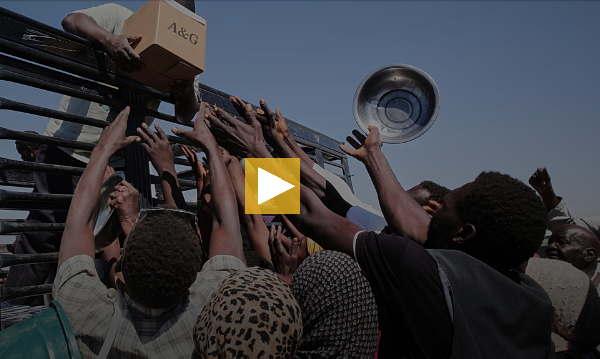
Sudanese families displaced from El-Fasher reach out as aid workers distribute food supplies
The United Nations Security Council received a briefing on Monday about the escalating violence and worsening humanitarian situation in Sudan.
Representatives from a range of UN agencies warned the Security Council of growing risks to civilians and humanitarian workers as the paramilitary Rapid Support Forces and Sudanese army battle for control of the country.
“Since the Secretariat’s last briefing on Sudan in October, the conflict has again intensified, confirming fears that the dry season will bring increased fighting and renewed attacks on civilians,” Mohamed Khaled Khiari, UN Assistant Secretary-General for the Middle East, Asia and the Pacific, told the Council.
“Each passing day brings staggering levels of violence and destruction. Civilians are enduring immense, unimaginable suffering with no end in sight. In recent weeks, the conflict has centered in the Kordofan region, where the Rapid Support Forces have made significant territorial gains. On 1 December, the Rapid Support forces captured by Babanusa in West Kordofan, followed on 8 December by their capture of Heglig in South Kordofan – an oil field and critical processing station for South Sudanese crude oil pumping to Port Sudan for exportation. Kadugli and Dilling, both in South Kordofan, are now under tightening siege conditions.”
Food insecurity
Vital services including health centers have also come under attack, even as the population faces increased levels of disease and hunger.
“If we talk about malnutrition, Sudan is one of the world’s largest food crisis,” Shible Sahbani, a representative of the World Health Organization in Sudan, said.
“And it’s a shame to say this about Sudan, because it used to be considered the food basket of the whole region. So now, as we speak, I can tell you that over 21 million people are facing high levels of acute malnutrition and food insecurity. Forty-five per cent of the population is in IPC three and plus IPC three, four, and five, which is basically famine. Sudan is also among the top four countries globally with the highest prevalence of global acute malnutrition, affecting 13.6 per cent of the population.”
The World Food Program says it will need to address the situation, which will get worse within months, as food stocks run out and fighting continues. The agency is calling for more than $660 million to help reach those most in need.
Ghana’s leading goal scorer and Africa’s top scorer in World Cup history, Asamoah Gyan, has once again given fans a glimpse of his love for music, this time from behind a microphone.
The former Black Stars captain, who has never hidden his passion for music, was captured in a small studio singing Stonebwoy’s popular song Jejereje.
In a video that has since caught the attention of fans on social media, Gyan appeared relaxed and fully immersed in the moment as he sang along to the Afro-dancehall tune.
2025 AFCON: Patson Daka ‘breaks’ neck after failed backflip celebration
Gyan is no stranger to the music scene. During his playing days, he balanced football with music, releasing his own songs and collaborating with top artistes.
One of his most notable appearances was on Ghana Girls, a hit song by the late Castro, which became an instant hit.
Although he has stepped away from active football, moments like this remind fans that Gyan’s creativity extends beyond the pitch.
The performance has sparked admiration, with many applauding his love for Stonebwoy.
Watch the video below:
FKA/JE
Watch highlights of the bout between Freezy Macbones and Jonathan Tetteh below:
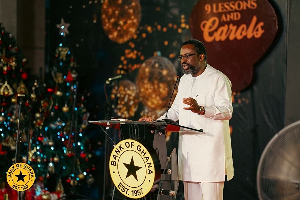
Borrowing costs could fall to about 10 percent by the end of 2026 – earlier than initially envisaged as macroeconomic conditions continue to improve, according to Bank of Ghana Governor Dr Johnson Pandit Asiama.
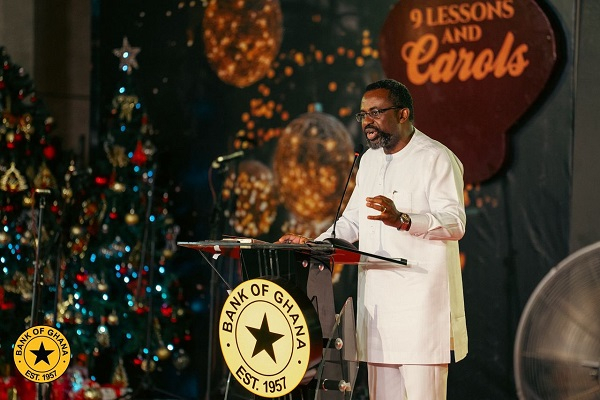
Speaking at the central bank’s year-end festival of carols and thanksgiving services, Dr Asiama said the disinflation trend, currency stability and improving growth outlook have created room for a faster decline in lending rates, even as risks persist in the global and domestic economy.
“I am on record as having said that I would like to see lending rates below 10 percent before the end of my term,” Dr Asiama told staff. “If there is one thing I pray for each morning, it is that our businesses can borrow below 10 percent, that the youth of this country who are so innovative can borrow below 10 percent and do things for themselves. I believe we are already on course.”
Governor Asiama said the Ghana Reference Rate (GRR), the lowest benchmark for lending, is currently around 15 percent – down sharply from levels seen earlier in the economic adjustment period. Based on current trends, the central bank now expects the economy could reach the 10 percent lending rate threshold by end of next year rather than within the originally projected three-year window.
“When we came in, lending rates were well beyond where they should be,” he said. “Now we are hopeful that by end of next year we could actually get to the 10 percent I was envisaging for the next three years. These outcomes are worth giving time for and we do not take them lightly.”
The Governor however cautioned that Ghana remains exposed to global shocks as a small, open economy. He pointed to geopolitical tensions, volatile trade conditions and an uneven global recovery as external risks that could quickly affect inflation, food prices and financial conditions.
“Something remote can go wrong somewhere in the Middle East or the U.S. economy and it impacts us,” he said, adding that while fundamentals have improved, risks “have not disappeared”.
He said the progress made in 2025 was a result of discipline and restraint, noting that the central bank and wider economy avoided a repeat of the instability seen in 2022. According to him, pressures were contained before they escalated into crises, helping to preserve trust in institutions and stabilise expectations.
The Governor also highlighted recent legislative reforms including amendments to the Bank of Ghana Act, which he said have strengthened governance and operational independence and reduced the risk of crisis-driven liquidity injections. Those changes, he noted, were designed to ensure that the conditions which led to the domestic debt exchange and pension losses in 2022 do not recur.
In addition, Dr Asiama said passage of the Virtual Asset Service Providers law has brought crypto-related activity into a regulated framework, allowing the central bank to manage risks rather than ignore them.
The Bank expects to continue reforms that will improve efficiency, deepen supervision and invest in staff development through a new people strategy, while also moving to unlock value from idle real estate assets held by the Bank.
“Progress has given us room to move,” Dr Asiama said. “But it also calls for vigilance. The work is not finished. This is just the beginning.”
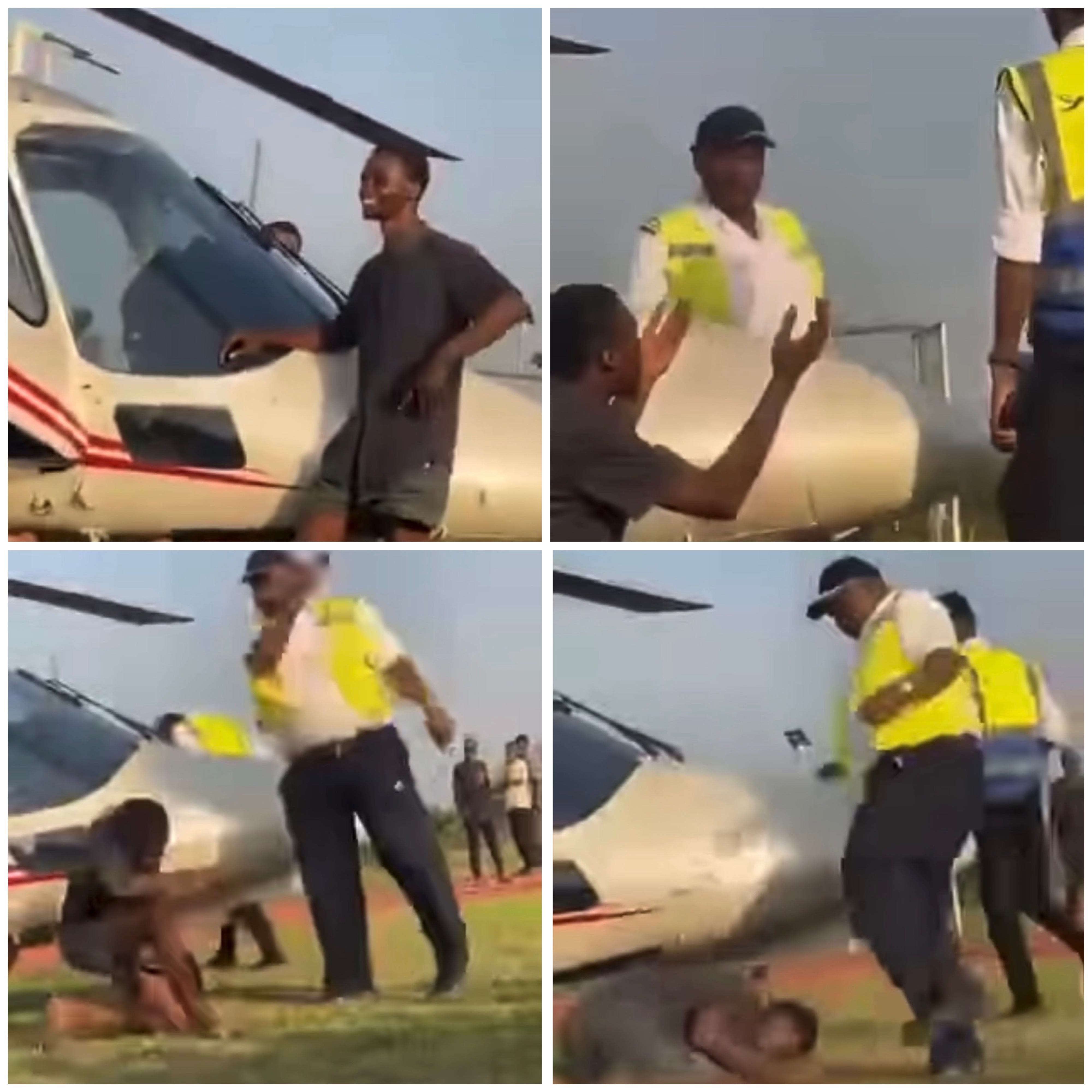
An airport official is currently receiving heat from Nigerians online after he was caught on tape ass@ulting a young man for posing beside a helicopter that flew singer Asake to his Alma Mata, Obafemi Awolowo University, Ile Ife in Osun state on Monday, December 22.
The video showed the young man posing in excitement beside the parked helicopter. One of the officials had accosted the young man and asked to leave the area where the helicopter was parked. The man in fear bowed before the officer and asked to be forgiven if he had committed any offence. The officer walked away and left the man to continue posing beside the helicopter.
Just as he left, another officer charged towards the man, kicking him with his boot and slapping him for posing beside the helicopter.
The video has sparked outrage online with many calling for the officer to be sanctioned for ass@ulting the said man.
A new set of data released by the Ghana Statistical Service has revealed striking disparities in some key health and demographic outcomes.
The District Level Thematic Reports, released on Monday, focused on birth registration, the double burden of malnutrition, the disposal of children’s stools, the unmet need for family planning among women in union, handwashing and water treatment in Ghanaian households, and excessive alcohol consumption among men.
While 11.7 percent of households nationally experience the double burden of malnutrition, several districts in the Northern, Northeastern, Savannah, Oti, and Upper East regions record prevalence levels above 20 percent, said the report.
Furthermore, the report noted that sanitation practices remain far below national targets. “Safe disposal of children’s stools ranges from just 4.1 percent to 61.1 percent across districts, well below the national target of 80 percent by 2025,” it said.
“Access to basic handwashing facilities remains limited nationwide. Only 43.5 percent of households have access to basic handwashing facilities,” the report added.
Family planning outcomes show that national progress masks deep local disparities. However, the unmet need for family planning among women in union declined from 29.9 percent in 2014 to 23.4 percent in 2022.
Deputy Government Statistician Omar Seidu called for immediate action to strengthen supply chains by establishing regional distribution hubs, deploying mobile delivery units, and investing in solar-powered refrigeration for rural clinics to ensure the availability of essential medicines for women after birth.
The Ghana Fixed Income Market (GFIM) processed GH¢1,523,068,024 across 695 transactions on Monday, December 23, 2025, with government securities continuing to dominate trading activity as institutional investors maintained strong appetite for sovereign debt instruments.
New Government of Ghana (GOG) notes and bonds led the session with GH¢744,092,039 traded through 52 separate transactions, representing approximately 49 percent of total market activity. Corporate bonds contributed GH¢360 million through four transactions, while treasury bills accounted for GH¢143,089,445 across 619 deals, demonstrating continued demand for shorter term government securities.
Sell and buyback trades involving government notes and bonds added GH¢275,886,540 through 20 transactions, reflecting institutional strategies to access temporary liquidity while maintaining exposure to government bond positions. Old GOG notes and bonds registered no trading activity during the session.
The largest single transaction of the day involved a government bond maturing February 13, 2029, with security code A6145 1838 carrying an 8.65 percent coupon. This instrument traded GH¢319,626,405 across 10 transactions at a yield of 15.25 percent and closing price of 83.9203 cedis per 100 cedis face value. The substantial volume demonstrates continued institutional confidence in medium term government securities.
In the treasury bill segment, the most actively traded security was a bill maturing June 22, 2026, which recorded GH¢31,983,079 through 28 separate transactions at a closing price of 95.4878 cedis. Current treasury bill rates around 10.6 to 10.7 percent represent their lowest levels in 14 years, reflecting Ghana’s improved macroeconomic conditions and declining inflation environment.
Corporate bond activity focused heavily on Consolidated Bank Ghana (CMB) securities. A CMB bond maturing August 31, 2026, carrying a 13.00 percent coupon, recorded GH¢300 million through three transactions at a closing price of 96.2608 cedis. This represents one of the largest corporate bond volumes recorded in December 2025, though non sovereign instruments still account for less than one quarter of total daily trading.
The highest value sellback trade involved a government bond maturing February 6, 2035, with security code A6151 1838 carrying a 9.55 percent coupon. This instrument saw GH¢167,934,520 change hands across nine transactions at a yield of 16.42 percent and closing price of 67.9883 cedis. The elevated yield on longer dated government debt indicates that investors continue demanding substantial risk premiums for holding Ghanaian government securities beyond the medium term.
Monday’s trading volume represents a significant rebound from light activity typically observed before major holidays. The session followed consistent patterns seen throughout December, where volumes have fluctuated between GH¢900 million and GH¢2.7 billion depending on government funding needs and institutional portfolio adjustments.
The Ghana Fixed Income Market has experienced a remarkable recovery in 2025 following the challenges of the Domestic Debt Exchange Programme (DDEP) implemented in 2023. Managing Director of the Ghana Stock Exchange (GSE) Abena Amoah revealed that cumulative trading volume from January to October 2025 crossed the GH¢200 billion threshold, positioning the market to achieve or exceed pre DDEP levels.
The strong performance reflects multiple positive developments in Ghana’s economy during 2025. Inflation declined from 23.8 percent in December 2024 to 6.3 percent in November 2025, reaching its lowest level since 2021 and falling below the Bank of Ghana’s target range. The cedi appreciated roughly 30 to 35 percent against major currencies throughout the year, supported by higher cocoa and gold export earnings and improved investor confidence.
The Bank of Ghana has responded to improved economic conditions by cutting its benchmark policy rate from 29 percent at the start of the year to 18 percent by November 2025, marking the first sustained monetary policy loosening after an extended tightening cycle. The cumulative 1,100 basis points in rate cuts throughout 2025 reflected confidence in disinflation trends and provided support for fixed income market recovery.
Interest rates across the yield curve have declined sharply. The 91 day treasury bill rate eased to approximately 10.6 percent from 25.8 percent a year earlier, while average bank lending rates dropped to around 22 percent from over 30 percent. The steep decline in money market rates has prompted institutional investors to reallocate funds from short term government securities into longer dated bonds seeking enhanced returns.
However, the spread between treasury bill rates at 10 to 11 percent and government bond yields around 15 to 16 percent appears consistent with historical patterns adjusted for the improved inflation outlook. The yields on medium to long term government bonds reflect risk premiums that investors demand given Ghana’s recent debt restructuring history and ongoing fiscal consolidation requirements.
Government securities including treasury bills, notes and bonds are automatically admitted to trade on the GFIM platform upon issuance. Corporate bonds, Bank of Ghana money market instruments and other debt securities may be listed subject to admission requirements. All transactions settle through Bank of Ghana’s Central Securities Depositary on a T plus 3 basis, ensuring efficient clearing and settlement processes that support market confidence.
The limited corporate bond activity, despite Monday’s substantial CMB transaction, remains a structural challenge for the GFIM. Only eight active corporate issuers currently participate in the market, down from 12 previously, as four companies recently exited. The limited depth in corporate debt reflects various factors including company preferences for bank financing, regulatory requirements for bond issuances and investor concentration in government securities perceived as lower risk.
The GFIM celebrated its 10th anniversary in November and December 2025 under the theme “10 Years of the Ghana Fixed Income Market: Deepening Markets, Expanding Possibilities.” Since inception in August 2015, the platform has traded over GH¢1 trillion in securities, establishing itself as one of Sub Saharan Africa’s most liquid fixed income markets outside South Africa and Nigeria.
Looking ahead, the GSE aims to admit 100 companies to the GFIM and expand participation to 10 million Ghanaians, up from the current two million securities account holders. The exchange plans to launch an academy providing preparatory programs designed to demystify capital markets for companies and their boards while guiding them through listing requirements and finance access procedures.
Foreign institutional investors have returned to Ghana’s fixed income market after withdrawing during the debt crisis period. Portfolio inflows accelerated in the second half of 2025 as global fund managers increased emerging market allocations following United States Federal Reserve interest rate adjustments and improved perceptions of Ghana’s fiscal management.
December typically brings increased portfolio adjustment activity as institutional investors rebalance allocations and prepare annual financial statements. Monday’s substantial trading volume likely reflected year end positioning by banks, pension funds and other institutional participants seeking to optimize portfolio returns and meet regulatory capital requirements before closing their 2025 books.
As Ghana’s fixed income market enters the final trading days of 2025, the strong recovery trajectory established throughout the year demonstrates restored confidence in the country’s debt instruments and improved macroeconomic fundamentals. The successful navigation of debt restructuring challenges, sustained disinflation and prudent fiscal management have created conditions for continued market development into 2026.
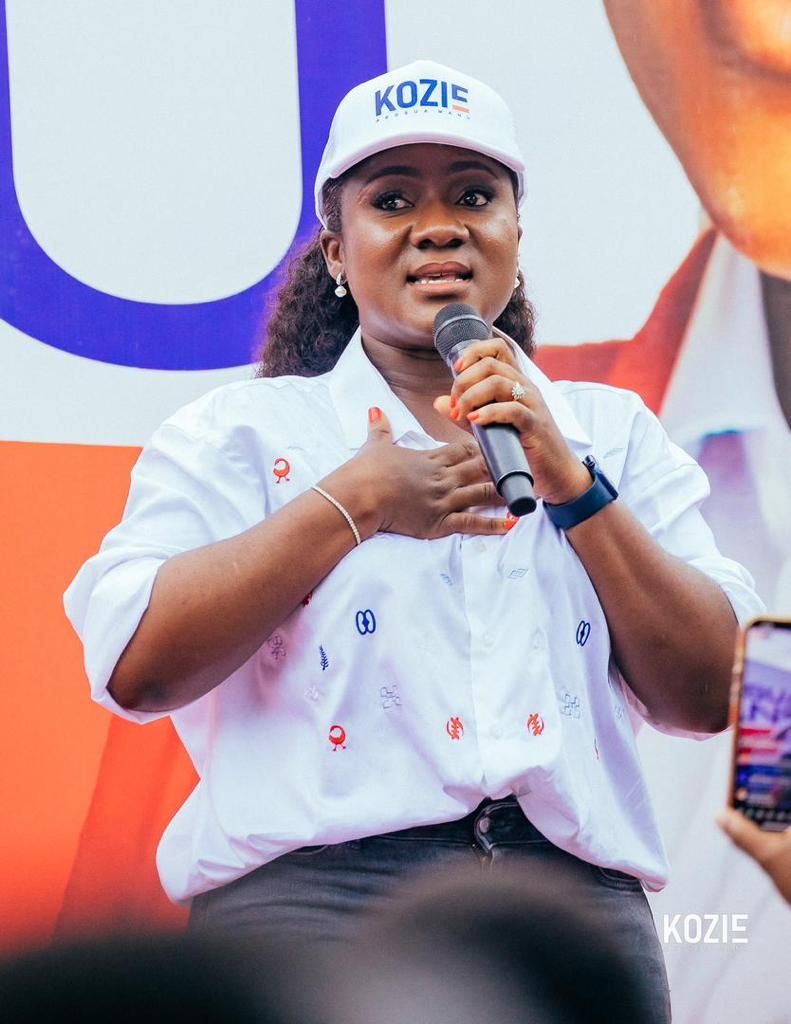
Special Aide to former Vice President Dr. Mahamudu Bawumia, Akosua Asaa Manu, popularly known as Kozie, has emphasized the need for discipline and unity within the New Patriotic Party (NPP) as the party prepares to elect its flagbearer next month.
Speaking on Movement Radio on Monday, December 22, 2025, Kozie addressed growing public discourse around internal party conduct, campaign tensions, and recent controversies involving party actors.
According to her, the NPP remains a values-driven political organisation. She said the party’s traditions are anchored in respect, the rule of law, and responsible political engagement.
“The NPP is a party with a strong tradition and clear values. We have well-defined structures and disciplinary processes. Unreasonable behaviour, no matter who is involved, finds no expression here,” Kozie stated.
While acknowledging that internal competition can be intense, especially during party elections, she urged members to prioritise discipline and cohesion. She cautioned supporters and communicators of various factions against actions or statements that could fracture unity or damage the party’s public image.
“Our conduct reflects on the entire party. Reckless commentary, misinformation, and personal attacks do not serve our collective interests,” she noted.
Kozie stressed that unity is essential as the party prepares for the January 31 elections. She warned that internal divisions have historically weakened political parties. She therefore urged surrogates to be mindful and conduct their campaigns in ways that do not harm the party.
“Elections are won by united parties. Differences must be resolved with respect, discipline, and loyalty to the party’s cause,” she added.
Her comments come amid rising political tensions ahead of the NPP’s internal activities. Attention is increasingly focused on the conduct of aspirants, surrogates, and grassroots supporters as the January 31 flagbearer election approaches.
DISCLAIMER: The Views, Comments, Opinions, Contributions and Statements made by Readers and Contributors on this platform do not necessarily represent the views or policy of Multimedia Group Limited.
DISCLAIMER: The Views, Comments, Opinions, Contributions and Statements made by Readers and Contributors on this platform do not necessarily represent the views or policy of Multimedia Group Limited.
The Greater Accra Regional Police Command has arrested 132 suspects following a series of special swoops and motor traffic operations conducted across parts of the Accra Metropolis as part of efforts to ensure safety during the Christmas festivities.
Addressing a press conference in Accra on Tuesday, December 23, 2025, the Regional Public Relations Officer, Superintendent Juliana Obeng, said the operations led to the recovery of several items, including motorcycles, suspected stolen items and narcotic substances.
“The Accra Regional Police Command has arrested a total of 132 suspects and retrieved various exhibits, including narcotic substances, suspected stolen items, and motorcycles, during a series of special swoop and motor operations conducted across several jurisdictions in the metropolis as part of sustained efforts to combat crime during this Christmas and beyond,” she stated.
Superintendent Obeng provided details of specific operations. On Thursday, December 18, 2025, police personnel from the Kotobabi District under the Nima Division conducted a swoop at Alojo near Merciful Hotel Annex, which led to the arrest of four suspects. “Details of which will be shared with you,” she said.
She added that another swoop was carried out on Sunday, December 21, 2025, by personnel from the Railways District Command under the Accra Central Division. “In a related operation on Sunday, December 21, personnel of the Railways District Command conducted swoops at identified criminal hideouts within the division, resulting in the arrest of 15 persons,” she noted.
Superintendent Obeng further disclosed that a motor traffic operation was undertaken on Friday, December 19, around East Legon and within the Airport Division. “The operation aimed at reducing crime and road traffic accidents, which resulted in the seizure of 36 motorcycles,” she explained. “Riders with minor offences were issued warning letters, while others are being processed before court.”
She added that similar operations were conducted in other parts of the metropolis as part of the command’s broader security strategy. The operations targeted known criminal hideouts and areas with high incidents of crime, deploying both uniformed and plainclothes officers to maximize effectiveness.
On the status of those arrested, Superintendent Obeng said all suspects are currently undergoing screening. “Meanwhile, all suspects arrested in the various operations are currently undergoing screening. Those found culpable will be put before the court, while persons not linked to any criminal activity will be released accordingly,” she stated.
She also noted that investigations are ongoing and that the exhibits retrieved would be subjected to further examination where required. “The retrieved exhibits have been retained and will be forwarded to the Police Forensic Laboratory for analysis where necessary,” she said.
The Regional Public Relations Officer urged the public to support the police by sharing credible information to help keep Accra safe. “The command encourages the general public to continue cooperating with the police by providing timely and credible information to help keep Accra safe,” she urged.
The arrests are part of a nationwide intensification of police operations ahead of the Christmas and New Year festivities. Similar operations have been conducted in other regions, demonstrating a coordinated approach to crime prevention during the high traffic festive season.
In the Central East Region, police arrested 33 suspects during intelligence led swoops conducted in the early hours of December 16 and 17, 2025, within Kasoa Old Market, Awutu Breku, Gomoa Buduata, Senya Breku and surrounding communities. Some of those arrested were found in possession of substances suspected to be Indian hemp and quantities of Tramadol. Police also impounded 45 motorbikes and recovered a toy gun during those operations.
The festive season typically sees increased movement of people and goods, creating opportunities for criminal activities such as theft, robbery, drug trafficking and traffic offences. Police forces across the country have therefore stepped up patrols, established checkpoints and conducted targeted operations in crime prone areas.
The motor traffic operations, which resulted in the seizure of 36 motorcycles in the East Legon and Airport areas, reflect concerns about the role of motorcycles in facilitating criminal activities. Many robberies and snatching incidents in urban areas involve suspects using motorcycles for quick getaways. Additionally, motorcycles are often used for transporting narcotics and other contraband.
The operations also aim to enforce traffic regulations, particularly the mandatory use of helmets by motorcycle riders and compliance with licensing requirements. Many motorcycle riders operate without proper documentation or safety equipment, contributing to road accidents and fatalities.
The police have emphasized that adequate security will continue to be provided at public events and in communities across the Greater Accra Region throughout the festive period. Increased police visibility, rapid response capabilities and community engagement are key components of the security strategy.
Residents are encouraged to remain vigilant, secure their properties, avoid displaying large amounts of cash in public and report suspicious activities to the nearest police station or through emergency hotlines. The police have assured the public of their readiness to respond promptly to distress calls and maintain order during what is traditionally one of the busiest periods of the year.
The 132 arrests in Accra represent a significant enforcement action and demonstrate the police command’s commitment to proactive crime prevention rather than reactive responses. By targeting known criminal hideouts and conducting motor traffic operations simultaneously, the police aim to disrupt criminal networks and create a deterrent effect.
The screening process for the 132 suspects will determine which individuals will face criminal charges in court and which will be released. Suspects found with narcotic substances will likely face charges under the Narcotics Control, Enforcement and Sanctions Act, while those connected to stolen items may be charged with theft or receiving stolen property.
Motorcycle riders whose vehicles were impounded will need to produce proper documentation, including valid licenses, registration documents and insurance certificates, before their motorcycles can be released. Those who committed minor violations and received warning letters are expected to comply with regulations to avoid future sanctions.
The police operations come amid broader concerns about crime in urban areas, particularly armed robbery, drug trafficking and cybercrimes. While the swoops focus on street level offences, they form part of a comprehensive approach that includes intelligence gathering, community policing and partnerships with other security agencies.
As Ghana enters the peak of the festive season, with major events such as Detty December concerts, church services and family gatherings drawing large crowds, the police presence in Accra and other major cities will remain heightened. The goal is to ensure that residents and visitors can celebrate safely while criminal elements are deterred or apprehended.
The African American Association of Ghana (AAAG) has held its annual End of Year Party with a call for stronger collaboration with Ghanaian businesses to provide practical support that will ensure a smoother transition for diasporans relocating to Ghana.
Speaking at the event, President of AAAG, Shannan Akosua Magee, said the organisation’s key focus in the coming year will be to deepen partnerships that enhance the return and reintegration experience for members of the diaspora. She explained that closer collaboration with businesses and institutions would help provide access to essential resources, guidance and opportunities to make the transition process more seamless and sustainable.
Founded more than three decades ago, AAAG is one of the oldest diasporan organizations in Africa. The organization was incorporated as a non governmental organization in 1991 by a small group of African Americans residing in Accra who decided to formalize their informal gatherings. For more than 30 years, it has been based at the W.E.B. DuBois Pan African Center in Cantonments, Accra, where it continues to hold its monthly meetings.
From this historic setting, AAAG has served as a resource for returnees by offering community during what can be an isolating relocation process through cultural programmes, domestic travel experiences and informal networks of care. The association’s mission is to be recognized as a preeminent community vehicle for the cultural, social, spiritual and economic reintegration of African Americans and other people of African descent returning from the diaspora into Ghanaian society.
The annual End of Year All White Party has become a tradition and one of the AAAG’s most meaningful gatherings. More than a social event, the evening served as a moment of appreciation, reflection and collective planning, bringing together diasporans, returnees, long term residents and friends of the organisation from across Ghana and the global diaspora.
Ms Akosua Magee expressed the need for continuous engagement with the Ghana Police Service and traditional authorities to ensure that new returnees feel safe, welcomed and culturally grounded in their resettlement. She emphasized that building strong relationships with these institutions would help create an environment where diasporans can integrate successfully while feeling protected and supported.
According to her, AAAG plans to introduce Ghanaian language courses in the coming year, recognizing language as an important tool for cultural understanding, respect and belonging. The language courses are expected to help new arrivals communicate more effectively with local communities, understand cultural nuances and demonstrate respect for Ghanaian customs and traditions.
“As AAAG looks toward the future, leadership emphasised the importance of preserving its long standing presence at the W.E.B. DuBois Pan African Center,” Ms Magee said. “Conversations around continuity are guided by a desire to honour history, strengthen institutional stability, and ensure that the organization’s physical home reflects the legacy it has built over decades.”
The W.E.B. DuBois Pan African Center holds particular significance as the final home of the renowned scholar, civil rights activist and Pan Africanist, William Edward Burghardt Du Bois, who spent his final years in Ghana at the invitation of President Kwame Nkrumah. The center serves as both a museum and a living space for Pan African scholarship and activism, making it an appropriate home for an organization dedicated to the return and reintegration of African Americans to the continent.
The evening also marked early momentum toward AAAG’s 35th anniversary since its formal incorporation. Plans are underway to celebrate the organisation’s history, increase awareness of the contributions made by Afrodescendants across Ghana, and set a clear vision for the next generation. The upcoming anniversary will provide an opportunity to reflect on more than three decades of service to the African American community in Ghana and to chart a course for continued relevance and impact.
AAAG’s work has taken on increased significance in recent years as Ghana has positioned itself as a leading destination for African diaspora return and investment. The “Year of Return” initiative in 2019, marking 400 years since the first enslaved Africans arrived in Jamestown, Virginia, brought unprecedented attention to Ghana as a destination for diaspora tourism and resettlement. This was followed by the “Beyond the Return” campaign, which sought to deepen engagement beyond tourism into investment and permanent relocation.
These national initiatives have resulted in a growing number of African Americans and other diasporans choosing to relocate to Ghana, either permanently or for extended periods. This influx has highlighted both opportunities and challenges in the reintegration process, including issues related to housing, employment, cultural adaptation, legal documentation and social integration.
AAAG has consistently worked to address these challenges through community support, information sharing and advocacy. The organization holds regular monthly meetings where members can share experiences, seek advice and build networks. These gatherings provide practical information on navigating bureaucratic processes, finding housing, accessing healthcare, understanding local business practices and building social connections.
In June 2025, AAAG partnered with the Ghana Tourism Authority (GTA) and the Office of Diaspora Affairs to host a vibrant float through Accra’s principal streets to mark the 2025 Juneteenth Festival. The event formed part of a broader effort to commemorate the abolition of slavery in the United States while fostering deeper cultural connections between Africans and the African diaspora.
Vice President of AAAG, Maurice Nii Aryetey Cheetham, speaking at the Juneteenth celebration, emphasized the urgency of preserving this significant history. “Many Ghanaians don’t know what Juneteenth is and have never heard of it. So we want to share part of our history and make it an annual celebration,” he said.
The partnership approach that AAAG is advocating reflects a recognition that successful diaspora reintegration requires coordination among multiple stakeholders. Ghanaian businesses can play a crucial role by creating employment opportunities tailored to diaspora skills and experience, offering culturally sensitive services, and serving as bridges between returnees and local communities.
Financial institutions, for instance, could develop banking products that address the unique needs of diasporans, such as simplified account opening processes for new arrivals or investment vehicles that facilitate cross border transactions. Real estate companies could provide housing solutions that balance diaspora expectations with local realities, while offering guidance on property acquisition and tenant rights.
Educational institutions could facilitate skills transfer and professional development, enabling diasporans to contribute their expertise while adapting to local contexts. Healthcare providers could offer services that combine international standards with local knowledge, addressing the medical needs of returnees while respecting cultural practices.
Traditional authorities, as Ms Magee emphasized, also have an important role to play. Their endorsement and support can ease social integration, facilitate land access in communities, and help diasporans understand and respect customary practices. Engagement with traditional leadership demonstrates respect for indigenous governance structures and can smooth the path for acceptance within local communities.
The call for collaboration with the Ghana Police Service addresses concerns about security and the rule of law. Returnees need assurance that they will be treated fairly under Ghanaian law, that their property rights will be protected, and that law enforcement will respond effectively to their concerns. Regular dialogue between AAAG and police leadership can help build mutual understanding and address any issues that arise.
AAAG’s evolution over more than three decades demonstrates the enduring relevance of community based organizations in supporting diaspora return. While government initiatives and policies create the enabling environment, organizations like AAAG provide the human connection, practical support and cultural bridge that make the difference between a successful reintegration and a frustrated return.
As Ghana continues to position itself as a Pan African hub and a preferred destination for African diaspora return, the work of AAAG becomes increasingly important. The organization’s long history provides institutional memory and experience that can guide new arrivals, while its ongoing evolution ensures that it remains responsive to changing needs and circumstances.
The focus on language education, in particular, represents an important recognition that successful integration requires more than legal status or economic opportunity. Language opens doors to cultural understanding, enables deeper social relationships, and demonstrates respect for host communities. By planning to offer Ghanaian language courses, AAAG is addressing a fundamental barrier to full integration.
The End of Year All White Party, beyond its festive nature, serves as a reminder that community and celebration are essential elements of successful diaspora life. The ability to gather with others who share similar experiences, to celebrate cultural heritage, and to support one another through challenges creates the social fabric that makes relocation sustainable rather than merely possible.
The High Court in Accra has placed an injunction on the Driver and Vehicle Licensing Authority (DVLA), restraining it from rolling out digital or any new vehicle number plate registration system beginning January 2026.
This follows a suit filed by BEMENCO Embossment Ltd and 26 other plaintiffs, all members of the Vehicle Embossment Association of Ghana (VEMAG).
The injunction application was granted by the High Court on Monday (December 22, 2025), restraining the DVLA from introducing digitalised vehicle number plates or any new registration plates until the court determines the merits of the case or the order is set aside.
The order also prevents the DVLA from implementing any alternative arrangement for the embossment and supply of vehicle number plates outside the existing framework involving the plaintiffs.
The plaintiffs argued that DVLA had awarded both manufacturing and embossment contracts to a single entity, an act which they termed as unprecedented and contrary to established practice.
The VEMAG is seeking an order compelling the DVLA to continue engaging licensed embossers for 2026 and beyond. VEMAG is also asking for costs, including solicitors fees, and any further reliefs the court may deem fit. They also seek several reliefs from the court, including declarations that the DVLA’s refusal to allocate blank registration plates for 2026 is unlawful and a breach of contract.
They further allege that on October 27, 2025, the DVLA Chief Executive Officer informed members of the plaintiff association at a meeting that the Authority had awarded the contract for both the manufacture and embossment of number plates to one individual, Dr Nyarko Esumadu Appiah of Original Manufacturing and Embossment, also known as Daasebre.
According to VEMAG the DVLA still owes some of their members arrears for plates already produced.
Alleged breach
VEMAG argued that the approvals granted by the DVLA, coupled with the consistent conduct of both parties over three decades, amounted to an enforceable contract for the embossment of vehicle number plates.
They contend that the DVLA has neither revoked nor withdrawn those approvals, yet has refused to allocate blank registration plates for the 2026 production cycle.
They say that by this time of the year, production for the following year would normally have been completed, ensuring a smooth transition into the new year.
However, the DVLA’s failure to make allocations has, according to them, created uncertainty and disrupted established processes.
VEMAG also argued that DVLA had not been transparent in its approach in rolling out the new digital number plates. They also said the current DVLA management has been unwilling to continue consultations, despite assurances previously given to embossers to prepare for the digital transition.
They also allege that the DVLA did not advertise for tenders nor obtain approval from the Public Procurement Authority to sole-source the contract, thereby violating the Public Procurement Act, 2003 (Act 663).
They described the decision as illegal, discriminatory and an abuse of administrative authority, particularly in overlooking dozens of Ghanaian-owned companies that have invested heavily in the sector.
Impact
The plaintiffs warned that the DVLA’s actions could have severe socio-economic consequences.
They stated that members of the association collectively employed over 3,000 workers across the country and that disengaging them abruptly would jeopardise livelihoods nationwide. They also expressed concern that the public could be inconvenienced at the start of the year if the DVLA is unable to register vehicles and issue plates due to the injunction.
VEMAG states that as part of the approval process, members were required to acquire specialised embossment equipment that met DVLA specifications, at costs ranging between GHc70,000 and GH 1 million per unit. They further claim that over the years, the embossers have pre-financed the production of vehicle number plates, producing and supplying plates to the DVLA, which sells them before settling payments to the embossers.
The Attorney-General and Minister of Justice (A-G), Dr Dominic Ayine, has announced the commencement of criminal prosecutions against the New Patriotic Party’s (NPP’s) Ashanti Regional Chairman, Bernard Antwi Boasiako, also known as Chairman Wontumi, and the founder of the Liberal Party of Ghana (LPG), Percival Kofi Akpaloo, for separate major alleged fraud cases involving state funds.
Addressing a press briefing in Accra yesterday, the A-G also provided an update on the government’s broader anti-corruption drive under the Operation Recover All Loot (ORAL) initiative.
Wontumi Farms case
Dr Ayine detailed that the Economic and Organised Crime Office (EOCO) had concluded investigations into Wontumi Farms Limited, a company solely owned by Chairman Wontumi.
The probe revealed that in December 2017, Mr Boasiako applied for a GH¢18 million loan from the Ghana Exim Bank under the Mining Alternative Livelihood Initiative, purportedly to cultivate maize on 100,000 acres of land and employ young people in Asare Nkwanta in the Ashanti Region.
The company, the A-G alleged, was not legally registered at the time of the application.
In spite of that, Exim Bank approved a facility of GH¢18.73 million, which included a grant component of over GH¢6.7 million.
Investigations established that Mr Boasiako allegedly failed to meet key pre-disbursement conditions, including providing a database of workers for a biometric payroll system.
A central finding was that Chairman Wontumi allegedly forged a document from an equipment dealer, Kas-Sama Enterprise.
Dr Ayine said Mr Boasiako altered a proforma invoice to look like a receipt, purportedly showing payment of GH¢4 million for farm machinery, including bulldozers and excavators, which were never purchased.
“It is clear from our investigations that Chairman Wontumi and his company made fraudulent misrepresentations to Exim Bank, forged a receipt in order to deceive Exim Bank,” the A-G stated.
Consequently, Wontumi Farms Limited and its directors will be prosecuted for defrauding by false pretences, forgery and causing financial loss to the state to the tune of GH¢24.25 million (principal plus interest).
Akpaloo, COCOBOD Feeder Roads case
In a second case, the A-G alleged fraud involving Percival Kofi Akpaloo.
EOCO investigations revealed that Mr Akpaloo allegedly cloned a legitimate company, Pomaa Universal (Gh.) Ltd, owned by Akua Pomaa, which had a GH¢29.5-million COCOBOD feeder road contract.
Mr Akpaloo secretly registered a similarly named entity, Pomaah (with an ‘h’) Universal (Gh.) Ltd, and between December 2022 and June 2024, collected eight COCOBOD cheques worth over GH¢3.1 million issued to the legitimate company and deposited them into his cloned company’s account, the Attorney-General alleged.
“Akua Pomaa was unaware of both the existence of Pomaah Universal (Gh.) Ltd and the diversion of funds until COCOBOD contacted her,” Dr Ayine said.
She also alleged that Mr Akpaloo forged her signature on the contract.
Mr Akpaloo, his company, Pomaah Universal, and his spouse, Delvine Akpaloo, will face charges in January 2026 for stealing, forgery and money laundering.
Update on ORAL
Providing an update on the wider ORAL investigations, the A-G confirmed that following his earlier briefing on the National Service Authority (NSA) scandal, the Auditor-General had issued disallowance and surcharge notices to implicated officers.
“After 14 days, if they fail to show cause, the money becomes a debt due and owing to the state, and I will proceed to take civil action to recover the sums involved,” he stated, warning of attachment of properties.
Dr Ayine gave assurance that the ORAL investigations were progressing robustly, with the aim of building cases that met the standard of proof for criminal trials.
The A-G’s announcements signal a continued crackdown on high-profile alleged corruption, with the state preparing to pursue both criminal convictions and civil asset recovery.
The Super Eagles of Nigeria began their 2025 Africa Cup of Nations Group C campaign with a hard-fought 2–1 victory over a spirited Tanzania side on Tuesday, December 23, 2025, in Fez, Morocco.
Nigeria started the contest with authority, dominating possession and pushing Tanzania back with quick attacks down the flanks. Victor Osimhen was a constant menace, twice getting in behind the defense, but the Taifa Stars goalkeeper, Zuberi Foba produced a series of impressive saves to keep the underdogs in the game.
The breakthrough eventually arrived in the 37th minute when Semi Ajayi rose highest to power a header past Foba after a precise cross from Alex Iwobi, giving Nigeria a deserved lead at halftime.
Tanzania returned from the break with renewed belief and were rewarded almost immediately. In the 50th minute, Novatus Miroshi’s perfectly weighted pass caught Nigeria’s backline off guard, allowing Charles M’Mombwa to score the equalizer.
Watch Mohamed Salah’s stoppage-time winner in Egypt’s AFCON opener
The joy for the East Africans was short-lived. Just two minutes later, Ademola Lookman restored Nigeria’s lead with a moment of individual brilliance, dancing past defenders at the edge of the box before unleashing a fierce strike into the top corner.
Despite lacking star power in attack, Tanzania showed courage and continued to push for another equalizer, creating half-chances late on but failed to test Nwabali.
Nigeria managed the closing stages professionally to secure all three points. The Super Eagles will now turn their attention to a decisive clash against Tunisia on Saturday, December 27, 2025, while Tanzania prepare for a crucial East African derby against Uganda.
FKA/JE
Watch highlights of the bout between Freezy Macbones and Jonathan Tetteh below:
Fez, Dec. 23, GNA – Nigeria’s Super Eagles began their 2025 African Cup of Nations (AFCON) campaign with a hard-fought 2-1 victory over Tanzania’s Taifa Stars at the Fez Stadium on Tuesday.
Defender Oluwasemilogo Ajayi put Nigeria ahead in the 36th minute, rising to meet a Samuel Chukwueze cross with a powerful header after Victor Osimhen’s earlier effort was cleared off the line by Ibrahim Hamad.
Tanzania levelled five minutes after the break when Charles M’Mombwa pounced from close range as Nigeria’s defence switched off.
But the Super Eagles restored their lead almost immediately, with Ademola Lookman firing home a spectacular strike in the 52nd minute.
Alex Iwobi came close to adding a third for Nigeria but dragged his shot wide from inside the box.
Tanzania defender Ibrahim Hamad had a glorious opportunity to pull parity in the 86th minute but skied his effort from close range.
The result gives Nigeria an early advantage with all three points in a tough Group C, where Tunisia and Uganda meet later on Tuesday.
The Public Utility Workers’ Union (PUWU) of TUC Ghana has expressed strong opposition to government plans to appoint a transaction advisor to transition the Electricity Company of Ghana (ECG) into Private Sector Participation (PSP).
In a statement released Tuesday, December 23, PUWU said the announcement, which came shortly before Christmas, was surprising given the ongoing turnaround programme being implemented jointly by ECG management and workers under PUWU’s guidance. The programme, agreed with the Ministry of Energy, focuses on reviving ECG through internal reforms rather than privatisation.
The union highlighted that over the past five months, ECG workers have made significant strides under the turnaround programme, including improved revenue collection, reduced system losses, and stabilised power supply. These achievements have reportedly been acknowledged by government officials, including Finance Minister Dr. Cassiel Ato Forson, Majority Leader Hon. Mahama Ayariga, and Energy Minister Hon. John Abdullai Jinapor.
PUWU emphasised that ECG is a strategic national asset and any decision regarding its future must follow due process, ensure transparency, and involve broad stakeholder consultation.
The union called on the government to halt all actions toward PSP at this stage, allow the turnaround programme to run its full course, and evaluate its outcomes before considering alternative options.
“Halt all actions toward PSP at this stage. Allow the turnaround programme agreed with ECG Workers and PUWU—TUC to run its full course. The outcomes of this programme should be evaluated and streamlined to agree with national policy in energy distribution in Ghana,” he said.
The union reaffirmed its commitment to protecting public interest, safeguarding jobs, and ensuring reliable and affordable power supply for all Ghanaians.
Abusuapanin Kofi Owusu, family head of Daddy Lumba, denied false reports of his death in a live radio interview
Social media rumours claimed Abusuapanin died in a car crash, sparking widespread concern among Ghanaians
Abusuapanin Owusu cursed those spreading the malicious rumours, firmly stating he was alive and well
Don’t miss out! Get your daily dose of sports news straight to your phone. Join YEN’s Sports News channel on WhatsApp now!
Abusuapanin Kofi Owusu, the family head of late Ghanaian music legend Daddy Lumba, has firmly denied rumours of his passing.
Daddy Lumba’s family head, Abusuapanin Kofi Owusu, debunks death rumours. Photo credit: DL 106.9 FM. Image source: Instagram Source: Instagram
Abusuapanin Kofi Owusu, also known as Tupac, went live on DL FM 106.9 to address the swirling social media reports that claimed he had passed away.
Some social media users took to TikTok, claiming that the family head had lost his life in a car crash, fuelling much speculation and concern among relatives and Ghanaians at large.
Abusuapanin Owusu comments on death rumour
Commenting on the rumour, Abusuapanin stated emphatically that he was ‘alive and kicking.’ He also told listeners he was at the studio to deny the news in person.
In his words:
“I am the family head. I have come to the studio to deny the rumours. You can see I am fine. I have not died. I am here live.”
In a fiery part of the interview, he placed a curse on those spreading the malicious rumours, saying,
“What you did to me by spreading rumours about my death, that is how you will die.”
He concluded by reassuring all concerned friends and followers that he is fine and healthy, shutting down the false reports once and for all.
Abusuapanin Owusu speaks about Daddy Lumba’s funeral
In a similar report, Abusuapanin Kofi Owusu stoked another controversy on social media after sharing new details about the late musician’s burial.
Ghanaian highlife legend, Daddy Lumba, passed away at the age of 60 on July 26, 2025, after a short illness.
The late legend’s funeral sparked controversy after his body was covered while on display, ensuring attendees could not get a good glimpse of the singer.
Abusuapanin Kofi Owusu clears the air on rumours surrounding Daddy Lumba’s funeral, sparking further controversy. Image credit: @plus1tv, @getinfomedia Source: TikTok
Social media exploded with rumours over the reason for the decision, with many claiming the body lying in state was not Daddy Lumba.
Speaking on DL FM on December 22, Abusuapanin Kofi Owusu pushed back against the allegations.
He stated that Daddy Lumba’s body was shown to all members of his family before the funeral so they could testify he was the one who was displayed.
He also said that they decided to keep his final resting site hidden due to some threats to have his body exhumed after his burial.
Below is the TikTok video of Abusuapanin Kofi Owusu addressing the speculation:
Faustina Fosuh slams Abusuapanin over Lumba’s funeral
YEN.com.gh had earlier reported that Daddy Lumba’s sister, Faustina Fosuh, sparked fresh drama after openly criticising family head Abusuapanin Kofi Owusu over the organisation of Daddy Lumba’s funeral.
Her comments followed months of bitter family infighting after Daddy Lumba’s death, which split his relatives into opposing camps over the recognition of his wives and the timing of his burial.
In a viral TikTok video, Faustina Fosuh said she had privately raised concerns about the pace of the funeral arrangements but was ignored, a remark many interpreted as a pointed jab at Abusuapanin.
The government has called on traders to pass on the benefits of recent improvements in key macroeconomic indicators by further reducing the prices of goods during the festive season.
The call was made by the Minister for Trade, Agribusiness and Industry, Elizabeth Ofosu-Adjare, during a visit to the Makola Market on Tuesday, December 23, 2025, where she engaged traders on prevailing market conditions and consumer activity.
The Minister noted that recent macroeconomic gains, including lower inflation, a stronger Cedi and a reduced policy rate, had boosted consumer confidence and contributed to brisk trading across markets during the festive period.
“The President has asked me to come and wish the market well and also to check how the economy is being reflected in the market. We all know that inflation is low, the Cedi has become strong and the policy rate has reduced, so we have to see how that reflects in the pocket of the average Ghanaian,” she said.
Ms. Ofosu-Adjare said she was encouraged by feedback from traders, who reported increased business activity and improved market conditions.
“I am excited about what I am hearing. The traders themselves are telling me how the market is booming. That is evidence that the measures the President has put in place are ensuring that citizens benefit from good governance,” she added.
The Minister appealed to traders to continue reducing prices to enable consumers to fully enjoy the benefits of the improving economy.
“What I have told the market women and men is that they should keep on reducing the prices of goods. It is encouraging that the Cedi is stable and prices have come down, and since the Cedi is still appreciating, they can do more so that the benefits can reach everybody,” she said.
A commercial dispute in Nigeria involving a Ghanaian owned real estate development in Abuja has sparked concern within Ghana’s investment community, amid warnings that the matter could strain economic relations between West Africa’s two largest Anglophone economies if not carefully managed.
The case centers on River Park Estate, a major residential project in Nigeria’s federal capital, owned by Ghanaian business interests linked to Sir Dr Sam Jonah. Although the dispute is currently before a Nigerian court, allegations that actions affecting the project have continued despite ongoing litigation have heightened anxieties about due process and institutional conduct.
Ghana has formally escalated the protracted dispute to the Economic Community of West African States (ECOWAS) Court, marking a significant diplomatic and legal turn in a controversy that now threatens to strain bilateral relations between Accra and Abuja. Ghana’s High Commissioner to Nigeria, Baba Jamal, confirmed that an official petition has been submitted to the regional bloc after earlier efforts at resolving the matter through engagement failed.
“When I became the High Commissioner, we properly briefed Accra, and that resulted in an official petition to ECOWAS,” Jamal said. According to him, ECOWAS has since requested full documentation on the dispute, a process that Ghana is completing. The diplomatic escalation follows sustained complaints by JonahCapital, a Ghanaian investment firm, which alleges harassment, document falsification and breach of agreement by Nigerian authorities.
Additionally, Foreign Affairs Minister Samuel Okudzeto Ablakwa raised concerns at the 95th Ordinary Session of the ECOWAS Council of Ministers held in Abuja from December 10 to 12, 2025, describing what he termed unfair treatment and harassment of Ghanaian businesses by Nigerian authorities, specifically citing the JonahCapital case as an example of alleged victimization.
Sir Sam Jonah submitted an 11 page petition dated December 13, 2025, to Minister Ablakwa over alleged unlawful actions by Nigeria’s Corporate Affairs Commission (CAC) that threaten his ownership interests in JonahCapital Nigeria Limited and Houses for Africa Nigeria Limited. The petition outlined a complex dispute accusing Nigerian authorities of expropriating shares and sidelining courts despite ongoing litigation.
According to the petition, CAC Registrar General Hussaini Ishaq Magaji cancelled all corporate filings for both companies on December 8, 2025, effectively reverting their status back to incorporation dates of 2006 and 2007 respectively. Sir Sam stated that upon checking company status reports, he discovered entire corporate records had been cancelled despite a court injunction barring such actions.
Justice Mohammed Zubairu of the High Court of the Federal Capital Territory, sitting in Jikwoyi Kurudu, had on September 17, 2025, issued an injunctive order barring Federal Capital Development Authority (FCDA) officials from entering the estate or taking any action pending the hearing and determination of a suit challenging the authority’s actions.
However, on December 18, 2025, officials of the FCDA, accompanied by police and other security personnel, moved into the high brow River Park Estate in Abuja with bulldozers and demolished multi million naira structures, despite the subsisting court order restraining such action. The suit was filed by JonahCapital Nigeria Ltd and Houses for Africa Nigeria Ltd against the Minister of the Federal Capital Territory and the FCDA over ownership of the 500 hectare estate.
Analyst Yaw Barima said the situation demands measured but decisive engagement by the Government of Ghana to safeguard the interests of Ghanaian businesses operating abroad. “There is a clear responsibility to protect national investment credibility where credible concerns about fairness arise. This is not confrontation, but prudent economic diplomacy,” he said.
Ghana and Nigeria share deep commercial ties. Bilateral trade between the two countries runs into several billions of dollars annually, with Nigeria consistently ranking among Ghana’s top trading partners. Ghana, for its part, hosts thousands of Nigerian owned enterprises, spanning banking, telecommunications, retail trade, manufacturing and entertainment. Both countries are also central to regional integration efforts under ECOWAS and the African Continental Free Trade Area (AfCFTA).
Mr Barima noted that Ghana’s reputation for a stable legal and regulatory environment has long been a critical factor underpinning Nigerian business success in the country. “Property rights are respected and contracts are enforced. That goodwill has supported investment inflows for decades, but it is not inexhaustible,” he warned.
He argued that Nigerian businesses operating in Ghana have a direct stake in the outcome and should play an active role by urging restraint and respect for judicial processes at home. “They are uniquely positioned as responsible stakeholders. Silence risks allowing damaging perceptions of injustice to harden,” Barima said.
The ownership dispute has generated conflicting claims about who legitimately controls the estate. In June 2025, the Nigerian Police filed a 26 count charge against lawyer Abu Arome and three Ghanaians, Sir Sam Jonah, a Knight of the British Empire (KBE), Kojo Ansah and Victor Quainoo, along with Mobus Property Nigeria Ltd, before Justice Modupe Osho Adebiyi of the High Court of the Federal Capital Territory.
According to court documents marked CR/402/2025 and dated June 25 but filed on June 26, 2025, the accused allegedly forged corporate documents and filed them with the CAC to unlawfully seize control of Houses for Africa Nigeria Ltd and JonahCapital Nigeria Ltd. The Police allege that the accused persons fraudulently increased the share capital of the companies and allocated 99 million shares to themselves using forged documents and forged signatures.
However, JonahCapital CEO Kojo Mensah has strongly contested these allegations, maintaining that JonahCapital’s ownership of the estate is supported by extensive documentation dating back to 2012. “The share certificates have been prepared. Transfer forms were signed by me and are sitting with the lawyers in Abuja,” he said, referencing an email dated June 27, 2012. He added that JonahCapital possesses FedEx records connected to the transmission of documents in 2012.
The management of JonahCapital Nigeria Limited and Houses for Africa Nigeria Limited issued a statement rejecting claims that the companies are run by Sir Sam Jonah, describing such reports as “false, misleading, and baseless.” The statement clarified that Jonah was only invited to be a shareholder at the beginning, that at no time was he a Director of the companies, nor did he participate in their management.
According to the statement, sometime in 2024, particularly on February 1, 2024, Samuel Jonah illegally executed a purported board resolution of JonahCapital Nigeria Limited despite never being a Director and having relinquished his shareholding since 2007. Using forged documents, the statement alleges, he unlawfully increased the company’s share capital from one million shares to 100 million shares, allocating 99 million shares to himself and fraudulently removing the legitimate Nigerian owners and directors, replacing them with his Ghanaian associates.
Former President Olusegun Obasanjo has also weighed in on the matter, denying ever allocating 501 hectares of land to Sir Sam Jonah. In a letter to the Police dated July 1, 2025, Obasanjo stated categorically that Jonah was “completely mistaken in his recollection” if he claimed the former president had ever allocated any land to him.
FCT Minister Nyesom Wike has publicly stated during a live national television broadcast on September 18, 2025, that Ghanaian businessman Sir Sam Esson Jonah was the owner and controller of JonahCapital Nigeria Limited, the company with development rights over the estate. However, a Nigerian investor involved in the matter argued that the minister’s public claims contradict findings and reports by several Nigerian authorities, including the CAC, the Inspector General of Police and even a committee reportedly set up by the minister himself.
Sir Sam Jonah, in a December 8, 2025 petition to Nigeria’s Minister of Industry, Trade and Investment, Dr Jumoke Oduwole, accused the CAC Registrar General of unilaterally reversing nearly two decades of corporate records relating to JonahCapital Nigeria Ltd and Houses for Africa Nigeria Ltd. The petition requested investigation of “unlawful expropriation of shares, extrajudicial removal of directors and retrospective invalidation of corporate filings” by the CAC Registrar General.
According to Mensah, the CAC falsely claimed that JonahCapital failed to attend reconciliation meetings, an assertion he says is contradicted by video evidence publicly posted by the Registrar General himself. “In fact, it came to us as a surprise. The CAC never wrote to us,” Mensah said. “They wrote a letter to the Attorney General, peddling lies that we did not turn up for the meeting.”
Beyond the immediate dispute, analysts caution that the broader risk lies in investor sentiment. Ghana and Nigeria together account for a significant share of West Africa’s gross domestic product (GDP), and any deterioration in confidence could ripple across the sub region, affecting cross border investment flows, project financing costs and long term integration goals.
“When justice appears selective, commerce becomes fragile. Unchecked perceptions can shape public opinion, influence regulatory behaviour and strain bilateral relations. Ghana and Nigeria are too economically interdependent to allow a single dispute to escalate,” Mr Barima said.
Sir Sam Jonah ranks among Ghana’s most prominent business figures with extensive investments across multiple African countries. He previously served as Chief Executive Officer of Ashanti Goldfields Company, now AngloGold Ashanti, transforming it into one of Africa’s premier mining companies. His reputation and track record in corporate governance lend significant weight to allegations of procedural irregularities in the Nigerian CAC’s handling of his companies.
The Attorney General of the Federation and Minister of Justice directed in August 2025 that the criminal case file be transferred to his office after the defendants were scheduled to be arraigned at the High Court of the FCT, Gwarimpa. The matter has since remained under the Attorney General’s review.
Legal observers have raised questions about whether delays or inaction at the level of the Attorney General are inadvertently enabling administrative overreach and undermining judicial processes already before the Federal High Court. Perhaps most troubling, sources indicate, is the apparent disappearance or continued non release of the Special Investigation Panel (SIP) report compiled by the Nigerian police on the River Park Estate dispute.
The River Park Estate dispute illustrates complexities of real estate development in Nigeria where land allocation procedures, title documentation and regulatory approvals can become contentious. Abuja’s property market has witnessed numerous ownership disputes involving both domestic and foreign investors as the capital city expands rapidly.
With the matter now formally before ECOWAS and ongoing litigation in Nigerian courts, stakeholders on both sides are watching closely to see how the dispute will be resolved and what precedent it might set for cross border investment and commercial disputes within the West African sub region.
This blog is managed by the content creator and not GhanaWeb, its affiliates, or employees. Advertising on this blog requires a minimum of GH₵50 a week. Contact the blog owner with any queries.
Attractive News Blog of Tuesday, 23 December 2025
Source: Andre Mustapha NII okai Inusah
As he reflects on a decade-long music career, Stonebwoy is preparing to celebrate in grand style with the highly anticipated Bhim Concert on December 24 at the Accra Sports Stadium. The event will mark 10 years of consistent success, growth, and influence in the music industry.
Known for his high-energy performances and global appeal, Stonebwoy says the milestone is not just about personal achievement but about legacy. “Now that I’ve earned something, I’m choosing to leave an impact,” he shared.
The anniversary concert is expected to bring together top Ghanaian and international artistes in a night of music, culture, and unity, cementing Stonebwoy’s status as one of Africa’s most influential musical figures.
The Bank of Ghana (BoG) expects lending rates in the country could drop to around 10 percent by the end of 2026, earlier than previously projected, as macroeconomic conditions improve, Governor Dr Johnson Pandit Asiama has said.
Speaking at the central bank’s year end Festival of Nine Lessons, Carols and Thanksgiving Service in Accra on December 19, 2025, Dr Asiama attributed the anticipated decline to a combination of disinflation, currency stability and an improving growth outlook, even as global and domestic risks persist.
“I am on record as having said that I would like to see lending rates below 10 percent before the end of my term,” Dr Asiama told staff. “If there is one thing I pray for each morning, it is that our businesses can borrow below 10 percent, and that the youth, who are so innovative, can access affordable credit to pursue their ideas. We are already on course.”
The Governor noted that the Ghana Reference Rate (GRR), the benchmark for the lowest lending rates, is currently around 15 percent, a sharp decline from previous years. The GRR has fallen dramatically from 29.72 percent in January 2025 to 17.86 percent in October 2025, signalling improved liquidity and easing money market conditions.
“When we came in, lending rates were well beyond where they should be. Now, we are hopeful that by the end of next year, we could actually reach the 10 percent threshold originally envisaged for the next three years,” he said. The accelerated timeline represents significant progress for an economy that saw lending rates well above 27 percent during the height of recent economic challenges.
Average lending rates in Ghana have fallen sharply within 2025, dropping from about 32 percent to between 21 and 22 percent. However, Dr Asiama noted stark variations in the cost of credit across banks. While some banks price loans around the GRR, others charge as high as 39 percent, depending on borrower risk profiles.
The Governor stressed that narrowing these gaps and reducing overall credit costs is key for sustaining Ghana’s economic recovery. “It is one of the things I want to be judged by at the end of my tenure: seeing lending rates as low as they can be,” he said. “Lower rates mean stronger businesses, more jobs and faster economic growth.”
However, Dr Asiama cautioned that Ghana remains vulnerable to external shocks as a small, open economy. He pointed to geopolitical tensions, volatile trade conditions and an uneven global recovery as factors that could impact inflation, food prices and financial stability.
“Something remote can go wrong somewhere in the Middle East or the United States economy, and it impacts us,” he noted. While fundamentals have improved, he stressed that risks have not disappeared and vigilance remains essential.
The Governor attributed the progress made in 2025 to discipline and restraint, which helped the central bank and the wider economy avoid a repeat of the instability seen in 2022. He explained that pressures were contained before escalating into crises, preserving trust and stabilising expectations.
“When I assumed office earlier in the year, the challenge was not a lack of ideas or policy tools, but an erosion of confidence in signals, coordination and the consistency of policy implementation,” Dr Asiama recalled. “At the time, market behaviour reflected uncertainty rather than conviction, and in such an environment, even well intended actions struggled to gain traction.”
He described 2025 as a period marked by difficult choices and decisions whose consequences extended far beyond the moment they were taken. The reforms undertaken during the year played a critical role in restoring monetary and market discipline, stabilising the cedi and significantly slowing inflation.
Dr Asiama also highlighted recent legislative reforms, including amendments to the Bank of Ghana Act, which strengthened governance, enhanced operational independence and reduced the risk of crisis driven liquidity interventions. He noted that these changes were designed to ensure that the conditions which led to the domestic debt exchange and pension losses in 2022 do not recur.
Additionally, the passage of the Virtual Asset Service Providers law has brought crypto related activities under regulation. “Effectively, virtual assets trading is now legal and no one is going to be arrested for doing crypto, but we now have the framework to manage the risks involved,” Dr Asiama stated.
The Governor explained that the law allows the central bank to manage risks rather than ignore them, bringing digital asset activities into a regulated framework that protects consumers while enabling innovation.
Looking ahead to 2026, Dr Asiama announced plans for a comprehensive people strategy to enhance staff development, leadership succession and workplace culture. He revealed efforts to strengthen subsidiaries such as Ghana International Bank in London and the Bank Hospital, as well as the creation of a new subsidiary to manage real estate and assets acquired during the financial sector cleanup.
Plans are also underway to unlock value from idle real estate assets held by the Bank. The Governor said the central bank expects to continue reforms aimed at improving efficiency, deepening supervision and investing in staff development.
“Progress has given us room to move, but it also calls for vigilance. The work is not finished. This is just the beginning,” Dr Asiama added.
The Governor’s four year term, which began in early 2025, initially set 2028 as the target for achieving single digit lending rates. The revised timeline to end of 2026 reflects the faster than expected improvement in macroeconomic indicators.
Ghana’s economic recovery has been supported by multiple positive indicators. The cedi appreciated by about 30 percent against the United States dollar in 2025, making it one of the best performing currencies globally this year. Inflation has declined steadily and is now trending at around 8 percent, well within the Bank of Ghana’s target band of 6 to 10 percent.
Gross international reserves stand at US$10.7 billion, providing about 4.7 months of imports cover, serving as a cushion against external shocks. Ghana also recorded a trade surplus of US$4.1 billion in the first four months of 2025, with the current account surplus at US$2.1 billion in the first quarter alone, largely due to gold and cobalt exports.
At the 127th Monetary Policy Committee (MPC) meeting held recently, Dr Asiama acknowledged that while the cost of borrowing remains high, recent data shows undeniable progress. “I’ve said before that I want to see average lending rates at 10 percent by the end of my tenure and I still stand by that. We are doing everything we can to make sure we achieve it,” he said.
The Governor has also been vocal about the need for commercial banks to support Ghana’s export strategy. Speaking at various forums, he called on banks to strengthen export finance desks, support agro processing and non traditional exports, and engage more deliberately with trade opportunities under the African Continental Free Trade Area (AfCFTA).
“The banking sector must not sit on the sidelines of Ghana’s export agenda but help shape it,” he said, urging banks to design export ready loan products and build sector specific expertise.
At the Governor’s Day Annual Bankers’ Dinner organized by the Chartered Institute of Bankers, Dr Asiama disclosed that the central bank is also working to reduce the Non Performing Loan (NPL) ratio to 10 percent by the end of 2026. The current NPL ratio stands at 19.5 percent as of October 2025.
He explained that the improving macroeconomic environment should provide room for intelligent loan restructuring by commercial banks without compromising prudential standards. “If 2025 was the year confidence was rebuilt, then 2026 must be the year that confidence is put to work carefully, productively and with judgment in service of a stronger, more competitive Ghanaian economy,” he said.
The Governor stressed that asset quality within the banking sector must remain a top priority, especially as interest rates begin to ease. As of the end of 2024, eleven banks recorded capital ratios below the prudential threshold. However, by November 2025, that number had reduced to five, reflecting recapitalization efforts, enhanced supervision and improved macroeconomic conditions.
Dr Asiama also announced that significant progress has been made in modernizing the payments ecosystem, with the completion of the National Payment Systems Strategy for 2025 to 2029. The strategy provides a coordinated roadmap for interoperability, cybersecurity, instant payments and broader infrastructure modernization.
The Governor acknowledged that small and medium sized enterprises, which form the backbone of the economy, are among the hardest hit by high interest rates, limiting their ability to expand operations and create jobs. “When borrowing costs are lowered, businesses can invest, grow and employ more people,” he explained.
Speaking at the Association of Ghana Industries (AGI) Corporate Forum earlier in 2025, Dr Asiama proposed structured engagement mechanisms between the Bank of Ghana and AGI, including quarterly consultative forums on industrial credit access and foreign exchange policy, sector specific research partnerships to identify policy bottlenecks, and enhanced information sharing on regulatory changes and financial market trends.
“We need to unlock greater flows of sustainable capital and private investment. We are laying the foundations for an economy that is not just recovering, but which is rising with purpose,” he noted at the forum.
The government forecasts a primary budget surplus of 1.5 percent of gross domestic product in 2026, while the overall deficit is forecast to narrow to 2.2 percent from a projected 2.8 percent in 2025. Economic growth is expected to accelerate at 4.8 percent in 2026, up from 4 percent in 2025.
Ghana’s easing cycle mirrors similar moves by regional peers. South Africa’s Reserve Bank recently reduced its benchmark lending rate by 25 basis points to 6.75 percent, the lowest since October 2022, following Zambia’s central bank 25 basis points cut earlier in the month. Both moves were motivated by slowing inflation and efforts to support economic recovery.
With inflation trending downwards and the cedi strengthening, analysts see a clearer path to credit for firms and households. Lower borrowing costs are expected to improve access to credit for businesses and households, stimulating economic activity while maintaining stability.
The Bank of Ghana has also confirmed that it will shift to using 14 day bills to manage liquidity and improve the transmission of monetary policy, further signaling its commitment to creating a more responsive and efficient financial system.
The Bank of Ghana (BoG) expects lending rates in the country could drop to around 10 percent by the end of 2026, earlier than previously projected, as macroeconomic conditions improve, Governor Dr Johnson Pandit Asiama has said.
Speaking at the central bank’s year end Festival of Nine Lessons, Carols and Thanksgiving Service in Accra on December 19, 2025, Dr Asiama attributed the anticipated decline to a combination of disinflation, currency stability and an improving growth outlook, even as global and domestic risks persist.
“I am on record as having said that I would like to see lending rates below 10 percent before the end of my term,” Dr Asiama told staff. “If there is one thing I pray for each morning, it is that our businesses can borrow below 10 percent, and that the youth, who are so innovative, can access affordable credit to pursue their ideas. We are already on course.”
The Governor noted that the Ghana Reference Rate (GRR), the benchmark for the lowest lending rates, is currently around 15 percent, a sharp decline from previous years. The GRR has fallen dramatically from 29.72 percent in January 2025 to 17.86 percent in October 2025, signalling improved liquidity and easing money market conditions.
“When we came in, lending rates were well beyond where they should be. Now, we are hopeful that by the end of next year, we could actually reach the 10 percent threshold originally envisaged for the next three years,” he said. The accelerated timeline represents significant progress for an economy that saw lending rates well above 27 percent during the height of recent economic challenges.
Average lending rates in Ghana have fallen sharply within 2025, dropping from about 32 percent to between 21 and 22 percent. However, Dr Asiama noted stark variations in the cost of credit across banks. While some banks price loans around the GRR, others charge as high as 39 percent, depending on borrower risk profiles.
The Governor stressed that narrowing these gaps and reducing overall credit costs is key for sustaining Ghana’s economic recovery. “It is one of the things I want to be judged by at the end of my tenure: seeing lending rates as low as they can be,” he said. “Lower rates mean stronger businesses, more jobs and faster economic growth.”
However, Dr Asiama cautioned that Ghana remains vulnerable to external shocks as a small, open economy. He pointed to geopolitical tensions, volatile trade conditions and an uneven global recovery as factors that could impact inflation, food prices and financial stability.
“Something remote can go wrong somewhere in the Middle East or the United States economy, and it impacts us,” he noted. While fundamentals have improved, he stressed that risks have not disappeared and vigilance remains essential.
The Governor attributed the progress made in 2025 to discipline and restraint, which helped the central bank and the wider economy avoid a repeat of the instability seen in 2022. He explained that pressures were contained before escalating into crises, preserving trust and stabilising expectations.
“When I assumed office earlier in the year, the challenge was not a lack of ideas or policy tools, but an erosion of confidence in signals, coordination and the consistency of policy implementation,” Dr Asiama recalled. “At the time, market behaviour reflected uncertainty rather than conviction, and in such an environment, even well intended actions struggled to gain traction.”
He described 2025 as a period marked by difficult choices and decisions whose consequences extended far beyond the moment they were taken. The reforms undertaken during the year played a critical role in restoring monetary and market discipline, stabilising the cedi and significantly slowing inflation.
Dr Asiama also highlighted recent legislative reforms, including amendments to the Bank of Ghana Act, which strengthened governance, enhanced operational independence and reduced the risk of crisis driven liquidity interventions. He noted that these changes were designed to ensure that the conditions which led to the domestic debt exchange and pension losses in 2022 do not recur.
Additionally, the passage of the Virtual Asset Service Providers law has brought crypto related activities under regulation. “Effectively, virtual assets trading is now legal and no one is going to be arrested for doing crypto, but we now have the framework to manage the risks involved,” Dr Asiama stated.
The Governor explained that the law allows the central bank to manage risks rather than ignore them, bringing digital asset activities into a regulated framework that protects consumers while enabling innovation.
Looking ahead to 2026, Dr Asiama announced plans for a comprehensive people strategy to enhance staff development, leadership succession and workplace culture. He revealed efforts to strengthen subsidiaries such as Ghana International Bank in London and the Bank Hospital, as well as the creation of a new subsidiary to manage real estate and assets acquired during the financial sector cleanup.
Plans are also underway to unlock value from idle real estate assets held by the Bank. The Governor said the central bank expects to continue reforms aimed at improving efficiency, deepening supervision and investing in staff development.
“Progress has given us room to move, but it also calls for vigilance. The work is not finished. This is just the beginning,” Dr Asiama added.
The Governor’s four year term, which began in early 2025, initially set 2028 as the target for achieving single digit lending rates. The revised timeline to end of 2026 reflects the faster than expected improvement in macroeconomic indicators.
Ghana’s economic recovery has been supported by multiple positive indicators. The cedi appreciated by about 30 percent against the United States dollar in 2025, making it one of the best performing currencies globally this year. Inflation has declined steadily and is now trending at around 8 percent, well within the Bank of Ghana’s target band of 6 to 10 percent.
Gross international reserves stand at US$10.7 billion, providing about 4.7 months of imports cover, serving as a cushion against external shocks. Ghana also recorded a trade surplus of US$4.1 billion in the first four months of 2025, with the current account surplus at US$2.1 billion in the first quarter alone, largely due to gold and cobalt exports.
At the 127th Monetary Policy Committee (MPC) meeting held recently, Dr Asiama acknowledged that while the cost of borrowing remains high, recent data shows undeniable progress. “I’ve said before that I want to see average lending rates at 10 percent by the end of my tenure and I still stand by that. We are doing everything we can to make sure we achieve it,” he said.
The Governor has also been vocal about the need for commercial banks to support Ghana’s export strategy. Speaking at various forums, he called on banks to strengthen export finance desks, support agro processing and non traditional exports, and engage more deliberately with trade opportunities under the African Continental Free Trade Area (AfCFTA).
“The banking sector must not sit on the sidelines of Ghana’s export agenda but help shape it,” he said, urging banks to design export ready loan products and build sector specific expertise.
At the Governor’s Day Annual Bankers’ Dinner organized by the Chartered Institute of Bankers, Dr Asiama disclosed that the central bank is also working to reduce the Non Performing Loan (NPL) ratio to 10 percent by the end of 2026. The current NPL ratio stands at 19.5 percent as of October 2025.
He explained that the improving macroeconomic environment should provide room for intelligent loan restructuring by commercial banks without compromising prudential standards. “If 2025 was the year confidence was rebuilt, then 2026 must be the year that confidence is put to work carefully, productively and with judgment in service of a stronger, more competitive Ghanaian economy,” he said.
The Governor stressed that asset quality within the banking sector must remain a top priority, especially as interest rates begin to ease. As of the end of 2024, eleven banks recorded capital ratios below the prudential threshold. However, by November 2025, that number had reduced to five, reflecting recapitalization efforts, enhanced supervision and improved macroeconomic conditions.
Dr Asiama also announced that significant progress has been made in modernizing the payments ecosystem, with the completion of the National Payment Systems Strategy for 2025 to 2029. The strategy provides a coordinated roadmap for interoperability, cybersecurity, instant payments and broader infrastructure modernization.
The Governor acknowledged that small and medium sized enterprises, which form the backbone of the economy, are among the hardest hit by high interest rates, limiting their ability to expand operations and create jobs. “When borrowing costs are lowered, businesses can invest, grow and employ more people,” he explained.
Speaking at the Association of Ghana Industries (AGI) Corporate Forum earlier in 2025, Dr Asiama proposed structured engagement mechanisms between the Bank of Ghana and AGI, including quarterly consultative forums on industrial credit access and foreign exchange policy, sector specific research partnerships to identify policy bottlenecks, and enhanced information sharing on regulatory changes and financial market trends.
“We need to unlock greater flows of sustainable capital and private investment. We are laying the foundations for an economy that is not just recovering, but which is rising with purpose,” he noted at the forum.
The government forecasts a primary budget surplus of 1.5 percent of gross domestic product in 2026, while the overall deficit is forecast to narrow to 2.2 percent from a projected 2.8 percent in 2025. Economic growth is expected to accelerate at 4.8 percent in 2026, up from 4 percent in 2025.
Ghana’s easing cycle mirrors similar moves by regional peers. South Africa’s Reserve Bank recently reduced its benchmark lending rate by 25 basis points to 6.75 percent, the lowest since October 2022, following Zambia’s central bank 25 basis points cut earlier in the month. Both moves were motivated by slowing inflation and efforts to support economic recovery.
With inflation trending downwards and the cedi strengthening, analysts see a clearer path to credit for firms and households. Lower borrowing costs are expected to improve access to credit for businesses and households, stimulating economic activity while maintaining stability.
The Bank of Ghana has also confirmed that it will shift to using 14 day bills to manage liquidity and improve the transmission of monetary policy, further signaling its commitment to creating a more responsive and efficient financial system.
The Accra Regional Police Command, in collaboration with the Accra Central Division, has arrested a suspect following a series of thefts reported during the Diaspora Summit 2025 at the Accra International Conference Centre (AICC).
The summit, which drew numerous local and international participants, was marred by several incidents of theft, prompting heightened police vigilance and the launch of an undercover operation.
According to the police, on Friday, December 19, 2025, officers responded to complaints from attendees about stolen personal belongings, including mobile phones, iPads, and credit cards.
In response, a covert operation was carried out at the event to enhance security and safeguard participants.
Addressing the press on Tuesday, December 23, the Superintendent of Police and Head of Public Affairs for the Accra Region, Ms. Juliana Obeng, revealed that officers identified and apprehended Regan Kwesi Egui-Addo, also known as Morgan Addo, a suspect already on the police wanted list for previous theft-related offences within the Accra Central Police Division.
“The suspect was found posing as a legitimate participant at the event, wearing an official summit tag,” Ms. Obeng said. “However, upon questioning, he failed to provide a satisfactory explanation for his presence at the conference, leading to his arrest.”
Egui-Addo was subsequently detained at the Ministries Police Station, where investigations are ongoing.
Preliminary findings indicate that Egui-Addo allegedly uses a deceptive method to steal ATM cards. “He manipulates situations at ATM locations to make transactions difficult for users. After creating such difficulties, he approaches victims under the guise of offering assistance, only to swap their ATM cards with his own,” the police said.
Investigations have confirmed that Egui-Addo withdrew unspecified amounts from various ATM locations using stolen cards. The suspect is believed to have targeted participants during conference breaks, stealing ATM cards and other valuables from bags and laptops while attendees were distracted.
Following the arrest, police conducted a search of Egui-Addo’s residence in Ashaley-Botwe, recovering eight ATM cards belonging to different individuals, including:
-GCB ReadyCash ATM Card – Angela Esi Anderson
-GCB Debit Plus VISA Card – Ishaka Marissu
-GCB Debit Plus Mastercard – Abena Safan
-GCB Classic Mastercard – Ruby Esenam Bana
-GCB ReadyCash ATM Card – Alimatu Inussa
-ABSA International Debit VISA Card – Ransford Ashitey
-GTB Bank Mastercard – Serial number 545441003674430
-Fidelity Bank VISA Card – Eddie Elliot
“The cards, which are now being retained as exhibits, will be subject to further investigation. We will engage the relevant banks to verify the rightful owners of the cards and assist in our ongoing inquiries,” Ms. Obeng stated.
During the briefing, she reassured the public of the police’s commitment to ensuring the safety of lives and property during major events.
“The police will continue to provide adequate security to ensure the safety of attendees during public events, especially as we approach the festive season,” she said. “However, we urge the public to remain vigilant, keep their personal belongings under close supervision at all times, and report any suspicious persons or activities promptly to the police.”
She emphasised that while security measures are in place, public cooperation is crucial to reducing theft and ensuring a safe environment.
She stated that the police are collaborating closely with financial institutions to trace the ownership of the stolen ATM cards.
Austin Kwabena Brako-Powers, private legal practitioner and governance analyst, dismissed recommendations to extend Ghana’s presidential term as politically motivated during a Tuesday interview on TV3’s Big Issue.
“The real issue is not the length of time in office but what governments have achieved within that time,” he said, reflecting on President Mahama’s current tenure.
The Constitutional Review Committee has proposed constitutional changes that would bind Parliament to Ghana’s National Development Plan in lawmaking and budgeting, according to a report submitted to President John Dramani Mahama on Monday, December 22, 2025. The goal is to ensure consistency between development planning, legislation and public expenditure.
The Committee, chaired by Professor Henry Kwasi Prempeh, Executive Director of the Ghana Centre for Democratic Development (CDD Ghana), links Ghana’s policy instability to legislation passed without alignment to a coherent national development framework, a practice it says has undermined investor confidence and effective planning. According to the report titled “Transforming Ghana: From Electoral Democracy to Developmental Democracy,” laws passed without reference to a coherent national plan have contributed to regulatory volatility, fragmented spending and short term, politically driven decision making.
The proposed solution is a constitutional amendment requiring every Bill introduced in Parliament to demonstrate alignment with the National Development Plan and the Directive Principles of State Policy. These principles, outlined in Chapter 6 of the 1992 Constitution, set out the fundamental economic, social, educational and cultural objectives that should guide governance.
According to the report, “Every Bill introduced in Parliament shall be accompanied by a memorandum which indicates how the proposed legislation advances and is aligned with the National Development Plan and the Directive Principles of State Policy.” This measure would alter how Parliament considers legislation, requiring that proposed laws reflect long term development priorities over immediate political considerations.
More importantly for economic governance, the Committee proposes that legislation contradicting the National Development Plan should face heightened scrutiny. The report states that “where a Bill materially departs from the National Development Plan, [it shall] expressly identify the nature of the departure and provide a reasoned justification demonstrating why such departure is necessary and consistent with the long term national interest.” The provision establishes a framework where departures from national policies must be explained transparently and with sound reasoning, similar to practices in advanced economies.
Aligning the National Development Plan with the Constitution would give businesses and investors greater confidence in Ghana’s policy direction. Laws impacting taxation, trade, industry, energy and infrastructure would be evaluated against the national roadmap, ensuring greater consistency and reducing the likelihood of sudden policy reversals.
The Committee also recommends that constitutional rules governing budgeting be tightened to ensure that public expenditure genuinely reflects national priorities. It proposes that all government spending, including the annual budget and the Medium Term Expenditure Framework (MTEF), must clearly demonstrate how public funds contribute to achieving the goals outlined in the National Development Plan.
As stated directly in the report, “All government appropriations, including the annual budget and the Medium Term Expenditure Framework, shall indicate how public funds are to be applied to advance the objectives, priorities, and targets set out in the National Development Plan.” This provision aims to address longstanding concerns that budgets often prioritize short term political projects over strategic investments in productivity, infrastructure and human capital.
While the Committee permits departures from the National Development Plan, it insists that any such divergence be fully disclosed and justified. The report states, “Where any proposed expenditure materially diverges from that Plan, such divergence shall be expressly disclosed and justified.” In doing so, the reform reinforces fiscal discipline, promotes transparency and helps ensure more stable and predictable public finances.
At the heart of the Committee’s proposals is the constitutional anchoring of a long term National Development Plan, aligned with annual budgets and overseen by a strengthened National Development Planning Commission (NDPC). The Committee argues that this framework would transform Ghana from what it describes as an “electoral democracy,” where governance focuses primarily on managing elections, into a “developmental democracy” where governance consistently improves lives.
The Committee conducted extensive nationwide consultations involving more than 21,500 Ghanaians through 10 zonal public engagements across the capitals of the former 10 regions. These engagements attracted 2,436 participants, including youth groups, persons with disabilities, market women, civil society organisations, public and civil servants, district assembly officials, professional bodies, traditional leaders, security agencies, driver associations, students and state institutions.
In addition, 10 thematic stakeholder engagements involving over 500 experts and practitioners were organized, alongside 17 targeted engagements with identifiable groups such as Members of Parliament, the Judiciary, the media, business leaders, academia and youth groups. The Committee also made extensive use of digital platforms, generating over 114,000 impressions on X (formerly Twitter), 192,000 views on Facebook and thousands of views on YouTube.
The Committee warns that Ghana risks becoming a “choiceless democracy,” a system where citizens periodically vote in peaceful elections but experience little change in governance quality or socio economic outcomes. While the 1992 Constitution has delivered political stability, peaceful alternation of power and civil liberties, the Committee argues that it has not sufficiently translated democratic competition into developmental outcomes.
The report’s recommendations are organized into nine substantive chapters covering critical areas such as refocusing the Presidency on strategic national development, making Parliament more responsive and policy driven, improving management of national resources and public finances, restoring trust in accountability institutions, and building a professional and performance oriented public service.
Other chapters focus on promoting equity and inclusion, devolving power and resources to local communities, safeguarding democratic freedoms and stability, and ensuring the Constitution remains a living document capable of responding to evolving national needs.
Professor Prempeh emphasized that the Committee believes the current four year presidential term is insufficient for effective governance and should be extended to five years, which would better align with development planning cycles. However, he refuted suggestions that the proposals seek to introduce a third presidential term for President Mahama, stressing that no such provision exists in the Constitution and that the two term limit would be retained.
On the executive, the Committee recommends lowering the minimum presidential age from 40 to 30, subjecting presidential salaries and benefits to taxation, and stripping Members of Parliament of eligibility for ministerial appointments. It proposes capping the total number of ministers and ending the current hybrid governance system that allows ministers to be appointed from Parliament, which the Committee argues weakens efficiency and accountability.
The Committee also proposes stricter controls on tax exemptions, public borrowing and debt, enhanced independence for the Central Bank and Government Statistician, and constitutional recognition of the State Interests and Governance Authority (SIGA) to improve corporate governance of state owned enterprises, including merit based appointments and fixed tenures for chief executive officers.
To deepen representative democracy, the Committee proposes capping Parliament at 276 members, strengthening constituency engagement, tightening conflict of interest rules and expanding space for private members’ bills. It calls for reforms in political party financing, internal party democracy and the establishment of an independent regulator for political parties.
The report recommends restructuring the Electoral Commission, National Commission for Civic Education and National Media Commission, with clearer appointment processes, security of tenure, improved funding and stronger regulatory mandates, while safeguarding media freedom.
To restore public confidence, the Committee recommends reform of the Council of State, sweeping judicial reforms covering appointments, tenure, removal and financial independence, and the creation of a new constitutional Anti Corruption and Ethics Commission. The Committee also proposes splitting the Commission on Human Rights and Administrative Justice (CHRAJ) into two separate bodies.
The report calls for depoliticizing the public service, strengthening the Public Services Commission, protecting public officers from political interference, enforcing asset declaration, addressing unexplained wealth and introducing clearer sanctions for misconduct.
President Mahama has promised to implement the recommendations made by the Constitutional Review Committee. In line with this pledge, the president announced plans to form an implementation committee early in 2026 to drive the recommendations forward. Speaking after receiving the Committee’s final report, President Mahama said some members of the Committee would be invited to serve on the implementation panel to help transfer institutional knowledge into the process.
The constitutional amendment process in Ghana is stringent, requiring a two thirds supermajority in Parliament for most provisions. For entrenched provisions, a referendum is required with 40 percent voter turnout and 75 percent approval. The ruling National Democratic Congress (NDC) currently holds a supermajority in Parliament for the first time since 1992, potentially easing the path for constitutional amendments.
The successive reform attempts mean that many of the themes are recurrent, and crucially, some of the reforms appear to have broad support among the two main political parties. Notably, there is general consensus that the outsized role of the President in the overall constitutional schema, including control over appointments throughout all levels of the public services and state structure, has retarded the development of independent institutions and hindered credible checks and balances.
This latest effort follows previous stalled attempts at constitutional reform. In 2010, an extensive and participatory reform process produced a series of reform proposals that remain relevant but have not been implemented. In 2023, the Minister for Parliamentary Affairs under the previous administration, Osei Kyei Mensah Bonsu, sought to revive the stalled constitutional review project and established a Constitution Review Consultative Committee to review the 2011 report and make actionable proposals.
The early start of the constitutional reform process soon after President Mahama’s inauguration and the short term of the new Committee mean that specific reform proposals can emerge quickly, enhancing the chances of formal debate and even approval. As it is Mahama’s final term, there is little political incentive for him to backtrack on reform, potentially increasing the likelihood of meaningful constitutional change.
When Ghana’s former national soccer team coach and celebrated coach of the Sudanese national team, the legendary Kwesi Appiah, decided to write a memoir, he settled on a very poignant title, “Leaders Don’t Have to Yell. When one of America’s greatest presidents ever, John Fritzgerald Kennedy wrote a book, he called it “Profiles in Courage”, dedicated to men who exhibited a special kind of courage, not necessarily physical, but what is popularly referred to as “Grace under pressure”.
As the Africa Cup of Nations returns with its familiar rush of drama, tension and unforgettable moments, betPawa has introduced a new feature designed for fans who understand how quickly football can turn.
Called 1UP on Double Chance, this feature gives AFCON fans a new way to experience tournament football.
The idea is simple and powerful. Back a team on Double Chance. The moment that team scores the fi rst goal, the bet is settled as a win. There is no long wait until the final whistle. No anxiety over late equalisers. One goal is enough.
1UP applies to eligible Double Chance Full Time bets only. Terms and conditions apply.
AFCON is a tournament where early goals often define the story of a match. A single strike can lift a nation, silence a stadium or force opponents into desperate mistakes.
With betPawa’s 1UP on Double Chance, that first breakthrough now carries even more meaning.
This feature speaks directly to the psychology of football fans. The fear of losing after being in front. The frustration of seeing a winning position slip away in the final minutes.
With 1UP on Double Chance, betPawa removes that stress and replaces it with clarity and confidence, designed for the pace and pressure of tournament football.
While some operators offer 1UP as a standalone feature, betPawa brings it together with Double Chance to give AFCON fans a different way to experience tournament football.
For AFCON fans, that means greater control and less waiting when the match is on the line.
As AFCON captures the attention of millions across the continent, betPawa’s latest innovation arrives at the perfect moment. Built for the pace of tournament football and the intensity of knockout games, 1UP on Double Chance gives fans a smarter way to enjoy every match, exclusively on betPawa.
AFCON delivers moments that define tournaments. With betPawa’s 1UP on Double Chance, a single goal can be all it takes.
Explore 1UP on Double Chance and experience AFCON with greater clarity and control on betPawa.
The New Patriotic Party (NPP) has established a joint committee to study the final proposals submitted by the Constitution Review Committee (CRC) to President John Dramani Mahama and advise the party’s National Council on an official stance.
The party’s National Organiser, Henry Nana Boakye, disclosed this in a statement posted on Facebook on Tuesday, December 23, following the submission of the CRC’s final report to the President on Monday, December 22.
According to Mr. Boakye, the NPP leadership had previously constituted the joint committee as part of its engagement in the constitution review process, tasking it with developing and presenting the party’s proposals to the CRC.
The committee is jointly led by the Ranking Member on Parliament’s Constitutional and Legal Affairs Committee, Kwame Anyimadu-Antwi, and the Chairman of the NPP’s Constitutional and Legal Committee, Frank Davies Esq.
“With the submission of the CRC’s final proposals to the President, the General Secretary of the Party has now directed the joint committee to carefully study the proposals and advise the National Council of the Party accordingly,” the statement said.
He emphasised that the move reflects the party’s structured and consultative approach to constitutional reform, ensuring that its response is grounded in thorough analysis and collective deliberation.
The joint committee includes several senior party figures and Members of Parliament, among them Hassan Tampuli, Hon. O.B. Amoah, Nana Agyei Baffour Awuah, Kojo Oppong Nkrumah, Gary Nimako Esq., Martin Adjei-Mensah Korsah, Dr. Mahama Tiah Abdul-Kabiru, Fati Abubakar, and Hanifa Adjoa Yahaya.
Mr. Boakye urged party members and supporters to exercise restraint in their public commentary on the CRC proposals while the internal review is ongoing.
“All party members are encouraged to be cautious with their commentary on the proposals of the CRC as we await the outcome of the joint committee’s study,” he stated.
He assured that the NPP’s official position on the final proposals submitted to the President would be communicated in due course, signalling the party’s intention to speak with one voice once consultations are concluded.
“The position of the Party on the final proposals submitted yesterday will soon be made public,” he stressed.
The court battle between the family of late NDC politician Samuel Aboagye and his widow, Abigail Salami, resumed at the Obuasi District Court on December 23, 2025
The family had earlier dragged the US-based widow to court after accusing her of refusing to present her child for DNA testing following the August 6 helicopter crash
Samuel Aboagye was one of six individuals killed in the August 6 helicopter crash while on their way to Obuasi for an anti-illegal mining event
Ghana’s top stories, now easier to find. Discover our new search feature!
The heated court battle between the family of late NDC politician, Samuel Aboagye and his widow, Abigail Salami, resumed with another hearing at the Obuasi District Court on December 23, 2025.
Samuel Aboagye’s family and Abigail Salami resume the DNA battle at the Obuasi District Court on December 23, 2025. Image credit: @abigailsalami7 Source: TikTok
On November 11, reports emerged that the family of late politician Samuel Aboagye had dragged his US-based wife to court.
In a video seen by YEN.com.gh on the TikTok page Don Summer One, Chukwu Joseph, the court correspondent for Angel 96.1 FM in Kumasi, broke the news after attending the maiden hearing at the Obuasi District Court.
According to Chukwu, Samuel Aboagye’s family raised suspicion after Abigail Salami refused on two occasions to provide her child for a DNA test in the aftermath of the August 6 helicopter crash.
“After the helicopter crash, every family was asked to present immediate family members for DNA testing. The family called Abigail Aboagye in the United States and asked her to present the child to the investigative team to carry out the tests to identify his remains. They agreed on a date, but when the time came, they could not reach her,” the court correspondent said.
He added that Salami’s suspicious behaviour prompted the family to seek clarity on the child’s paternity by heading to court.
In a subsequent interview, the late NADMO deputy director’s brother said their move was in accordance with his wishes, claiming that Aboagye suspected his wife had an affair with another prominent politician while he was alive.
After the family filed their lawsuit, Abigail Salami reportedly filed a counter suit seeking to block them from being allowed to carry out a DNA test on her child.
Below is a TikTok video with details of the case involving Samuel Aboagye’s family and his widow.
Samuel Aboagye DNA case update
On December 23, both parties reappeared before the Obuasi District court for the resumption of the case.
In a video seen by YEN.com.gh on the TikTok page Dadzie TV, lawyers for both the plaintiffs and defendants were seen arriving at the court.
Samuel Aboagye’s family members, including his brother, also made their way to the court.
According to the blogger, the trial judge called lawyers for both parties into her chambers to hold a private meeting, leaving the media without access to proceedings.
He added that after more than an hour’s meeting, the legal teams of both parties left without any additional information.
Below is the TikTok video of Dadzie TV speaking about the latest update in the Samuel Aboagye case.
Previously, YEN.com.gh reported that Samuel Aboagye’s family responded to reports that his daughter had taken a DNA test, which had confirmed her as the late politician’s daughter.
In an interview, the late August 6 helicopter crash victim’s brother denied the reports, stating that they were false.
Accra, Dec. 23, GNA – Ghana and China have reaffirmed their commitment to deepening responsible, green and mutually beneficial mining cooperation at the 2025 Annual Conference and Chairman Rotation Ceremony of the Association of China–Ghana Mining (ACGM) held in Accra.
The ceremony brought together senior government officials, diplomats, Chinese industry leaders among others.
It marked the formal transition of leadership from Mr. Tang Zhenjiang, outgoing Chairman of the Association and head of Cardinal Namdini Mining Limited of Shandong Gold to Mr. Wang Jinquan.
Mr Wang assumes the chairmanship at a time of renewed political backing for China–Ghana economic cooperation following high-level engagements between the two countries’ leaders.
The Association of China–Ghana Mining (ACGM) serves as a platform for dialogue and cooperation among Chinese mining companies operating in Ghana, regulators and other stakeholders, with the objective of promoting responsible investment, regulatory compliance and sustainable development in the mining sector.
The Association works closely with the Ministry of Lands and Natural Resources, the Minerals Commission, the Ghana Chamber of Mines and the media to align mining activities with Ghana’s national development priorities.
China has become a significant partner in Ghana’s mining industry in recent years, with investments increasingly focused on technology transfer, local content, skills development and environmentally responsible operations.
This evolving cooperation has coincided with Ghana’s broader push to maximise value from its mineral resources while reducing environmental impact and strengthening community benefits.
Activities implemented during the tenure of the outgoing Chairman, Mr. Tang Zhenjiang, underscored the scale and direction of this cooperation, particularly at Shandong Gold’s Cardinal Namdini Mining Company in northern Ghana.
The company is developing a 100-megawatt solar photovoltaic power project expected to cut carbon emissions by about 92,000 tonnes annually, while supporting innovative solar–agriculture initiatives.
In 2025 alone, local procurement and employee wages linked to the project exceeded US$330 million.
Beyond flagship investments, ACGM member companies have supported scholarships, youth skills training programmes, community welfare initiatives and national campaigns, reflecting a broader effort to align mining operations with environmental sustainability, social responsibility and community harmony.
Mr Tang said the Association had also partnered the Ghana News Agency to train journalists on green mining and responsible reporting, while providing more than GH¢900,000 in cash and in-kind support to communities and individuals across the country.
He stressed that Chinese mining investments were increasingly designed to integrate technology transfer, local procurement and employment expansion, infrastructure development and environmental stewardship.
It aims to ensure that mining revenues circulate within Ghana’s domestic economy and support long-term regional development.
Mr. Tang said the Association had remained steadfast since its establishment in advancing mining and industrial chain cooperation between China and Ghana, with a focus on delivering tangible benefits to local communities, strengthening Ghana’s mining value chain and promoting sustainable development.
He noted that the Association’s work aligned with the principles outlined earlier this year during President John Dramani Mahama’s visit to China, where President Xi Jinping underscored sincerity, equality, mutual benefit and a balanced approach to justice and interests as the guiding framework for bilateral cooperation.
Mr. Tang highlighted concrete outcomes achieved under his tenure, including the introduction of intelligent mining systems, green energy solutions, and the establishment of a training centre in collaboration with Chinese universities to build Ghanaian technical capacity.
Mr. Wang Jinquan, accepting the mandate as new Chairman, expressed gratitude to the Government of Ghana, the Chinese Embassy and industry stakeholders for their guidance and support, and paid tribute to the foundation laid by his predecessor.
He said the Association was entering a new phase of deeper cooperation, shaped by recent commitments by the leaders of China and Ghana to elevate collaboration in mineral resources, infrastructure and environmental protection.
Mr. Wang outlined a development agenda centred on three priorities: strategically aligning the Association with the broader China-Ghana cooperation framework, placing member services at the heart of its work, and embedding responsibility, localisation and green mining practices into long-term planning.
He said the Association would strengthen coordination with Ghanaian institutions, promote international standards, technological innovation and efficient management, and support talent development and community-driven initiatives.
Mr Tong Defa, The Chinese Ambassador to Ghana, described mining cooperation as a vital bridge connecting the development strategies of the two countries and improving the welfare of their peoples.
He praised Mr. Tang’s dual role as Association Chairman and leader of Cardinal Namdini Mining, citing the project as one of the largest greenfield Chinese mining investments in Africa, with significant job creation, skills transfer and community development outcomes.
The Ambassador expressed confidence in the new Chairman and urged the Association and its members to deepen cooperation in innovation and smart mining, promote coordinated industrial chain development, adhere to sustainable practices, and strengthen talent exchanges to support Ghana’s transformation of mineral resources into lasting development momentum.
Mr. Isaac Andrews Tandoh, the Chief Executive Officer of the Minerals Commission, commended Chinese investors for their contributions to employment, productivity, safety and skills development, while stressing the importance of genuine partnerships that advance local content and value addition.
He said the Commission would remain firm against “fronting” arrangements and encouraged transparent engagement to ensure mining growth benefits Ghana equitably.
The Chief Executive Officer of the Ghana Chamber of Mines, Dr. Kenneth Ashigbey, described relations between the Chamber and the Association as constructive and cordial.
He noted that Chinese enterprises continued to make meaningful contributions across mining value chains.
He called for continued dialogue on fiscal reforms, including royalty frameworks, to strike a balance between national benefits and a competitive investment climate.
Liverpool manager Arne Slot has said Alexander Isak faces “a couple of months” out injured after a “reckless” challenge by Tottenham defender Micky van de Ven.
Isak sustained a fracture to his left leg following a sliding tackle from Van de Ven as he scored for the Reds in a 2-1 win at Spurs.
The Sweden international had an operation on what Liverpool described as “an ankle injury that included a fibula fracture”.
“It’s going to be a long injury, for a couple of months,” said Slot. “It’s a big disappointment for him and, as a result, for us.”
Van de Ven escaped any punishment for his challenge, while team-mate Xavi Simons had earlier been sent-off when he caught Reds centre-back Virgil van Dijk on his calf with a late tackle.
On Van de Ven’s challenge, Slot added: “This was for me a reckless challenge.
“I’ve said a lot about the the tackle of Xavi Simons, which for me was completely unintentional. I don’t think you will ever get an injury out of a tackle like that.
“The tackle of Van de Ven – if you make that tackle 10 times – I think 10 times there is a serious chance that a player gets a serious injury.”
Former Liverpool defender Jamie Carragher called the Isak injury a “huge blow” for the Reds but said the tackle from Van de Ven was “a challenge I’d probably make”.
“There’s a lot been made about a lot of the challenges in the game from Tottenham players and a lot of them weren’t clever,” Carragher said on Sky Sports’ Monday Night Football.
“I put myself in Van de Ven’s position and that’s a challenge I’d probably make.
“He’s trying to block it – it’s just the follow through. I don’t know where else anyone thinks his foot’s going to go. He has to make that challenge. You can’t let the striker just get a shot away in that situation.
“It’s just really bad luck for Isak. It’s probably one of the first glimpses we’ve seen of his real quality in a Liverpool shirt.”
Liverpool host Wolves on Saturday and, apart from Isak, Slot’s attacking options will also be limited with Mohamed Salah at the Africa Cup of Nations with Egypt.
Cody Gakpo has been out injured with a muscle injury but the Netherlands forward could be back for the game against Wolves.
Jeremie Frimpong returned from a hamstring injury when he came on as a substitute and played on the right wing against Tottenham, with Slot saying he was now able to start if needed.
However, the Reds boss ruled out recalling attacking midfielder Harvey Elliott from his loan spell at Aston Villa to help with his resources.
“No, Harvey is an Aston Villa player and he is supposed to be going there for a season,” said Slot. “Any questions about him, the best thing to ask is at Villa, who are doing quite well by the way.”
The nation is closing 2025 with its strongest macroeconomic footing in years, setting up the country as an attractive ‘sweet spot’ for portfolio investors heading into 2026 as inflation retreats to a single digit, growth stabilises above 5 percent and the central bank pivots decisively toward a pro-growth stance.
Economic projections point to average growth of about 5.6 percent in 2026, supported by easing financial conditions and improving investor confidence. Inflation is expected to settle between 5 and 6 percent, while external buffers are strengthening despite a bearish outlook for oil prices.
Analysts expect weaker crude receipts to be partly offset by stronger gold export earnings, underpinning reserves and the balance of payments.
Much of the reset in 2025 was driven by policy moves from the finance ministry with strong fiscal consolidation and the Bank of Ghana, which recently overhauled its liquidity management framework and accelerated monetary easing as disinflation outpaced expectations.
In November, the Monetary Policy Committee cut its benchmark rate by 350 basis points to 18 percent, extending total cuts for the year to 1,000 basis points.
The decision followed a sharp fall in headline inflation to 8 percent in October and a further fall to 6.3 percent in November – the lowest level in recent years – while Treasury yields remained in double digits, pushing real interest rates to multi-year highs. Governor Johnson Pandit Asiama said the committee judged that “prevailing high real interest rates provide scope for easing policy to further boost the growth recovery”, noting inflation is now well within the medium-term target band.
The rate cut was paired with a structural shift in liquidity operations. The central bank reinstated the 14-day bill as its main open market operations instrument, retiring the longer 56-day and 273-day bills that had dominated liquidity absorption in recent years.
Dr Asiama described the move as a return to the shorter end of the market, aimed at improving monetary transmission and market functioning.
On the domestic front, growth gained momentum through the year. The economy expanded by 5.5 percent in the third quarter, slightly slower than the 7 percent recorded a year earlier but consistent with a steady recovery path. Data from the Ghana Statistical Service showed strong contributions from agriculture and services, while oil and gas continued to weigh on industrial output.
The solid third-quarter showing followed a 6.3 percent expansion in the year’s first half. Monthly indicators released by the statistical office pointed to provisional growth of 5.1 percent in August, up from 4.9 percent a year earlier – again driven by services and agriculture.
Business activity indicators also improved. The central bank’s Composite Index of Economic Activity rose by 9.6 percent at the end of September, compared with 2.9 percent over the same period in 2024; reflecting gains in industrial production, trade, private sector credit and consumption.
Confidence surveys conducted in October signalled sustained optimism while the Purchasing Managers’ Index improved on the back of new orders, suggesting the negative output gap is narrowing.
Disinflation was one of the clearest themes of 2025. Headline inflation fell steadily from 23.5 percent in January to 6.3 percent in November, with both food and non-food inflation returning to single digits for the first time since mid-2021.
Core inflation measures also declined, pointing to easing underlying price pressures and well-anchored expectations among consumers, businesses and banks. Central bank forecasts suggest inflation will remain within the 6 to10 percent target range into early 2026.
Lower inflation and policy easing translated into a broad decline in interest rates. The interbank weighted average rate fell to 21 percent in October from 27.7 percent a year earlier. T
he 91-day Treasury bill rate eased to 10.6 percent from 25.8 percent, while average bank lending rates dropped to 22.2 percent from 30.5 percent. Private sector credit growth – which had been contracting earlier in the year – turned positive, reaching 5.4 percent in real terms by October.
Fiscal performance also improved. Over the first nine months, the overall fiscal deficit narrowed to 1.5 percent of GDP on a commitment basis, better than the 3.2 percent target, supported by restrained spending.
Public debt fell sharply to 45 percent of GDP by end-October from 61.8 percent at the end of 2024, helped by debt management measures, lower borrowing costs and currency appreciation.
Banks remained profitable and well capitalised, with the non-performing loan ratio declining to 19.5 percent from 22.7 percent a year earlier although credit risks remain elevated.
Externally, Ghana recorded a current account surplus of US$3.8billion in the first nine months, supported by higher gold and cocoa exports and strong remittance inflows. Reserves rose to US$11.4billion, covering nearly five months of imports, while the cedi appreciated more than 32 percent against the US dollar by late November.
Building on the broad-based confidence, Ghana Stock Exchange (GSE) also recorded a remarkable year in 2025 with the Composite Index (GSE-CI) surging to 79.1 percent and closing around 8,755.59 points as of mid‑trading on Monday, December 22, 2025.
The market’s rally has been led predominantly by the financial sector, with GSE’s Financial Stock Index outperforming the broader market with gains near 95 percent year‑to‑date.
Positive investor sentiment, sustained trading activity and robust performances across banking, consumer, telecom and energy stocks underpinned the market’s strong showing throughout the year.
The year also saw notable developments in market structure, including the successful listing of First Atlantic Bank (FAB) which underscored continued investor appetite for new equity offerings.
Ghana’s market has consistently ranked among the top-performing exchanges in Africa for 2025, reflecting both the vibrancy of domestic capital markets and increasing confidence of local and regional investors. Market capitalisation soared past GH¢170billion, marking 2025 as one of the most prosperous years for GSE in its recent history.
The fixed‑income market also staged a notable recovery and sustained robust activity, with government securities continuing to anchor trading volumes and investor interest.
Weekly and monthly data showed trading boosts, including volumes doubling to over GH¢4billion in late November and individual sessions approaching nearly GH¢1billion in turnover – driven largely by Treasury bills and government bonds across multiple maturities.
Cumulative turnover for the year reinforced this rebound from the post‑DDEP trough, with volumes on course to approach or exceed pre‑restructuring levels. However, concerns remain over the low corporate bond activity.
The mobile money sub-sector also continued its rapid expansion, cementing its role as a cornerstone of the country’s digital economy. According to BoG data, the total value of mobile‑money transactions reached approximately GH¢3.6trillion in the first ten months of the year – up sharply from GH¢2.368trillion in the same period of 2024 due to strong year‑on‑year growth and rising adoption across consumer and business use cases.
Registered mobile money accounts climbed to around 79.1 million, supported by nearly 950 000 registered agents – demonstrating the depth of penetration into both urban and rural markets. Interoperability between platforms also strengthened, with cross‑platform transfers contributing materially to the sector’s overall throughput.
Despite occasional monthly fluctuations in activity, mobile money remained a central driver of financial inclusion and digital payments innovation in Ghana. Abolition of the e‑levy and continued investment by fintech players and telecom operators have buoyed transaction volumes, while collaborations between payment technology firms and aggregators have broadened access points for merchants and consumers alike.
The domestic fintech ecosystem captured meaningful investor attention in 2025, with several high‑profile capital raises underscoring the sector’s growing maturity and regional appeal.
Notable among these was Affinity Africa’s US$8million seed round led by European venture firms, which highlighted investor confidence in platforms targetting underserved and unbanked populations with mobile‑first financial services.
Broader startup funding data for Ghana shows a bubbly funding environment, with fintech names such as OZÉ – focused on embedded financial tools for SMEs – among the headline recipients of equity investment alongside other sectors like agritech and logistics
With inflation risks moderating, reserves building and growth recovering, policymakers see room to support activity further. For investors, the combination of macro stability, easing rates and improving fundamentals has positioned Ghana as a standout frontier market heading into 2026.
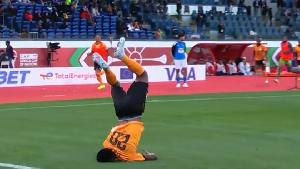 Daka landed on his neck after he tried a backflip celebration


 During the visit, Madam Benson held discussions with Ghanaian business owners to gain insights into their experiences, challenges, and aspirations, while exploring practical ways the Trade House can support business growth and improve access to the UK market.
 “This initiative is a testament to our commitment to fostering economic collaboration and ensuring that Ghanaian businesses in the UK have the necessary support to thrive. Through partnership and dialogue, we can build stronger ties and create opportunities for our entrepreneurs to succeed,” she said.
 Mrs. Benson also highlighted the critical role of the Ghanaian diaspora in national development, urging them to take advantage of opportunities offered by the Trade House to grow their businesses and contribute to Ghana’s economic progress.
 The Ghana Trade House, inaugurated as a central hub for trade and investment promotion, is expected to improve access for Ghanaian entrepreneurs to the UK market, showcase the diversity of Ghanaian products, culture, and innovation, and further strengthen bilateral trade relations between Ghana and the United Kingdom.