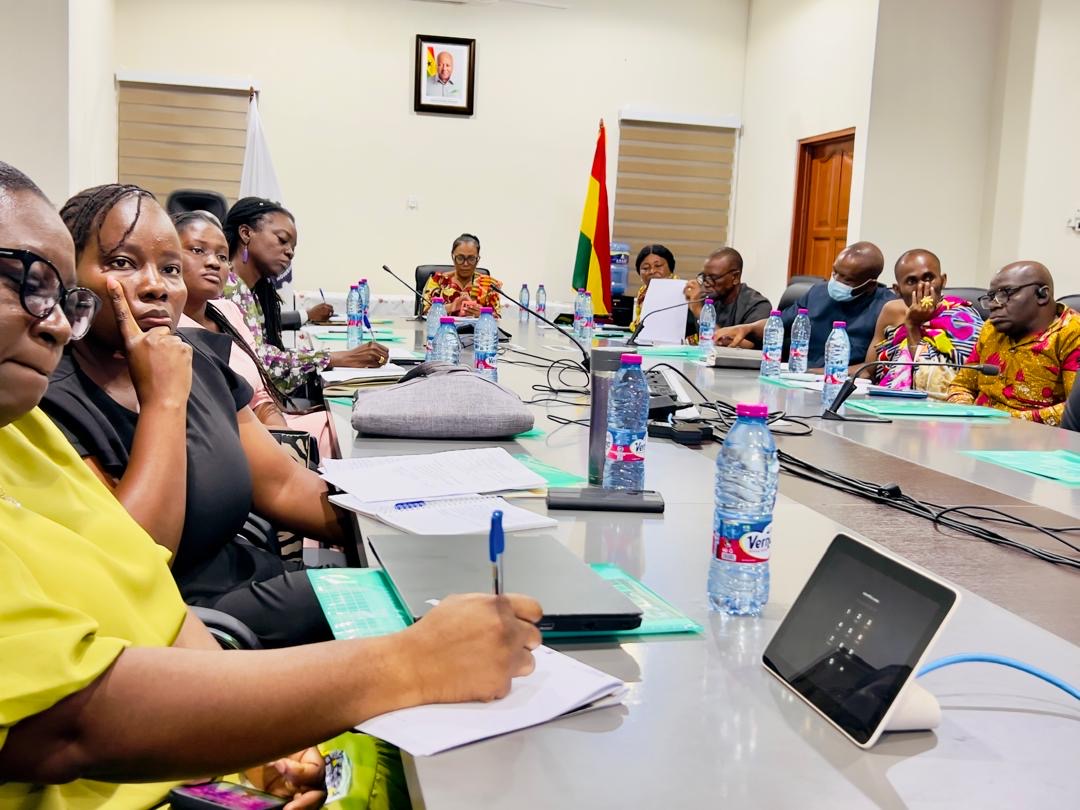
A wave of diplomatic retaliation emerges as U.S. widens travel ban
A wave of diplomatic retaliation is emerging across the globe as the United States widens its travel ban and tightens visa restrictions, prompting several nations to respond by targeting American travellers.
In recent weeks, the U.S. administration expanded its visa ban policy to 39 countries, including Antigua and Barbuda and other Caribbean and African nations, citing security concerns and alleged immigration overstays. The move sparked immediate condemnation from affected governments and has triggered a shift toward visa reciprocity and defensive foreign policy measures.
The most forceful response so far has come from Niger, which has enacted a sweeping prohibition on U.S. citizens:
“Niger is completely and permanently prohibiting the issuance of visas to all U.S. citizens and indefinitely banning entry to its territory,” its government declared.
While the State Department has long advised against travel to Niger due to political instability and security risks, the latest measure represents a major escalation in diplomatic tensions.
Earlier this year, Chad also suspended the issuance of visas to U.S. nationals, announcing the move shortly after being named on a previous U.S. travel ban list.
Chad’s president emphasised the principle of reciprocity:
The suspension will remain “until equality and mutual respect in travel policy is restored.”
While not all newly restricted nations have adopted retaliatory bans, diplomats in multiple capitals are calling for coordinated responses if Washington does not reconsider its stance.
In the Caribbean, where Antigua and Barbuda and Dominica now face U.S. restrictions on business and student visas, leaders are monitoring the diplomatic landscape closely.
Officials warn that if punitive measures continue to escalate, reciprocal action cannot be ruled out across the region.
The sharp rise in visa conflicts signals a shift away from the international travel norms of recent decades. Experts warn that an expanding cycle of retaliatory restrictions could:
• Deepen geopolitical divides
• Complicate global mobility
• Undermine tourism-dependent economies
As the U.S. doubles down on its visa enforcement posture, more countries may soon join Niger and Chad in closing the door to American travellers, setting the stage for a broader global standoff over travel rights and diplomatic respect.
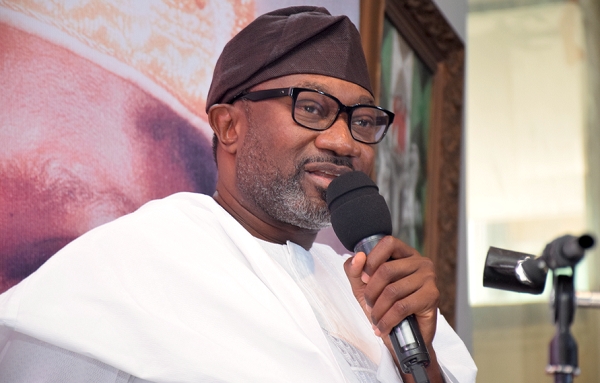
Nigerian billionaire Femi Otedola has sold his controlling stake in Geregu Power Plc, one of Nigeria’s key electricity producers, in a $750 million deal.
In a landmark $750 million transaction, Otedola has fully exited Geregu Power Plc, one of the country’s most strategic electricity generation companies, marking one of the largest private power-sector divestments in Nigeria’s history.
The sale closes a 12-year investment cycle and significantly boosts Otedola’s standing among Africa’s top billionaires.
The divestment followed a restructuring of Amperion Power Distribution Company Limited, Geregu Power’s majority shareholder.
Through the deal, MA’AM Energy Limited, an Abuja-based energy company, acquired a 95% equity stake in Amperion, effectively taking control of 77% of Geregu Power previously held indirectly by Otedola.
The transaction, which closed on December 29, 2025, did not involve a direct transfer of Geregu shares on the Nigerian Exchange (NGX), leaving the company’s listed shareholding unchanged.
A consortium of Nigerian banks led by Zenith Bank reportedly financed the acquisition, with BlackBirch Capital serving as financial adviser.
The $750 million sale confirms Otedola’s full exit and represents a profit of roughly $618 million, underscoring the scale of value creation in Nigeria’s privatized power sector.
From Commodities to Power
Otedola, who first built his fortune in commodities trading, sold his controlling stake in Forte Oil in 2019 to pivot aggressively into the power sector, making Geregu Power the centrepiece of his strategy.
After acquiring the plant during Nigeria’s power sector privatisation in 2013, he increased his stake to more than 95% before gradually selling down holdings in 2022 and 2023 to bring in institutional investors.
Those investors included the Nigerian government, Afreximbank’s Fund for Export Development in Africa, and China’s State Grid Corporation, a move that strengthened Geregu’s balance sheet and governance profile ahead of its listing on the NGX.
Until the latest transaction, Otedola retained indirect control of about 77% of Geregu Power, overseeing its growth into one of Nigeria’s most profitable power producers.
The sale to MA’AM Energy marks his full exit, concluding a 12-year investment cycle that delivered one of the largest private equity-style returns in Nigeria’s energy sector.
Building a Powerhouse
Under Otedola, Geregu grew from a 40-megawatt plant into a 435-megawatt powerhouse, contributing roughly 10% of Nigeria’s national grid and consistently generating ₦20 billion ($133 million) in annual dividends.
Following the transaction, Geregu Power announced a board reconstitution, with a new chairman and several new directors, while the outgoing executive team stepped down, signalling a complete leadership transition.
Financially, the company remains strong. For the nine months ending September 30, 2025, Geregu reported ₦131.47 billion ($877 million) in revenue, up nearly 17% year-on-year, and a profit after tax of ₦25.1 billion ($167 million), reflecting resilience amid rising costs.
The company is currently valued at ₦2.85 trillion ($1.9 billion) and trades at ₦1,140 ($7.60) per share, making it one of the most capitalised and profitable firms on the NGX.
Wealth and the Bigger Picture
For Otedola, the exit also boosts his personal wealth. Now worth approximately $1.6 billion on the Forbes list after adding roughly $100 million this year, he is expected to climb further in Africa’s billionaire rankings.
He remains chairman and the largest individual shareholder of First HoldCo Plc, where he is focusing more capital on financial services — a strategy reflected in previous exits, including Forte Oil.
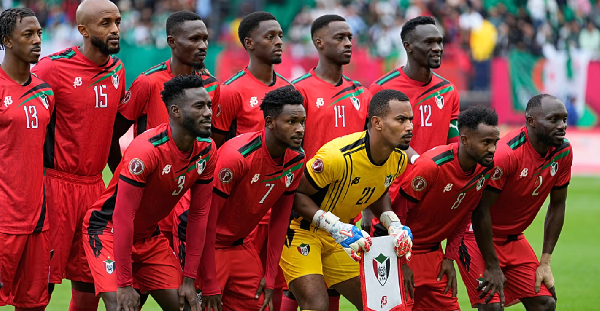
The Sudanese men’s national team is coached by Kwesi Appiah, the former Black Stars coach
Sudan has secured qualification for the Round of 16 at the 2025 Africa Cup of Nations (AFCON) as one of the best third-placed teams, following Morocco’s victory over Zambia.
The result ensured that Sudan accumulated enough points to progress from the group stage, marking a significant achievement for the Sultans of Jediane at the continental showpiece.
Sudan’s qualification comes on the back of a historic campaign in which they recorded only their second-ever win in AFCON history during the ongoing tournament.
The milestone further cements the growing impact of head coach Kwesi Appiah, who has guided the team to one of its most successful AFCON performances to date.
Under Appiah’s leadership, Sudan has shown renewed tactical discipline and resilience, enabling it to compete strongly against more established African sides.
The Round of 16 qualification represents a major boost for Sudanese football and a proud moment for the nation, as the Sultans of Jediane continue to defy expectations at AFCON 2025.
Sudan will now await confirmation of their next opponents as the knockout stage of the tournament gets underway.
When outspoken politician and businessman Kennedy Agyapong, during an outreach engagement in the Central Region in December 2025, said the Ghana Revenue Authority (GRA) must stop intimidating entrepreneurs and instead support job creation, he struck a nerve.
“The GRA should stop treating Ghanaian businessmen like criminals. When people try to build companies in this country, they go through too much frustration. How do we expect to create jobs when the very institutions meant to help are scaring business owners?”
The NPP presidential hopeful is not alone. Similar concerns have been raised before.
In 2024, during an interaction with members of the Ghana Chamber of Commerce and Industry, Vice President Dr. Mahamudu Bawumia also accused the Authority of harassing businesses under the guise of tax collection.
According to Dr. Bawumia, the problem lies in the GRA’s practice of setting unrealistic revenue targets for its officers — a situation that results in overtaxing existing businesses instead of expanding the tax base.
“They are harassing businesses. That harassment is coming from the sort of targets that are created at their office. They are setting unrealistic targets. Because the tax base is narrow, officers are given monthly targets and are left wondering where to find the money.”
“So they return to the same taxpayers — people already paying — and come up with new reasons for them to pay more.”
But beyond the politics and soundbites, one question matters most:
How do Ghanaian businesses actually feel about the GRA’s impact on their survival and growth?
To find out, Business Outlook with Vivian Kai Lokko put the question directly to the public across its social media platforms.
The responses reveal a story that goes far deeper than a simple for-or-against tax debate.
The Verdict from the Polls
Across LinkedIn, X (Twitter), TikTok, and Instagram, one message stood out clearly: many businesses feel more pressure than support.
LinkedIn — a platform dominated by professionals and formal business operators — showed a more nuanced response:
56% say the GRA is hurting businesses
33% say it is both helping and hurting
11% believe it is helping On X (Twitter), opinions were split and uncertain:
38% say hurting
38% say both helping and hurting
19% are not sure
6% say helping However, on platforms closer to everyday business activity and informal enterprise, the verdict was far less mixed. TikTok
79% say hurting
21% say helping Instagram
100% say hurting
What the Data Really Tells Us
This is not a tax-rejection poll. It is a lived-experience poll.
The closer respondents are to daily cash-flow pressures, informal trading, and survival-driven entrepreneurship, the more negative their perception of the GRA becomes. Platforms like Instagram and TikTok — home to micro-entrepreneurs, traders, creatives, and side hustlers — delivered the harshest verdicts.
Meanwhile, LinkedIn users, often salaried professionals or operators within the formal sector, acknowledged the importance of taxation but still expressed deep frustration.
The message is clear: the problem is not taxation itself — it is how tax enforcement is experienced.
Supportive or Punitive? That’s the Real Debate
Businesses are not arguing against paying taxes. They are questioning whether the system:
understands their cash-flow realities,
supports growth during difficult economic cycles, and
treats them as partners in development rather than targets for extraction. When compliance feels intimidating instead of enabling, the cost is not just frustration — it is slower growth, job losses, and discouraged entrepreneurship. As of 2024, SMEs in Ghana contributed about 70% of GDP and accounted for roughly 92% of all businesses — making their survival a national economic priority.
Why This Matters for Ghana’s Economy
Small and medium-sized enterprises are the backbone of Ghana’s economy. They create jobs, drive innovation, and sustain communities. If these businesses consistently feel pressured rather than supported, the long-term consequences go far beyond tax revenue.
A tax system that works must do two things at once: collect revenue efficiently and build trust with the businesses that generate that revenue.
Right now, trust appears to be the missing link.
The Bottom Line
Kennedy Agyapong’s comments may have reignited the conversation, but the polls suggest the issue is far bigger than politics.
For many Ghanaian businesses, the real question is not: “Should we pay taxes?” It is: “Does the system help us survive long enough to pay them?”
Until that gap is addressed, the perception of the GRA — fair or not — will continue to tilt toward hurting rather than helping.
By Vivian Kai Lokko
The author is the Editorial Lead for Business Outlook with Vivian Kai Lokko, a high-impact digital platform for smart conversations on business, leadership, and the economy.
DISCLAIMER: The Views, Comments, Opinions, Contributions and Statements made by Readers and Contributors on this platform do not necessarily represent the views or policy of Multimedia Group Limited.
DISCLAIMER: The Views, Comments, Opinions, Contributions and Statements made by Readers and Contributors on this platform do not necessarily represent the views or policy of Multimedia Group Limited.
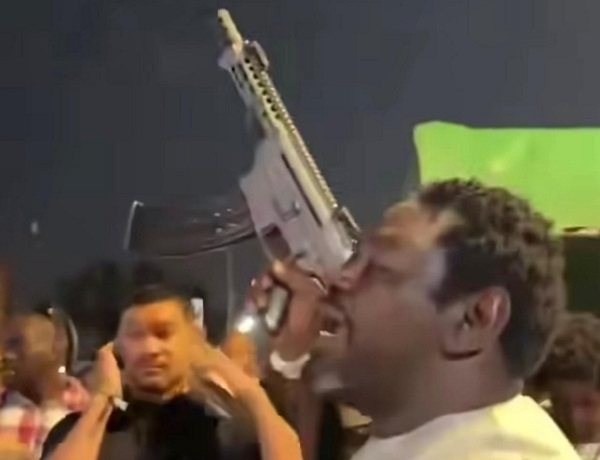
Dancehall superstar Shatta Wale performed at the event
The 2025 End-of-Year Dinner and Awards Night of Bills Micro-Credit Limited in Accra was more than a corporate celebration — it was a night of high-energy performances that had staff and guests dancing and singing along.
From gospel to Afrobeats, the evening’s music segment brought together some of the biggest names in the industry, combining entertainment with the recognition of staff excellence.
Gospel singer Nacee kicked off the night with a stirring ministration, offering a reflective pause before the party atmosphere took over.
Queen Mona4Real then raised the energy with an upbeat performance that had the crowd on their feet, while dancehall superstar Shatta Wale described founder Richard Nii Armah Quaye as “a brother” and ignited the audience with his signature hits.
Adding an international flair, Nigerian superstar Davido delivered a set that had everyone singing and dancing along to his chart-topping songs.
Ghanaian singer Moliy closed the night with soulful performances, leaving guests with unforgettable memories.
Speaking on the entertainment segment, CEO Romeo Richlove Kweku Seshie said the music was more than just fun — it was a way to celebrate staff dedication and foster team spirit.
Board Chairman Kojo Dei Kwarteng encouraged employees to enjoy the festive atmosphere, emphasising that success at Bills Micro-Credit is celebrated with both recognition and joy.
Founder and President of RNAQ Holdings, Richard Nii Armah Quaye, praised staff for their hard work and highlighted the role of entertainment in bonding teams and uplifting morale.
The night proved that at Bills Micro-Credit, corporate celebrations go beyond awards and speeches — they are vibrant, high-energy experiences designed to reward staff, strengthen connections, and create lasting memories.
Dermatologist and Founder of Skin Foundation, Dr Kofi Ansah Brifo, has revealed that indulging in skin bleaching disrupts the skin’s ability to heal itself. Bleaching makes one prone to slow healing of wounds, he said.
According to Dr Brifo, patients tend to blame the doctor if their wounds or injuries are not healing quickly enough.
They ignore the fact that layers of the skin have been peeled off, leaving the bleached skin exposed to all kinds of risks, which slows down the healing process.
Speaking on the GTV Breakfast Show on Tuesday, December 30, 2025, Dr Brifo explained that the potency of steroids in some products affects the collagen, which helps with healing.
He added that surgeries are difficult to perform on bleached skin and cautioned the public to put a stop to bleaching.
“Someone gets involved in an accident and is brought to the emergency room, and you can’t even perform surgery on this person because the skin has been bleached,” he said.
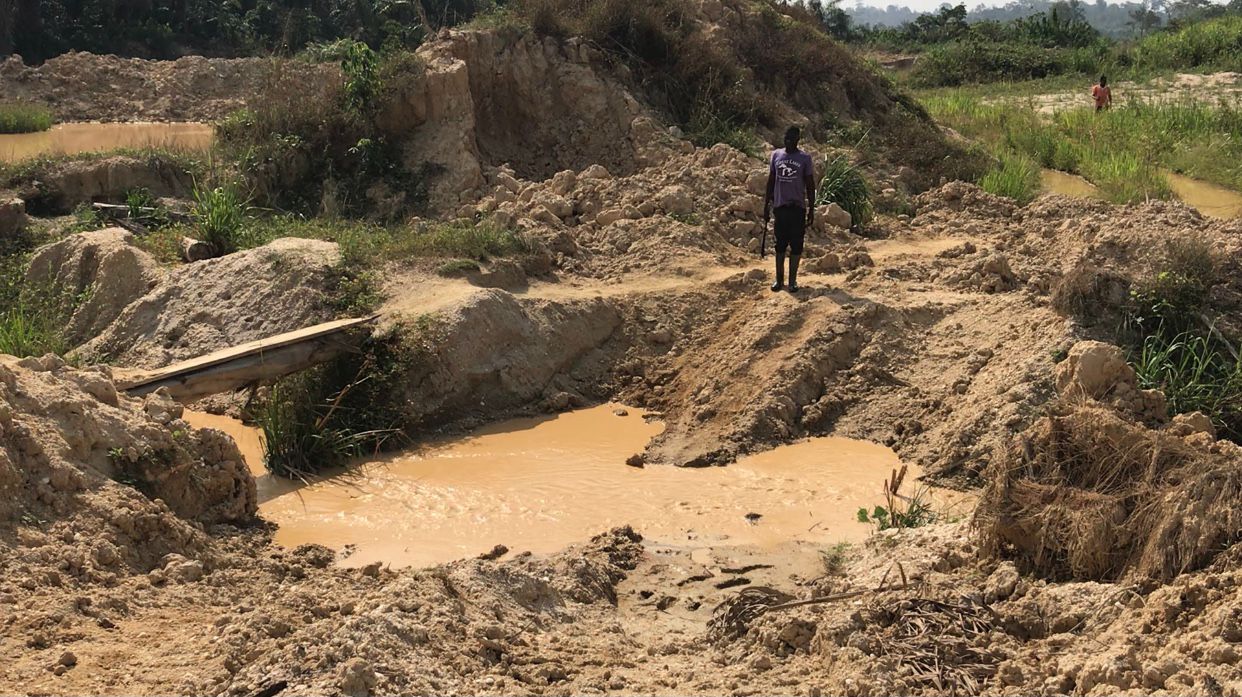
Scene from one of the galamsey sites visited by NAiMOS
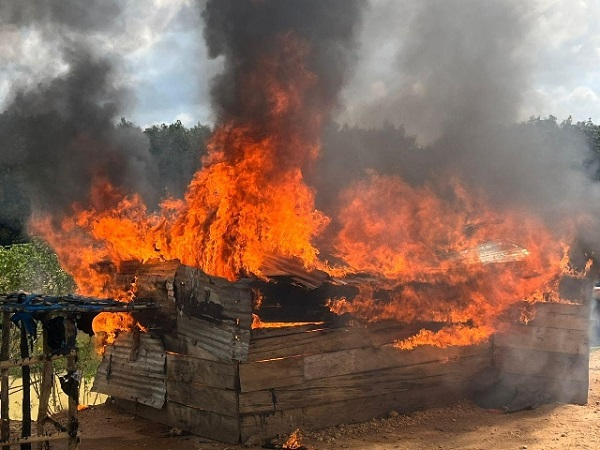
The National Anti-Illegal Mining Operations Secretariat (NAiMOS) has intensified the fight against illegal mining (galamsey) in the Western and Western North Regions.
A task force from NAiMOS recently stormed several illegal mining sites at Hiawa in the Amenfi Central District of the two Western Regions.
The task force destroyed assorted illegal mining equipment, including makeshift structures, water pumping machines, and wooden gold washing platforms, among others.
The task force has intensified its anti-galamsey crackdown in areas currently reoccupied by illegal miners, causing severe havoc to water bodies, forests, and farmlands in complete disregard of all environmental laws and regulatory oversight.
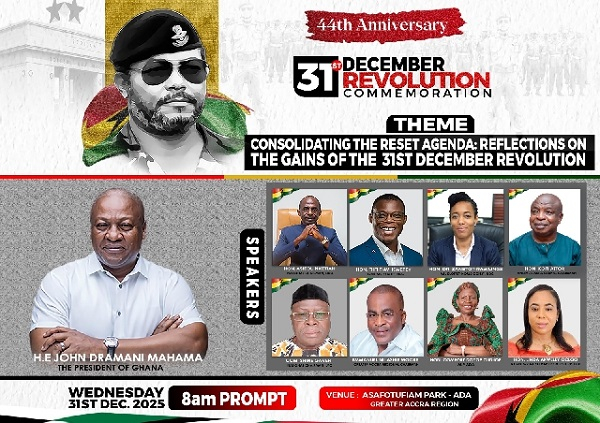
The National Democratic Congress (NDC) has announced plans to commemorate the 44th anniversary of the 31st December Revolution in Ada in the Greater Accra Region.
The event is scheduled to take place on Wednesday, December 31, 2026, at Asafotufiam Park in Ada, beginning at 8:00 a.m.
According to the party, this year’s commemoration will be held under the theme: “Consolidating the Reset Agenda: Reflections on the Gains of the 31st December Revolution.”
The anniversary celebration is expected to bring together party leadership, government officials, party faithful, and sympathisers from across the country to reflect on the historical significance of the 31st December 1981 Revolution and its impact on Ghana’s political, social, and economic development.
The annual event traditionally serves as a platform for the NDC to assess the legacy of the revolution and reaffirm its commitment to the principles of accountability, social justice, and national development.
Party officials say the 2026 commemoration will also provide an opportunity to align the ideals of the revolution with the party’s current “reset agenda” and broader governance priorities.
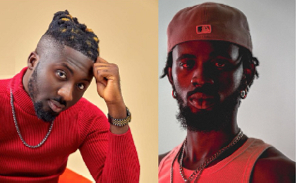
Amerado (L) and Black Sherif are among the artistes who had frights on stage in 2025
Among many things that are inevitable when it comes to live performances of artistes, stage slips and accidents are ones that mostly top the list.
In 2025, a number of Ghanaian artistes had their fair share of stage accidents, some very hilarious while others were very scary. In this list are some of them.
1. Amerado
Amerado’s stage collapsed during a live performance at Baidoo Bonsoe Senior High Technical School.
In a video that circulated online, the artiste was seen energetically performing before the stage collapsed beneath him, causing him to fall.
The rapper sustained some injuries but has recovered well now.
2. Olivetheboy
“Goodsin” hitmaker Olivetheboy, at the 2025 edition of Tidal Rave, slipped and fell butt-first on stage while performing his hit song “Asylum”.
The artiste made a light-hearted joke out of the incident and continued with his session without sustaining any major injuries.
3. Wendy Shay
Singer Wendy Shay suffered a stage mishap that resulted in her falling while performing live at the 2025 GMB grand finale.
The singer didn’t suffer any injuries and light-heartedly laughed it off.
Text
4. Sefa:
Singer Sefa, while performing at the 40th birthday celebration of business mogul Richard Nii-Armah Quaye on a levelled platform, nearly fell.
She, however, picked herself up and continued her performance.
5. Black Sherif
“Iron Boy” Black Sherif, at the 2025 edition of his annual concert, Zaama Disco, had a brief moment of stage mishap where he slipped.
He, however, got back on his feet to continue his electrifying performance without suffering any injuries.
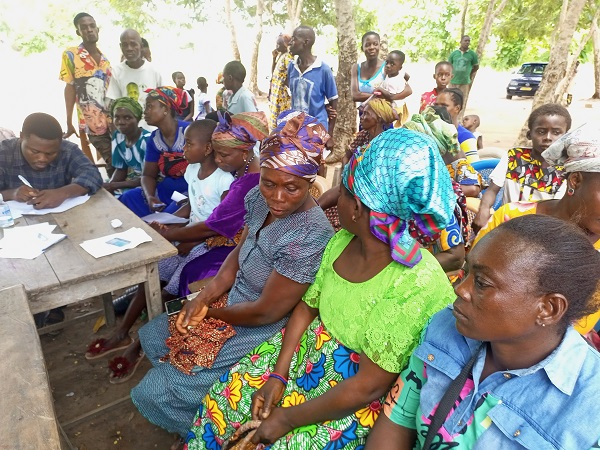
More than 600 people in three communities in the Jirapa Municipality, have undergone HIV, Hepatitis B Virus (HBV) and Hepatitis C Virus (HCV) testing in a community-based health awareness, screening and testing campaign.
Out of the 647 people that registered for voluntary screening, testing and counselling, 13 tested positive for HCV, 19 for HBV, while three had HIV, and all were referred to the Clinic for treatment
The screening exercise was organised by Sahara Advocates of Change (SAC) in partnership with the Hain Polyclinic in the Ping, Nindoo and Hain communities as part of the “Knock and Respond: Breaking Stigmatisation Barrier” project.
The project was being implemented by SAC, in collaboration with the Hain Polyclinic, with support from Gilead Sciences, to encourage registered clients to take their regular medications and to create community solutions to reduce stigma and virus spread.
A statement by SAC to the Ghana News Agency (GNA) in Wa indicated that the project was also to raise awareness and educate the people on HIV, HBV and HCV, and encourage early detection and treatment.
Stigmatisation discourages people from testing for HIV – Dr Bakari
“About 2,000 rural community members were sensitised and now have a clearer perspective of what the diseases are and their impact on their lives if they are infected with it,” the statement said.
It indicated that stigma had forced about 50 clients with HIV and 25 with HBV, who were receiving medication at the Hain Polyclinic to relocate to other communities to access care.
The statement said the campaign facilitated community-led dialogue on addressing stigma and preventing further spread of the diseases, with each community providing its solutions in that regard.
In the Ping community, for instance, the people expressed their resolve to desist from discriminating against persons living with these diseases and to ensure their inclusion in communal activities.
The statement said the Chief of the Nindoo community also encouraged his subjects to support persons living with those diseases by engaging them in communal activities.
At Hain, the women and community leaders called for moral support and inclusion of persons living with HIV and hepatitis in community activities.
They also emphasised the need for precautionary measures to prevent transmission of those conditions.
The statement attributed the relatively high prevalence of those conditions in the area to some cultural and hygiene practices, including sharing calabashes, open defecation and poor handwashing habits.
The statement said the leadership of the Hain Polyclinic expressed gratitude to SAC and Gilead Sciences for the campaign.
They said it would contribute to increased awareness and reduced stigma and transmission rates of those diseases in the area.
Madam Rubelyn Yap, the Executive Director of Sahara Advocates of Change, said the project had achieved its objectives, particularly in creating community-driven solutions to reduce stigma and virus spread.
She noted that the campaign had improved HIV, HBV and HCV awareness in those communities and urged newly diagnosed persons to begin treatment.
Madam Yap also encouraged people to get tested to know their status and to receive treatment without fear of discrimination.
East Legon crime raid: 120 suspects arrested in major police joint operation
Professor Mensah has accusing them of talking without offering practical solutions
Professor Kobby Mensah, an Associate Professor at the University of Ghana Business School (UGBS) and Chief Executive Officer of the Ghana Tourism Development Company Limited, has criticised the Minority in Parliament following their press conference held on Monday, December 29, 2025.
The Minority, led by former Minister of Information, Kojo Oppong Nkrumah, accused the ruling National Democratic Congress (NDC) government of lacking originality and competence in economic management, particularly in relation to the Bank of Ghana’s Gold-for-Reserves programme.
However, reacting to the claims in a post on X, Professor Mensah dismissed the Minority’s criticisms, accusing them of talking without offering practical solutions.
Responding directly to Kojo Oppong Nkrumah, the professor questioned the track record of the Minority while they were in government.
“Which of your ‘old’ ideas reduced the pound sterling from 23 cedis to 14? The dollar from 16 cedis to 11? Or reduced fuel from 20 cedis per litre to 10.37? Talk, Talk Party,” he wrote.
‘No new ideas, just rebranding’ – Minority lashes out at government
The Minority’s press conference focused on what they described as a significant financial loss to the state estimated at $214 million under the Gold-for-Reserves programme managed by the Bank of Ghana.
They are calling for a bipartisan parliamentary inquiry to investigate the circumstances surrounding the losses and to recommend safeguards to prevent a recurrence.
Addressing the media, Kojo Oppong Nkrumah argued that the government has failed to introduce new or superior economic ideas, claiming it has merely repackaged policies inherited from the previous administration.
“The truth about this government is that they have not introduced any superior economic ideas. All they have been doing is rebranding, renaming old things and sometimes even hiding the details until we, the Minority, bring them to the public’s attention,” he said.
He further questioned what innovations the government would introduce once the International Monetary Fund (IMF) programme ends in mid-2026.
“So, when the IMF is no longer here by the middle of 2026 and they are finished rebranding the ideas they inherited, which new ideas would they be introducing? Which old ideas would they now be left with to copy, and who will be shepherding them?” he asked.
Beyond the inquiry, the Minority is also demanding the establishment of a parliamentary ad-hoc investigative committee to probe the Gold-for-Reserves transaction in detail.
They insist that the Bank of Ghana and the Ghana Gold Board must disclose the full fee structure, pricing formula, selection criteria for aggregators, and all foreign exchange arrangements linked to the programme.
According to the Minority, environmental concerns must also be addressed, including the suspension of mining permits in forest reserves and the enforcement of strict traceability measures.
“At present, we have every reason to believe that state money is being misused,” Kojo Oppong Nkrumah stated.
The Minority further expects the Governor of the Bank of Ghana and the Chief Executive Officer of the Ghana Gold Board to appear before the proposed committee to answer questions regarding the transaction.
Which of your “old” ideas reduced the pound sterling from 23 cedis to 14? Dollar from 16 to 11 cedis; Or reduced fuel ⛽️ from 20/liter to 10.37 🤷♀️ Talk Talk Party https://t.co/gy0TVazbCp
Public policy advocacy is a constant wrestle between precision/rigour and clarity. I thought my recent piece on the GoldBod losses saga was comprehensive, and therefore convenient. But even finance-steeped friends reached out to advise that I need to get more focused.
Three key questions, in their view, are confusing people, and clearing them up would do far more good for the important debate than discussing “accounting treatment” disputes.
The Questions
How exactly did GoldBod incur losses?
Even if GoldBod incurred losses, are they significant?
But even if significant losses have occurred, aren’t they vastly offset by the benefits of the Cedi’s stability in recent years?
Questions 2 and 3 are, obviously, tightly linked.
I will try and be super-focused and just walk readers through my reasoning without any philosophical meandering.
The Answers
Part I: How did the losses come about
According to the IMF, GoldBod sold about $5 billion to the Bank of Ghana (BoG) “aggregated” from small-scale and artisanal (ASM) gold miners.
2. It also bought $2.6 billion from legacy sources, including large-scale mining companies, outside the GoldBod channel.
3. It then spent about $10 billion intervening in the foreign exchange (FX) market to deliver the Cedi stability Ghanaians are now enjoying.
4. It still has ~$11.4 billion of “reserves”, of which at least $3.58 billion is made up of gold bullion. I say “at least” because BoG uses a conservative valuation for its gold holdings. Using spot prices today (not advisable) would imply $5.3 billion of gold in over $13 billion of reserves.
5. Trust me, all these numbers are relevant. You will soon see, so keep track.
6. The IMF says that the gold that was bought from local ASM miners led to a loss of 4.28% ($214 million). That is to say the dollar value of the Cedis supplied by the BoG to the miners through GoldBod and the dollars delivered to the BoG from the overseas buyers (we shall call them “off-takers”) don’t match; there is a shortfall.
7. (Note: we are all dependent on the IMF’s data because the IMF is the only entity the government would give such data to.)
8. How that arises is not difficult to explain at all. I will walk readers through two hypothetical transactions using real market numbers for two separate days.
9. Let’s start with 10th December 2025.
The LBMA benchmark for 24 carats/K gold (think of this as the “global price for pure gold”) was: USD 4,196 per troy ounce (think of this as the unit in which gold is sold internationally).
The official exchange rate used by GoldBod: 11.42 GHS/USD
GoldBod price per Ghana pound (23 carats/K) was: GHS 11,446 (the “Ghana pound” is the main local unit for gold; 23 carats is the usual assay benchmark locally).
The now famous bonus offered by GoldBod to local miners to encourage them to sell: GHS 650 per Ghana pound of 23K.
Convert 23K “pound” to 24K equivalent = 11,943.652 GHS per Ghana pound of 24K
Convert Ghana pound to ounces = 47,934.078 GHS
Convert to USD = USD 4,197.380
The result is a tiny premium (GoldBod is paying more for local gold than it can sell internationally).
Premium vs 4,196 = USD 1.38/oz; Percent = +0.033%
Now add the bonus on top of the 23K price per Ghana pound: 11,446 + 650 = 12,096 GHS (23K)
Convert to 24K equivalent = 12,621.913 GHS (per Ghana pound of 24K)
Convert to troy oz = 50,656.178 GHS per troy oz (24K)
Convert to USD = USD 4,435.742
Premium = 4,435.742 − 4,196 = USD 239.742 per ounce
Percent = 239.742 / 4,196 = 5.714%
10. So, on that day, GoldBod lost 5.714% just on the buying side. Even if it had sold at the full international price, it would still have lost money. We shall explain in a moment why it can’t really sell at the full international price, either.
11. Now, let’s take today, the 29th of December.
GoldBod quotes GHS 11,467 per Ghana pound
Per ounce equivalent = GHS 46,023.112
Per USD per ounce at official exchange rate of 11.10 = USD 4,146.22
Compare to the “world market price” of USD 4,325
Implied Discount (GoldBod is making a marginal profit) = USD 178.774
In percentage terms = 4.13% discount
But remember the bonus!
With bonus = GHS 12,117 total per Ghana pound
Ounce equivalent = GHS 48,631.789
USD equivalent = USD 4,381.242
Implied Premium = USD 56.242
Premium % = 1.30% premium (GoldBod is making a loss of 1.30% per trade)
12. It should be obvious what is happening here: ASM gold was a relatively efficient market in Ghana for many years with many buyers and many sellers until GoldBod was imposed on the system. The miners were used to getting as much of the “world price” as possible. They sold through lean, mean, and highly efficient intermediaries with very low costs who could time the onward sale to maximise their margin.
13. In the current model, GoldBod buys all the gold in the ASM market and must be ready to buy at all times and deliver to offtakers in all weather. It must offer close to market rate across the board all lose to smugglers or from miners and local traders just hoarding the gold. On the domestic, buying, side, things are that simple.
14. On the external, selling, side, GoldBod must sell at a discount to World prices because one has to factor in freight, insurance, and the assay verification and other costs on the importer’s side since this is the dore (raw gold) market outside a trusted exchange. The importer/offtaker takes a risk and must be compensated.
15. The importer/offtaker also advances dollars to the Bank of Ghana/GoldBod because the liquidity needs of the BoG are pressing and fast settlement is vital for that reason. That is also a risk that the offtaker must be compensated for.
16. In India, dore gold has favourable customs treatment because the Indian government wants to promote refining in India. If the gold was being refined in Ghana, GoldBod would have been hit by additional discounts because the importer/offtaker’s custom duties would have increased.
17. In short, when you displace a large, heterogenous, group of buyers, sellers, and intermediaries, with a very concentrated ecosystem of a super-aggregator (Bawa Rock), a few mega offtakers in India and Dubai, and one ultra-intermediary (GoldBod), you can get efficiency but risks can also concentrate and by the time you compensate for those risks, there would be losses.
Part II: Are the losses even significant?
18. If GoldBod was operating strictly using its own capital, yes!
19. In 2025, GoldBod was allocated $279 million as working capital but the Finance Ministry did not disbursed. We can interpret this to mean that the Ministry was unclear about its trading strategy of model.
20. But assuming it had disbursed and this was the only fiscal buffer available to the GoldBod, not the limitless-seeming Bank of Ghana tap. Then:
Consider losses on the ASM doré leg at US$214 million through end-Q3 2025 (i.e. about 9 months).
Annualising that run-rate gives roughly:
– Now assume GoldBod’s only loss-absorbing capital is the Ministry of Finance allocation of US$279 million.
Time to wipe-out (straight-line, assuming no recapitalisation)
In effect, it would take 12 months for GoldBod to become functionally insolvent if it continued operating at the same scale and loss structure.
Do you realise though that the Ministry of Finance would be forced to recapitalise it due to political reasons? You see why some of us are arguing that this is a fiscal subsidy that must be transparently borne by the policy owners?
In fact, a more conservative “functional insolvency” trigger is when half the buffer is gone.
Half of US$279m = US$139.5m.
At ~US$285m/yr loss rate:
Operationally: you would expect serious stress within ~6 months, and likely failure within ~12 months, absent a bailout or a major restructuring of the model.
21, Remember that Cocobod is a policy institution too. Yet, we have all been witnessed to how capital stress has damaged it.
22. Using SIGA and Auditor General reports, we have attempted to construct similar loss-per-turnover numbers for Cocobod below.
23. See the numbers for Cocobod below:
24. As readers can judge themselves, Cocobod records significantly lower losses benchmarked against the reported GoldBod losses.
25. The self-evident implication is that even as a policy organ of the government of Ghana (GoG), a consistent near- 5% loss on annual turnover by any would seriously stress its sponsoring government.
26. Bear in mind that the loss prospect could amplify if a single off-taker refused delivery, a prospect far from remote given the current level of concentration.
Part III: But don’t the benefits far outweigh the costs?
27. This is obviously the most complex part of the analysis. But if readers bear with me and follow the numbers, they should be fine.
28. It is a trivial point for everyone to grasp regardless of their economics knowledge that no one factor alone explains exchange rate movements. Surveys of economists by popular research houses normally surface more than 15 major factors.
Source: Consensus Economics (2013)
29. In Ghana, we know that the fiscal deficit and how it is financed, inflation, export performance, and a whole host of factors both influence the exchange rate and are in turn influenced by it.
30. No serious person would thus attribute the stability being enjoyed by the Cedi so far to just one factor, such as the policy innovation represented by the GoldBod.
31. The right question thus is: how much of the Cedi’s stability should we attribute to the GoldBod and through what mechanism has it been exerting its influence? (Some of us have held the position for a while now that the Ghana Cedi is overvalued, and that it has moved from a generally managed float regime to a substantially managed peg one. But that is a separate debate. What is relevant is twofold: a) how the government found the capacity to manage the peg (never a trivial undertaking as the UK learnt on Black Wednesday) and b) whether macro-indicators, such as inflation, move in a manner that makes the peg sustainable.)
32. First, we know that the only plausible mechanism is through the “gold dollars” the GoldBod has diverted from commercial banks and parallel forex markets (which used to get most of the dollars from ASM gold, including even the smuggled portion since smugglers still need Cedis eventually to continue their nefarious trade) to the central bank. The BoG uses these dollars to cushion the Cedi.
33. Remember, however, that only about half of the funds used by the BoG to intervene in the FX market comes from the GoldBod. The remaining 50% comes from other exporters and large-scale gold mines, as well as IMF and other official financial flows. So, whatever impact we attribute to the BoG’s interventions (and remember that intervention alone can never halt depreciation), 50% is what we must attribute to the GoldBod.
34. Second, we know that gold prices have risen dramatically. This has nothing to do with the GoldBod but it is on course to nearly triple the amount of gold dollars in the system compared to, say, 2023.
35. If we use year-end values, the Cedi has risen from 14.7 (2024/12) to the US dollar to 11.14 to the US dollar (2025/12). That is a near -25% appreciation rate.
36. From the historical gold-Cedi relationship, we estimate a lagged effect of 3.9 percentage points appreciation in the Cedi if gold prices rise by 10%. The financial return on gold in 2025 is ~72%. Through a complex series of technical calculations to fix temporality and directionality, we estimate that 8.4% of the Cedi’s appreciation is due to the rise of the gold price through the export channel.
37. It is important to note that gold as a share of exports in Ghana has risen from the mid-30% range about two decades ago to roughly 65% today (double the long-run 2-decade average), a sign of insane overdependency on the commodity’s price rally.
38. The simple result of the above analysis to isolate the GoldBod’s effect is that of the ~25% appreciation rate, the GoldBod must share with other factors a maximal bound of 8% (that is half of the positive residual after accounting for the gold price rally’s effect on export performance).
Note: The clean attribution splits are illustrative and not necessarily econometric
39. A lot of other complex calculations follow to determine the impact to be allocated to the IMF-supervised fiscal consolidation and primary balance enforcement and its influence on money supply; the impact of the improved harvests (primarily a function of rainfall) on food inflation; the debt restructuring effort and the resulting relief from debt servicing; and the fall in interest rates, which appears to have been primarily driven by Finance Ministry policy. All these have had some complex direct or indirect effect on the Cedi.
40. It would be difficult in light of all the above to assign more than 3 percentage points of the 25% Cedi appreciation to the role the GoldBod has played in resourcing the Bank of Ghana’s FX market intervention capacity. Even those who will disagree with this specific estimate cannot dispute the logic of capping GoldBod’s contribution.
41. A 3% appreciation corresponds to about $600 million in relief on the import bill front. A significantly higher number than the $214 million we have been quarreling about.
42. Don’t get me wrong. It is a significant new development that we must all respectfully follow. But it serves no one’s interest, lest of all GoldBod management’s, if we start blowing up expectations. That would amount to setting them up to fail.
43. But we must not be oblivious about the costs of central bank intervention. The cost-benefit ledger extends to that aspect too. As I will show shortly, things don’t end at $600 million in “import burden relief”. Relax, I am not going to try and offset the relief with any speculative symmetric pressure on exporters. There is something more interesting to explore.
44. When BoG (via GoldBod) purchases gold locally in Cedis, it creates new Cedi liquidity. If BoG sterilises (mops up) that liquidity through Open Market Operations (OMO), it converts a monetary expansion into a recurring interest expense.
45. OMO simply means it borrows money from banks and other large institutions to “back” the paper money it has created (keeping things simple.) That money doesn’t come free.
46. On a US$5 billion gold purchase base, sterilising the Cedi created by that purchase through OMO transactions costs the central bank roughly GHS 11–13bn every year at realistic BoG OMO rates.
47. It is thus possible that the BoG will announce losses for this year. In addition to all the opacity and shadowy dealings, these fiscal stresses are the reason why some of us have been consistently wary and apprehensive about all these gold programs. Who has noticed that since the Gold-for-Oil program was terminated there has been no discernible impact at the fuel pumps? Who really was that program serving?
48. Remember also that we have only accounted for GoldBod losses in the Gold-for-Reserves intervention program. If even the other half of the intervention budget implies half of GoldBod’s trading losses, the total costs of the program would easily neutralize the $600 million in import burden relief calculated earlier (not accounting for sterilization costs of the other half of the intervention budget to avoid double-counting).
49. In simple terms, the GoldBod-backed intervention program yields no net benefit to the extent that it does not cover enough of the BoG’s need nor alleviate import burden sufficiently.
50. But that is still in neutral territory. It implies, at worst, that the GoldBod approach once its full costs become transparent cease being the miracle that on the surface it appears to be.
51. There is a more worrying issue. The GoldBod-backed intervention program is generally cost-neutral only whilst the price of gold remains elevated.
52. Readers may recall that the BoG stores some of the gold in its reserves and relies on a liquidity conversion cycle to turn the gold dollars into a cedi cushion in the domestic FX markets. Imagine a sudden drop in the price of gold, perhaps to its historic two-decade mean in the $2000-ish range.
53. Because of the policy commitments, BoG cannot simply suspend the program in its entirety. Not when funds have been advanced and long- or medium-term supply obligations have been established.
54. In such a bear market downside scenario, the BoG’s gold reserves would suddenly lose value in the multibillion-dollar range.
55. Gold bought at the height of the market could then only be liquidated for Cedi cushioning at less than half their value. That would imply printing even more Cedis to underwrite the effort. It is unbelievable how pro-cyclical the whole thing is until you work through all the risk-scenarios.
56. To repeat: the whole GoldBod thing can persist in a reasonably contained manner if the price of gold stays high and volatility continues to tilt upwards than downwards most of the time.
57. A significant drop in the price of gold would hit the program very hard. But then again the entire export channel will implode anyway.
58. Gold is now the real risk-driver for the economy. An important lesson in all of this is that the country should stop bifurcating its budget design into oil and non-oil and use gold and non-gold.
59. As for GoldBod, the more transparency there is, the better prepared this country would be when the markets turn and deft navigation is needed to prevent it from skidding off the tracks.
60. Hopefully, this tightly focused piece has done a better job in addressing the three questions on the minds of many readers.
DISCLAIMER: The Views, Comments, Opinions, Contributions and Statements made by Readers and Contributors on this platform do not necessarily represent the views or policy of Multimedia Group Limited.
DISCLAIMER: The Views, Comments, Opinions, Contributions and Statements made by Readers and Contributors on this platform do not necessarily represent the views or policy of Multimedia Group Limited.
Emmanuel Reagan Fynn is the Ashanti Regional NSS Director
The Ashanti Regional Director of the National Service Secretariat and Deputy Youth Organiser for the National Democratic Congress (NDC), Emmanuel Reagan Fynn, has expressed strong optimism for Ghana’s economic future, predicting the US dollar could dramatically drop to GH₵5.00 by 2026 under a John Dramani Mahama-led administration.
Fynn made these remarks during the NDC Island City Branch end-of-year party at the Island City in Ahenema Kokoben, within the Atwima Kwanwoma constituency of the Ashanti Region.
“Looking at the excellent work the John Dramani Mahama-led administration is doing, I wouldn’t be surprised to see the dollar drop to GH₵5.00 by 2026,” Fynn asserted to enthusiastic party members.
He further highlighted what he described as positive economic developments under the current administration, attributing improvements to the NDC’s policy influence. “Last year, the dollar was trading at 17 cedis, but due to our effective policies, it has now decreased to just over 11 cedis. This improvement has led to lower prices for essential goods such as rice and oil this holiday season compared to last year,” he stated.
Earlier in his address, Fynn expressed gratitude for the collective efforts that have contributed to the party’s electoral success, stating, “Our dedication has yielded results as we have transitioned from opposition to governance. This achievement is a significant milestone in Ghana’s political landscape, and every member deserves recognition for their hard work.”
He reaffirmed the NDC’s commitment to sustainable development over short-term financial assistance, promising substantial job-creation initiatives in the coming year. Fynn also contrasted the current government’s approach with that of previous administrations, which he claimed prioritised personal interests over the needs of dedicated party members.
The year-end celebration attracted a large audience of enthusiastic supporters, including notable figures like Baah Acheamfour, the Deputy Ashanti Regional Secretary of the NDC. Attendees enjoyed lively music, a variety of culinary offerings, and a strong sense of community throughout the event.
As a token of appreciation, the organisers recognised outstanding contributions from various branches, presenting gifts to individuals who have made significant sacrifices for the party over the years.
The Ashanti Regional Director of the National Service Secretariat and Deputy Youth Organiser for the National Democratic Congress (NDC), Emmanuel Reagan Fynn, has expressed strong optimism for Ghana’s economic future, predicting the US dollar could dramatically drop to GH₵5.00 by 2026 under a John Dramani Mahama-led administration.
Fynn made these remarks during the NDC Island City Branch end-of-year party at the Island City in Ahenema Kokoben, within the Atwima Kwanwoma constituency of the Ashanti Region.
“Looking at the excellent work the John Dramani Mahama-led administration is doing, I wouldn’t be surprised to see the dollar drop to GH₵5.00 by 2026,” Fynn asserted to enthusiastic party members.
He further highlighted what he described as positive economic developments under the current administration, attributing improvements to the NDC’s policy influence. “Last year, the dollar was trading at 17 cedis, but due to our effective policies, it has now decreased to just over 11 cedis. This improvement has led to lower prices for essential goods such as rice and oil this holiday season compared to last year,” he stated.
Earlier in his address, Fynn expressed gratitude for the collective efforts that have contributed to the party’s electoral success, stating, “Our dedication has yielded results as we have transitioned from opposition to governance. This achievement is a significant milestone in Ghana’s political landscape, and every member deserves recognition for their hard work.”
He reaffirmed the NDC’s commitment to sustainable development over short-term financial assistance, promising substantial job-creation initiatives in the coming year. Fynn also contrasted the current government’s approach with that of previous administrations, which he claimed prioritised personal interests over the needs of dedicated party members.
The year-end celebration attracted a large audience of enthusiastic supporters, including notable figures like Baah Acheamfour, the Deputy Ashanti Regional Secretary of the NDC. Attendees enjoyed lively music, a variety of culinary offerings, and a strong sense of community throughout the event.
As a token of appreciation, the organisers recognised outstanding contributions from various branches, presenting gifts to individuals who have made significant sacrifices for the party over the years.
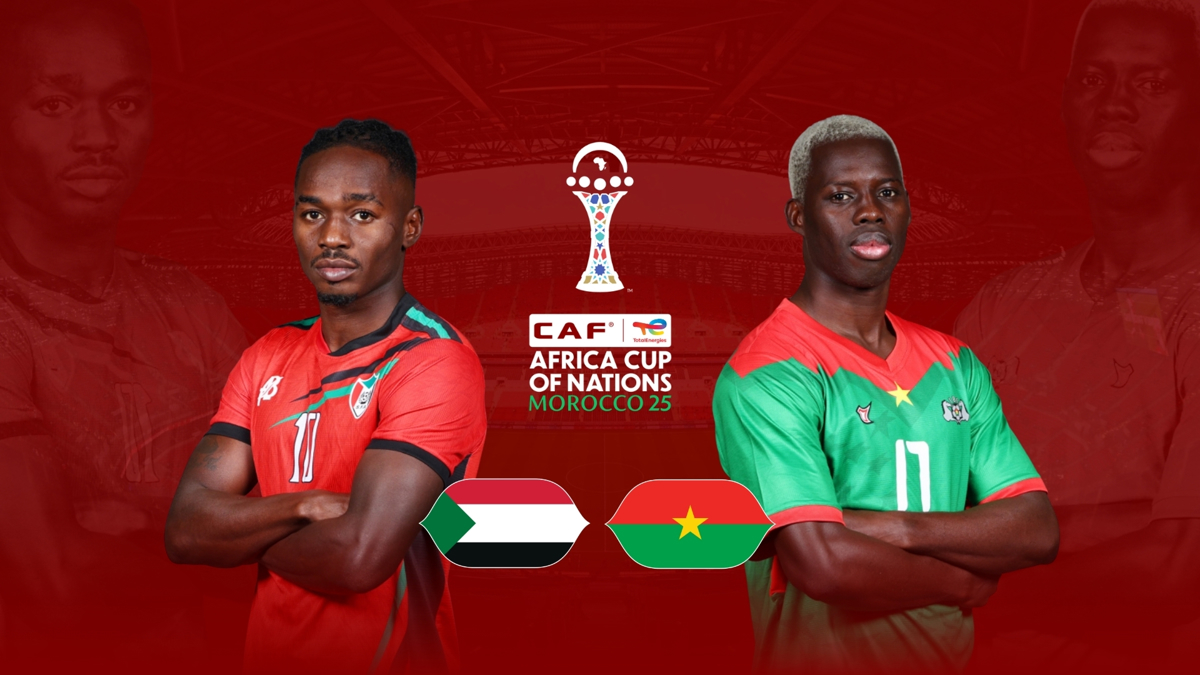
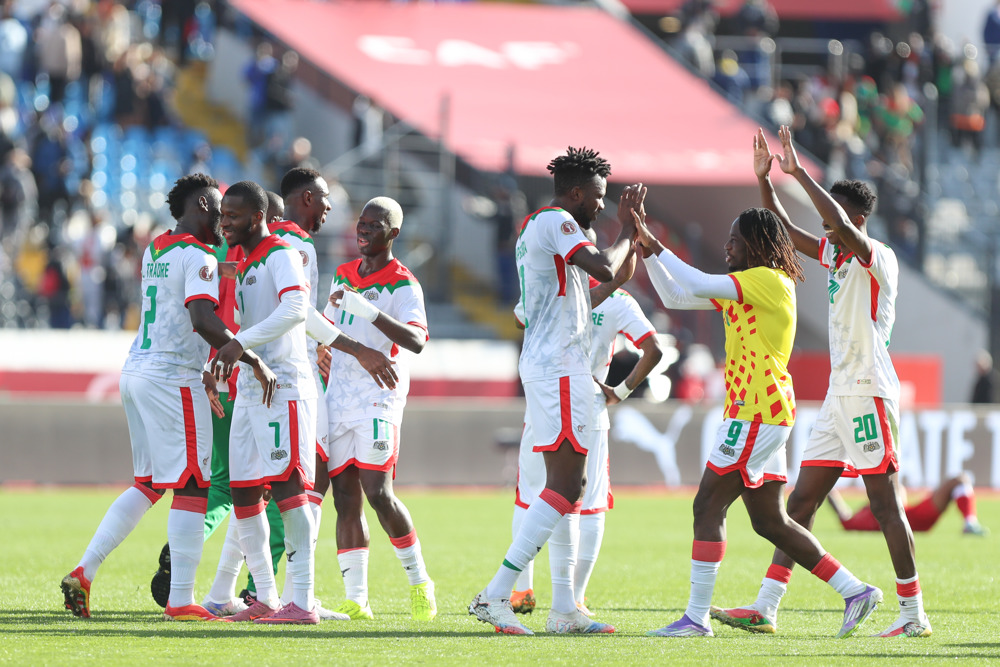
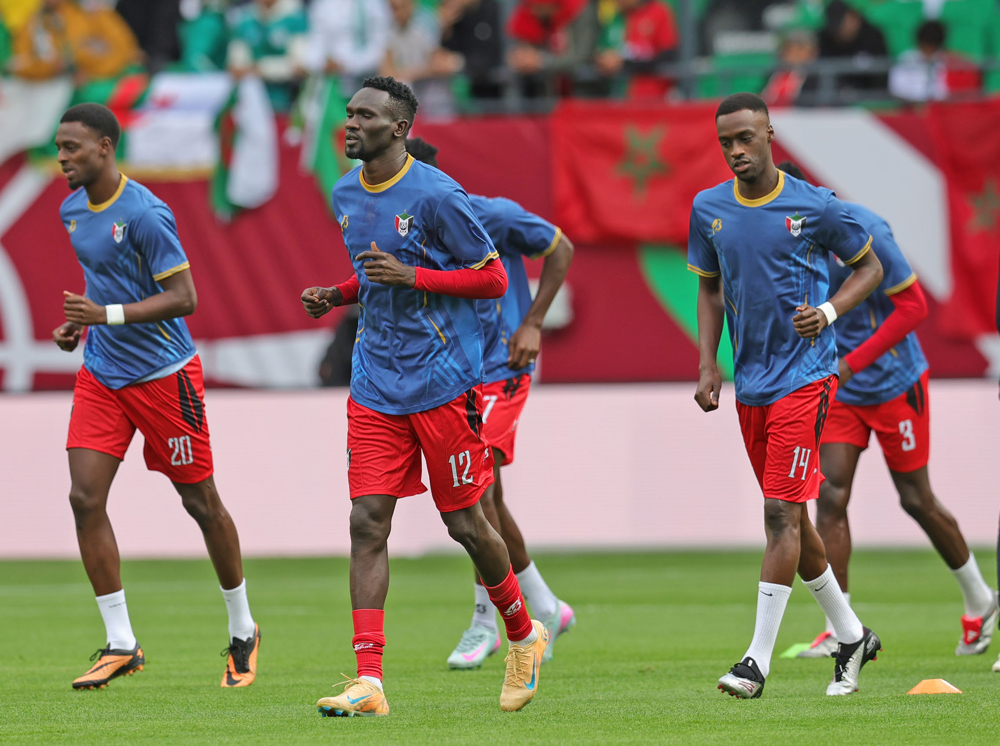
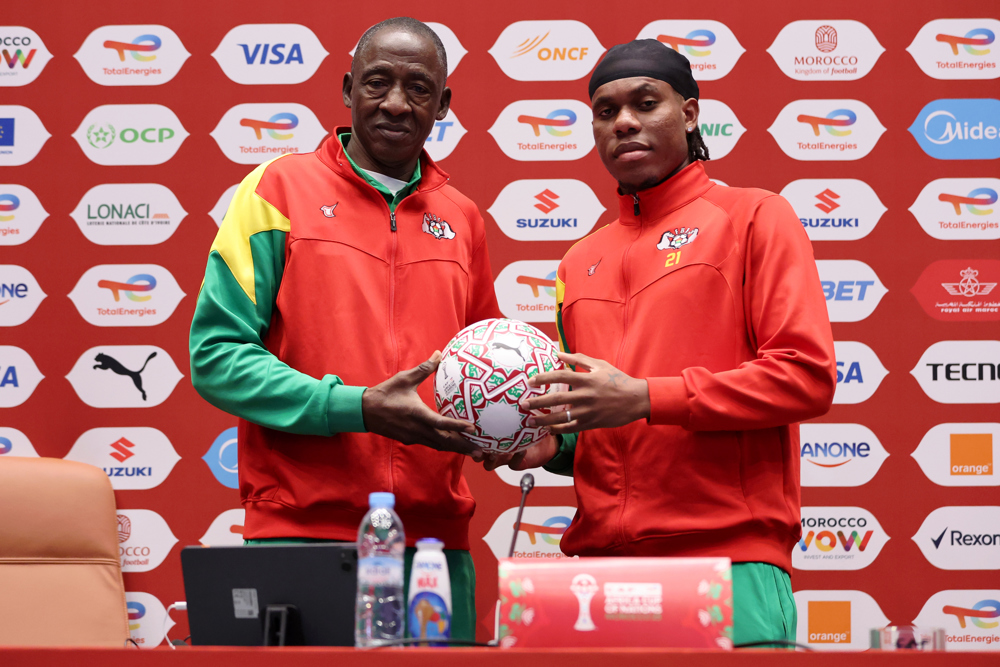
Sudan take on Botswana on New Year’s Eve at the Mohammed V Stadium in Casablanca, in what will be a blockbuster clash for the second spot in Group E of the TotalEnergies Africa Cup of Nations (AFCON), Morocco 2025.
More than just three points will be at stake, as the clash will determine who clinches the second place in the group, with Algeria already assured of topping.
Both teams come into the fixture in a relatively comfortable position, having already secured qualification to the Round of 16. A tally of three points has proven sufficient to progress, either as second place or one of the best placed number three sides.
However, the importance of this fixture remains significant, as it will decide whether either side finishes second or third in the group, a factor that could influence the knockout-stage pathway.
The Falcons of Jediane, under the guidance of Kwesi Appiah, will be aiming to maintain their balanced performances. Tactical discipline, defensive solidity, and swift transitions have been the hallmarks of Sudan’s campaign so far.
Fine margins, such as positional awareness, set-piece efficiency, and game management are expected to play a crucial role in tilting the contest.
Burkina Faso, coached by Brama Traoré, will look to impose their style, drawing strength from a robust midfield, physical intensity, and the continental experience within their squad. With qualification pressure eased, Les Stallions will be driven by the desire to improve their group standing and respond positively after their recent defeat to Algeria.
A tactical duel is widely anticipated, with both teams keen to avoid costly errors. A single moment could prove decisive in shaping both the result and the final Group E rankings, underlining the competitive quality of the two sides at this edition of the AFCON.
What was said:
Kwesi Appiah (Sudan Head Coach):
“Our match against Burkina Faso will be an important one. They have players with real quality, but we also have a good team and we have prepared well. It will be an exciting game for everyone. As a coach, I always focus on the next match, not the past ones. Burkina Faso have a very strong squad, with many players based in Europe, so beating them will not be easy. We will give everything we have and raise our ambitions to make the Sudanese people happy.
“The situation is difficult for us, as everyone knows what Sudan is going through because of the war. Despite that, our players have given everything. Our goal is to bring a smile to the faces of Sudanese people and make them proud. When you qualify for a competition, you must show why you deserve to be there, and we will fight to win.”
Mohamed Issa (Sudan Player):
“We have prepared well for the Burkina Faso match and we are fully ready for this challenge. The atmosphere in the squad is excellent and everyone is focused on the next game. Before the Equatorial Guinea match, our aim was to win and qualify, and we achieved that. The celebrations after qualification were special. Our families and our people were very happy, and that is exactly what we wanted.”
Brama Traoré (Burkina Faso Head Coach):
“Every team here has made progress, and no one can say Sudan are not a good side. They have a well-known coach who played a major role in their qualification, so we consider Sudan one of the strong African teams. We will approach this match with all our resources and introduce new faces as we look for victory.
“We are progressing step by step and our plan is clear. We will play intelligently and adapt our approach to the opponent. Our supporters are everywhere, and our people are waiting for us to make them proud. That is what we will strive to do.”
Ibrahim Kaboré (Burkina Faso Player):
“We are fully focused on our match against Sudan and we know how important it is ahead of the next round. The choices are always the coach’s, and I respect them. I am always ready to give my best for my country, whether I start or come off the bench. For me, the most important thing is the collective effort.”
Match facts:
This will be the second official meeting between Sudan and Burkina Faso. It is their first encounter at the AFCON finals since the 2012 edition.
Their only previous AFCON meeting came in the group stage of AFCON 2012, when Sudan claimed a 2–1 victory over Burkina Faso.
KGL Foundation has donated building materials valued at over GHS 170,000 to Tamale Central Prisons in the Northern Region to support the rehabilitation of the correctional facility’s infrastructure.
Nii Ankonu Annorbah-Sarpei, Programmes Manager at KGL Foundation, presented the items on behalf of the organization on December 26, 2025. The donation included roofing sheets, wawa woods, buckets of paint, electrical and plumbing materials, and air conditioners aimed at enhancing the prison’s physical infrastructure.
Annorbah-Sarpei explained that the items would improve the rehabilitative architecture by providing dedicated, multi-purpose spaces for essential programs that help offenders develop skills and address personal challenges. He noted that the materials would support the creation of educational and vocational classrooms for inmates, enabling them to acquire practical skills during their incarceration.
Deputy Director of Prisons (DDP) Obed Kofi Acquaye, who received the donation on behalf of the Ghana Prisons Service, expressed gratitude to KGL Foundation for their support toward the Tamale Central Prison rehabilitation project. He emphasized that the contribution would directly improve conditions at the facility and enhance the quality of rehabilitation programs offered to inmates.
DDP Acquaye highlighted several challenges confronting the facility, including the need for expanded workshops to accommodate more vocational training activities. He also pointed to improved sanitation requirements, particularly the need for a septic emptier, and the urgent necessity of a consistent water supply during the dry season when the facility experiences severe shortages.
The Deputy Director called on other institutions and organizations to support government efforts for the rehabilitation of Tamale Central Prison, noting that partnerships with civil society organizations and private sector entities are critical to achieving sustainable improvements in Ghana’s correctional facilities.
Inmates at the facility also appealed for enhanced support in vocational training programs that would equip them with marketable skills upon release. They requested assistance with post release employment opportunities to help them reintegrate successfully into society and avoid recidivism. The inmates additionally called for provision of a water tanker to address persistent water supply challenges at the prison.
Wood
The donation represents KGL Foundation’s continued commitment to supporting correctional facilities in Ghana. The foundation, established as the corporate social responsibility arm of KGL Group, focuses on health, education, sports, arts and culture, and youth empowerment initiatives across the country.
KGL Foundation has been actively engaged with Tamale Central Prison through its Hope Beyond Walls project, which provides mental health and education support to short term inmates. The foundation has partnered with Savannah Alliance Ghana to implement comprehensive rehabilitation programs that address both mental wellness and practical skills development for incarcerated persons.
Tamale Central Prison, established in 1914 with an authorized capacity of 78 inmates, has faced chronic overcrowding and infrastructure challenges for decades. The facility serves as the primary correctional institution for the Northern Region and houses both remand and convicted prisoners.
The prison has benefited from various partnerships with civil society organizations and private sector entities in recent years. Next Door Ghana Limited previously donated office furniture for a newly established diagnostic center, while Fatih Foundation constructed a mechanized borehole to address water supply challenges. These collaborations reflect growing recognition of the need for multi-sector approaches to improving Ghana’s correctional system.
The Ghana Prisons Service has increasingly emphasized rehabilitation over punishment, aligning with international best practices in correctional management. This shift requires significant investment in infrastructure, training programs, and support services that enable inmates to develop skills and address underlying issues that contributed to their incarceration.
Vocational training programs at Tamale Central Prison have included skills development in carpentry, masonry, tailoring, and agricultural production. However, limited workshop space, inadequate equipment, and insufficient training materials have constrained the scale and effectiveness of these programs. The building materials donated by KGL Foundation are expected to expand the physical capacity for such activities.
Building Materials
The water supply challenge highlighted by DDP Acquaye represents a critical concern for the facility’s operation and inmate welfare. Inadequate water access affects sanitation, hygiene, food preparation, and basic dignity for incarcerated persons. The prison’s reliance on municipal water supply, which becomes unreliable during dry seasons, has necessitated emergency water deliveries that strain operational budgets.
The appeal for post release employment support reflects broader challenges in Ghana’s correctional system. Many released inmates struggle to find employment due to stigma, lack of formal qualifications, and limited connections to potential employers. Without economic opportunities upon release, formerly incarcerated persons face heightened risk of returning to criminal activity.
KGL Foundation’s intervention at Tamale Central Prison aligns with its broader mission to address social development concerns in Ghana and support vulnerable populations. The foundation has implemented projects across multiple sectors, including support for juvenile football development, healthcare initiatives, and educational programs in underserved communities.
KGL Foundation has donated building materials valued at over GHS 170,000 to Tamale Central Prisons in the Northern Region to support the rehabilitation of the correctional facility’s infrastructure.
Nii Ankonu Annorbah-Sarpei, Programmes Manager at KGL Foundation, presented the items on behalf of the organization on December 26, 2025. The donation included roofing sheets, wawa woods, buckets of paint, electrical and plumbing materials, and air conditioners aimed at enhancing the prison’s physical infrastructure.
Annorbah-Sarpei explained that the items would improve the rehabilitative architecture by providing dedicated, multi-purpose spaces for essential programs that help offenders develop skills and address personal challenges. He noted that the materials would support the creation of educational and vocational classrooms for inmates, enabling them to acquire practical skills during their incarceration.
Deputy Director of Prisons (DDP) Obed Kofi Acquaye, who received the donation on behalf of the Ghana Prisons Service, expressed gratitude to KGL Foundation for their support toward the Tamale Central Prison rehabilitation project. He emphasized that the contribution would directly improve conditions at the facility and enhance the quality of rehabilitation programs offered to inmates.
DDP Acquaye highlighted several challenges confronting the facility, including the need for expanded workshops to accommodate more vocational training activities. He also pointed to improved sanitation requirements, particularly the need for a septic emptier, and the urgent necessity of a consistent water supply during the dry season when the facility experiences severe shortages.
The Deputy Director called on other institutions and organizations to support government efforts for the rehabilitation of Tamale Central Prison, noting that partnerships with civil society organizations and private sector entities are critical to achieving sustainable improvements in Ghana’s correctional facilities.
Inmates at the facility also appealed for enhanced support in vocational training programs that would equip them with marketable skills upon release. They requested assistance with post release employment opportunities to help them reintegrate successfully into society and avoid recidivism. The inmates additionally called for provision of a water tanker to address persistent water supply challenges at the prison.
Wood
The donation represents KGL Foundation’s continued commitment to supporting correctional facilities in Ghana. The foundation, established as the corporate social responsibility arm of KGL Group, focuses on health, education, sports, arts and culture, and youth empowerment initiatives across the country.
KGL Foundation has been actively engaged with Tamale Central Prison through its Hope Beyond Walls project, which provides mental health and education support to short term inmates. The foundation has partnered with Savannah Alliance Ghana to implement comprehensive rehabilitation programs that address both mental wellness and practical skills development for incarcerated persons.
Tamale Central Prison, established in 1914 with an authorized capacity of 78 inmates, has faced chronic overcrowding and infrastructure challenges for decades. The facility serves as the primary correctional institution for the Northern Region and houses both remand and convicted prisoners.
The prison has benefited from various partnerships with civil society organizations and private sector entities in recent years. Next Door Ghana Limited previously donated office furniture for a newly established diagnostic center, while Fatih Foundation constructed a mechanized borehole to address water supply challenges. These collaborations reflect growing recognition of the need for multi-sector approaches to improving Ghana’s correctional system.
The Ghana Prisons Service has increasingly emphasized rehabilitation over punishment, aligning with international best practices in correctional management. This shift requires significant investment in infrastructure, training programs, and support services that enable inmates to develop skills and address underlying issues that contributed to their incarceration.
Vocational training programs at Tamale Central Prison have included skills development in carpentry, masonry, tailoring, and agricultural production. However, limited workshop space, inadequate equipment, and insufficient training materials have constrained the scale and effectiveness of these programs. The building materials donated by KGL Foundation are expected to expand the physical capacity for such activities.
Building Materials
The water supply challenge highlighted by DDP Acquaye represents a critical concern for the facility’s operation and inmate welfare. Inadequate water access affects sanitation, hygiene, food preparation, and basic dignity for incarcerated persons. The prison’s reliance on municipal water supply, which becomes unreliable during dry seasons, has necessitated emergency water deliveries that strain operational budgets.
The appeal for post release employment support reflects broader challenges in Ghana’s correctional system. Many released inmates struggle to find employment due to stigma, lack of formal qualifications, and limited connections to potential employers. Without economic opportunities upon release, formerly incarcerated persons face heightened risk of returning to criminal activity.
KGL Foundation’s intervention at Tamale Central Prison aligns with its broader mission to address social development concerns in Ghana and support vulnerable populations. The foundation has implemented projects across multiple sectors, including support for juvenile football development, healthcare initiatives, and educational programs in underserved communities.
For many years, 31st December was observed in Ghana as a public holiday.
That observance was later declared unconstitutional by the Supreme Court in what has come to be known as the 31st December Case. While the decision itself is familiar to many, the reasoning behind it is less often revisited, and for some, not fully remembered.
This article does not defend coups d’état, nor does it question Ghana’s commitment to constitutional democracy. Rather, it revisits the constitutional reasoning adopted by the Court, to ask whether it was internally consistent, particularly in light of the Constitution’s own provenance and subsequent constitutional practice.
How 31st December became a public holiday
On 31st December 1981, a coup d’état led by Flight Lieutenant Jerry John Rawlings overthrew the 1979 Constitution and the civilian government of Dr. Hilla Limann. The coup ushered in the Provisional National Defence Council (PNDC), a revolutionary regime which exercised both legislative and executive authority.
In the exercise of those combined powers, the PNDC declared 31st December a public holiday, to commemorate what it described as a revolution. The holiday was observed annually throughout the PNDC era.
Following the return to constitutional rule under the Constitution of the Republic of Ghana, the holiday continued to be observed, including during the early years of democratic governance.
It was in this context that the continued celebration of 31st December as a public holiday was challenged before the Supreme Court.
The Supreme Court’s decision
The challenge was premised on the argument that the use of public funds to celebrate the overthrow of a constitutional order was inconsistent with the spirit of the 1992 Constitution, which is committed to constitutionalism, democracy, and the rule of law.
The Supreme Court upheld the challenge. It held that the continued celebration of 31st December as a public holiday, funded by public resources, contravened the spirit of the Constitution, and it accordingly declared the holiday unconstitutional.
The moral impulse behind the decision is understandable. Ghana’s constitutional order rightly rejects unconstitutional changes of government. However, constitutional adjudication requires not only fidelity to values, but also analytical coherence.
It is that coherence which invites closer examination.
The overlooked constitutional provenance
A critical background fact is often omitted from discussions of the case.
The 1992 Constitution itself is contained in the Schedule to PNDC Law 282 (PNDCL 282). It was promulgated under the authority of the PNDC and signed into law by Chairman Rawlings, the same individual who led the 31st December 1981 coup.
This historical and legal fact has never been treated as constitutionally problematic. On the contrary, the Constitution has been fully accepted, operationalised, and celebrated as the supreme law of the land.
That acceptance raises a legitimate question:
If the Constitution’s PNDC provenance does not taint its legitimacy, why should the commemoration of a date associated with that same historical transition be uniquely unconstitutional?
Public funds and constitutional acceptance
The issue becomes sharper when public funding is considered.
Under the 1992 Constitution, all three arms of government were established:
the Executive,
Parliament, and
the Judiciary.
All of these institutions, including the courts and the Supreme Court itself, are funded entirely by public funds appropriated under the Constitution. Judges, ministers, Members of Parliament, and public officers all receive their emoluments from the Consolidated Fund.
If the use of public funds under a constitutional order emerging from a PNDC legal process is constitutionally acceptable for:
governance,
adjudication,
and the daily operation of the state,
It becomes difficult to argue that the same public funds become constitutionally offensive solely because they support a commemorative holiday.
Public funds are constitutionally neutral; what matters is authorisation and legality, not symbolism alone.
Constitution day and national elections
State practice since 1992 reinforces this point.
7th January is celebrated as Constitution Day, with public funds expended on official ceremonies and commemorations. The Constitution celebrated on that day is the same Constitution scheduled to PNDCL 282.
In addition, Ghana has conducted multiple presidential and parliamentary elections under the 1992 Constitution, all financed by substantial public expenditure. Elections are celebrated as the highest expression of constitutional democracy, notwithstanding the Constitution’s historical pathway.
No one suggests that these elections offend the spirit of the Constitution because of the Constitution’s PNDC provenance. On the contrary, they are seen as affirmations of constitutional legitimacy.
The problem of selective symbolism
Placed side by side, a difficulty emerges.
Public funds are constitutionally acceptable when used to:
operate state institutions,
pay public officers,
celebrate Constitution Day,
and conduct national elections,
all under a Constitution born through a PNDC enactment.
Yet the same public funds were held to be constitutionally impermissible when used to commemorate 31st December, solely because of its historical symbolism.
That distinction is not grounded in constitutional text or structure. It is a symbolic judgment, not a doctrinal one.
What could have been said instead
None of this means that 31st December had to remain a public holiday. Parliament was under no constitutional obligation to preserve it. It could have been repealed, replaced, or allowed to fade into history as a matter of policy choice.
What is open to question is the elevation of that policy choice into a constitutional prohibition, based on reasoning that appears selective once the broader constitutional landscape is considered.
The constitution as a prospective and historical document
A further difficulty with the reasoning in the 31st December Case lies in the temporal reach implicitly attributed to the Constitution. The 1992 Constitution is prospective in character. It seeks to regulate future conduct, entrench democratic governance going forward, and prevent the recurrence of unconstitutional change of government. It does not purport to operate retrospectively so as to forbid the acknowledgment of historical events that predate its coming into force. Condemning unconstitutional takeovers as a matter of constitutional principle is not the same as constitutionally outlawing the remembrance of past political ruptures. The Constitution regulates the future; it does not erase the past.
This understanding is consistent with long-standing Ghanaian constitutional jurisprudence. In Tuffour v Attorney-General, Sowah JSC observed, in substance, that a constitution does not descend from the skies fully formed; it is rooted in, and shaped by, the history of the society that adopts it. The Constitution necessarily embodies that history even as it seeks to order the future. Ghana’s constitutional journey includes both rupture and restoration, and the 1992 Constitution reflects that complex inheritance rather than denying it.
Read in this light, the difficulty with the reasoning in the 31st December Case lies not in its commitment to constitutional democracy—a commitment that is unassailable—but in attributing to the Constitution a retrospective intolerance that it does not claim for itself. Once the Constitution has accepted its own provenance, legitimised institutions born of that transition, and sanctioned the use of public funds for governance, elections, and even the celebration of Constitution Day, it becomes analytically difficult to single out the acknowledgment of one historical moment as constitutionally impermissible.
Courts are sometimes called upon to speak in morally resonant terms, particularly in societies shaped by constitutional disruption. But constitutional interpretation must remain internally coherent and disciplined, lest symbolism eclipse doctrine. Revisiting the reasoning in the 31st December Case is therefore not an exercise in historical nostalgia or political advocacy. It is an invitation to reflect on how concepts such as “the spirit of the Constitution” should be applied with restraint, consistency, and fidelity to the Constitution’s text, structure, and history.
Conclusion
Courts are sometimes called upon to speak in morally resonant terms, especially in societies shaped by constitutional disruption. But constitutional interpretation must remain internally consistent, lest symbolism eclipse doctrine.
Revisiting the reasoning in the 31st December Case is therefore not an exercise in historical nostalgia or political advocacy. It is an invitation to reflect on constitutional coherence, and on how concepts such as “the spirit of the Constitution” should be employed with restraint.
History may be contested. Constitutional reasoning must remain disciplined.
By: Emmanuel Adabayeri
The writer is a lawyer and a constitutional commentator
DISCLAIMER: The Views, Comments, Opinions, Contributions and Statements made by Readers and Contributors on this platform do not necessarily represent the views or policy of Multimedia Group Limited.
DISCLAIMER: The Views, Comments, Opinions, Contributions and Statements made by Readers and Contributors on this platform do not necessarily represent the views or policy of Multimedia Group Limited.
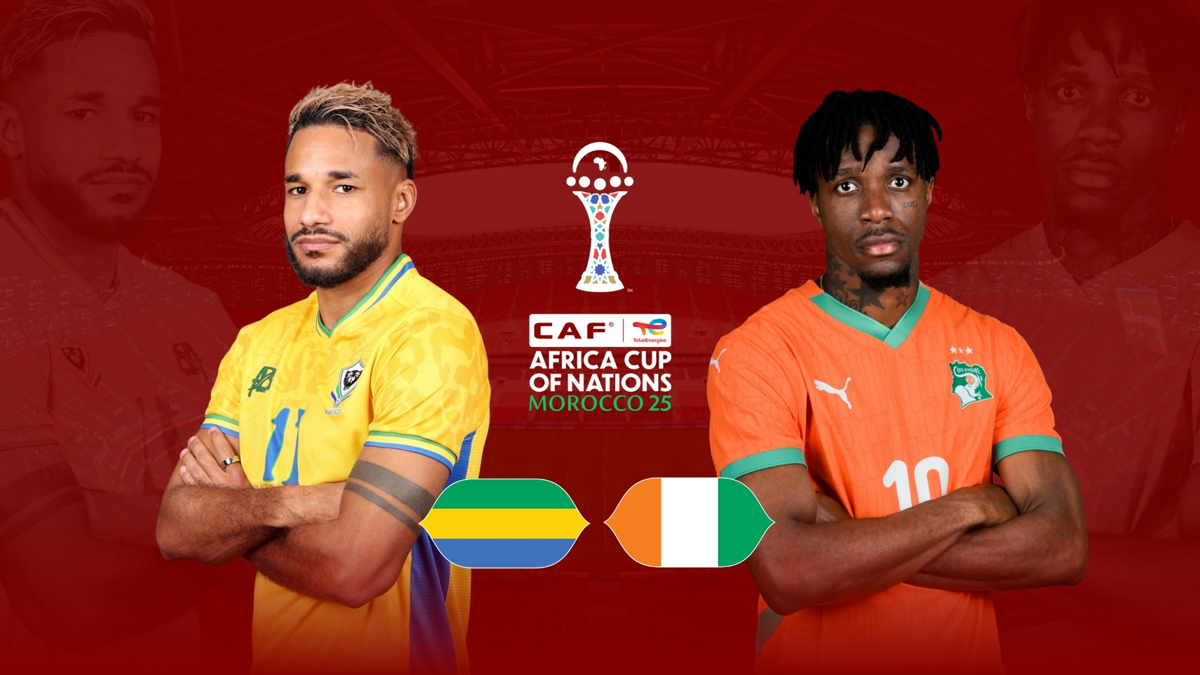
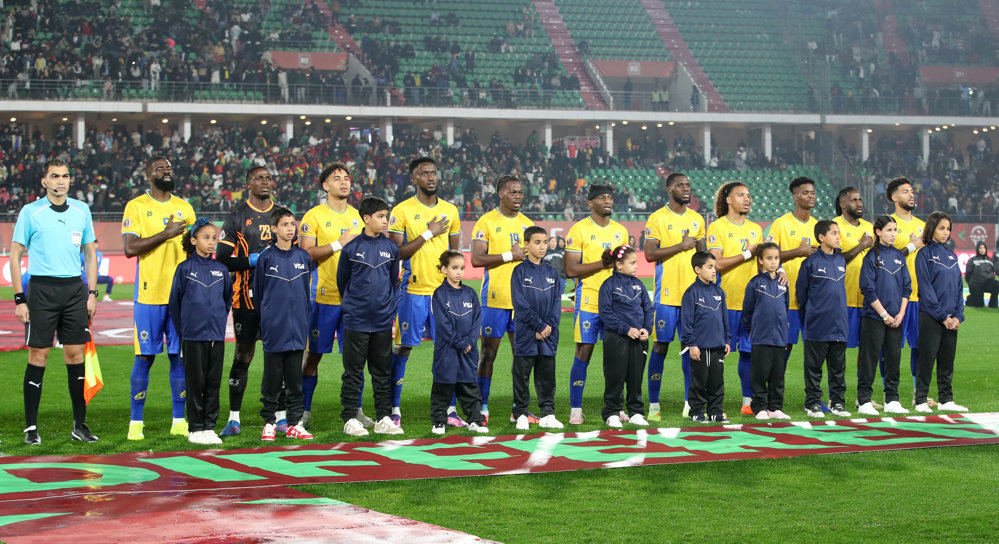
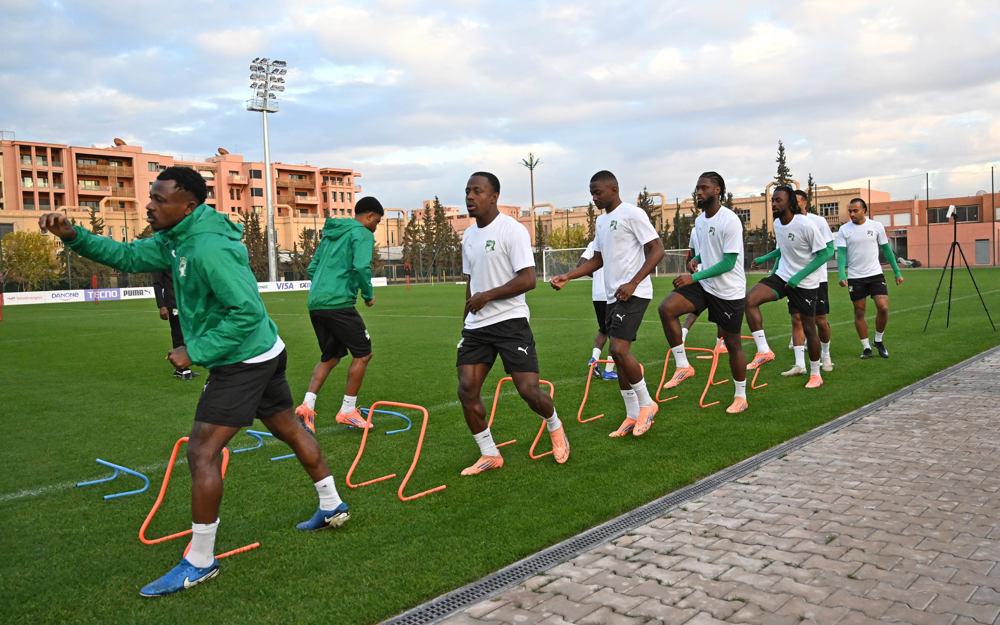
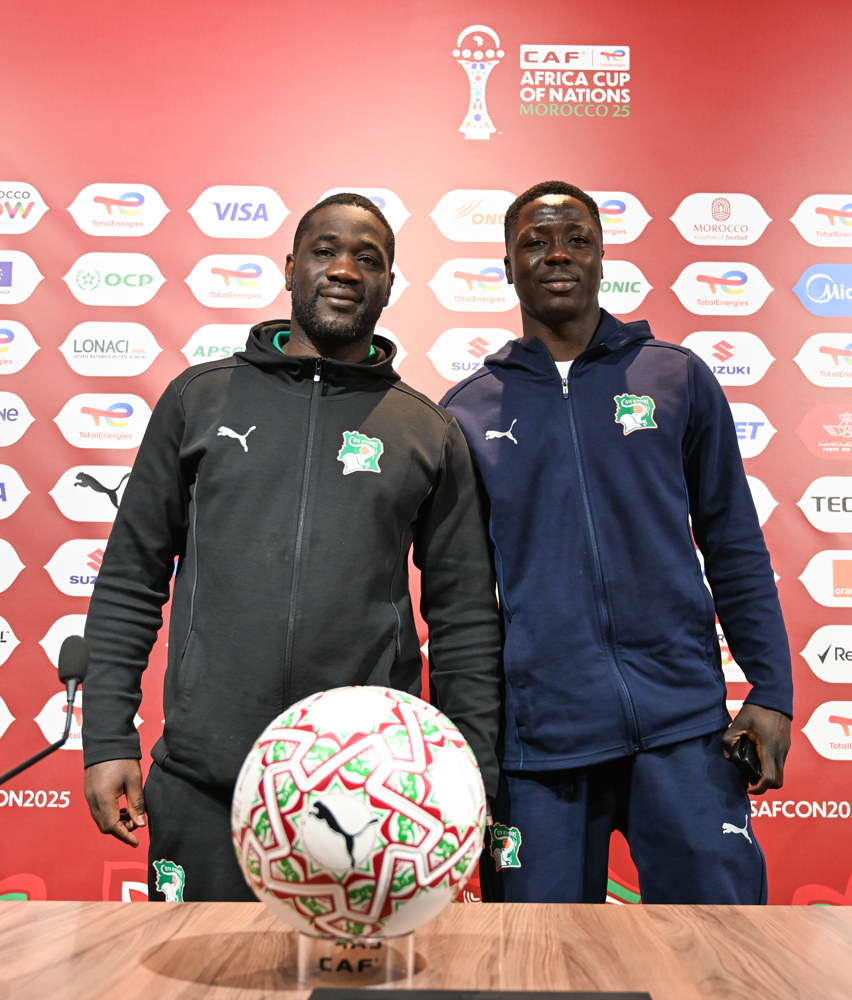
Gabon and Côte d’Ivoire meet at the Grand Stade de Marrakech in their final Group match of the TotalEnergies CAF Africa Cup of Nations Morocco 2025, with different objectives for each side.
Already eliminated, Gabon will be looking to finish the tournament on a positive note and deliver a performance that reflects their ambitions. Côte d’Ivoire, the reigning African champions, are aiming to confirm first place in the knockout stage.
Despite their elimination, the Panthers are determined to approach their final group match with commitment.
Facing the defending champions provides an opportunity for Gabon to show character, play with intensity, and display a worthy performance to their supporters.
WHAT WAS SAID
Thierry Mouyouma – Gabon Head Coach
“Despite the disappointment, the team is ready. We are competitors. We have one last match to play against Côte d’Ivoire, the reigning African champions. It is a special match because it will be our final game of this competition. We want to finish well, especially against an opponent who will be playing for first place in the group.”
Johann Obiang – Gabon Player
As the coach said, we were disappointed but the group remains focused. We want to finish this competition properly, just as we wanted to start it well. We will play to win. This group is made up of competitors, and we have been building something together for several years.”
Emerse Faé – Côte d’Ivoire Head Coach
“Because we are Côte d’Ivoire, expectations are high. Our supporters expect us to win, and that responsibility is part of our role. We will play this match as if we were not yet qualified. There will be no calculations. We will simply play to win.”
Diakité Oumar – Côte d’Ivoire Player
“Every team wants to beat Côte d’Ivoire, regardless of the situation. That is normal. Even though Gabon are eliminated, they will want to finish with a good performance. We have to remain focused.”
PRE-MATCH STATISTICS
• 11 meetings between Gabon and Côte d’Ivoire since 1987
• 6 wins for Côte d’Ivoire, 3 wins for Gabon, 2 draws
• 15 goals scored by Côte d’Ivoire
• 7 goals scored by Gabon
The statistics favour Côte d’Ivoire, but both teams will be aiming to deliver a strong performance in this final group match.
Olympic bronze medalist Samuel Takyi delivered a dominant performance at the Idrowhyt Events Centre, forcing Isaac Dowuona to retire after just two rounds before issuing a challenge to national lightweight champion Joseph Commey.
Dowuona, fighting out of the Bronx Gym under the ring name Zongo Fire, started the contest aggressively and rushed forward in the opening round. However, the Bronx Gym fighter failed to answer the bell for the third round after absorbing accurate jabs and hooks from Takyi during the first two sessions. The retirement marked an abrupt end to a bout that never allowed Dowuona to fully test his opponent’s arsenal.
Takyi, who trains at Wisdom Boxing Gym under Coach Dr. Ofori Asare, used the post fight moment to declare his readiness for Commey, who holds the national lightweight title and fights under the nickname Jaguar. The callout signals Takyi’s intention to pursue domestic titles while building his professional record, which now stands at eight wins without defeat.
The 24 year old featherweight won bronze for Ghana at the Tokyo 2020 Olympics, ending the country’s 29 year medal drought in any sport. He followed that historic achievement with gold at the 2023 African Games in Accra, cementing his status as one of Ghana’s most decorated amateur boxers before turning professional.
Since entering the paid ranks, Takyi has campaigned primarily outside Ghana, facing opponents in South Africa and Nigeria while training periodically in the United Kingdom to sharpen his skills under international coaching standards. His return to domestic competition represents a strategic pivot toward securing national recognition while maintaining his unbeaten professional streak.
Commey, a 2022 Commonwealth Games silver medalist, represents a significant step up in domestic competition. The Jaguar has established himself among Ghana’s elite lightweights and would provide Takyi with a credible test against proven national level opposition. A potential matchup between the two would pit Olympic pedigree against Commonwealth Games experience in what could emerge as one of Ghana’s marquee lightweight contests.
The fight card was promoted by Cabic Promotions, which has consistently featured competitive matchups on its Big Fight Night series. Takyi thanked all supporters following his victory, acknowledging the backing that has sustained his transition from amateur standout to professional prospect.
Takyi’s professional journey has been marked by aggressive pursuit of international exposure combined with selective domestic appearances. His willingness to challenge Commey suggests confidence in his readiness to compete for national honors while continuing to build the resume necessary for eventual world title contention. The Olympic medalist has publicly stated his ambition to become world champion by the end of 2026, a timeline that would require rapid progression through domestic and regional competition.
Whether Commey accepts the challenge remains uncertain, though a fight between two of Ghana’s most accomplished boxers would generate significant interest in the local boxing community. Takyi’s stoppage victory over Dowuona demonstrated the power and precision that made him an Olympic medalist, qualities he will need against more experienced professional opposition as he climbs the lightweight ranks.
Parin FC demonstrated their trademark resilience with another comeback victory in week nine of the Accra North District Football Association (ANDFA) Division Three league, defeating New Dove FC 3-2 at Apenkwa Astro Turf on Friday to move top of the table with 19 points.
The Tantra Hills based side twice fell behind before Michael Ayertey’s double and Samuel Clinton Amponsah’s winner secured three points in a dramatic contest that featured fan disturbances and intense end to end action. The victory continues Parin FC’s pattern of fighting back from deficits, having staged similar comebacks in earlier matches this season against Prestige Heights and Nima Kings.
New Dove opened the scoring early through Emmanuel Ampadu, putting the home side ahead before Parin FC found their footing. Ayertey equalized after pouncing on a through pass from Raphael Tetteh, restoring parity as both teams went into halftime level. The first half ended with neither side able to establish dominance despite New Dove’s aggressive start.
New Dove regained the lead early in the second half when Isaac Debrah converted a penalty after Edward Osei fouled an attacker inside the box. However, Ayertey struck again to make the score 2-2, canceling out New Dove’s second lead and setting up a tense finale. Both sides battled for control as action swung from one end to the other, with neither team able to establish sustained pressure.
The match was briefly halted when New Dove fans invaded the inner perimeter, forcing the center referee to restore order before play could continue. The disruption appeared to galvanize Parin FC, who seized control in the closing stages.
Amponsah delivered the decisive moment when he picked up a long cross from defense, ran at the New Dove defenders, and placed the ball into the corner of the net for the match winner. The goal silenced the home crowd and secured Parin FC’s position at the top of the ANDFA Division Three standings.
Parin FC now leads the table with 19 points from nine matches, maintaining their excellent form under Coach Eric Nyarko. The side has built its campaign on resilience and the goalscoring prowess of Ayertey, whose two goal performance takes his tally as the team’s leading scorer into double figures this season. The victory represents Parin FC’s latest demonstration of their ability to overcome adversity and claim points even when trailing.
The defeat leaves New Dove frustrated after twice taking the lead only to surrender all three points. Playing at home with strong local support, New Dove will rue their inability to protect their advantages against a Parin FC side that continues to find ways to win close matches.
Parin FC’s ability to stage comebacks has become their signature trait this season, having previously rallied from behind against Prestige Heights in mid December and Nima Kings in November. Their mental strength and refusal to accept defeat has positioned them as strong contenders for promotion from Division Three.
The Tantra Hills outfit will look to maintain their position at the summit when ANDFA Division Three action resumes, while New Dove must regroup after letting victory slip away despite controlling significant portions of the contest. For Parin FC, the three points represent another step toward their stated goal of winning the league and securing promotion to Division Two football.
Thieves used the quiet Christmas period to drill their way into the vault of a German retail bank and make off with at least 10 million euros’ worth of money and valuables from customers’ deposit boxes, police said on Tuesday.
The perpetrators drilled through a thick concrete wall at a branch of Sparkasse bank in the western city of Gelsenkirchen and then broke into several thousand safe deposit boxes and stole a sum estimated in the double-digit millions of euros, the police said in a statement.
Most shops and banks close in Germany over the Christmas period, starting from the evening of December 24, and police only discovered the hole after a fire alarm went off in the early hours of Monday, December 29.
Dozens of angry customers gathered in front of the bank on Tuesday, loudly chanting “Let us in!”
“I couldn’t sleep last night. We’re getting no information,” one man told the Welt broadcaster as he waited outside the branch, adding that he had been using the safe for 25 years and that it contained his savings for old age.
Another man said he used his deposit box to store cash and jewellery for his family.
A spokesperson for the Sparkasse bank in Gelsenkirchen did not immediately respond to a request for comment.
Police said witnesses have reported that they saw several men on Saturday night carrying large bags in the stairwell of an adjacent parking garage.
There were also reports of a black Audi RS 6 leaving the garage early on Monday morning with masked men inside. The vehicle’s licence plate was that of a car stolen in Hanover, more than 200 kilometres to the northeast of Gelsenkirchen, police said.
Philanthropist and businessman Alhaji Seidu Agongo has fulfilled a promise that is set to transform healthcare delivery for some of Ghana’s most vulnerable people.
On Tuesday, December 30, 2025, the Ghana Police Hospital inaugurated a new eight-bed facility funded by Alhaji Agongo to house “unknown” patients—individuals brought to the hospital without traceable relatives, often destitute, mentally ill, or victims of road accidents.
The project followed an appeal by the Ghana Police Service for public support to ease the growing burden on the hospital and improve healthcare delivery.
Since its establishment in 1976, the Police Hospital has had a unique mandate to provide healthcare not only to police personnel and their families, but also to suspects, convicts, and members of the general public.
Over time, caring for unknown persons has become a significant part of the hospital’s service delivery.
Hospital authorities say many of these patients arrive in critical condition, nameless and abandoned, leaving the hospital to bear the full cost of their treatment and rehabilitation—an expense estimated at over one million cedis annually.
In addition, many unknown persons are brought in dead. Each year, the hospital organises mass burials for between 1,000 and 1,200 unidentified bodies at a cost exceeding GH¢400,000 annually.
Unknown patients who recover are reintegrated into their communities once identified, also at the hospital’s expense.
With an average of about 30 unknown patients admitted every month and approximately 10 long-term cases at any given time, hospital officials say the burden has steadily increased over the years.
Following the appeal, Alhaji Agongo, founder of the defunct Heritage Bank, intervened by constructing the eight-bed facility and pledging quarterly financial support to assist with the hospital’s mass burial initiative—an intervention the Police Service has described as unprecedented.
The new facility will allow severely neglected patients to be separated from the general hospital population, improving infection control while restoring dignity to those society has often forgotten. Hospital authorities have described the project as historic.
Alhaji Agongo has also pledged to finance part of the quarterly mass burials and cover medical bills for unknown patients.
“When I learned about the plight of these unknown patients—people who come in broken, nameless, and abandoned—I said to myself that we, as a country, needed to act,” he said. “Humanity is not about what we do for those we know or who can repay us, but for those who cannot. Indeed, nobody is unknown—we are all known by one Creator, and that should unite us to uplift each other and make society better.”
He explained that the facility represents more than bricks and mortar, describing it as a sanctuary for lives that matter, even when no one claims them. He expressed the hope that the project would inspire others to support causes that restore dignity to the forgotten in society.
Hospital officials say the intervention will ease congestion, improve standards of care, and reduce the financial strain on the institution. They also expressed hope that it would encourage other individuals and organisations to extend support to the hospital.
For decades, the Ghana Police Hospital has borne the responsibility of treating unknown patients and burying unidentified bodies without external assistance. Alhaji Agongo’s commitment marks the first time a private citizen has stepped in to share this burden.
As the new facility opens its doors, it symbolises a rare blend of compassion and action—an enduring example of private philanthropy meeting public need. For the Ghana Police Hospital and the nameless individuals it serves, 30 December 2025 marks a new chapter of hope.
Lifting Others
Alhaji Agongo said his philanthropic work has never been about seeking attention or expecting anything in return, but is driven by a belief that society progresses when people support one another selflessly.
“We don’t support because we are related; we support because there is a need to make each other better,” he said, adding that his motivation for philanthropy stems from an innate desire to improve society.
He cited several initiatives reflecting this philosophy, including the establishment of Fanaka University to promote entrepreneurship and practical education, the funding of scholarships and medical support for underprivileged students and patients, and the construction of a ward for the Child Emergency Unit at the Korle Bu Teaching Hospital.
Alhaji Agongo also recalled donating medical supplies during the COVID-19 pandemic and providing relief to flood victims, efforts he said were aimed at meeting urgent needs and restoring dignity.
DISCLAIMER: The Views, Comments, Opinions, Contributions and Statements made by Readers and Contributors on this platform do not necessarily represent the views or policy of Multimedia Group Limited.
DISCLAIMER: The Views, Comments, Opinions, Contributions and Statements made by Readers and Contributors on this platform do not necessarily represent the views or policy of Multimedia Group Limited.
The Ghana Tourism Authority (GTA) will host a landmark faith and cultural gathering, “Ghana in Praise – One Nation, One Praise,” on Saturday, 3rd January 2026, at 6:00 pm at The Palms Convention Centre, La Palm Royal Beach Hotel, Accra.
The event forms part of GTA’s faith, culture, and tourism initiatives, and will bring together Gospel ministers, cultural leaders, creatives, and worshippers from across Ghana and the African diaspora for a night of thanksgiving, worship, and spiritual reflection as the nation welcomes the new year.
“Faith, culture, and heritage are pillars of Ghana’s identity and soft power. ‘Ghana in Praise’ is an opportunity for the nation to come together, give thanks, and commit the year ahead into God’s hands,” said GTA CEO Maame Efua Houadjeto.
The gathering will feature international gospel stars Mercy Chinwo, Ada Ehi, and Steve Crown, alongside Ghanaian artists Nacee, Empress Gifty, Joyce Blessing, and Noble Nketia, promising an evening of inspiring worship and celebration.
Invited dignitaries include national and faith leaders who have shaped Ghana’s spiritual and moral landscape, including Hon. Elvis Afriyie Ankrah, Presidential Envoy in charge of Interfaith and Ecumenical Bodies. Their participation is expected to provide spiritual guidance, encouragement, and inspiration to attendees.
According to GTA, the initiative aims to strengthen Ghana’s cultural diplomacy, enhance tourism appeal, and foster national cohesion, while also creating a platform for engagement with the Ghanaian diaspora.
“Ghana in Praise – One Nation, One Praise” reflects GTA’s broader mission to position Ghana as a destination rich in history, creativity, faith, and national values, highlighting the country’s commitment to unity, moral leadership, and cultural heritage.
The suspect was captured firing warning shots into the air with a Derya MK-12 firearm
The Ghana Police Service on Tuesday, January 30, 2025, announced the arrest of a suspect identified as Abubakari Sadick, popularly known as ‘Cyborg,’ for unlawful possession and discharge of a firearm.
According to the police, Cyborg discharged a firearm at a public event held at the El-Wak Stadium in Accra on December 28, 2025.
GhanaWeb has now sighted the viral video, in which the suspect was captured in the act.
The video showed the accused person firing warning shots into the air with a Derya MK-12 firearm.
Before firing the shots, he was heard pleading with the authorities of the country over his actions.
He mentioned the President of the Republic, John Dramani Mahama, and the Minister of the Interior, Muntaka Mubarak Mohammed, among other authorities.
Police arrest suspect seen in viral video discharging firearm at public event
“Keep your voice down! It is not allowed in Ghana now to give a warning shot. But I’m pleading for my (sic) John Dramani Mahama and Ibrahim… and Muntaka that my brother from another mother come, so I just want to give a gunshot for him, please,” he said while pointing at an artiste at the event.
He then proceeded to cock the gun before firing several shots into the air to the amusement of the crowd.
Man captured discharging firearm at Jamestown arrested – Police
Acting Commissioner-General of the Ghana Revenue Authority, Anthony Sarpong
The Ghana Revenue Authority (GRA) has confirmed that it will begin implementing the Value Added Tax (VAT) reforms from January 1, 2026.
This follows the passage and subsequent presidential assent to the VAT Bill, 2025.
The development marks a significant overhaul aimed at simplifying the country’s tax system, consolidating tax laws, abolishing the COVID-19 Levy and improving compliance through digitisation in revenue administration.
The law also seeks to promote greater fairness and economic growth as the country intensifies efforts to enhance domestic tax mobilisation.
The reform forms part of recommendations from the International Monetary Fund (IMF) to reduce bureaucratic bottlenecks in tax collection.
Key changes include the unification of the flat-rate system, reduction in effective tax rates, allowance for the deduction of GETFund and NHIL as input tax, and improvements in revenue efficiency.
The reforms will also include the deployment of digital platforms such as the E-VAT system to ensure accurate tax collection.
TAGG raises alarm over Parliament’s approval of GRA-TRUEDARE deal
Speaking to journalists on the new VAT regime, the Commissioner for the Domestic Tax Revenue Division, Dr Martin Kolbil Yamborigya, explained that customers will now be required to pay 20 percent instead of 21.9 percent on goods and services.
“There will be a lot of benefits for the taxpayer because we have now re-coupled the National Health Insurance Levy and the Ghana Education Trust Fund (GETFund). This will bring down the amount to be paid.
“It means some savings will be made by businesses, and the levies have also become input taxes to be claimed at the end of the day,” he said.
The bill was passed in November this year after it was presented to Parliament during the 2026 Budget Statement and Economic Policy presentation.
The presidential assent further empowers the Ghana Revenue Authority to proceed with the implementation of the reforms contained in the law.
AM
Also, watch below Amnesty International’s ‘Protect the Protest’ documentary as the world marks International Human Rights Day 2025
Senegal beat Benin 3-0 to top AFCON 2025 group, while DR Congo beat Botswana, setting up a mouth-watering Algeria tie.
Published On 30 Dec 202530 Dec 2025
Share
Senegal saw off Benin on Tuesday to go through to the last 16 of the Africa Cup of Nations as winners of Group D, leaving the Democratic Republic of the Congo (DRC) to settle for second place, which means they will play Algeria in a heavyweight tie in the next round.
Sadio Mane’s Senegal, the 2022 African champions, came into the final round of group games needing to beat Benin in Tangier, and hope their Congolese rivals have not managed to move above them on goal difference.
Recommended Stories
list of 4 itemsend of list
Senegal ran out 3-0 winners against Benin, with Abdoulaye Seck and Habib Diallo scoring before skipper Kalidou Koulibaly was sent off in the second half. Cherif Ndiaye then added a late penalty.
The DRC beat the already-eliminated Botswana 3-0 at the same time in Rabat, meaning the leading duo both finished with seven points from three games, but Pape Thiaw’s Senegal topped the section by a difference of two goals.
As a result, Senegal have a far kinder path in the knockout phase and will remain in Tangier for a last-16 tie on Saturday against the third-place finisher in Group E.
That will be either Burkina Faso or Sudan, who play each other in Casablanca on Wednesday.
The Leopards, in contrast, must play the 2019 champions Algeria in the last 16 next Tuesday, with the winner of that potentially having to face Nigeria in the quarterfinals.
Benin’s three points, courtesy of a solitary 1-0 win over Botswana, are enough for them to go through as one of the best third-placed teams.
It will be just their second appearance in the AFCON knockout stages, and their reward is a meeting with Mohamed Salah’s Egypt in Agadir on Monday.
Israel-based centre-back Seck headed Senegal into the lead from Krepin Diatta’s free kick on 38 minutes, and their second goal arrived just after the hour, when a superb cutback by Mane was turned in by Diallo.
Skipper Koulibaly was then sent off after a yellow card was upgraded to red following a VAR review, leaving the Lions of Teranga to play out the final 19 minutes plus stoppage time a man down.
Ndiaye’s 97th-minute penalty made it 3-0 and ended any doubt about Senegal’s final position in the group.
Playmaker Gael Kakuta, once of Chelsea and now playing in Turkiye, was in outstanding form for the DRC against Botswana at Al Medina Stadium, as his back heel set up Nathanael Mbuku for the opener.
Kakuta then converted a penalty shortly before half-time and got his second and his team’s third on the hour mark from Theo Bongonda’s assist.
Another goal at that point could have left the DRC and Senegal with identical records and facing a possible drawing of lots to determine their final group positions.
The DRC thought they had it when Fiston Mayele put the ball in the net on 64 minutes.
Several tonnes of harvested cocoa are being left to rot on the farms in Mfantseman in the Upper Denkyira East District of the Central Region due to the destruction of the main access route leading to the farms by illegal miners.
Farmers face the dangers of drowning in open pits filled with large volumes of water while carrying loads of cocoa and therefore find it safe to only carry minimal amounts of their produce leaving the larger share to go waste on the farms.
“The farmers previously relied on manual labor to cart their produce from the farm but many of the youth have now developed high taste for galamsey and no longer available for hiring and so a greater share of our produce is left to rot on the farm” Osei Yaw, a farmer who spoke to Citi News said.
When the youth abandoned farm work and manual carting of produce in exchange of galamsey, the use of tricycles became the next option for farmers.
But since last year, that option has become unreliable due to the activities of illegal miners.
Ben Yorke, a former assemblyman for the area who is also a cocoa farmer said “the tricycles are no longer able to access the farms, so we are left with no option but to leave the cocoa on the farm. We are really incurring huge losses”.
“Very soon our cocoa trees may even wither because all major rivers and streams that we depended on to tend our farms have all been heavily polluted. Some of them can no longer even be traced,” he added.
While state security apparatuses conduct anti-galamsey operations in various parts of the country the farmers wonder why the area has never been visited to clamp down on the illegal mining activities.
“We really don’t know why any of the operational teams haven’t stormed here to deal with the galamseyers. This is far beyond security threat. Our livelihoods are at stake and so we are calling on the government to come to our aid,” Kwasi Ameyaw, another farmer who is also extremely worried, told Citi News.
Citi News’ sources in the community suggest an individual only identified as IGP is responsible for the illegal mining activities.
The Ghana Tourism Authority (GTA) will host a landmark faith and cultural gathering, “Ghana in Praise – One Nation, One Praise,” on Saturday, 3rd January 2026, at 6:00 pm at The Palms Convention Centre, La Palm Royal Beach Hotel, Accra.
The event forms part of GTA’s faith, culture, and tourism initiatives, and will bring together Gospel ministers, cultural leaders, creatives, and worshippers from across Ghana and the African diaspora for a night of thanksgiving, worship, and spiritual reflection as the nation welcomes the new year.
“Faith, culture, and heritage are pillars of Ghana’s identity and soft power. ‘Ghana in Praise’ is an opportunity for the nation to come together, give thanks, and commit the year ahead into God’s hands,” said GTA CEO Maame Efua Houadjeto.
The gathering will feature international gospel stars Mercy Chinwo, Ada Ehi, and Steve Crown, alongside Ghanaian artists Nacee, Empress Gifty, Joyce Blessing, and Noble Nketia, promising an evening of inspiring worship and celebration.
Invited dignitaries include national and faith leaders who have shaped Ghana’s spiritual and moral landscape, including Hon. Elvis Afriyie Ankrah, Presidential Envoy in charge of Interfaith and Ecumenical Bodies. Their participation is expected to provide spiritual guidance, encouragement, and inspiration to attendees.
According to GTA, the initiative aims to strengthen Ghana’s cultural diplomacy, enhance tourism appeal, and foster national cohesion, while also creating a platform for engagement with the Ghanaian diaspora.
“Ghana in Praise – One Nation, One Praise” reflects GTA’s broader mission to position Ghana as a destination rich in history, creativity, faith, and national values, highlighting the country’s commitment to unity, moral leadership, and cultural heritage.
The suspects were caught mining and washing minerals directly into the Birim River
The National Anti-Illegal Mining Operations Secretariat (NAIMOS) has arrested five Chinese nationals following a targeted operation against illegal mining activities along the Birim River in the Akyem Oda area of the Birim Central Municipality.
The operation, conducted on Monday, December 29, 2025, began at about 1:40 PM and formed part of a series of coordinated raids on illegal mining sites in the area.
The suspects were apprehended while actively mining and washing mineral materials directly into the Birim River, causing significant environmental harm.
During the operation, two excavators discovered at the site were immobilised, while a Toyota Hilux pickup and a Toyota Land Cruiser allegedly used by the suspects were seized by the task force.
NAIMOS personnel also dismantled several makeshift structures erected at the mining sites and destroyed water pumping machines and other mining equipment.
NAIMOS says the exercise is part of an intensified nationwide crackdown on illegal mining activities, particularly along major water bodies, during the festive season, to curb pollution and protect Ghana’s water resources.
The suspects are expected to be handed over to the appropriate authorities for further investigations and prosecution.
The Deputy General Secretary of the National Democratic Congress (NDC), Mustapha Gbande, says the government has shown renewed commitment and energy in the fight against illegal mining, popularly known as galamsey.
Speaking on Channel One Newsroom on Tuesday, December30, he said since the NDC assumed office, efforts have been intensified to streamline mining activities, particularly those that pollute water bodies and degrade forest reserves.
He noted that the government has moved with a united front, with the President, ministers, and state agencies all working together to address public concerns about environmental destruction.
According to him, strong attention has also been placed on regulating artisanal and alluvial mining to ensure that mining activities are carried out responsibly and in line with the law.
Touching on the issue of foreign nationals involved in illegal mining, Mr. Gbanda said deportations have been consistently enforced.
He explained that in early 2025, several foreign nationals engaged in galamsey were deported through the coordinated efforts of the Ministry of the Interior, the Ghana Immigration Service, and other security agencies.
Mr. Gbanda stressed that authorities have remained firm on the issue, adding that there has not been any instance where foreign nationals arrested for illegal mining were allowed to remain in the country.
He said the government remains determined to protect Ghana’s natural resources and ensure that mining activities do not come at the expense of the environment and public health.
“For us as a party and I believe a government ever since we came into power, there has been a considerable amount of renewed energy and commitment and first of all streamlining mining relaed activities in this country relative to pollution and what in one accord what the people of Ghana has demonstrated discomfort towards.
“So if you check the president, the ministers, everybody has come together to fight mining particularly in the water bodies and then the forest reserves and also streamlining the artisanal and alluvial mining activities.
“When it comes to the issues of deportation and all of that, I know that in the beginning of 2025 a lot of foreign nationals who have been engaged in or caught up in these things have been deported facilitated by the Minister for the Interior, the immigration and all other agencies involved. I do not think that there has been an occasion where such people were caught and they were not deported.”
Read also
Group petitions AG, OSP, EOCO over unlicenced actors in GoldBod scheme
Kenyan dancehall sensation Elly Wee might have struck out with long-time crush Tanasha Donna, but it looks like his love life is back on track, and the romance has crossed borders! Word on the street is that the “People’s Choice Dancehall Artist of the Year 2024” has found his “resting place” in the arms of stunning Djiboutian fashion model, Ayanita Moutah. The Addis Ababa Sighting
Rumours have been swirling, and sources close to the duo have given us plenty to talk about. The pair were most recently spotted together in Ethiopia, reportedly attending a high-profile fashion gala. While a gala is certainly an appropriate venue for a fashion model and an award-winning musician, the recent sightings suggest a relationship that goes beyond professional networking.
‘Djibouti’ – The Ultimate Confirmation?
Elly Wee has since dropped a brand-new track, aptly titled “Djibouti,” and guess who the star of the show is? None other than Ayanita Moutah herself!
This collaboration strongly fuels the speculation. Late last year, Ayanita had already hinted at a trip to Kenya and a feature in a music video with a Kenyan artist. Her prominent role in Elly Wee’s latest release seems to be the smoking gun that confirms their rumored romantic connection.
The Road to ‘Thesis ‘
“Djibouti” isn’t just a potential love song; it’s the first single off Elly Wee’s highly anticipated debut album, ‘Thesis’.
The 13-track compilation is scheduled for release on January 10, 2026, and features a star-studded lineup. Fans can look forward to major collaborations with notable names in the industry, including:
Petrooz Krugar gush Attara Jave Samson Exile the 93rd Gathoni Whether this cross-continental romance will be the muse for more tracks on ‘Thesis’ remains to be seen.
The Tema Regional Police Command has foiled an attempted armed robbery at Afienya-Mataheko, resulting in the death of four suspected robbers following a gun battle with police.
Addressing a press briefing on Tuesday, December 30, 2025, the Head of Public Affairs of the Command, Assistant Superintendent of Police (ASP) Dede Dzakpasu, said the operation formed part of sustained efforts to dismantle a notorious robbery gang believed to have operated in Tema and its surrounding areas for several years.
She disclosed that on December 27, 2025, police received intelligence that a group of ex-convicts was planning to carry out armed robbery attacks within the metropolis. Based on the information, officers were deployed to the area and placed under surveillance.
ASP Dzakpasu said in the early hours of December 29, at about 1:00 a.m., four suspects were spotted attempting to break into a residential property at Afienya-Mataheko. According to her, the suspects opened fire upon detecting the presence of police, prompting officers to return fire.
Three of the suspects, identified as Kwabena Azuwebi, also known as Lastman; Yaro Bawku; and Faisal, were gunned down and rushed to the Police Hospital but were pronounced dead on arrival.
She added that the fourth suspect, Kassim Hussein, initially escaped despite sustaining gunshot wounds but was later arrested. He subsequently died while receiving medical treatment.
ASP Dzakpasu noted that all four deceased suspects were on the police wanted list and had been linked to several robbery cases within the region.
“It would be recalled that one of the suspects, Kwabena Azuwebi alias Lastman, was recently granted bail by a court in a robbery case after a long period on remand,” she said.
Police retrieved an AK-47 rifle, a Taurus pistol loaded with six rounds of ammunition, two cutlasses, and two Royal motorbikes, one unregistered and the other bearing registration number M-25-GT-4243, believed to have been used by the suspects.
ASP Dzakpasu said all exhibits have been retained for further investigations, while the bodies of the deceased suspects have been deposited at the Police Hospital Mortuary pending autopsy.
She added that investigations are ongoing to identify possible accomplices and establish links to other criminal activities.
Lawyer and Member of Parliament for South Dayi in the Volta Region, Rockson-Nelson Etse Dafeamekpor, has been appointed Chairman of the Kenpong Travel and Tours’ 2026 FIFA World Cup Travels Management Team.
Speaking on his long-standing association with the Kenpong Group and bearing testimony to the company’s reputation as a most trusted partner for international sports travel, Mr Dafeamekpor recalled that his professional journey with the organisation dates back more than two decades.
He served as Administrative Manager of the company between 2002 and 2004 before enrolling in law school in 2005.
After qualifying as a lawyer in 2009, he returned to Kenpong Travel and Tours in a consulting role, where he assisted in setting up the company into its current form.
Since then, Kenpong Travel and Tours has successfully managed travel arrangements for nearly all of Ghana’s international tournament appearances, earning a reputation for efficiency, reliability, and flawless execution.
Mr Dafeamekpor said his appointment as Chairman of the 2026 World Cup Travels Management Team is built on this history of trust and proven delivery.
“Kenpong Travel and Tours has, over the years, handled Ghana’s international tournament travels without blemish. For the 2026 World Cup, we are raising the bar even higher,” he said.
According to him, the company’s 2026 World Cup travel package goes beyond logistics to deliver a truly memorable experience for fans.
“As Chairman of the Kenpong Travels’ 2026 World Cup Travels Management Team, we are not only promising a hassle-free journey, but a World Cup travel experience of a lifetime,” he stated.
With matches to be hosted across the United States, Canada and Mexico, he said Kenpong Travel and Tours will offer comprehensive travel solutions that combine comfort, convenience, and unforgettable moments for Ghanaian football fans.
The company has unveiled a simple but powerful slogan for the tournament: “Book with Kenpong & Travel with Kenpong.”
Mr Dafeamekpor said preparations are already underway to ensure that supporters who choose Kenpong Travel and Tours for the 2026 FIFA World Cup enjoy seamless travel arrangements and a world-class experience worthy of the global showpiece.
DISCLAIMER: The Views, Comments, Opinions, Contributions and Statements made by Readers and Contributors on this platform do not necessarily represent the views or policy of Multimedia Group Limited.
DISCLAIMER: The Views, Comments, Opinions, Contributions and Statements made by Readers and Contributors on this platform do not necessarily represent the views or policy of Multimedia Group Limited.
Afia Schwarzenneger has publicly alleged the exact cause of the late Daddy Lumba’s death days after his funeral service in Kumasi
In a video, the controversial media personality also alleged the location of the late highlife music icon’s resting place
Afia Schwarzenegger’s allegations concerning Daddy Lumba’s death and burial has triggered mixed reactions from netizens online
Ghana’s top stories, now easier to find. Discover our new search feature!
Controversial Ghanaian comedienne and media personality Afia Schwarzenegger has made new allegations regarding the cause of Daddy Lumba’s death and the location of his burial site.
Afia Schwarzenegger shares the alleged cause of Daddy Lumba’s death and the location of his burial site. Photo source: DADDY LUMBA, Valentina Nana Agyeiwaa Source: Facebook
Daddy Lumba died at the Bank Hospital in Cantonments, Accra, at the age of 60 on July 26, 2025, after a short illness.
Several important Ghanaian dignitaries, including Nana Acheampong, Dr Osei Kwame Despite, Dr Ernest Ofori Sarpong, Kennedy Agyapong (Kenpong), Johnson Asiedu Nketia, Chairman Wontumi, Lil Win and Dr Frank Amoakohene, attended the solemn event.
Some family members of the late Daddy Lumba, including his children, younger sister Faustina Fosu, Abusuapanin Victor Kofi Owusu Banahene, and second wife Odo Broni, were present to bid farewell to the late singer.
The late musician’s elder sister, Ernestina Fosu, his first wife, Akosua Serwaa, Papa Shee, and other members of the immediate family did not attend the funeral service due to their dispute with the Abusuapanin over the funeral arrangements and their court cases.
Following the solemn event, speculations about the exact location of the late Daddy Lumba’s burial place have emerged on social media.
The YouTube video of Daddy Lumba’s funeral is below:
Afia also alleged that the late highlife legend was buried at his plush residence in East Legon, Accra, in accordance with his dying wish.
Evangelist Papa Shee defends Dr Osei Kwame Despite amid rumours of interfering in the Akosua Serwaa vs Odo Broni beef. Image credit: @kellymensa, @gh.facts Source: TikTok
In response to questions about the late Daddy Lumba’s autopsy reports, the controversial social media personality alleged that the late singer died from a cardiac arrest.
She said:
“He was buried at his residence in East Legon, which was his dying wish. Do you know what killed him? He died from a cardiac arrest.”
Afia also claimed that he had previously advised the late singer’s Abusuapanin to publicly share the cause of his death.
The Instagram video of Afia Schwarzenegger speaking about the alleged cause of Daddy Lumba’s death and location of his burial site is below:
Daddy Lumba’s family dispute after his death
Akosua Serwaa, filed a lawsuit against her husband’s family head, Kofi Owusu, and his Ghana-based wife, Odo Broni.
The suit asked the court to declare her the only legal surviving spouse of Daddy Lumba and also bar his second wife, known privately as Priscilla Ofori, from being declared the deceased’s wife.
After about a month of proceedings, the Kumasi High Court declined to name Akosua Serwaa the sole legal wife of the late highlife legend, as she had sought.
Why was Akosua Serwaa’s case dismissed?
The judge, Justice Dorinda Smith, is reported to have ruled that Akosua Serwaa could not prove that she was Daddy Lumba’s sole legal wife, while Odo Broni was able to prove that she was married traditionally.
According to reports, the judge was not convinced by the marriage certificate presented by Serwaa to support her claims of marrying under the Ordinance with Lumba in Germany.
The judge further directed that the Germany-based Serwaa and Odo Broni be recognised as the spouses of Daddy Lumba and be allowed to perform the widowhood rites.
The court’s decision did not satisfy the late musician’s first widow, who has since filed an appeal at the Court of Appeal in Ghana.
Afia Schwarzenegger’s allegations stir reactions
YEN.com.gh has gathered some comments from social media users below:
IIV commented:
“So now it’s cardiac arrest? One person’s death, so many stories.”
Babylast said:
“If it’s cardiac arrest, then why did Freda Afriyie say it was sodium, and others said it was human error? Also, why will 2pac come to lie to us, the people, that it was DL in the lying state during the funeral, right?”
Aracelisergio13 wrote:
“If that was true, then what was stopping them from allowing the real siblings to do another postmortem or see the body.”
Papa Shee responds to Despite’s statement
Earlier, YEN.com.gh reported that Papa Shee responded to Despite’s statement denying his involvement in the dispute between the late Daddy Lumba’s family after his death.
In a video, the evangelist defended the business mogul, denying claims of his involvement in the court disputes and the daily operations at his various media platforms.
Evangelist Papa Shee also urged the public to disregard the numerous accusations against Despite.
After drawing with Senegal 1-1 on Saturday, DR Congo needed the Teranga Lions to drop points or better the West Africans’ margin of victory over Benin by three goals to top the group.
Boss Sebastien Desabre made seven changes to his starting XI, with playmaker Bongonda and striker Cedric Bakambu among those dropping out.
The Leopards briefly moved to the summit after taking the lead, but Abdoulaye Seck’s goal for the Teranga Lions in Tangier restored the West Africans’ advantage.
At 3-0 ahead, the Leopards had an identical record to the Senegalese, which would have entailed the drawing of lots to decide top spot, while Mayele’s potential fourth, which was disallowed after another intervention by VAR, could have won them the group.
In the end, Cherif Ndiaye’s late penalty for Senegal settled matters, sparing Bongonda’s blushes after he sent a header over, missed his kick with the goal gaping and then had a low effort saved by the outstretched leg of Botswana goalkeeper Goitseone Phoko in stoppage time.
The Congolese upset continental heavyweights Cameroon and Nigeria in continental play-offs for the 2026 Fifa World Cup last month, and Algeria will be wary of their opponents as Desabre looks to better their fourth-placed finish from the 2023 edition.
Botswana, meanwhile, end their second appearance at the finals both goalless and pointless, having also exited in the group stage on their Afcon debut in 2012.
Samuel Okudzeto Ablakwa is the Minister of Foreign Affairs and North Tongu MP
The Member of Parliament for North Tongu, Samuel Okudzeto Ablakwa, has hinted at his impending retirement from Parliament.
According to him, he is preparing a new generation of leaders to take over as he continues to invest in education through his annual scholarship scheme.
Ablakwa surprises Embassy driver with all-expense-paid dream trip to Ghana
Addressing beneficiaries at a scholarship presentation ceremony in his constituency on December 29, 2025, Ablakwa said the support he offers students is part of a broader vision to groom future professionals and leaders who will help sustain Ghana’s development long after he leaves public office.
“… We are producing engineers, lawyers, aeronautical engineers, and future MPs who will take over from me because I’ll be retiring soon.
“Then future ministers, presidents, teachers who will come and help us to maintain the high standards that we are laying over here,” he said.
Ablakwa, who has consistently used part of his resources to support students in his constituency, expressed excitement about the scholarship programme.
He described it as one of the most fulfilling aspects of his public service.
“I am always excited to hand out these scholarships,” he told the students, urging them to use the funds strictly for their intended purpose.
“These are cash amounts, please don’t be tempted, no diversions. Go straight to your institutions and pay the fees,” he advised the students.
He further cautioned beneficiaries that continued support depends on accountability, insisting that proof of payment must be submitted to qualify for future assistance.
Ablakwa inaugurates SMART classrooms for STEM education
“If you want to receive another round of scholarship, make sure your evidence of payment is with us. If we don’t see the evidence of payment, then you are disqualifying yourself for the next academic year,” he said.
‘We are producing future MP’s who will take over from me soon’- Samuel Okudzeto Ablakwa, North Tongu MP and Foreign Affairs Minister, says he plans to retire from Parliament soon and is intentionally grooming students in the constituency to step up and continue a legacy of… pic.twitter.com/HHzuhspl8z
A group calling itself Concerned Citizens of Ghana has petitioned the Attorney-General (AG), the Office of the Special Prosecutor (OSP), and the Economic and Organised Crime Office (EOCO) over alleged irregularities in the operations of the Ghana Gold Board (GoldBod).
In the petition shared with Citi Newson Tuesday December 30, the group raised concerns about the alleged involvement of individuals and companies said to be unlicensed and currently under investigation for financial loss to the state in key GoldBod activities, including gold assaying, smelting, pricing, and refinery-related operations.
The petition specifically mentions Mr. Roger Frimpong Kwakye, who is reportedly under investigation in connection with the Mineral Income Investment Fund’s Gold for Forex programme, which ended in 2024. According to the group, intelligence suggests he has been linked to GoldBod operations through Goldstrom Ghana and BAWA-ROCK Limited, despite not being licenced or certified under the GoldBod Act.
The group questioned the legal basis for Mr. Kwakye’s alleged involvement in GoldBod activities, including the organisation of traceability training programmes for license holders and the assaying and smelting of gold through a foreign-owned refinery operating at Kotoka International Airport. They argued that such actions, if confirmed, would violate provisions of the GoldBod Act, which restrict these activities to certified and licensed entities.
The petitioners further expressed concern that Goldstrom, which they claim is foreign-owned, may have been engaged in refinery-related activities without meeting the local ownership and licensing requirements set out in the law. They warned that any deviation from these requirements could undermine national interest, transparency, and state revenue.
The group is calling for an immediate and comprehensive investigation by the Attorney-General, the Office of the Special Prosecutor, and EOCO into the alleged roles of the individuals and companies mentioned. They also want any unlicenced persons or entities involved in GoldBod operations to be suspended pending investigations.
In addition, the petition demands full disclosure of all contracts awarded by GoldBod, as well as details of the due diligence processes used in selecting service providers.
The petitioners say they remain ready to cooperate with state institutions and civil society groups to ensure accountability and protect Ghana’s gold value chain from abuse.
Read also
Traders reject GSA’s Smart Port Note, call for policy reassessment
A group calling itself Concerned Citizens of Ghana has petitioned state investigative bodies to probe the alleged unlawful involvement of an unlicensed and investigated individual in Ghana’s GoldBod operations, warning of potential abuse and financial loss to the state.
In a petition addressed to the Office of the Attorney-General, the Office of the Special Prosecutor (OSP), and the Economic and Organised Crime Office (EOCO), the citizens raised “grave concerns” about the activities of one Mr. Roger Frimpong Kwakye.
The petition alleges that Mr. Kwakye, who is reportedly under active investigation by the OSP for matters relating to “financial loss to the State,” is playing a central role in critical GoldBod activities despite his company, Goldstrom, not being a licensed entity under the GoldBod regime.
According to the petitioners, this constitutes a clear violation of the GoldBod Act, which restricts key functions like assaying, smelting, and pricing of gold strictly to certified and licensed entities.
“How does an individual under serious criminal investigation, including matters relating to financial loss to the State, meet the fit-and-proper standard required to participate, influence, and shape GoldBod operations?” the petition asks.
Allegations of Contract Irregularities
The document details that Mr. Kwakye, as Managing Director of Goldstrom Ghana, has allegedly contracted his foreign-based refinery to assay and smelt gold for BAWA-ROCK LTD on behalf of Ghana GoldBod. It further claims he has been facilitating fund distribution for license holders via WhatsApp and was engaged to organise traceability training without proper tendering.
“The GoldBod Act was enacted to prevent precisely this kind of capture, manipulation, and abuse,” the petitioners stated, arguing that the alleged arrangements undermine Parliament’s intent to protect national interest, prevent capital flight, and ensure transparency.
They expressed alarm that an individual linked to previous investigations into the alleged squandering of approximately USD 90 million of MIIF Gold for Forex (G4F) funds is now embedded in the sensitive national gold value chain.
Formal Demands for Action
The Concerned Citizens have made three key demands from the state agencies. They are calling for an immediate investigation into Mr Kwakye’s role, Goldstrom’s involvement, and the legality of all related contracts.
They also demand the suspension of any individual or entity operating within GoldBod without the requisite license or employment status under the Act.
Finally, they seek full disclosure of all relevant contracts and the due diligence processes used in selecting vendors.
The petition suggests evidence can be gathered from CCTV footage at GoldBod premises, traders’ WhatsApp pages, and Zoom meeting records.
DISCLAIMER: The Views, Comments, Opinions, Contributions and Statements made by Readers and Contributors on this platform do not necessarily represent the views or policy of Multimedia Group Limited.
DISCLAIMER: The Views, Comments, Opinions, Contributions and Statements made by Readers and Contributors on this platform do not necessarily represent the views or policy of Multimedia Group Limited.
Throwback image of Ghanaian ladies in their Christmas attires
The melodious Christmas songs, the warm season’s greetings, thunderous sounds of fire crackers, the joyous screams of children, the smell of jollof and chicken are how you know Christmas is here.
Way before the advancement of technology, families gathered, dressed in their colourful and specially-sewn Christmas attire: “Kaba and slit” for women, shirt and trousers for men, with children wearing styles similar to those of their parents.
Christmas was an occasion for the whole community; neighbours shared homemade meals like fufu, jollof, chicken, amongst others as a form of unity, familiarity, bonding and feasting.
The sounds of Highlife from radios set the tone for the celebrations, as children played under shade trees and the elderly shared stories of past Christmases while planning for the following year’s farming season and crop growth.
As the night fell and the stars twinkled like diamonds in the clear skies, the sounds of crackling firewood accompanied laughter and chatter.
“Ananse” stories were not left out, as the elderly entertained children with stories of the cunning trickster.
Though the advancement of technology has limited these experiences, Ghanaians still embrace the tranquillity of Christmas.
It is a time of love, joy, love, togetherness; a time when people take a pause away from work and their busy schedules to relax and soak in the vibrant celebrations.
PA/AE
Watch Ofori Amponsah discuss interesting issues surrounding Lumba’s death, career path on this episode of Talkertainment:
Subin MP Kofi Obiri Yeboah has criticised President John Mahama’s administration for rising prices of essential commodities
He said despite the NDC’s claims of economic stability, items like cement, rice, and kenkey have become more expensive
The lawmaker also questioned the rationale behind pumping millions into stabilising the cedi while ordinary Ghanaians feel no impact
The Member of Parliament for Subin in the Ashanti Region, Kofi Obiri Yeboah, has slammed President John Mahama’s administration over soaring prices of commodities in the country.
He said despite claims by elements in the ruling National Democratic Congress (NDC) that the Ghanaian economy has stabilised under their watch, prices of essential commodities like cement, rice, and kenkey have increased.
The MP for Subin, Kofi Obiri Yeboah, slams President John Mahama over soaring prices of cement, rice and Kenkey. Photo credit: Kofi Obiri Yeboah & John Dramani Mahama/Facebook. Source: Facebook
Giving his end-of-year review of the NDC’s administration in an interview with Kumasi-based Oyerepa Radio, the Subin MP claimed the first year of President Mahama’s presidency has been a “complete disaster and failure.”
In an excerpt of the interview sighted on Oyerepa Radio’s Facebook page, Kofi Obiri Yeboah, who is a lawyer by profession, questioned the rationale of the President Mahama-led government in pumping millions of cedis into stabilising the cedi against the major international trading currency when the average Ghanaian does not feel the impact.
“Mahama’s first year has been a disaster, total failure. Because, you see, we joined politics to better the lot of the youth, and so anybody that joined politics without having the youth in mind is selfish. So I’m against any decision that will not inure to the benefit of the youth,” he said.
“Since they assumed office, they have pumped Ghanaian taxpayers’ money, which could have been used for building hospitals, just to maintain the dollar. When we [NPP] were in power, cement was selling at GH¢85, but they campaigned against us. Now, what is the price of a cement bag? It’s over GH¢100. The price of kenkey has gone up, fresh coconut water has also gone up,” he lamented.
Watch the Facebook video below:
Netizens slam Subin MP, question his claims
Some Ghanaians who chanced on the interview of the Subin MP thronged the comment section to slam him, with many questioning his claims on the rising cost of living under President Mahama.
YEN.com.gh compiled a few of the reactions below:
@Alee Joe said:
“8yrs of corruption can make an old man looks dumb in the face of reality.”
@Evang E A Ayiisi also said:
“Why won’t you lose the highly educated people with these barefaced lies.”
“We blame those who voted for this man. They voted a disaster.”
Rev Issac Owusu-Bempa praises President Johb Mahama for steering Ghana to the right path. Photo credit: Issac Owusu-Bempa/Facebook. Source: Facebook
Owusu-Bempa says Ghana is prohressing under Mahama
Meanwhile, YEN.com.gh reported that the founder and leader of the Glorious Word Power Ministries Reverend Isaac Owusu-Bempah had praised President John Mahama for leading Ghana towards economic stability.
The popular preacher cited the strong performance of the cedi and a joyful Christmas season as signs of divine favour.
He credited the president and vice president’s dedication to prayer as key to the country’s recent progress.
Controversial Ghanaian prophet, Samuel Henry, popularly known as Prophet Roja
Controversial Ghanaian prophet, Samuel Henry, popularly known as Prophet Roja, has shared a prophecy which he claims will occur in Ghana in the year 2026.
Speaking during an interview on Nhyira FM, excerpts of which have since circulated on social media, the cleric said the prophecy was revealed to him in the spiritual realm and is linked to a chieftaincy matter.
According to Prophet Roja, the vision involved a kingdom where a vacancy would emerge for a chief to occupy the throne, resulting in intense chaos and disputes before a leader is eventually installed.
He explained that although a chief would be installed, the individual would not complete his tenure, as death would cut the reign short, forcing the kingdom to search for a replacement.
“In a certain kingdom, there will be a vacancy for a chief to sit on the throne. There will be a lot of chaos but despite all the confusion, someone will be installed as chief,” he said.
‘Dr Bawumia will win NPP presidential primary’ – Prophet Roja
“However, the chief will not be able to complete his tenure. The person will die and they will have to find another person to replace him after his death.”
Prophet Roja stressed that the prophecy was profound and urged Ghanaians to be vigilant.
“This is deep. Ghanaians should watch out. This will happen in 2026. Write it down, it will happen in Ghana,” he added.
@nhyira1045fm
🔥😨 Prophet Roja Shares a Spine-Tingling Vision for 2026… Could History Be Repeating Itself?
♬ original sound – Nhyira 104.5 FM
AM
Also, watch below Amnesty International’s ‘Protect the Protest’ documentary as the world marks International Human Rights Day 2025
Ghana is set to usher in the new year with a major national worship event as the Ghana Tourism Authority presents Ghana In Praise 2026, a large-scale gospel gathering aimed at uniting the country through music, faith and thanksgiving.
The event will take place on Saturday, 3 January 2026, at the Palms Convention Centre, starting at 6pm, and is expected to attract worshippers, gospel music lovers, families and visitors from across Ghana and the diaspora.
Themed “One Nation, One Praise”, Ghana In Praise seeks to create a shared space for reflection and celebration as the country begins a new year. Organisers describe the event as a national moment of gratitude, unity and spiritual renewal, with gospel music serving as a unifying force.
The night will feature performances and ministrations from a strong line-up of renowned gospel artistes. Scheduled to minister on one stage are Mercy Chinwo, Steve Crown, Joyce Blessing, Empress Gifty, Ada Ehi, Nacee and Noble Nketsiah. The blend of local and international acts is expected to deliver a range of worship styles, from contemporary gospel to traditional praise.
Ghana In Praise forms part of Ghana’s broader cultural and tourism calendar, extending festive activities into January and offering visitors additional experiences beyond the December season. The event aligns with ongoing efforts to promote Ghana as a destination where culture, music, faith and hospitality intersect.
The programme is powered by the Ghana Tourism Authority and supported by the Black Star Experience, reinforcing its national significance and connection to Ghana’s cultural promotion agenda.
Attendance is strictly by invitation.
Organisers are encouraging early ticket purchase due to limited seating and anticipated high demand.
Ghana In Praise 2026 is expected to be one of the first major gospel events of the year, bringing together people of different backgrounds under one roof to begin the year in worship.
DISCLAIMER: The Views, Comments, Opinions, Contributions and Statements made by Readers and Contributors on this platform do not necessarily represent the views or policy of Multimedia Group Limited.
DISCLAIMER: The Views, Comments, Opinions, Contributions and Statements made by Readers and Contributors on this platform do not necessarily represent the views or policy of Multimedia Group Limited.
Filmmaker and creative industry advocate Socrate Safo has issued a stark warning that Ghana’s creative markets are dying due to chronic failure to enforce existing statutory protections, calling for immediate action to reverse what he describes as a culture of regulatory admiration without implementation.
Safo argued that Ghana already possesses adequate legal frameworks to protect creative rights, but enforcement remains absent. “Ghana’s statutory laws already provide a framework for protection,” he stated. “What is missing is enforcement.” He specifically challenged the Copyright Office of Ghana to abandon passive advocacy and activate its full regulatory powers, particularly concerning digital platforms operating in the country.
The filmmaker warned that theoretical copyright protections mean nothing while markets collapse in practice, advocating for mandatory licensing systems and penalties targeting unregulated mass free distribution. He emphasized that regulatory inaction has created conditions where creative rights exist only on paper, leaving rights holders exposed and revenue streams dangerously unstable.
Safo also directed criticism at collective management organizations, particularly the Ghana Music Rights Organisation (GHAMRO), insisting that public music performance must always generate royalties regardless of ticketing or sponsorship arrangements. “Music used in public spaces is not a donation,” he stressed. “It is intellectual property.” He proposed that royalties be calculated using verified playlists submitted by performers, with enforcement extending across concerts, festivals, and corporate sponsored events.
The creative industry critic identified free distribution as the sector’s fundamental structural weakness, noting it has evolved from occasional exception to market foundation with devastating consequences for artists, promoters, and investors alike. “Creative work has a price,” Safo declared. “Free distribution must return to its rightful place as an exception, not the foundation of the market.”
He challenged the widespread practice of hosting concerts, film premieres, and major creative events without admission fees simply because corporate sponsorship has been secured. Safo maintained that sponsorship was designed to support value creation, not eliminate it, arguing that even modest ticket pricing reinforces the economic dignity of creative labor while training audiences to sustain the industry financially.
“Without this discipline, the industry continues to train its audience out of the habit of supporting it,” Safo added, warning that the sector’s problems are now fully diagnosed and visible. What remains missing, he concluded, is decisive corrective action backed by law, discipline, and collective restraint. “Regulation must be enforced, not admired,” he stated.
A coalition of exporters, importers and traders in Ghana has called for the immediate suspension of the Smart Port Note (SPN), warning that the policy risks increasing costs and duplicating existing customs systems.
In a statement issued on December 29, the Coalition of Concerned Exporters, Importers and Traders said the Ghana Shippers’ Authority (GSA) should halt implementation of the mandatory scheme, scheduled to begin in February 2026, until it is fully reassessed.
The group said the policy had been introduced without a publicly available position paper explaining its necessity or benefits. “The initiative lacks justification and was developed without adequate stakeholder consultation,” the coalition said.
The coalition questioned whether the GSA has the legal authority to introduce a pre-shipment notification system, arguing that inspection and compliance functions fall under the Ghana Revenue Authority’s (GRA) destination inspection framework.
It warned that introducing the SPN without alignment with the GRA could create regulatory overlap and weaken accountability within the port and customs system.
According to the group, while importers may be compelled to submit shipping data, suppliers at ports of origin would not be legally required to comply, creating what it described as a “verification gap” that undermines the system’s effectiveness.
The traders’ group said the SPN duplicates functions already performed by Ghana’s Integrated Customs Management System (ICUMS), which provides cargo data, inventory history and risk profiling. The ICUMS, introduced in June 2020, processes documents and payments through a single window and allows users to create a Unique Consignment Reference for easy identification and tracking of all cargo.
The coalition rejected assurances that the scheme would not impose additional costs on traders, arguing that fees charged to exporters would ultimately be passed on to Ghanaian consignees. “This represents a new financial burden rather than a trade facilitation measure,” the statement said.
The statement argued that the initiative appears primarily designed to generate revenue for the service provider, Inter-Ocean Maritime and Logistics Institute (IOMLI), contrary to the GSA’s core mandate of protecting shippers from avoidable costs.
The coalition further warned that the SPN could conflict with the government’s broader digitalisation agenda, including plans to deploy artificial intelligence tools within customs operations to curb revenue leakages.
The coalition urged the GSA to suspend the policy and return to its core mandate under the Ghana Shippers’ Authority Act, 2024 (Act 1122), which includes protecting traders from exploitative shipping practices and reducing the cost of doing business.
Act 1122 transformed the GSA from an advocacy body into a regulatory authority, empowering it to approve or reject charges proposed by shipping service providers, including shipping lines, freight forwarders, terminal operators, and clearing agents, before they take effect.
The coalition said it remained open to working with the Ministry of Transport, the Ministry of Finance, the GRA and the GSA to develop reforms that genuinely improve trade efficiency.
Professor Kobby Mensah has criticised the NPP for calling a press conference to demand a probe into the alleged $214 million loss at GoldBod
He claimed the NPP failed to implement practical economic solutions during its eight-year rule and labels the press conference as needless
His comments was inresponseto the apressconference held bytheMinority in Parliament, demanding a probe into the operations of GoldBod
A lecturer at the University of Ghana, Professor Kobby Mensah, has slammed the New Patriotic Party (NPP) over its recent press conference, demanding a probe into the alleged $214 million loss by the Ghana Gold Board (GoldBod).
In a post on X, Professor Kobby Mensah, who was recently appointed by President Mahama to helm the Ghana Tourism Development Company as chief executive, suggested the press conference addressed by Ofoase-Ayirebi MP Kojo Oppong-Nkrumah was needless.
Prof Kobby Mensah slams the Minority in Parliament over Kojo Oppong-Nkrumah’s recent press conference. demanding a probe into GoldBod operations. Photo credit: UGC. Source: UGC
He added that the NPP failed to demonstrate practical ideas in the management of Ghana’s economy when it ruled the country for eight years.
“Which of your ‘old’ ideas reduced the pound sterling from 23 cedis to 14? Dollar from 16 to 11 cedis? Or reduced fuel from 20/litre to 10.37? Talk Talk Party,” he wrote on X.
Minority demands investigations into GoldBod operations
Addressing the press on Monday, December 29, 2025, on behalf of the Minority, Kojo Oppong-Nkrumah demanded a bipartisan committee to probe the GoldBod, led by Sammy Gyamfi.
He stated that the committee should be tasked with demanding that the Bank of Ghana (BoG) and the GoldBod explain their fee structure, pricing mechanisms, aggregator selection criteria, and foreign exchange arrangements in connection with the Gold-for-Reserves programme.
“Under this bipartisan enquiry, we will be expecting the BoG and the GoldBod to publish the fee structure, the pricing formula, the aggregator selection criteria, and all foreign exchange arrangements that they have tied to this scheme, which has led to this loss,” he was reported to have said.
GoldBod CEO welcomes Minority’s probe demands
Meanwhile, Sammy Gyamfi, the CEO of the GoldBod, has welcomed the Minority’s demand for a probe into how the alleged $214 million loss was incurred.
In a social media post on Monday, December 29, 2025, Sammy Gyamfi dismissed claims that GoldBod has incurred a $214 million loss, arguing that the losses had rather been reduced significantly compared to previous years.
“What is even more revealing is that when the BoG, under the NPP in 2023 and 2024, made total G4O and G4R losses of GHS2.15 billion and GHS4.84 billion respectively, the Ghana cedi cumulatively depreciated against the U.S. dollar by 27.8% in 2023 and 19.2% in 2024, while inflation for 2023 and 2024 stood at 22.3% and 23.8% respectively,” he wrote.
“Today in 2025, the NPP is complaining about the fact that the BoG, working in conjunction with the GoldBod, has reduced their recurring G4R and G4O losses to GHS3.3 billion (according to the NPP), and yet, inflation has declined over 11 consecutive months from 23.8% to 6.3%, while the Ghana cedi has cumulatively appreciated by over 35% against the U.S. dollar (the first time the cedi is appreciating since the year 2007),” he added.
Watch the X video below:
Prof Mensah’s criticism of NPP sparks reactions
Prof Kobby Mensah’s criticism of the NPP’s demand for a probe into GoldBod’s operations has sparked mixed reactions online.
YEN.com.gh has compiled a few of the reactions below:
“So long as Ghana is a member of the IMF, the IMF will always be here. It is called Article IV consultations.”
@margin_ofsafety also said:
“There was a clear downward trajectory of the exchange rates before you took over and every gain now was already projected. NDC na chop chop parry oo.”
@obiba_jk2 commented:
“I’m just hearing rebranding rebranding. Lame minority!”
Prof Kobby Mensah of UGBS builds an app to help SHS students with university admissions. Photo credit: @ugbsofficial Source: UGC
Prof Kobby Mensah creates innovative app
YEN.com.gh reported that Prof. Kobby Mensah had developed a software tool to simplify university admissions for SHS students.
The platform uses WASSCE grades, high school courses, and demographic details to generate personalised reports on students’ admission chances.
It also helps SHS 1 students assess their progress early, adjust study strategies, and prepare for WASSCE exams effectively.
Accra, Dec. 24, GNA – The National Population Council (NPC) has called for stronger coordination and sustained financing to ensure effective implementation of Ghana’s Adolescent Sexual and Reproductive Health (ASRH) Policy.
Mrs Angelina Osei Kodua-Nyanor, Acting Executive Director of the NPC, made the call at a high-level multi-stakeholder meeting in Accra to review population and ASRH policies and their implementation progress.
She said while Ghana had made commendable progress in developing policies, strategic plans and frameworks, the real challenge remained effective implementation at national and decentralised levels.
“Ghana is good at policy development, but implementation is what determines success or failure, the real benefits of our development agenda depend on how policies are implemented on the ground,” she said.
The meeting, convened by the NPC and the United Nations Population Fund (UNFPA), aimed to enhance collaboration, reduce duplication of efforts and develop a unified advocacy agenda for improved adolescent sexual and reproductive health outcomes.
It brought together development partners, civil and non-governmental organisations to discuss how population and demographic issues were mainstreamed into national and sectoral development planning and investment decisions.
The meeting also served to review existing policies, programmes and interventions, identify implementation bottlenecks, and explore ways to align efforts to maximise impact.
Mrs Kodua-Nyanor emphasised the need for youth-focused stakeholders to align their programmes with national priorities and report interventions to the NPC to avoid duplication and fragmentation.
“We need to be sure that the little resources we have are used judiciously, equitably and transparently across regions, the government’s commitment would be strengthened where there is a clear, unified advocacy agenda supported by strong evidence,” she said.
Mrs. Kodua-Nyanor noted that while progress had been made in policy formulation and programme rollout, adolescent pregnancy and new HIV infections among young people remained high, particularly in rural and underserved areas.
“Statistics indicated that about 15 per cent of girls aged 15–19 had ever been pregnant, with higher concentrations in deprived communities,” she said.
Ms Adjoa Yenyi, Programme Specialist Adolescent and Youth Development at UNFPA, reiterated the fund’s commitment to supporting Ghana through policy and technical assistance to ensure universal access to comprehensive, youth-friendly sexual and reproductive health services.
Dr Angela El-Adas, Board Chair of the NPC, said adolescent sexual and reproductive health was not only a health concern but a critical population and development issue affecting education, labour force participation, maternal health, population growth and national productivity.
She said the NPC recognised persistent gaps between policy intent and outcomes.
“Fragmentation of efforts, uneven implementation across regions, limited financing and persistent socio-cultural barriers continue to undermine the impact of otherwise well-designed policies,” she said.
Dr El-Adas noted that, given its cross-cutting nature, ASRH could not be addressed by a single institution, as it spanned health, education, gender, local government, social protection and youth development sectors.
“The ASRH Policy, developed by the NPC, provides a comprehensive framework to guide interventions that promote the health, wellbeing and empowerment of adolescents, but its effective implementation required strong coordination among stakeholders across sectors,” she said.
A coalition of exporters, importers and traders in Ghana has called for the immediate suspension of the Smart Port Note (SPN), warning that the policy risks increasing costs and duplicating existing customs systems.
In a statement issued on December 29, the Coalition of Concerned Exporters, Importers and Traders said the Ghana Shippers’ Authority (GSA) should halt implementation of the mandatory scheme, scheduled to begin in February 2026, until it is fully reassessed.
The group said the policy had been introduced without a publicly available position paper explaining its necessity or benefits. “The initiative lacks justification and was developed without adequate stakeholder consultation,” the coalition said.
The coalition questioned whether the GSA has the legal authority to introduce a pre-shipment notification system, arguing that inspection and compliance functions fall under the Ghana Revenue Authority’s (GRA) destination inspection framework.
It warned that introducing the SPN without alignment with the GRA could create regulatory overlap and weaken accountability within the port and customs system.
According to the group, while importers may be compelled to submit shipping data, suppliers at ports of origin would not be legally required to comply, creating what it described as a “verification gap” that undermines the system’s effectiveness.
The traders’ group said the SPN duplicates functions already performed by Ghana’s Integrated Customs Management System (ICUMS), which provides cargo data, inventory history and risk profiling. The ICUMS, introduced in June 2020, processes documents and payments through a single window and allows users to create a Unique Consignment Reference for easy identification and tracking of all cargo.
The coalition rejected assurances that the scheme would not impose additional costs on traders, arguing that fees charged to exporters would ultimately be passed on to Ghanaian consignees. “This represents a new financial burden rather than a trade facilitation measure,” the statement said.
The statement argued that the initiative appears primarily designed to generate revenue for the service provider, Inter-Ocean Maritime and Logistics Institute (IOMLI), contrary to the GSA’s core mandate of protecting shippers from avoidable costs.
The coalition further warned that the SPN could conflict with the government’s broader digitalisation agenda, including plans to deploy artificial intelligence tools within customs operations to curb revenue leakages.
The coalition urged the GSA to suspend the policy and return to its core mandate under the Ghana Shippers’ Authority Act, 2024 (Act 1122), which includes protecting traders from exploitative shipping practices and reducing the cost of doing business.
Act 1122 transformed the GSA from an advocacy body into a regulatory authority, empowering it to approve or reject charges proposed by shipping service providers, including shipping lines, freight forwarders, terminal operators, and clearing agents, before they take effect.
The coalition said it remained open to working with the Ministry of Transport, the Ministry of Finance, the GRA and the GSA to develop reforms that genuinely improve trade efficiency.
A group calling itself Concerned Citizens of Ghana has petitioned the Attorney-General (AG), the Office of the Special Prosecutor (OSP), and the Economic and Organised Office (EOCO) over alleged irregularities in the operations of the Ghana Gold Board (GoldBod).
In the petition shared with Citi Newson Tuesday December 30, the group raised concerns about the alleged involvement of individuals and companies said to be unlicensed and currently under investigation for financial loss to the state in key GoldBod activities, including gold assaying, smelting, pricing, and refinery-related operations.
The petition specifically mentions Mr. Roger Frimpong Kwakye, who is reportedly under investigation in connection with the Mineral Income Investment Fund’s Gold for Forex programme, which ended in 2024. According to the group, intelligence suggests he has been linked to GoldBod operations through Goldstrom Ghana and BAWA-ROCK Limited, despite not being licenced or certified under the GoldBod Act.
The group questioned the legal basis for Mr. Kwakye’s alleged involvement in GoldBod activities, including the organisation of traceability training programmes for license holders and the assaying and smelting of gold through a foreign-owned refinery operating at Kotoka International Airport. They argued that such actions, if confirmed, would violate provisions of the GoldBod Act, which restrict these activities to certified and licensed entities.
The petitioners further expressed concern that Goldstrom, which they claim is foreign-owned, may have been engaged in refinery-related activities without meeting the local ownership and licensing requirements set out in the law. They warned that any deviation from these requirements could undermine national interest, transparency, and state revenue.
The group is calling for an immediate and comprehensive investigation by the Attorney-General, the Office of the Special Prosecutor, and EOCO into the alleged roles of the individuals and companies mentioned. They also want any unlicenced persons or entities involved in GoldBod operations to be suspended pending investigations.
In addition, the petition demands full disclosure of all contracts awarded by GoldBod, as well as details of the due diligence processes used in selecting service providers.
The petitioners say they remain ready to cooperate with state institutions and civil society groups to ensure accountability and protect Ghana’s gold value chain from abuse.
Read also
Traders reject GSA’s Smart Port Note, call for policy reassessment
Raphael Onyedika scored twice and Paul Onuachu netted his first international goal in four years as Nigeria beat 10-man Uganda 3-1 in Fes on Tuesday to record a third win in Group C at the Africa Cup of Nations and send the east African side home.
Nigeria finished top of the group with nine points followed by Tunisia and then Tanzania, who drew 1-1, with the latter reaching the last 16 as one of the four best third-placed sides.
It was a dominant performance from Nigeria despite resting several regulars having already been assured of top spot in the group. Uganda netted a consolation through Rogers Mato and used three goalkeepers in the game following an injury to Denis Onyango and a red card for Salim Magoola, who was replaced by Nafian Alionzi – another mishap in a chaotic tournament for Paul Put’s side.
Nigeria have impressed in the group stage having been losing finalists two years ago, and following the shock of missing out on 2026 World Cup qualification. After Onuachu had missed a simple chance midway through the first half, he found the back of the net after 28 minutes. Fisayo Dele-Bashiru showed quick feet on the left and his pass into Onuachu was perfect for the big forward to finish.
Nigeria scored their second goal in the 62nd minute when Onyedika took Samuel Chukwueze’s pass and drilled his shot low through the legs of Alionzi. Onyedika netted his second five minutes later with a side-footed finish, Chukwueze again the provider with a pass from the right. Uganda got a consolation goal with 15 minutes left as the Nigerian defence momentarily went to sleep and Mato lifted the ball over the keeper and into the net.
Tanzania grabbed a second-half equaliser to hold Tunisia to a 1-1 draw and book a place in the last 16.
Dickson Job celebrates after Tanzania’s qualification for the knockout stage. Photograph: Paul Ellis/AFP/Getty Images
Tanzania’s second point of the tournament proved enough for them to advance as one of the four best third-placed finishers. Feisal Salum’s powerful shot three minutes into the second half secured the draw after Tunisia had gone ahead through a 43rd-minute penalty converted by Ismaël Gharbi.
Tunisia will meet Mali in Casablanca on Saturday in the last 16 while Tanzania will face the hosts, Morocco, in the first knockout round in Rabat on Sunday.
Later on Tuesday, Benin take on Senegal and Botswana play the Democratic Republic of the Congo (DRC) in the conclusion to Group D. Senegal kick off top of the group, level on four points with the DRC but ahead on goal difference. Those two sides and Benin, who have three points, are all guaranteed places in the last 16, at worst as one of the four best third-placed teams. Botswana, who have lost both their matches, must win in order to progress.
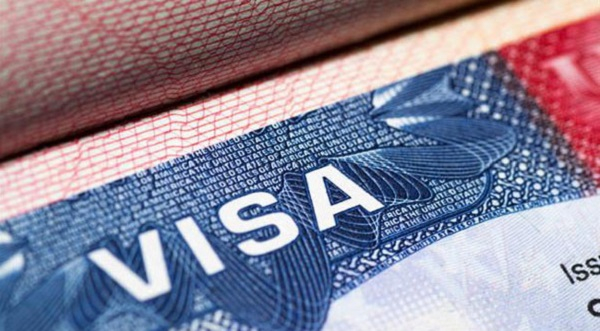
 A wave of diplomatic retaliation emerges as U.S. widens travel ban