



Türkiye–US Defense Disputes: Political Will Is There, but Congress Holds the Key
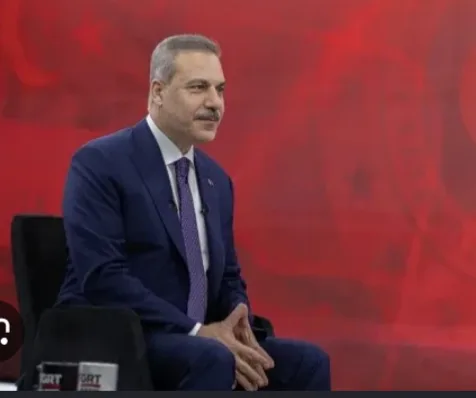
Turkish Foreign Minister Hakan Fidan has said that the political will to settle the long-running defense disputes between Ankara and Washington exists. But he added that the US administration cannot act alone, because Congress controls the legislative restrictions at the heart of the problem.
Speaking on Saturday to the Turkish broadcaster TGRT Haber, Fidan said certain delays rooted in the administration's own authority have now been lifted, including on some long-stalled ammunition purchases. He was clear about the limit, however: the administration has no authority over legislated matters, so its room for maneuver is "very limited."
The central irritant remains the US sanctions under the Countering America's Adversaries Through Sanctions Act (CAATSA), imposed on Türkiye over its purchase of Russian defense systems. Fidan said Presidents Erdogan and Trump have shown political will on the issue for about a year and a half and agreed to take it off the bilateral agenda.
In July, on the sidelines of the NATO summit in Ankara, Trump said the sanctions would come off, adding that the US does not want to sanction friends.
Fidan questioned why Türkiye is excluded from US defense cooperation when, in his words, "tons of countries" that bought Russian systems were spared similar penalties.
He argued that this exclusion harms American interests too. He blamed lobbying by "predictable networks," naming Israeli and Greek lobbies, for pushing Washington against Ankara in what he called "lobby wars." These are Fidan's own claims, and they reflect Ankara's reading of Washington politics.
Wider remarks on Washington and the Middle East
Fidan also commented on the recent US congressional elections and Israel's Knesset elections, arguing that Netanyahu's policies strongly influenced both outcomes. He said some newly elected US Democrats are breaking with party orthodoxy and opposing wars, while parts of the American right are questioning Middle East policies that do not put US interests first. He asserted that everyone complicit in Gaza's suffering and the blocking of aid will pay a political or other price.
On regional diplomacy, he said the US withdrawal from Syria and Iraq is central to Türkiye's "terror-free region project," and that Syrian stability is vital. He backed Iraqi Prime Minister Ali al-Zaydi's initiatives and noted ongoing Türkiye–US coordination on the Caucasus, a Russia–Ukraine ceasefire, and the Horn of Africa.
For Africa and West Africa in particular, the episode shows how far great-power arms politics is shaped by legislatures and lobbies as much as by presidents. Türkiye is now a significant defense partner across the Sahel, the Horn of Africa and the Gulf of Guinea, through drones and security cooperation.
A Türkiye that regains full access to US defense cooperation could change the balance of suppliers available to African states. Whether that happens depends on a Congress that has so far moved slowly, and on whether the Erdogan–Trump understanding can survive US domestic politics.
Private Investigator, Criminal Investigation and Intelligence Analysis,
International Conflict Management and Peacebuilding. (USIP)
Source: Anadolu Agency, 22 November 2026.
 WhatsApp


Comments (0)
No comments yet. Be the first to share your opinion!