



TRAFFITECH-GH: A New Era of Road Safety, Discipline and Accountability in Ghana
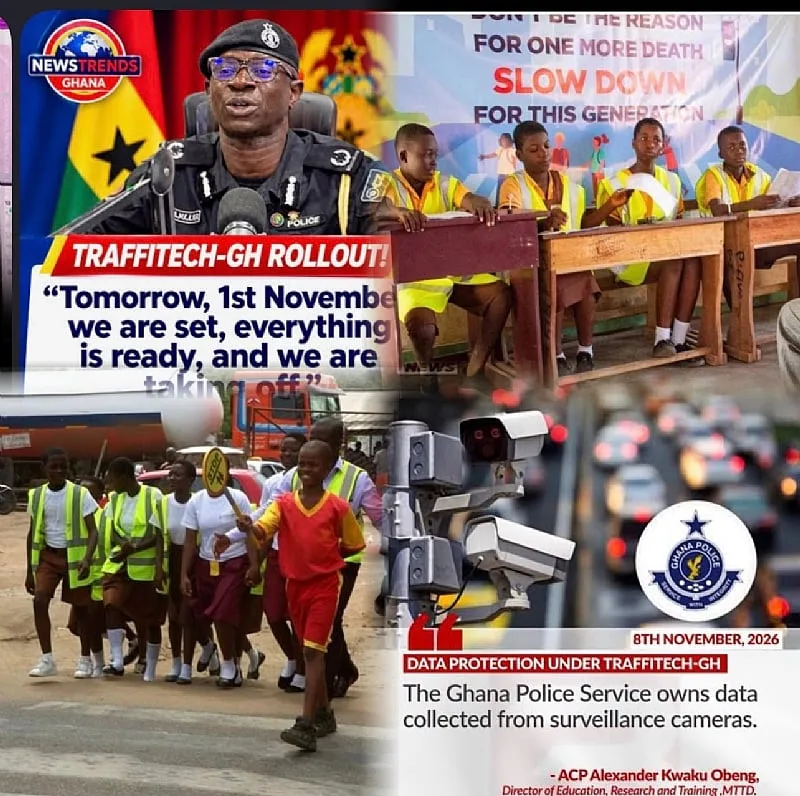
Imagine a Ghana where drivers obey speed limits even when no police officer is in sight. Imagine safer school zones, more disciplined intersections, and roads where dangerous driving is detected through reliable evidence and addressed fairly.
That is the promise behind TRAFFITECH-GH: the use of technology to support traffic law enforcement, encourage responsible driving and reduce preventable road crashes, injuries and deaths. TRAFFITECH-GH is not merely a system for issuing electronic traffic notices. Its wider value lies in changing behaviour, protecting pedestrians and passengers, strengthening accountability, and building a culture in which every road user respects human life.
TRAFFITECH-GH is a technology-assisted traffic management and enforcement initiative associated with the Ghana Police Service and its Motor Traffic and Transport Department (MTTD). It uses electronic tools, including fixed and mobile cameras, speed-measuring devices and digital record systems, to help detect, record and process specified road traffic violations.
The idea is straightforward: when a possible offence is detected, the evidence is recorded and reviewed through an established process; where an offence is verified, the appropriate notice and legal procedure follow. Technology supports enforcement. It does not remove the need for human oversight, lawful procedure, or the right to challenge an error.
Consider a driver travelling far above the posted speed limit. A properly installed and calibrated device detects the speed and records the evidence. Authorised personnel then review it before any notice is issued.
– Verification by authorised personnel
– Notification through an official channel
– Clear instructions for payment or contesting the notice
– Enforcement in accordance with the law
Motorists should always confirm that a notice is genuine and use only official payment and appeal channels. Never pay money to any individual who claims he can cancel a ticket or influence the process.
Excessive speed and dangerous driving can turn an ordinary journey into a tragedy. Consistent enforcement encourages drivers to slow down and obey signals. The objective must be fewer deaths and serious injuries, not simply more fines.
Protecting Pedestrians and Vulnerable Road Users
Children, older people, persons with disabilities, cyclists, roadside traders and passengers all need safer roads, supported by safe crossings, visible signs, footpaths, traffic calming and well-designed school zones.
Where a violation is established electronically, fewer roadside stops are needed. This limits arguments and opportunities for unofficial settlements and frees officers for traffic management and crash response.
Digital records make enforcement evidence-based. A motorist should be able to see the alleged offence, the time and location, the vehicle details and the evidence relied upon, and must have a practical way to correct mistakes and challenge disputed notices.
People respect enforcement when rules are applied consistently, procedures are transparent, and no one is above the law, regardless of wealth, status, occupation or connections.
Crashes damage vehicles and goods, interrupt work, burden families with medical costs and strain emergency and health services. Prevention protects household incomes, business activity and public resources.
Technology can assist with offences such as speeding and running red lights, and, depending on the equipment and approved procedures, dangerous overtaking, seatbelt violations and certain compliance matters. The public should be told clearly which offences are monitored, how they are detected and how evidence is verified.
4. Commercial Drivers and Transport Operators
Trotro and taxi operators, intercity bus drivers, motorcycle and delivery riders, haulage companies and fleet managers carry a heavy responsibility. A driver carrying many passengers is responsible for far more than reaching a destination quickly.
– Recognise drivers who demonstrate safe and professional conduct
Technology should build a responsible transport culture, not simply fear of penalties.
5. Take TRAFFITECH-GH to Every School
Road safety education should begin long before a young person applies for a driving licence. Children are already road users: they walk to school, cross streets, board buses and travel with adults, and they learn from the driving behaviour they see.
I therefore respectfully call on the Ministry of Education, the Ghana Education Service, the Ministry of the Interior, the Ghana Police Service and MTTD, the National Road Safety Authority, school authorities, parents and community leaders to work together to take TRAFFITECH-GH and road-safety education into schools throughout Ghana.
The programme should be age-appropriate, practical, inclusive and repeated throughout a student's education, teaching both how to use roads safely and why traffic laws exist, what technology-assisted enforcement does, its limits, and how citizens' rights are protected.
– Responsible cycling and motorcycle use
Driving schools should likewise teach traffic rules, the role of TRAFFITECH-GH, safe driving habits and the proper process for responding to a traffic notice.
Suggested activities include quizzes, debates, essays, drama and poster competitions, road-safety ambassador programmes and community events involving parents, transport operators, police officers and traditional leaders.
6. A–Z Road-Safety Learning Guide for Schools
A — Awareness: Road safety is everyone's responsibility.
B — Basic Traffic Rules: Learn the rules that protect drivers, passengers and pedestrians.
C — Crossing Safely: Use designated crossings; stop, look and listen before crossing.
D — Discipline: Show patience and self-control on the road.
E — Emergency Awareness: Know how to seek help and keep clear of emergency work.
F — Follow Signs: Obey traffic signs, signals and road markings.
G — Give Way: Respect pedestrians and give way where the law requires.
H — Helmet Safety: Wear a properly fitted, approved helmet on motorcycles and bicycles.
I — Importance of Seatbelts: Wear a seatbelt and use proper child restraints.
J — Journey Planning: Allow enough time and avoid rushing.
K — Know Speed Limits: They are legal limits, not targets.
L — Learn Traffic Lights: Understand and obey red, amber and green signals.
M — Motorcycle and Bicycle Safety: Use protective equipment, remain visible and follow the rules.
N — Never Drive Impaired: Never drive under the influence of alcohol or drugs.
O — Overtake Safely: Never overtake where prohibited or when the road ahead is not clear.
P — Protect Pedestrians: Take extra care near schools, markets, crossings and homes.
Q — Question and Learn: Ask questions about road signs, rules and safe behaviour.
R — Respect All Road Users: Share the road courteously and patiently.
S — School-Zone Safety: Slow down and follow instructions near schools.
T — Technology and TRAFFITECH-GH: Understand how technology supports enforcement and safety.
U — Understand Your Responsibility: Every road user has duties under the law.
V — Vehicle Roadworthiness: Properly maintained vehicles save lives.
W — Warning Signs: Recognise signs that warn of hazards ahead.
X — eXamine Risks: Pause and check for danger before crossing or entering a road.
Y — Youth Leadership: Encourage friends and family to practise safe road use.
Z — Zero Tolerance for Dangerous Behaviour: Reject reckless driving that puts lives at risk.
Nationwide and risk-based, guided by evidence, reaching high-risk roads, rural areas and intercity routes, not only the cities.
Speed limits and warnings must be accurate, visible and properly maintained.
Devices should be properly approved, installed, maintained and calibrated, with the integrity of evidence protected.
The public must be able to understand the legal basis for penalties, the collection process, contractual arrangements and how revenue is accounted for.
Personal information, images and vehicle records must be protected, retained only as permitted, and accessed only for legitimate purposes.
An accessible process should exist to dispute a notice, correct registration errors, challenge faulty readings and obtain a timely decision.
Information should be provided in clear English and Ghanaian languages through radio, television, community meetings, social media and schools, ensuring those with limited digital access are not left behind.
8. A Message to Parents, Young People and the Public
A parent sending a child to school wants that child to return home safely. A worker travelling to earn a living wants to return to family. A passenger boarding a bus wants to arrive alive. A pedestrian crossing the road deserves protection, whatever vehicle someone else is driving.
Technology cannot prevent every crash. It cannot replace responsible driving, safe road design, vehicle maintenance, good public transport, effective emergency care or strong institutions. But properly implemented and fairly governed, it is a powerful tool for detecting dangerous behaviour and encouraging compliance.
Traffic lights are not decorations. Speed limits are not suggestions. Seatbelts and helmets are not optional fashion accessories. Roads are shared public spaces, and every road user has a responsibility to protect life.
Conclusion: Make Road Safety a National Culture
The success of TRAFFITECH-GH should not be measured by cameras installed, notices issued or penalties collected, but by safer behaviour and fewer people killed or seriously injured on our roads.
Let us educate the next generation before they become the next generation of motorists. Let every school become a centre of road-safety awareness, and every student an ambassador for responsible road use, with parents, teachers, police officers, transport operators, traditional and faith leaders and public institutions sharing the responsibility.
TRAFFITECH-GH should not only help motorists understand that violations can be detected. It should help the whole nation understand why obeying traffic laws protects human life. Road safety is not a favour to government. It is a responsibility we owe ourselves, our families and future generations.
Executive Protection Agent, United States & Retired Chief Inspector, Ghana Police Service
Public Education and Road-Safety Awareness
 WhatsApp



Comments (0)
No comments yet. Be the first to share your opinion!