



The Sahel’s Dangerous Calm: What Does the Lull in Jihadist Fighting Really Hide?
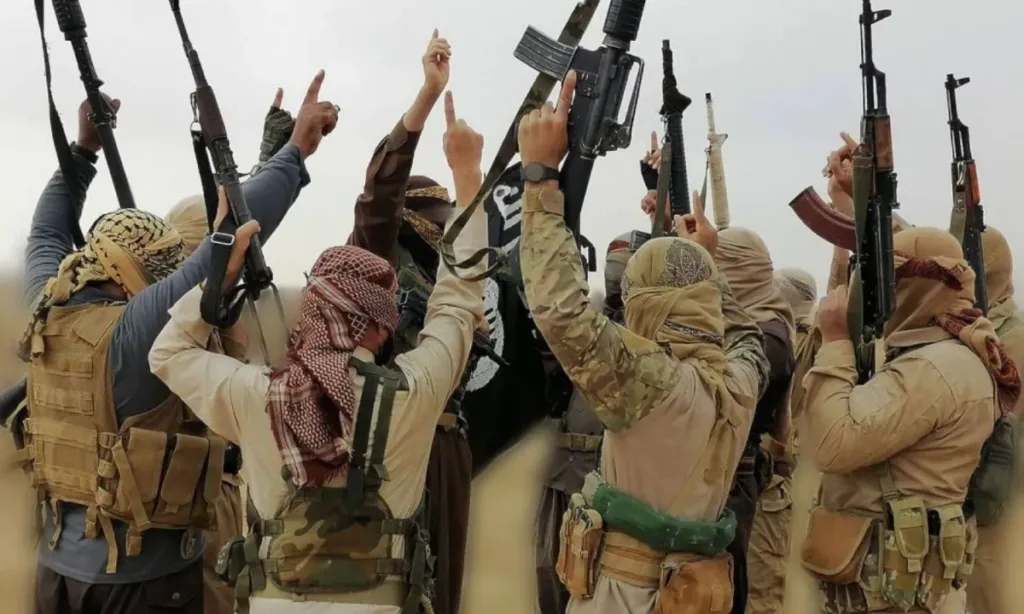
The reported easing of fighting between jihadist rivals in the Mali-Burkina Faso-Niger tri-border region may look like relief for governments struggling to contain an expanding insurgency. It should not be read that way. After months of fierce confrontations between Jama’at Nusrat al-Islam wal-Muslimin (JNIM) and Islamic State Sahel Province (ISSP), clashes between the two have reportedly slowed since late October. Yet attacks on state forces have continued, and neither group has shown any sign of abandoning its territorial ambitions. The violence may not be ending. It may be changing direction.
Mali shows why. JNIM’s assault on the Dioura garrison on 10 September caused heavy military casualties, and later attacks around Sévaré and Konna exposed how thinly government positions are held. JNIM also reportedly ambushed an Africa Corps column near Niono in late September and claimed further attacks on Malian patrols and convoys in the Ségou and Sikasso regions between 17 and 25 October. In Burkina Faso, soldiers and the government-backed Volunteers for the Defence of the Homeland remain under pressure. Individual claims need independent verification, but the pattern is clear: fewer clashes between the jihadists has not meant fewer attacks on the state.
Crisis Group’s October monitoring of Burkina Faso describes what that pressure looks like: a cluster of attacks around Ouahigouya, still unconfirmed, that reflects JNIM’s approach to major regional centres. It targets the surrounding outposts, towns and roads to raise the cost of resupply and reinforcement and to erode the state’s reach beyond the urban perimeter. The strategy is patient and cumulative, and it does not depend on defeating ISSP first. Africa Defense Forum notes that JNIM tends to concentrate on state security forces and Russian mercenaries while courting tribal leaders, which suggests that freed-up capacity has an obvious destination.
JNIM and the Islamic State’s Sahel affiliate have fought each other openly since 2019, competing over territory, recruits, defectors and ideological authority. ACLED analyst Héni Nsaibia has counted roughly 320 clashes between them since then, with more than 2,200 fighters killed.
The rivalry intensified again this autumn. On 9 October heavy fighting broke out around Ganadaouri, in Burkina Faso’s Oudalan province. ISSP claimed to have killed more than 400 JNIM fighters. Crisis Group’s CrisisWatch noted that the figure could not be independently verified, and that preliminary monitoring pointed to substantially lower casualties. Nsaibia observed that, if the claim were confirmed, it would be the deadliest single battle recorded between the two groups.
The claims on both sides deserve the same caution. Each group has an incentive to inflate its victories and hide its losses, and neither is a neutral source. What can be said is that fighting between them has escalated since early September, according to Al Jazeera, and that the Ganadaouri clashes were heavy enough for Crisis Group to log them as a major event in October. A reported slowdown after that peak is exactly the moment to ask whether the groups are exhausted or merely repositioning.
Whatever the true toll, sustained fighting is expensive. It ties up fighters, forces reinforcements and drains equipment. Pausing it frees all three. The danger is what each group does with the capacity it no longer spends on the other.
The danger is what each group does with the capacity it no longer spends on the other.
The first is exhaustion. Both organisations may need time to regroup, replace losses and consolidate ground. That is a pause to recover, not a retreat.
The second is a change of priorities. JNIM has pushed south towards Benin and Togo, and Crisis Group’s February report argues that, while its leaders regard the coastal states as secondary to the Sahel, ground-level fighters are eager to expand, which makes them a threat to those countries. Resources no longer spent on ISSP could feed that southward drift. ISSP, for its part, may use the quieter period to recover influence in areas where JNIM has pressed it.
The third is local accommodation. The military governments of the central Sahel publicly rule out talks with terrorist groups, yet reports of local understandings persist. In March, AFP and other outlets reported that more than 100 suspected jihadist detainees had been freed in Mali in return for a truce on attacks on fuel convoys, a deal expected to last until Eid al-Adha in late May. The Malian army denied it. Treat it as a reported arrangement, not an acknowledged agreement. Even so, it illustrates how violence can fall in one place by negotiated pause while an armed group keeps its networks, its local influence and its capacity to resume. A pause that suits one community can also push the threat towards another, and towards neighbours who were not at the table.
The distinction between a real decline and a tactical pause will show in the data. If attacks on state forces and convoys keep pace while inter-jihadist clashes stay low, the pause is a reallocation. If JNIM activity rises in Burkina Faso’s south and east, or in northern Benin and Togo, the freed capacity is moving towards the coast. If local truces appear around fuel routes and markets, as in Mali’s reported March arrangement, the question becomes who is bargaining on whose behalf. Reliable, independently verified incident data should be the test, not claims released by either group.
Ghana has so far avoided the sustained violence that neighbours have suffered, but the region’s trend is the wrong way. In July, the director of Ghana’s National Counter-Terrorism Fusion Centre told a Sahel Peace Initiative forum in Accra that West Africa had recorded more than 2,000 terrorist attacks and over 8,000 deaths in the first half of 2026, with fatalities up 14 per cent. In January, Accra hosted a high-level regional security conference under President Mahama, where Ghana’s foreign minister warned that the Sahel now accounts for more than half of global terrorism-related deaths and that the spillover risk to coastal states is serious.
The immediate concern is not a large-scale attack on Ghana. It is quieter: extremist networks using porous borders, local grievances and thin state presence to build logistics, recruit sympathisers and gain a foothold, as they have begun to do in northern Benin and Togo. A lull in the Sahel is precisely when such groups can reposition.
Ghana’s response should therefore be steady rather than alarmed. Intelligence-led border patrols, better surveillance and closer cooperation with neighbours must be matched by investment in northern communities, where poverty, unemployment and weak public services create grievances that extremists exploit. Any local arrangements with armed groups, wherever they are made, deserve scrutiny from the countries that will live with the consequences. And Ghana should use the Accra Initiative to turn January’s commitments into practical intelligence-sharing and joint operations.
The Sahel’s rival jihadists may be fighting each other less. That tells us about their priorities, not about the safety of the people they threaten. The calm should be treated not as reassurance, but as a window for coastal West Africa to strengthen its defences before the threat moves closer.
 WhatsApp

Comments (0)
No comments yet. Be the first to share your opinion!