



From 20 to 48 bags: Agroecology boosts yields but women farmers face land, credit barriers
Diana Afriyie used to harvest about 20 bags of maize from her four-acre farm.
Today, she harvests 48 bags from the same piece of land, representing a 140 per cent increase, following changes in her farming practices through the Smallholder Women Farmers Movement (SHWFM).
Before adopting agroecological practices, she sometimes bought about 15 bags of chemical fertiliser for her farm, spending thousands of Ghana cedis in the process.
However, using manure from her poultry farm as organic fertiliser and diversifying her crops have significantly reduced her dependence on purchased fertilisers and expenditure on farm inputs.
Mrs Afriyie has also stopped burning her farm after weeding, a practice she said helped retain soil moisture for longer periods, particularly during dry spells.
For another farmer, Selina Asante, crop rotation and mulching have helped protect her crops from drying out during prolonged dry spells by conserving soil moisture.
Their experiences demonstrate how nature-based farming practices can improve yields, reduce production costs and strengthen smallholder farmers' resilience to changing climatic conditions.
Yet, despite these gains, many women farmers in the Bono, Bono East and Ahafo regions struggle to expand their operations because of limited access to agricultural land, expensive credit and inadequate irrigation facilities.
The challenge is translating improved farming practices into sustainable agricultural businesses when women lack control over the resources needed to expand production.
The Regional Programme Officer of ActionAid Ghana, Yaw Osei Boateng, said the organisation had worked with smallholder women farmers in the three regions since 2016 to build their capacity in agroecological farming.
Under the initiative, he indicated that more than 700 women farmers had been trained, while three community seed banks had been established to preserve indigenous crop varieties for subsequent planting seasons.
He said the interventions had helped farmers reduce their dependence on synthetic agricultural chemicals, lower production costs and strengthen their resilience to climate-related shocks.
ActionAid had also supported the women to establish or strengthen village savings and loan associations to improve their access to funds for agricultural activities.
Mr Boateng said the women were being encouraged to integrate livestock rearing into their farming activities and cultivate different crops to reduce the risks associated with depending on a single agricultural enterprise.
The President of the Ahafo Regional SHWFM, Clementina Ayivor, said land ownership and control in many communities remained largely in the hands of men, including husbands, family heads and traditional authorities.
She explained that women often depended on their husbands or community landowners for access to farmland, limiting their ability to determine the size of land they cultivated and make long-term investments.
Consequently, many women continued to farm within their limited financial capacity instead of expanding production to take advantage of commercial opportunities.
Mrs Ayivor appealed to the government to improve women's access to agricultural land and introduce affordable credit arrangements.
She also identified unpredictable rainfall as a growing threat to production, explaining that rains sometimes started late and ended early, making it difficult for farmers to plan their activities.
Mrs Ayivor added that farmers whose lands were close to rivers were not necessarily protected, as some water bodies dried up during prolonged dry spells.
She, therefore, called for the provision of irrigation facilities to enable women farmers to maintain production when rainfall was inadequate.
A Senior Lecturer in Agronomy at the University of Energy and Natural Resources (UENR), Dr Kwadow Gyasi Santo, said agroecology offered opportunities to improve soil fertility, conserve water and reduce farmers' dependence on synthetic agricultural inputs.
He explained that the approach involved using resources within the farm environment to sustain agricultural production.
Organic materials, he said, improved soil structure and enhanced its capacity to retain water and nutrients, making them particularly beneficial during periods of inadequate rainfall.
He also cautioned against the indiscriminate application of pesticides, particularly insecticides, which could destroy beneficial organisms such as bees, which are important for pollination and disrupt ecological balance.
He said farmers could explore natural pest management methods, including neem extracts, while working with agricultural researchers to identify suitable alternatives to synthetic chemicals.
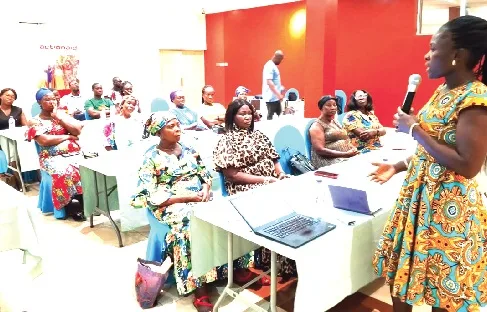
These concerns informed the movement's 2026 conference at Abesim in the Bono Region, organised with support from ActionAid Ghana on the theme, "Promoting Agroecology for a Better Future: Mobilising Women Farmers for Change".
The conference brought together 200 women from communities across the three regions to share farming experiences and identify priority issues for collective advocacy.
ActionAid said access to land, affordable credit and agricultural inputs had emerged as priority issues for advocacy in 2027. It pledged to support the women to engage the Ministry of Food and Agriculture and other relevant stakeholders to push for interventions that addressed their concerns.
The challenges are reflected in national agricultural data.
The 2017/2018 Ghana Census of Agriculture showed that women accounted for 24 per cent of farm holders, but only 11 per cent of holders of farms measuring five acres or more.
A 2023 study, which examined climate variability among smallholder farmers in the Bono East Region, also found inconsistent rainfall patterns and rising temperatures between 2011 and 2021.
It identified mixed farming and crop diversification as important resilience practices, while limited access to agricultural technologies and the high cost of improved crop varieties remained barriers.
For the women farmers, therefore, the challenge is no longer simply about acquiring knowledge of better farming methods.
It is about securing the land, financing, water and institutional support needed to translate those practices into sustainable agricultural businesses.
The experiences of Diana and Selina demonstrate that improved farming practices can produce more maize from the same farmland, while reducing expenditure on inputs.
However, unless women have equitable access to productive resources, such gains may remain difficult to replicate and expand.
Writer's email: This email address is being protected from spambots. You need JavaScript enabled to view it.
 WhatsApp





Comments (0)
No comments yet. Be the first to share your opinion!