



Senegal’s President enforces rejected budget by decree as $2.2bn IMF bailout hangs in balance
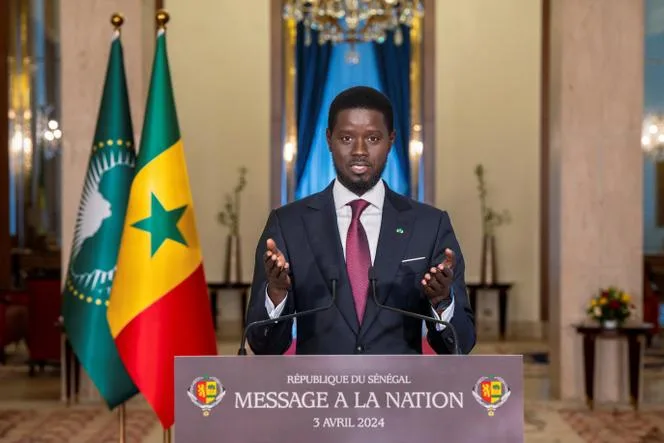
Senegalese President Bassirou Diomaye Faye has ordered the implementation of a revised 2026 budget rejected by parliament, bypassing lawmakers in a move aimed at restoring the country’s strained public finances and advancing a stalled $2.2 billion International Monetary Fund (IMF) bailout.
Faye’s office announced on Thursday, November 19, 2026, that the president had decided to bring the revised budget into force by decree, escalating a political standoff with the National Assembly, where his former allies in the ruling Pastef party hold a commanding majority.
The decision follows parliament’s rejection of the government’s budget measures amid disagreements over how to address Senegal’s mounting debt crisis.
Pastef leader and Prime Minister Ousmane Sonko has opposed debt restructuring, a key requirement under the proposed IMF programme, previously describing the approach as a “disgrace” that would undermine Senegal’s sovereignty.
Although Pastef had not officially responded to the president’s decree, influential party lawmaker Amadou Ba criticised the move, saying Faye was “making a bad mistake” and had “no authority to put into force a rejected revised budget bill”.
Senegal announced in September that it had reached an agreement with the IMF on a $2.2 billion debt programme intended to stabilise its public finances. However, the fund has yet to secure executive board approval for the bailout, which remains subject to conditions.
The revised 2026 budget and a proposed 2027 budget are considered essential to addressing the country’s debt burden and meeting the requirements of the IMF programme.
The government has warned that failure to approve the revised budget could threaten electricity supplies, delay payments to businesses and prevent the settlement of salary arrears owed to teachers.
The presidential decree has, however, received support from some labour representatives. Cheikh Diop, leader of the trade union CNTS-FC, described the decision as a “huge relief for the labour sector”, saying it could facilitate the repayment of domestic debts affecting workers and businesses.
The IMF has indicated its readiness to discuss a debt relief package with Senegal’s stakeholders, but warned that progress depends on resolving the budget impasse.
At a press briefing last week, IMF spokesperson Julie Kozack said advancing the relief package “depends on completion of the agreed steps on a budget framework”.
Senegal’s public-sector debt was estimated at 132 per cent of gross domestic product at the end of 2024, placing additional pressure on the government to secure a sustainable fiscal framework.
The latest confrontation comes as lawmakers are also considering the government’s proposed 2027 budget, sections of which have already been rejected during parliamentary proceedings.
Source: Trtafrika.com
 WhatsApp







Comments (1)
zeiniez.fashion