



CSOs, Others Call For Nat’l Philanthropy & Social Investment Policy
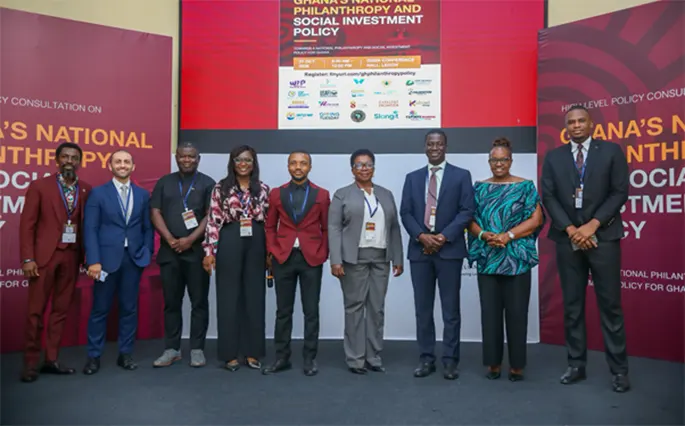
Civil society organisations (CSOs), philanthropy leaders and institutional funders have called on the government and private sector to collaborate with Ghana’s philanthropy community to develop a National Philanthropy and Social Investment Policy to strengthen local giving and mobilise domestic resources for national development.
The call was made at a High-Level Policy Consultation held on October 27, 2026, at the ISSER Conference Hall, University of Ghana, Legon, as part of Ghana Philanthropy Week 2026.
Held under the theme, “Towards a National Philanthropy and Social Investment Policy for Ghana,” the consultation brought together stakeholders from government, civil society, academia, the private sector and development organisations to discuss measures to strengthen philanthropy and social investment.
The policy initiative, which began following discussions at the 2022 Ghana Giving Summit, seeks to create an enabling environment for local philanthropy, protect charitable contributions from undue taxation and reduce Ghana’s dependence on foreign aid.
Prof. Godfred Bokpin, Technical Advisor to the Philanthropy Community Policy Working Group, said domestic philanthropy could make a significant contribution to closing the country’s development financing gap.
“Ghana could get no less than $300 million just from high-net-worth individuals annually to close our financing gap,” he said, urging policymakers to avoid tax measures that could discourage charitable giving.
Kwami Edem Senanu, Technical Co-chair of the Working Group, called for an inclusive policy process that gives donors, communities, businesses and public institutions a voice.
Similarly, Nana Benpong Amankwah of the Lawyers in Philanthropy Ghana Network, called for a clear separation between institutions responsible for regulating the sector and those promoting its growth.
“There should be a separation of the institution that regulates and then promotes,” he said, emphasising the need for transparency and accountability without imposing excessive administrative burdens on grassroots organisations.
Christian Elongué of the Ubuntu Giving Alliance said the consultation provided an opportunity to assess progress and identify regulatory reforms that could attract more philanthropic funding.
The next phase of the process will involve wider consultations with community foundations, faith-based organisations, traditional giving networks, women, young people, persons with disabilities, diaspora groups, NGOs and underserved communities.
Dr. Emmanuel Marfo, Co-convener of Ghana Philanthropy Week, said outcomes from the consultation and regional engagements would inform further technical analysis and nationwide validation ahead of the policy’s planned adoption in 2027.
Individuals and organisations can follow the process and submit recommendations at www.ghanaphilanthropypolicy.org.
 WhatsApp



Comments (0)
No comments yet. Be the first to share your opinion!