



Ghana is bigger than its leaders: Stop politicising our national identity – Bencha George writes

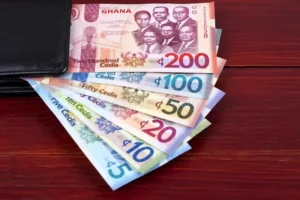
The ongoing debate surrounding the display of political personalities on Ghana’s national currency, monuments, and public spaces forces us to confront a fundamental question: Should our national identity be tied to individuals and shifting political traditions, or to the enduring soul of our republic?
I firmly believe that Ghana must always be bigger than its political leaders, and our collective identity must never become the private property of any political party, government, tribe, or individual. While recognizing distinguished Ghanaians for their historic contributions is vital, national monuments, currency, and public institutions should never be weaponized as instruments for political glorification.
The continuous politicization of our national symbols and the reflexive renaming of universities, airports, hospitals, and roads every time a new government takes office creates severe national challenges.
Here is why we must change course:
1. It Fosters Political Division, Instability, and Endless Controversy
Placing politically affiliated figures on our currency and national monuments practically invites polarization. Every change of administration triggers bitter feuds over whose face belongs on legal tender and whose statue should be torn down. Instead of serving as anchors of national unity, these symbols risk becoming permanent battlegrounds for political confrontation.
2. It Fuels Tribalism, Favoritism, and Ethnic Resentment
When public figures are selected for national honors without transparent, impartial criteria, citizens naturally begin to question whether ethnic loyalty, regional origins, or political patronage drove the decision. This breeds quiet resentment and a sense of exclusion among communities whose own heroes are ignored. True national recognition must reflect a life given to Ghana as a whole, not narrow ethnic or party ties.
3. It Undermines Institutional Continuity
Universities, airports, hospitals, and highways should possess identities that outlast transient political regimes. Constantly slapping new political names on these institutions erodes their historic brand, creates administrative chaos, and disrupts institutional memory. Public entities belong to the Republic of Ghana, not to the temporary administration of the day.
4. It Encourages Historical Revisionism and Petty Revenge
When one government paints the landscape with its favorite political icons, the succeeding government often feels compelled to scrub them away and install its own. This kicks off a petty cycle where our national history is constantly rewritten out of spite or political vanity. Ghana deserves an objective, independent preservation of its history, not a politically orchestrated soap opera.
5. It Chokes Independent Thought and Constructive Criticism
When partisan political figures are elevated into untouchable national icons, citizens are subtly discouraged from critically evaluating their flaws, failures, or historical records. Anyone who dares offer a balanced or alternative perspective is instantly branded as “politically biased” or disrespectful. This culture stifles intellectual freedom, critical thinking, and the robust debate desperately needed to solve our country’s problems.
6. It Diverts Attention and Resources from Real Development
Ghana faces monumental challenges: youth unemployment, educational reform, healthcare accessibility, industrialization, and economic transformation. Engaging in exhausting national rows over whose name adorns a building or a banknote is an expensive distraction. Our leaders should be judged by the tangible development they deliver, not the self-congratulatory monuments they build.
7. It Cultivates Personality Worship over Strong Institutions
A nation’s progress does not depend on deifying individual politicians; it depends on building resilient institutions that function brilliantly no matter who sits in the office. When personalities matter more than systems, citizens are conditioned to trade accountability for political loyalty. Ghana needs ironclad democratic institutions, not a culture of hero-worship. Former President of the USA Barack Obama stated in 2009 during his visit to Ghana, “We Ghanaians need strong institutions instead”
8. It Erases the Contributions of Ordinary Citizens and Professionals
National development is never the work of politicians alone. It is built on the sweat and sacrifice of teachers in rural classrooms, farmers feeding the nation, engineers wiring our infrastructure, scientists, healthcare workers, entrepreneurs, traditional leaders, and millions of ordinary citizens. When national honors are monopolized by politicians, these quiet heroes are unjustly erased.
9. It Wastes Public Funds on Pointless Rebranding
Changing the names of public infrastructure is an administrative and financial drain. It demands new signage, updated official stationery, digital rebranding, and costly bureaucratic adjustments. Pouring public funds into vanity rebranding, especially when classrooms lack books and hospitals lack basic equipment, is an unacceptable misplacement of priorities.
10. It Erodes Public Trust in National Institutions
Our national institutions must remain fiercely independent and serve every Ghanaian equally, regardless of political color. When the naming of these institutions reeks of partisan point-scoring, the public loses faith in their neutrality and integrity. Protecting public trust requires strict transparency and broad national consensus.
A Call for a New Path
Universities should be celebrated for academic excellence, airports for global connectivity, hospitals for saving lives, and roads for binding communities together. Their dignity should not depend on the political surname of the person they happen to be named after.
Ghana urgently needs a bipartisan national policy that shields public institutions and symbols from partisan interference. Any decision to honor an individual must follow transparent, independent guidelines based on undeniable, well-documented service to the nation backed by genuine public consensus.
This argument is not about erasing history or denying our true heroes their rightful place in the sun. It is about ensuring that national recognition never becomes a political weapon.
Our greatest national honor should not be a statue or a banknote; it should be a thriving nation with world-class education, accessible healthcare, booming industries, robust institutions, and an unshakeable sense of national unity.
Governments are merely the temporary custodians of our national assets; they are not the owners of Ghana’s history.
Let us honor our past without politicizing our future. Let us celebrate our heroes without dividing our people.
Ghana must be bigger than its leaders. The greatest monument we can build is a united, prosperous, democratic, and developed nation.
“A nation is not built by immortalizing its leaders, but by building institutions and opportunities that outlive them.”
Written By: Bencha George
(IT specialist, AI & ML Researcher& Founder of Bencha Tech Engineering)
 WhatsApp
Comments (0)
No comments yet. Be the first to share your opinion!