



Producing wealth, earning little: The plight of women in Upper West’s shea butter industry
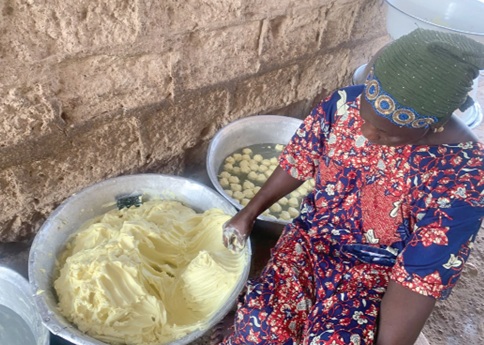
At the Kpaguri Shea Butter Processing Centre in Wa, the rhythmic pounding of roasted shea kernels, rising smoke from cooking pots and the steady movement of women at work reflect an industry that has long sustained households across northern Ghana.
For many women in the Upper West Region, shea butter production is more than a traditional activity.
It is a vital source of income that pays school fees, puts food on the table and supports families.
Yet despite the growing global demand for shea-based products, many processors continue to struggle with limited markets, inadequate equipment, lack of financing and the high cost of meeting certification requirements needed to access more lucrative buyers.
Women processors and agricultural experts are therefore calling for practical interventions, including improved market access, mechanisation, training and financial support, to help them expand production and earn better returns from an industry in which they provide most of the labour.
The journey from shea nut to butter is both time-consuming and physically demanding.
After collecting ripe shea fruits, the nuts are dried, cracked and processed into kernels, which are roasted, ground and kneaded before the extracted oil is boiled and cooled into butter.
Though simple in appearance to consumers, the process requires considerable effort and patience.
For 45-year-old Salamatu Ibrahim, who has spent more than a decade in the business, shea butter production remains the main source of livelihood for her family.
However, she says selling the finished product has become one of the biggest challenges confronting processors.
According to her, it can take as long as two weeks to sell a batch of shea butter before enough money is raised to begin another production cycle.
“Shea butter processing is very stressful, and after all the hard work, getting people to buy the product is a problem.
I carry it to the market every day, and it can take about two weeks to sell before I start producing again,” she said.
Salamatu said although the price of shea nuts had fallen slightly, low patronage continued to affect sales and profitability.
She added that the uncertainty surrounding the business makes it difficult to access credit to expand production.
“I am sometimes afraid to take a loan because I am not sure I will be able to pay it back. We are appealing to the government and non-governmental organisations to support us,” she said.
The experience is similar for 50-year-old Memuna Adams, who has been involved in shea butter processing for 15 years.
She said the business helps her support her children, but low profits and the absence of bulk buyers continue to limit growth.
“We do this business to survive and take care of our children. After processing the butter, getting buyers is the problem.
We go to the market every day, but the profit is very small,” she said, while calling for modern equipment to make processing easier and more efficient.
Beyond the challenges faced by individual processors, experts say structural constraints continue to hold back the growth of the industry.
The Upper West Regional Women in Agriculture Development (WIAD) Officer, Barikisu Alhassan Jangu, said market access remained one of the biggest obstacles facing women engaged in shea butter production.
According to her, although many processors produce high-quality butter, the cost of testing, registration and certification often prevents them from meeting the requirements of international markets.
She explained that many women operate as individuals or in small groups, making it difficult to produce the quantities required by large buyers.
To address this challenge, she advocated stronger producer networks and the establishment of registered processing centres where products could be aggregated, tested, certified and marketed.
Mrs Jangu said some processing groups have already benefitted from basic machinery such as crushers, roasters and kneaders, which have reduced the burden of manual processing.
However, she noted that more communities require similar support.
She also stressed the need for continuous training in quality control, packaging and labelling, explaining that the value of shea butter depends not only on production but also on maintaining standards that appeal to both local and international consumers.
Another concern, she noted, is the unequal distribution of benefits along the shea value chain.
While women undertake much of the labour-intensive work, including collecting nuts and processing the butter, they do not always receive a fair share of the revenue generated from the industry.
Mrs Jangu further highlighted the environmental impact of traditional processing methods, which rely heavily on firewood and charcoal.
She suggested the adoption of cleaner alternatives such as liquefied petroleum gas (LPG) and solar energy to reduce pressure on the environment and promote the sustainability of the sector.
Despite the challenges, stakeholders believe the shea industry holds significant potential for economic transformation in northern Ghana.
Increased investment in mechanisation, certification, quality assurance systems and market linkages could help processors access higher-value markets while improving incomes for thousands of women.
For Salamatu, Memuna and many others, the appeal is simple: support that goes beyond words and creates real opportunities for growth.
As they continue to transform shea nuts into a product valued around the world, they hope for an industry that rewards their labour fairly and enables them to build better futures for their families.
 WhatsApp

Comments (0)
No comments yet. Be the first to share your opinion!