



Kenya calls on partners to replenish Green Climate Funds as impacts of climate change intensifies
Environment PS Festus Ng’eno speaks at the margins of UN Climate Change Conference (COP31) in Antalya, Turkiye./GILBERT KOECHKenya has called on contributors and development partners to demonstrate renewed ambition and ensure that the Green Climate Fund (GCF) is adequately resourced to support developing countries in addressing the growing impacts of climate change.
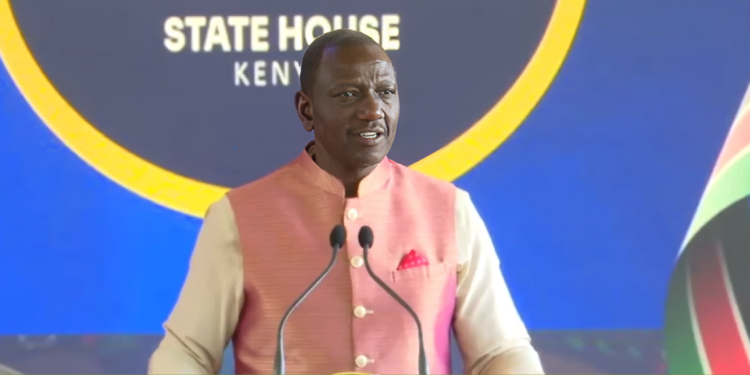
President William Ruto said climate change has had adverse effects on fiscal sustainability, especially in developing countries with limited resources, lowering revenues and increasing public spending at a time when they must invest in resilience.
“Yet international public climate finance has fallen well short of what is required. Africa is among the most vulnerable regions but receives less than 5% of global climate finance,” Ruto said in a speech read on his behalf by Environment PS Festus Ng’eno.
The PS represented the President at an event held under the theme “Delivering Climate Impact: Lessons from the Frontline”, a Green Climate Fund official high-level side event on the margins of the UN Climate Change Conference (COP31) in Antalya, Türkiye.
Environment PS Festus Ng’eno at the margins of UN Climate Change Conference (COP31) in Antalya, Türkiye. / GILBERT KOECHRuto said Kenya, like other African countries, needs resources that match the scale and urgency of the challenge.
He said climate impacts had worsened, fiscal space had tightened and sovereign debt had risen since the last replenishment of the GCF.
The GCF is the world’s climate fund for developing countries, mobilising finance at scale, strengthening national and regional institutions, and connecting global partners to drive transformative, country-led climate action.
It is one of the few funds that delivers finance at scale through country-owned programmes.
The GCF is the world’s largest climate fund. It has deployed more than USD 22 billion in funding and leveraged over USD 65 billion in co-financing for 376 approved projects and programmes globally.
Environment PS Festus Ng’eno at the margins of UN Climate Change Conference (COP31) in Antalya, Turkiye./GILBERT KOECHRuto said there was a need to support the fund’s replenishment.
“An ambitious GCF-3 is an investment in climate resilience and low-carbon development. It means countries can build on proven approaches, accelerate delivery, and reach those who need it most,” he said.
Ruto said Kenya remained committed to supporting the GCF’s call for an ambitious replenishment and to ensuring that contributing countries and partners honoured their pledges.
He also welcomed the GCF Board’s decision to select Nairobi to host the Regional Office for East and Southern Africa at its March 2026 meeting.
Ruto said the move was a vote of confidence in Kenya as a continental hub for climate finance and diplomacy, adding that the regional presence would mean more responsive engagement with governments and partners, as well as faster delivery of high-impact investments.
“Kenya is committed to ensuring that the full establishment and operationalization of the office is a success.”
On the transition to a low-carbon economy, Ruto said at least USD 4 trillion to USD 6 trillion in investment per year would be required.
He said delivering this would demand a transformation of the global financial system, adding that climate finance was not an abstract commitment.
“It is measured in lives protected, jobs created and communities that can withstand shocks. At this COP31, we have an opportunity to address finance holistically, as an ecosystem, and make it more accessible, affordable and available for developing countries.”
Ruto said the current financial system was unfair to developing countries.
“Reform would enable them to advocate for mutually beneficial outcomes, including additional resources for concessional loans. We expect the new financial architecture to deliver by helping to attract more investments towards climate action, securing more favourable terms for financial assistance, enhancing capital increase in MDBs for climate and double the adaptation finance.”
Ruto’s position was echoed by the Africa Group of Negotiators chairperson, Dr Antwi Amoah of Ghana.
Amoah said the continent was also keen to ensure that the Green Climate Fund was replenished.
The AGN chairperson decried a 27 per cent decline in GCF funding, saying the reduction would hurt ongoing efforts.
“Geopolitics could be the cause of the 27 per cent decline of GCF because excuses we are getting is that there’s no money. Our understanding is that there’s money, but there’s no money for climate. That’s the difference. Because they can get money for military interventions overnight. They can get money for energy security overnight. Why can’t they get money for climate? It’s because climate is not their priority.”
Amoah said Africa was not satisfied with how the tripling of climate finance was being handled.
He was, however, quick to point out that not everything could be achieved during negotiations.
At COP29 in Baku, Azerbaijan, parties adopted the New Collective Quantified Goal (NCQG) to replace the previous target of providing $100 billion annually in climate finance.
With climate finance at the centre of the discussions, nearly 200 countries reached an agreement to triple funding for developing countries from the previous annual target of USD 100 billion to USD 300 billion by 2035.
The agreement also secured a commitment from all actors to work together to scale up climate finance for developing countries from public and private sources to USD 1.3 trillion annually by 2035.
 WhatsApp
Comments (0)
No comments yet. Be the first to share your opinion!