



CBK Governor Explains Why Kenyan Shilling Has Stayed at KSh129 Against the Dollar for Over 2 Years
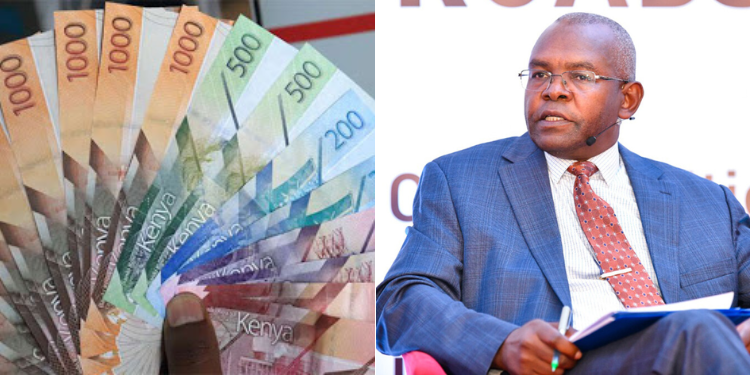
Speaking in an interview reflecting on his tenure at the Apex Bank, Thugge attributed the trend to foreign exchange market reforms, increased investor confidence, and the rebuilding of the country’s foreign reserves.
He noted that the Kenyan shilling‘s recovery followed a series of interventions introduced by the Central Bank in 2024 to address challenges in the foreign exchange market and restore confidence in the economy.
The governor recalled that the shilling had weakened to KSh161 against the dollar before appreciating to approximately KSh130 within one and a half months by the end of March 2024.
Since then, the exchange rate has remained around KSh129 to KSh130, marking what he described as an unusually long period of stability.
He added that the stability was the longest period he could recall since Kenya liberalised its foreign exchange market.
“Since March of 2024, the exchange rate has been broad; it’s market-determined but has been very stable at around 129, 130,” Thugge said.
“I don’t think there’s been a period this long of two and a half years of stability of the exchange rate.”
Thugge attributed the currency’s recovery partly to reforms introduced in the interbank foreign exchange market, which allowed commercial banks to trade more transparently and improved the availability of foreign currency.
One of the changes involved allowing electronic trading, enabling banks to see the prices at which other institutions were buying and selling foreign currency.
The move aimed to improve transparency and help market participants determine exchange rates more efficiently.
“We opened that market,” the governor explained, referring to the introduction of electronic trading.
The CBK also reduced the minimum amount required for transactions to qualify for interbank foreign exchange trading from $500,000 to $100,000.
According to Thugge, the reduction was intended to bring more liquidity into the interbank market.
Another major change involved eliminating the indicative exchange rate the Central Bank previously published.
Thugge explained that Kenya had been operating with two different exchange rates, with the indicative rate sometimes differing from the rates offered by commercial banks by as much as KSh8.
“So we got rid of the indicative one, and now we had only one rate,” he said.
The Central Bank also revised currency swap arrangements for foreign counterparties, reducing the tenure from one year to six months. For banks within the East African Community, the tenure was reduced from six months to zero.
Also Read: CBK Invites Kenyans to Invest in Ksh50 Billion Treasury Bonds With As Little as Ksh50,000
The governor also linked the shilling’s appreciation to Kenya’s successful liability management exercise in February 2024, which helped ease concerns about the country’s ability to repay its maturing Eurobond.
At the time, uncertainty surrounding the repayment of a $2 billion Eurobond had raised fears of a possible default, putting pressure on the foreign exchange market.
Thugge said Kenya took advantage of improved access to international capital markets to issue a new $1.5 billion Eurobond, which was used to cover part of the maturing debt.
“We issued a $1.5 billion Eurobond, which we used solely to cover the $2 billion. So we only had to deal with the remaining $500 million,” he explained.
During the same week, the government also issued an infrastructure bond that attracted foreign investors, bringing additional foreign currency into the country.
The combination of increased foreign exchange inflows and reduced concerns over debt repayment helped support the shilling.
“Within one and a half months, by the end of March, the exchange rate had appreciated from 161 to around 130,” Thugge said.
Also Read: Global Oil Prices Drop a Week to EPRA Fuel Price Review
Thugge further attributed the stability of the exchange rate to renewed foreign investor interest, which helped Kenya record balance of payments surpluses and rebuild foreign reserves.
He said the country began recovering reserves depleted over the preceding two years.
According to the governor, Kenya rebuilt approximately $1.4 billion in reserves in 2024 and a further $2.4 billion in 2025.
For 2026, the Central Bank estimates that the country could build reserves of up to $2.5 billion.
“We started to rebuild the reserves that we had lost the previous two years,” he said.
The increased foreign currency inflows also improved access to dollars for businesses and individuals, easing the shortages that had previously affected the market.
Thugge said people no longer had to wait in queues to access foreign currency, while inflation also declined following the interventions.
He noted that inflation fell below 5 per cent in April 2024 and remained below that level until April 2026, when external developments began pushing prices higher.
The governor acknowledged that stabilising the shilling and bringing inflation under control came at a cost, particularly for businesses and households that faced higher borrowing costs.
The CBK had aggressively raised its policy rate as part of efforts to tighten monetary policy and control inflation.
According to Thugge, the higher rates affected commercial bank lending and slowed the expansion of credit to the private sector.
However, after gaining confidence that economic stability had been achieved around August 2024, the Central Bank began lowering interest rates.
He said the Monetary Policy Committee reduced the policy rate during 10 consecutive meetings, bringing it down by a cumulative 425 basis points.
Thugge also criticised commercial banks for being quicker to raise lending rates when the CBK raised its policy rate than to cut them when monetary policy eased.
“When we were raising the policy rate, the banks were very quick to respond by raising their lending rates to consumers, to borrowers. But when we started to lower the rates, they were a bit more reluctant,” he said.
Annah Nanjala Wekesa is a journalist at The Kenya Times, with a passion for crafting news-worthy stories that leave a lasting impact. She holds a Bachelor of Arts in Communication and Media from Kisii University. She has honed her skills in the art of storytelling and journalism. Her passion lies in the art of storytelling that resonates with audiences, driving a commitment to delivering news-worthy stories through the lens of integrity and precision. She can be reached at [email protected]
Related Posts KRA Announces Ksh10,000 Tax Exemption Set to Benefit Thousands of Parents November 10, 2026 Why Stakeholders Are Split on Raising Drinking Age to 21 November 10, 2026 Meet Lydia Sitienei Chelagat, the Lawyer Ruto Wants to Lead Kenya’s Data Protection Office November 10, 2026 Court Gives Directions on Case Seeking to Stop Cabinet Salaries November 10, 2026 Leave a Reply Cancel replyYour email address will not be published. Required fields are marked *
Save my name, email, and website in this browser for the next time I comment.
Please enter your username or email address to reset your password.
Reported by thekenyatimes.com.
Read Original Report at thekenyatimes.com ↗ WhatsApp
Comments (0)
No comments yet. Be the first to share your opinion!