



NDIC: Politicians finance nine in 10 organised criminal gangs
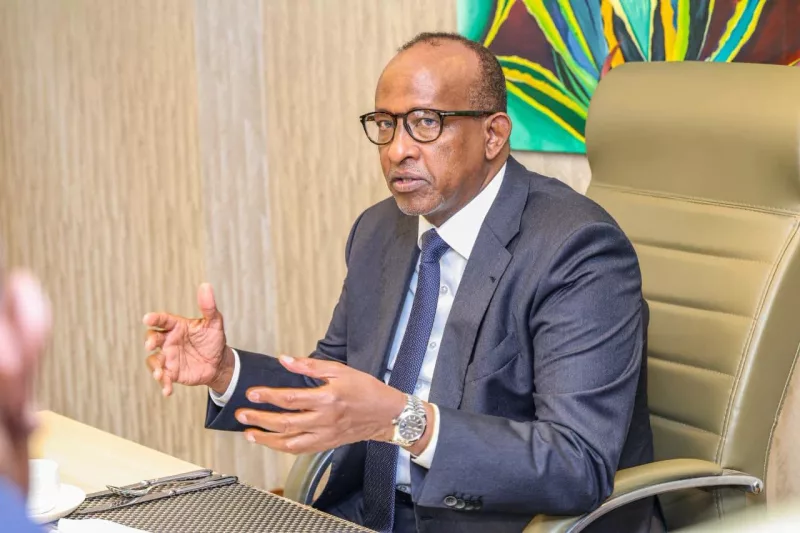
Prime Cabinet Secretary Musalia Mudavadi chairs the 2nd National Development Implementation Committee (NDIC) meeting of 2026 at the Kenya School of Government (KSG) on October 12, 2026/ HANDOUT
Politicians are allegedly using organised criminal gangs to intimidate opponents, disrupt rallies and influence voters ahead of the 2027 General Election, according to the National Development Implementation Committee (NDIC).
In a dispatch issued after its second meeting of 2026, chaired by Prime Cabinet Secretary Musalia Mudavadi at the Kenya School of Government, the committee warned that the groups had evolved from street gangs into organised networks posing a threat to electoral security.
The committee said politicians were responsible for mobilising, financing and deploying roughly nine in 10 organised criminal gangs, citing findings by the National Cohesion and Integration Commission on the extent of political involvement in criminal activity.
The National Crime Research Centre documented 309 criminal groups across 11 counties in 2025, according to the dispatch.
A further 109 organised gangs and groups had been documented as of September 2026, with Western, Rift Valley and Nairobi recording the highest numbers.
Western had 38 groups, followed by Rift Valley with 22 and Nairobi with 20, the committee reported.
NDIC warned that the networks threatened the security, stability and credibility of the 2027 elections. It called for enforcement measures targeting not only individuals involved in violence but also the networks that enable the groups to operate.
The committee resolved that security agencies should investigate and disrupt the gangs’ financiers, recruiters, logistics providers, access to weapons and other connections supporting their activities.
It cautioned that arrests alone would not dismantle the networks, as suspects could be replaced and groups reorganised if their financial and operational structures remained intact.
Between January and August 2026, 1,827 suspects were arrested and arraigned, while 729 convictions were secured. Another 716 cases were pending before courts, while 258 remained under investigation, according to the dispatch.
“Large arrests alone do not demonstrate the dismantling of networks,” the committee stated, calling for sustained case-linking, financial disruption, intelligence mapping and prosecution support to prevent the groups from reorganising.
NDIC also identified political party nominations as a potential security flashpoint, citing youth unemployment, informal-sector networks, illicit small arms, illicit financing and political protection as factors that could be exploited to mobilise criminal groups.
It directed that party nominations be incorporated into the National Election Security Plan, with threats against women candidates and persons with disabilities included in hotspot mapping and early-warning monitoring.
The committee further noted that women aspirants and persons with disabilities faced targeted attacks, online abuse and sexual and gender-based violence.
On election information security, NDIC identified artificial intelligence-generated deepfakes and synthetic audio as major threats ahead of the polls.
It resolved that detection tools should be operational six months before polling and that a protocol for detecting and verifying suspected manipulated content should be developed and tested before the elections.
The committee said election security arrangements would involve national, county and community-level early-warning structures, with hotspots monitored daily, weekly or monthly depending on their risk levels.
 WhatsApp
Comments (0)
No comments yet. Be the first to share your opinion!