



Tribute: Osagyefo Dr Kwame Nkrumah – The man who invented Ghana Sports and gave Africa its football soul
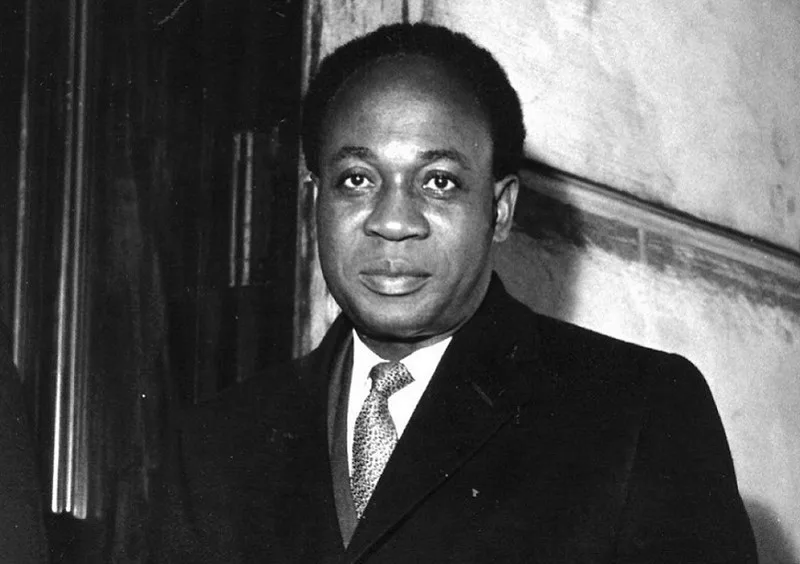
When Ghanaians remember Osagyefo Dr. Kwame Nkrumah, they remember the politician who won us independence. Few remember the sportsman who made that independence run, fight, box, gallop, and win.
Nkrumah did not meet sports. He built it.
When the Union Jack came down on March 6, 1957, Ghana had no Sports Ministry, no national stadium, no sports college, and only two decent pitches in Accra and Kumasi. The colonial government saw sports as recreation for the elite.
Nkrumah saw it as nation-building.
1. THE SYSTEM: From Zero to a Ministry
On July 1, 1960, Nkrumah established the Central Organisation of Sports (COS) under the Office of the President, led by Ohene Djan. It was the first Sports Ministry in Africa. At that time, even England did not have one.
Within a year, he delivered what 60 years of governments have struggled to do: Accra Sports Stadium (40,000 capacity) for £400,000 in 12 months (1961), and the Winneba National Sports College in 8 months (1961) — the first sports college in Africa.
His philosophy was clear: “We are going to see that we create our own African personality and identity,” and “When the African is given a chance, he can show the world that he is somebody.”
2. THE MASTERSTROKE: Coaches Before Players
This is Nkrumah’s most ignored revolution.
He declared: “We cannot be independent if white men still coach our national teams.”
In 1960, he sent C.K. Gyamfi to Leipzig, East Germany, for the highest coaching diploma. Gyamfi returned to win AFCON 1963, 1965, and 1982 — still Ghana’s most successful coach ever.
Between 1960-1965, 15 young Ghanaians were sent on full government scholarships to Czechoslovakia, Hungary and the Soviet Union to study coaching and sports medicine. At Winneba, Nkrumah brought German, Hungarian and Brazilian instructors who trained over 200 Grade One coaches and PE teachers by 1965.
Result: By AFCON 1963, all national teams were coached by Ghanaians. In 2026, we still debate hiring a foreign coach for the Black Stars.
3. OSAGYEFO’S OWN CLUB: REAL REPUBLIKANS
In 1960, Nkrumah ordered: “Pick the two best players from every club and give me a team that can beat the world.”
That was Real Republikans — Osagyefo’s Own Club.
Their record is still unbroken: 5 consecutive FA Cups (1961/62 to 1965), 1 League Title (1962/63) — the first Double in Ghana history, and 28 games unbeaten from 1961-1963. Old players say: “If you played Republikans, your best result was a 3-0 loss.”
9 of the 18 players who won Ghana’s first AFCON in 1963 were Republicans. 8 of 16 who retained it in Tunisia in 1965 were Republicans. The club was dissolved on February 25, 1966 — a day after the coup. Its jerseys were shared. Our football identity died with it.
4. BEYOND FOOTBALL: Boxing, Athletics, Hockey and Others
Nkrumah refused a one-sport nation.
Boxing: He built the Accra Boxing Arena and funded Roy Ankrah, who in 1954 became the first Ghanaian to win the Commonwealth Featherweight title, and Floyd Klutei Robertson, who in 1961 became the first Black African to challenge for a world title. That foundation produced D.K. Poison, Azumah Nelson and Ike Quartey.
Athletics: He created the National Schools Sports Festival in 1960. From it came Mike Ahey (Commonwealth long jump gold 1962), Rose Hart, Alice Annum, Joshua Owusu and the 4x100m relay team that won gold at the 1965 All-Africa Games in Brazzaville, where Ghana won 12 golds and placed second in Africa.
Hockey: Under Nkrumah, Ghana was Africa’s hockey superpower — gold at the 1961 West African Games and qualification for the 1964 Tokyo Olympics.
Other Sports: He funded the Ghana Lawn Tennis Association, reactivated cricket in Achimota and Prempeh College, and introduced table tennis and volleyball into the school curriculum. He created four national teams at once: Black Stars, Academicals (U-17), New Horizons (U-20), Black Meteors (U-23) — the structure that gave us the U-17 World Cups in 1991, 1995 and the U-20 World Cup in 2009.
5. HORSE RACING: The Forgotten People’s Sport Nkrumah Preserved
Horse racing in Accra dates back to 1876, and the Accra Turf Club was formally established in 1923. Its old Race Course stood where the National Security Secretariat, Accra International Conference Centre and Kempinski Hotel are today.
What did Nkrumah do? He did not abolish it as a colonial sport. He Africanized it. Under the Accra Turf Club’s Constitution, the President of Ghana became its Chief Patron — giving assent to all race meetings. Throughout the First Republic, Nkrumah kept the Accra Race Course running as a major national sporting centre.
Under the Central Organisation of Sports (COS), horse racing was listed alongside football and boxing as an official sport, with annual Homowo and Independence Day Races attracting thousands to Accra. Jockeys, grooms, horse owners and trainers — over 30,000 livelihoods today — were given state recognition.
It was only in 2006 that government redeveloped that old Race Course land and relocated the club to Borteyman under a Relocation Agreement dated May 24, 2006. The recent forceful demolition of that Borteyman course on August 22, 2026, where 200 armed men stormed the facility, shows how far we have strayed from protecting a 150-year-old heritage that Nkrumah preserved for 9 years.
Nkrumah understood: a nation that cannot protect its old sports cannot build new ones.
6. THE GIFT TO AFRICA: Champions League and World Cup Slots
In October 1964, Nkrumah donated 250 Guineas to CAF and charged them: “Africa can ill-afford to lag behind… I therefore charge you to organise Africa’s version of the European Cup with this trophy.”
That trophy is today the CAF Champions League — $4 million for the winner.
And when FIFA gave Africa only half a slot for the 1966 World Cup, Nkrumah led 15 African nations to boycott the World Cup in England. FIFA was forced to give Africa one full slot in 1970. That act of defiance is why Africa has 9 slots at the 2026 World Cup.
CONCLUSION: Why We Must Return to 1960
Yesterday, Sports Minister Kofi Adams dissolved the NSA Board over ticketing fraud and ordered a contractor to speed up Essipong — a roof that has taken six years.
In 1961, Nkrumah built Accra Sports Stadium in twelve months. He did not dissolve boards. He built systems.
He invested £400,000 and got 2 AFCONs, an Olympic quarter-final, a continental Champions League, 200+ coaches, and 9 World Cup slots for Africa.
We have invested over $200 million since 2017 and have group-stage exits and a FIFA ranking of 63rd.
Nkrumah did not build sports for sports’ sake. He built sports so that when Ghana sneezed, Africa caught a cold. Today, when Ghana plays, Africa changes the channel.
If we want the Black Stars to shine again, we must return to 1960. Build coaches before players. Build systems before stadiums.
Osagyefo never dies.
 WhatsApp
Comments (0)
No comments yet. Be the first to share your opinion!