



Bridging Ghana’s Rural Digital Divide: How the Bruben Community Network Is Transforming Lives in the Afram Plains
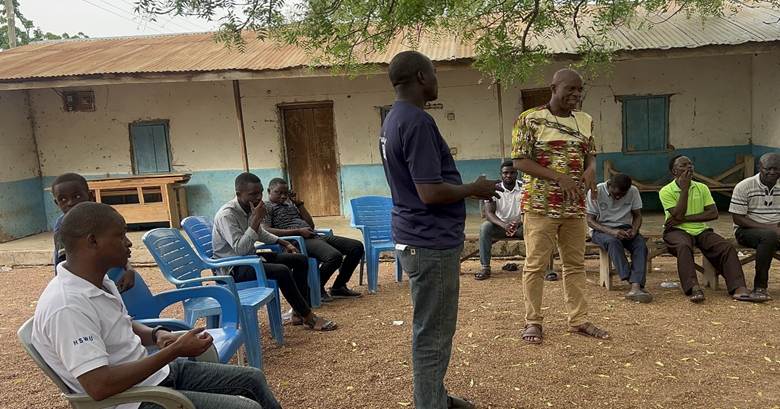
In today’s digital world, internet connectivity has become as essential as roads, electricity, and clean water. Access to reliable internet services now determines how communities participate in education, healthcare, governance, commerce, and national development. Yet, across many rural parts of Ghana, thousands of citizens remain digitally excluded due to poor telecommunications infrastructure and limited broadband coverage.
While urban centres such as Accra and Kumasi continue to enjoy expanding digital services, many rural communities still struggle with weak network signals, unreliable internet access, and limited opportunities to participate in the digital economy.
One inspiring example of how this challenge can be addressed is the Bruben Community Network Project in the Afram Plains area of the Eastern Region of Ghana.
Life Before Connectivity
Before the implementation of the Bruben Community Network, residents of Bruben and Mem-Chemfre faced significant communication challenges. The two communities, located within the island enclaves of the Afram Plains and surrounded by lakes and rivers, had long suffered from poor telecommunications access.
Simple activities such as making phone calls, accessing online educational resources, conducting digital financial transactions, or browsing the internet were extremely difficult. Residents often moved from one location to another searching for network signals just to place calls or receive messages.
The lack of connectivity affected nearly every sector of community life.
Schools had limited access to online learning materials and digital educational tools. Students could not fully participate in virtual learning opportunities increasingly available elsewhere. Teachers struggled to access online academic resources and professional development platforms.
Healthcare delivery was also affected. Clinics had limited access to digital health information, online consultations, and communication systems that could improve patient care and emergency coordination.
Local businesses and farmers were equally disadvantaged. Many could not access online markets, digital payment systems, or timely market information that could improve their economic activities and income generation.
The COVID-19 pandemic further exposed these inequalities. As businesses, educational institutions, and public services shifted online during lockdown periods, digitally excluded communities became even more marginalized.
A Community-Driven Digital Solution
To address these challenges, STEP NETWORK, in partnership with the Internet Society Foundation and 48percent, initiated the Bruben Community Network Project.
The initiative was designed as a community-centered digital inclusion project aimed at expanding affordable and sustainable internet connectivity to underserved rural communities.
Unlike traditional commercial telecom investments that often prioritize profitable urban markets, the Bruben initiative focused on empowering neglected communities through localized digital infrastructure.
The project deployed a fully wireless community network using both 2.4 GHz and 5 GHz wireless spectrum technologies. A Starlink satellite internet system was installed to provide reliable broadband connectivity to the area.
The technical infrastructure included wireless relay stations, sector antennas, point-to-point wireless bridges, hotspot access points, firewall systems, fibre interconnections, backup power systems, and locally hosted digital platforms.
A 35-meter communication tower was installed at the Bruben Community Clinic to support internet distribution across Bruben and surrounding communities.
Neighbouring communities such as Faaso Battor, Citi-Kope, and Cidikope also benefited from the expanded connectivity infrastructure.
Beyond Internet Access
One of the most remarkable aspects of the Bruben Community Network Project is that it went beyond simply providing internet access.
The initiative introduced several locally hosted digital platforms designed to support community development and improve access to essential services.
These included:
- An e-learning management system for schools and learners
- A digital health portal
- A community payment platform
- Cloud storage and local digital services
This approach demonstrates an important lesson in digital transformation: meaningful connectivity is not just about access to the internet but also about providing relevant digital services that address local community needs.
Transforming Education and Digital Literacy
The project has significantly improved digital literacy and educational access within the beneficiary communities.
Students and teachers can now access online educational materials, research resources, virtual learning systems, and communication platforms. Schools that previously operated in isolation are increasingly connected to broader educational opportunities.
For young people in these rural communities, internet connectivity now offers exposure to digital skills, online training opportunities, entrepreneurship resources, and global information networks that were previously inaccessible.
In many ways, the project is helping bridge not only the digital divide but also the educational inequality gap between urban and rural Ghana.
Economic and Social Impact
The network has also contributed to local economic development.
Business owners can now communicate more efficiently with suppliers and customers, use mobile payment systems, and access online business opportunities. Farmers and traders can obtain market information and communicate more effectively with buyers.
Improved connectivity has strengthened social interactions and information sharing within and outside the communities. Residents now have better access to communication platforms, social media, online government services, and digital financial systems.
Importantly, the network has remained fully operational for over three years, demonstrating both sustainability and strong community acceptance.
Sustainability Through Community Ownership
One of the major challenges facing rural ICT projects across Africa is sustainability. Many projects collapse after donor funding ends due to poor maintenance models and lack of local ownership.
The Bruben Community Network addressed this challenge by implementing a sustainability framework that included affordable pricing models, voucher-based internet access systems, network monitoring tools, and continuous community engagement.
Users could register accounts, purchase internet vouchers, and manage subscriptions through a captive portal system.
The project also deployed monitoring systems such as Nagios, Zabbix, and Uptime Kuma to ensure network reliability, monitor device performance, and maintain operational stability.
This combination of technical planning, affordability, and community participation has enabled the network to remain functional and impactful over several years.
Lessons for Ghana’s Digitalization Agenda
The Bruben Community Network Project offers important lessons for Ghana’s national digital transformation agenda.
First, digital inclusion must become a national development priority. Internet connectivity is no longer merely a telecommunications issue; it is now directly linked to economic empowerment, healthcare delivery, education, governance, and social inclusion.
Second, rural communities must not be excluded from Ghana’s digital future. If national digitalization policies primarily benefit urban populations, the country risks widening existing social and economic inequalities.
Third, community networks present a practical solution for extending connectivity to underserved areas where commercial telecom operators may have limited incentives to invest.
Finally, digital transformation efforts must prioritize local participation, affordability, sustainability, and community empowerment rather than focusing solely on infrastructure deployment.
The Way Forward for Ghana
As Ghana continues implementing initiatives under its digitalization agenda, there is a growing need for stronger investment in rural connectivity infrastructure, digital literacy programs, and community-driven innovation models.
Projects such as the Bruben Community Network demonstrate that rural communities can successfully adopt and sustain modern digital infrastructure when supported through inclusive partnerships and strategic planning.
The success of the initiative should encourage policymakers, development partners, private sector actors, and local communities to invest more aggressively in community-based digital inclusion programs across the country.
Ghana’s digital future cannot be fully realized if millions of rural citizens remain disconnected from the opportunities of the digital age.
The story of Bruben and Mem-Chemfre is therefore more than a local success story. It is a national lesson on how innovation, collaboration, and community participation can bridge the digital divide and create lasting social and economic transformation.
In the broader vision of national development, digital inclusion must not depend on geography.
Every Ghanaian community deserves the opportunity to participate fully in the digital economy.
Author: Abubakari Saddiq Adams | BSc BIT | MSc IT & Law | ThinkCyber Solutions Ltd. (Founder & Consultant) | Member, IIPGH
For comments, please contact +233246173369/+233504634180 or email [email protected]
 WhatsApp
Comments (0)
No comments yet. Be the first to share your opinion!