



Ghana’s fishers hold the knowledge, why are they not shaping policy?

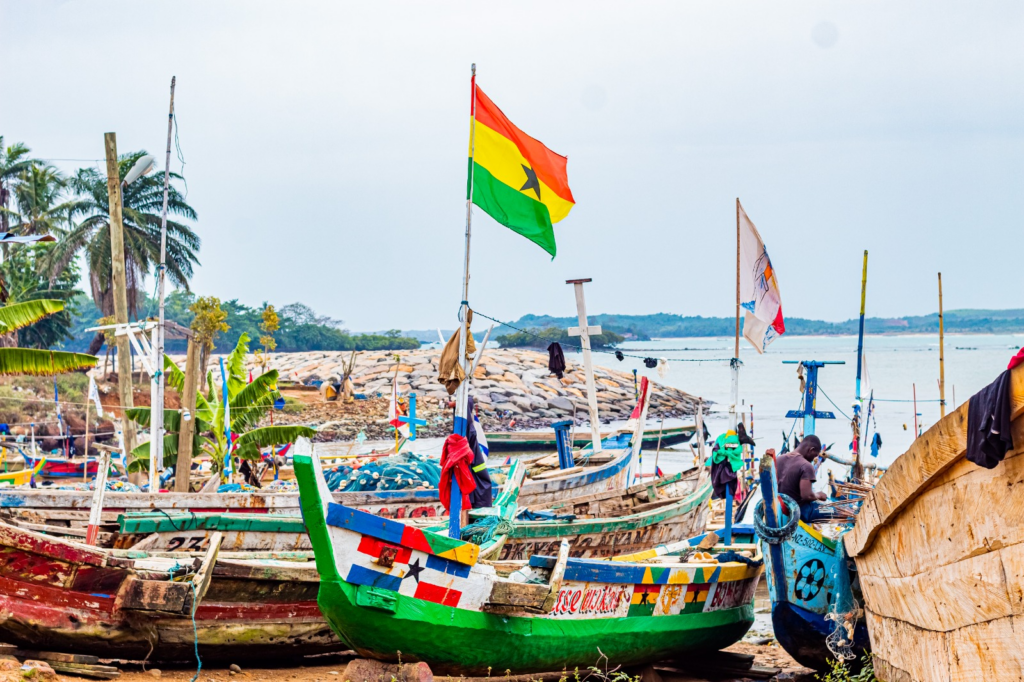
Artisanal fishers in Ghana have, since time immemorial, relied on the ocean not just for their livelihoods, but also as a place where they have gained significant knowledge by observation and long-standing experience engaging with it.
Through their trade, artisanal fishers are able to read slight changes in ocean currents, water colour, track bird movements and moon phases to predict fish availability and productive fishing grounds.
In some cases, too, they are simply able to forecast weather conditions just by observing the shoreline. However, this knowledge is mostly ignored in formal fisheries management policies. As a result, Ghana’s fisheries continue to be bedevilled with mounting ecological and economic pressure, which has been widely documented in academia and government documents.
Ghana’s fisheries, an industry drowning in crisis
Fish is a significant source of protein for many Ghanaian households, and it’s vital to Ghana’s food security. Sadly, Ghana’s small pelagic fishes are in deep crisis. Key fish stocks such as sardinella, often referred to as “the people’s fish” because they are crucial for artisanal fisheries and food security, have seen a sharp decline in the past two decades.
Between 2007 and 2016, Ghana’s Ministry of Fisheries and Aquaculture Development (MoFAD) recorded an up to 80 percent decline in sardinella landings, with catches falling from over 120,000 metric tons in the late 1990s to less than 20,000 metric tons in recent years. In 2018, Ghana’s small pelagic fishery was labelled as near collapse.
Several factors have been ascribed to this decline, including overfishing; illegal, Unreported, unregulated (IUU) fishing practices; an increased number of canoes coupled with low regulation enforcement; and, more recently, climate change.
The challenges in Ghana’s fisheries sector have become a major concern for industry players, including resource managers who continue to depend on limited empirical scientific data obtained through stock assessments.
The fishers themselves are equally concerned about the declining fish stocks. This has prompted the government of Ghana to introduce several measures, including the closed fishing season and restraints on new canoe entrants to the marine artisanal fishery, to reduce pressure on fish stocks.
In as much as these policies are important, my research suggests that they are deeply informed by scientific assessment, overlooking the valuable knowledge of fishers who are the resource users. For me, “this is a major mistake in how fisheries are governed in Ghana.”
Artisanal fishers are not just resource users; they hold valuable knowledge
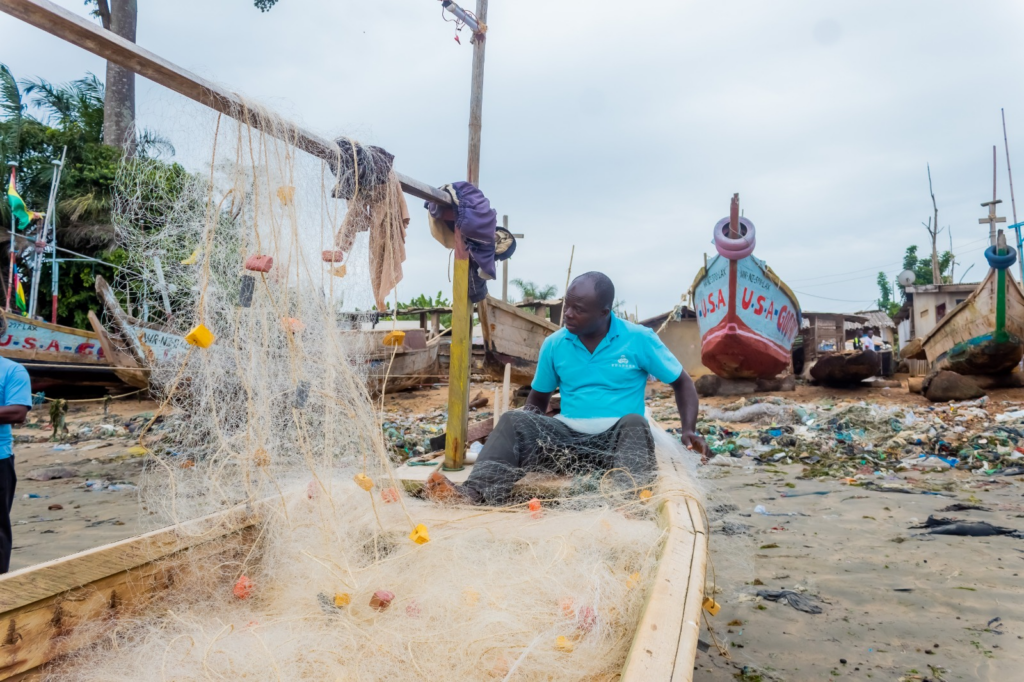
Artisanal fishers have in-depth ecological knowledge that is extremely powerful and adapts to different socio-economic, ecological and technological changes. This type of knowledge is deeply embedded in their daily relationship with local environmental conditions and their use of local aquatic resources.
My interviews with artisanal fishers across the coast of Ghana established that artisanal fishers boast of a rich body of knowledge about seasons and the weather. They explained how they are able to identify spawning periods. They are also able to track long-term changes in fish migration patterns. Many of them also rely on natural indicators such as seabird movement, water colour, fish movement, sea current and moon phases, as well as rainstorms to determine fishing grounds.
In the words of one artisanal fisher, “sometimes putting my feet in the sand at the shore and observing the clouds, I could predict how the weather is going to be”. One interesting thing I noticed in my research with artisanal fishers is that they can quickly adapt to changing environmental conditions as well as technological advancements.
Historically, fishers’ ecological knowledge played a crucial role in fisheries conservation. Many Ghanaian fishing communities enforced traditional bans before the celebration of certain festivals and on specific days such as Tuesdays, and embarked on seasonal closures to allow fish stocks to recover. Certain water bodies were considered sacred and remained untouched due to cultural beliefs, which indirectly served as protected areas that support fish breeding.
When “inclusion” becomes extraction
Globally, there is growing recognition that knowledge of artisanal fishers is crucial for fisheries management. Thus, calls for its integration into formal fisheries management. Key international agencies such as the Food and Agriculture Organisation (FAO) and several academic studies point to the fact that artisanal fishers’ knowledge offers valuable data on fishing efforts and behaviour to enhance fisheries management. Yet, they remain sidelined in fisheries policies.
Ghana is no exception. A recurring concern in my research was that fishers are asked to share their knowledge through stakeholder meetings and workshops, but they remain frustrated as they feel their involvement is more about ticking the boxes for the government and fulfilling formalities rather than having a genuine interest in their knowledge and by far, making them reflect on governance frameworks.
As one fisher lamented, “We are called to workshops and meetings, but most times, decisions have already been made. If our knowledge is truly valued, it would be used to guide policies rather than just being documented”. This does not connote true collaboration but highlights a deeper issue where insights of fishers, irrespective of how valuable they are, only count when validated by science. This is what scholars call “epistemic injustice”, a situation where other forms of knowledge are less valued simply due to who produces them.
The real issue isn’t lack of data but lack of trust
In fisheries management, people generally assume that having a better dataset will ultimately lead to better decision-making outcomes. What we can learn from Ghana’s situation is that the issue is not a lack of knowledge, but the real problem has to do with governance. As discussed earlier, artisanal fishers possess valuable knowledge relating to fish spawn, season shift and other factors affecting fish stock decline.
My research has established that there exist structural barriers that hinder effective collaboration. These barriers include centralised top-down decision-making that limits effective participation, a strong preference for scientific data over the lived experiences of fishers, a lack of a formal mechanism for incorporating fishers’ knowledge into formal policies and power imbalances, particularly the influence of industrial fishing interests.
The majority of the fishers interviewed expressed strong conviction that industrial operators have much influence on policy decisions compared to artisanal fishers.
The sad reality is that traditional regulatory mechanisms that once regulated fishing practices have been weakened and rendered ineffective over time, giving way to widespread illegal fishing practices. The situation has created mistrust among fishers and resource managers. Artisanal fishers now feel policies are imposed on them instead of being developed with them. The feeling of the fishers also affects compliance and policy effectiveness.
When fishers are heard, policies improve
The findings of my research show that treating fishers’ knowledge as less credible is not just unfair, but it is also detrimental to the effectiveness of fisheries management. The case of the implementation of a closed fishing season in Ghana is a perfect example of where fishers’ input improves policy outcomes. When Ghana first introduced the closed fishing season policy in 2018, artisanal fishers raised concerns regarding the timing and called for further engagement.
After further consultation with fishers, the government adjusted the timing. The result of this was greater acceptance and improved compliance. This also demonstrates that fishers’ knowledge can be useful in policy designs. In simple terms, when fishers feel their knowledge is reflected in decisions, they are more likely to support and ensure it succeeds. If this is nonexistent, even well-intentioned policies are bound to fail.
Looking beyond “Integration”
The FAO have called for more participative management systems that provide space for a process of dialogue and collaboration between diverse stakeholders, including governmental entities and local fishers. But is participation alone enough? As established in my research, in most situations, participation is reduced to consultation, where fishers are asked to provide their input, but those inputs have little or no influence over final decisions.
The solution to the problem cannot just be to add fishers’ knowledge into existing fisheries management frameworks. That in itself risks creating just another dataset. Rather, fisheries governance must gesture towards a relational governance approach.
By this, resource managers must begin to treat fishers as partners and not just resource users, recognise their knowledge as equally important and not supplementary, build long-lasting relationships based on trust and reciprocity and make sure that fishers’ input genuinely shapes policies. It is therefore important to ask critical questions such as: how can governance systems be reshaped to respect multiple ways of knowing? And not how can we integrate fishers’ knowledge into science.
Why Ghana’s situation matters
The case of Ghana mirrors a general challenge across Africa and beyond, where small-scale fisheries are a source of livelihood for millions of people, but stocks continue to decline. At the same time, the valuable knowledge of fishers stays underutilised. As fisheries across Africa continue to witness a sharp decline amidst climate impacts, it therefore becomes essential and not optional to make use of all available knowledge systems, including that of fishers.
Charting a different way going forward
The ultimate takeaway from my research is that Ghanaian artisanal fishers are not seeking to replace science with their knowledge. “BIG NO”. They just want to be recognised as key partners in the management of the resource they depend on. No doubt their knowledge offers valuable perspectives, especially in areas where scientific data may be limited.
It is imperative to utilise both the local knowledge of fishers and scientific data for a more adaptive, legitimate and effective management of the fisheries. Ghana’s quest to rebuild its fisheries must go beyond producing better data or stricter regulations.
Governance must endeavour to recognise fishers as not just resource users but key partners who hold valuable knowledge in their own right.
DISCLAIMER: The Views, Comments, Opinions, Contributions and Statements made by Readers and Contributors on this platform do not necessarily represent the views or policy of Multimedia Group Limited.
DISCLAIMER: The Views, Comments, Opinions, Contributions and Statements made by Readers and Contributors on this platform do not necessarily represent the views or policy of Multimedia Group Limited.
 WhatsApp
Comments (0)
No comments yet. Be the first to share your opinion!