
A GNA Feature by James Amoh Jnr
Accra, Dec. 30, GNA – At Danquah Circle, just off Osu’s Oxford Street, a small roadside scene tells a much larger story about urban discipline and civic behaviour in Accra.
A metal pole, typically reserved for traffic instructions, stands firmly by the roadside. Bolted to it is a circular sign, its message written boldly in red: “NO DUMPING HERE. SPOT FINE 1,000.”
Barely five metres away sits a major bus stop, alive with the familiar rhythm of the city; conductors shouting destinations, commuters negotiating fares, engines coughing into motion.
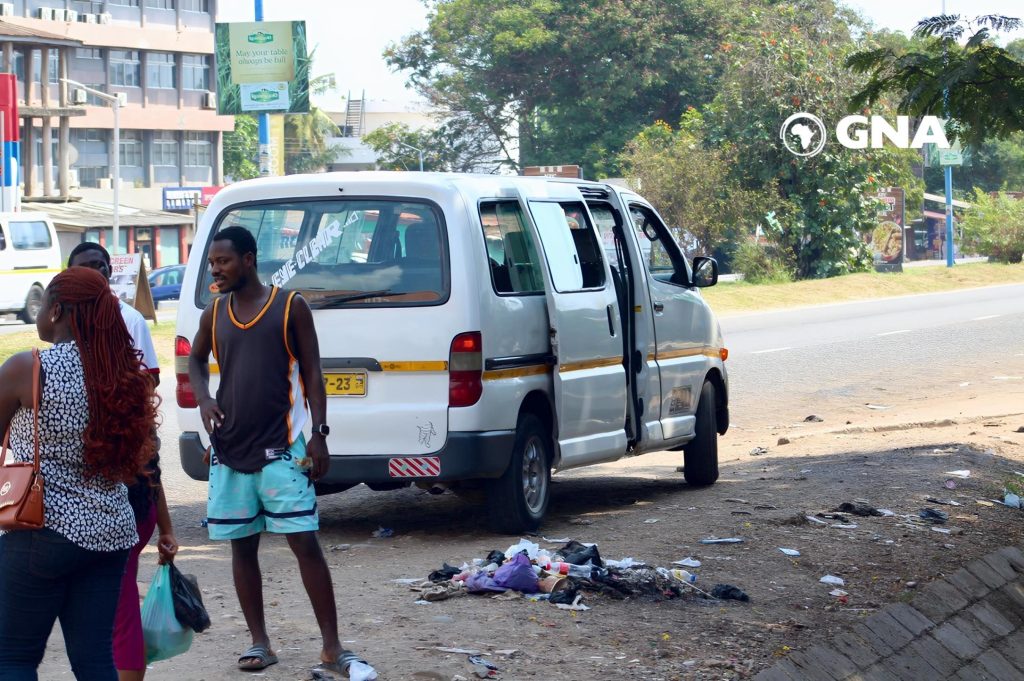
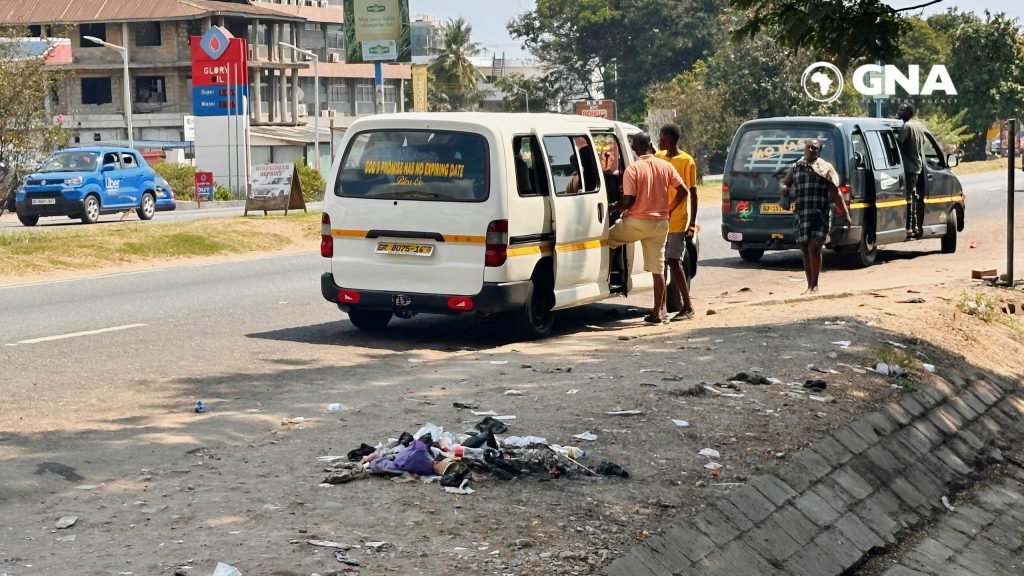
Directly beneath the sign, almost in quiet defiance, lies a sprawling heap of rubbish: black polythene bags split open, crushed plastic bottles, food wrappers, used sachets and broken containers. The sign is upright. The message is clear. The refuse remains.
This is not a forgotten alley or a hidden corner of the city. It is a major artery around Oxford Street, one of Accra’s most visible commercial and social corridors, especially during the Christmas season, when tourists, returnee diasporans and first-time visitors flood the area in search of culture, colour and celebration.

What confronts them instead is a sanitation paradox: instruction without compliance, authority without obedience.
A city that knows better, but does otherwise
Urban sanitation in Ghana is not a mystery. The laws exist. The agencies exist. The signage exists. What appears persistently absent is collective discipline and sustained enforcement.
According to the 2021 Population & Housing Census by the Ghana Statistical Service, only about one-third (33.4%) of households nationwide have their solid waste collected, with coverage higher in urban areas than rural ones.
In the Accra metropolitan area, research estimates daily solid waste generation at roughly 2,000-2,800 tonnes, with formal collection capturing around 70 per cent, leaving significant volumes uncollected and often dumped in drains, open spaces and informal sites. The rest, uncollected, unmanaged, becomes everybody’s problem.
The scene at Danquah Circle reflects this reality. Most Ghanaians that know dumping and littering are wrong. They see the sign. They pass it daily. Yet many still drop refuse there, sometimes hurriedly from moving vehicles, sometimes deliberately at night, sometimes in broad daylight.
Over time, one bag becomes ten. Ten become a mound. The mound becomes “the dumping spot,” sign or no sign.
The cost beyond the eyesore
Poor sanitation is often discussed as an aesthetic problem. It is not. It is an economic, environmental and public health emergency.

A World Bank Water and Sanitation Programme report estimated that poor sanitation cost Ghana around US$290 million a year, equivalent to about 1.6 per cent of GDP in 2012.
This is driven largely by health care costs, productivity losses and premature deaths attributable to sanitation-related disease but who cares?
Globally, the UN Environment Programme warns that mismanaged waste is a major contributor to urban flooding, marine pollution and greenhouse gas emissions.
Plastics clog drains, exacerbate flooding during rains and eventually find their way into the oceans. West Africa, including Ghana, is now considered a hotspot for plastic leakage into marine ecosystems.
In Accra, the consequences are familiar and seasonal. A few hours of heavy rain can submerge roads, stall traffic and flood homes, often because gutters are choked with the same sachets and bottles discarded at places like Danquah Circle.
Tourism and the image we export
Tourism thrives on perception. Clean streets suggest order, safety and pride. Filthy surroundings suggest neglect and lawlessness.
Data from the Ghana Tourism Authority show that Ghana welcomed over 1.1 million international tourists in 2023, with December consistently recording the highest arrivals due to events such as “December in GH.”
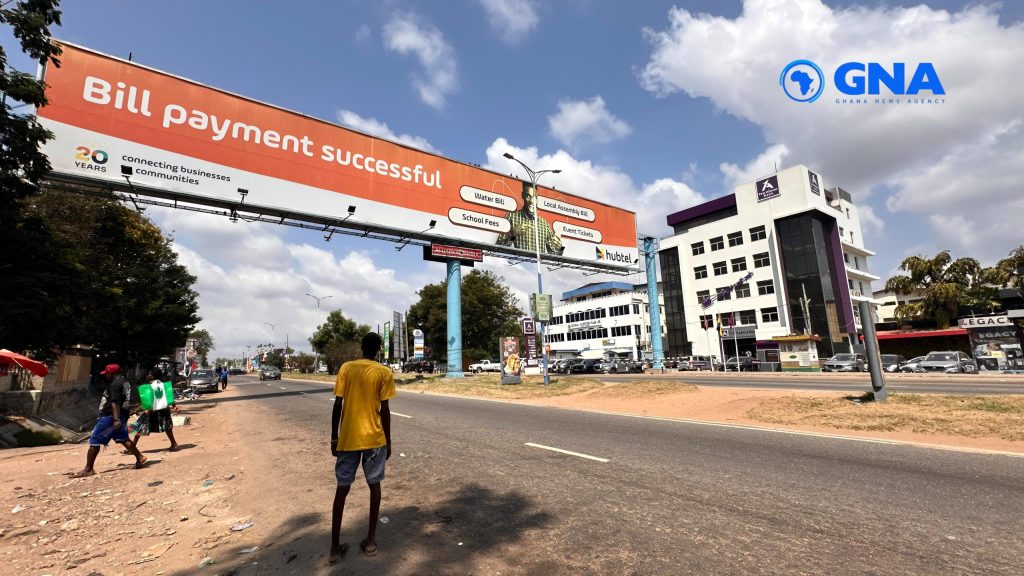
Oxford Street and its environs are often the first stop for visitors seeking nightlife, shopping and culture.
For a first-time visitor stepping off a bus near Danquah Circle, the rubbish heap beneath a “No Dumping” sign sends an unspoken message: rules here are optional. That message does not encourage repeat visits, positive reviews or long-term tourism growth.
Institutions, enforcement and the gaps between
Responsibility for urban sanitation is shared among several bodies, including the Ministry of Sanitation and Water Resources and local authorities such as the Accra Metropolitan Assembly.
Over the years, policies have been launched, clean-up exercises staged and campaigns rolled out, from the National Sanitation Campaign to district-level bye-laws imposing spot fines.
Yet enforcement remains inconsistent. Environmental health officers are few. Prosecutions are rare. Spot fines are threatened but seldom applied. In that vacuum, public behaviour fills the gap, and not for the better.
Experts argue that signage without enforcement can even be counterproductive.
“When people see rules constantly broken without consequence, it normalises non-compliance,” an urban planning researcher told the Ghana News Agency.
The sign at Danquah Circle, standing over a growing heap of refuse, is a case study.
Behaviour, not ignorance
This is not an information deficit. Ghanaians are repeatedly educated about sanitation, from school curricula to radio jingles and billboard campaigns. What persists is a behavioural challenge.
The behaviour is not abstract; it is lived and spoken aloud. At the bus stop near Danquah Circle, a man in his 40s casually dropped an empty sachet water bag onto the ground as he waited for a bus.
When challenged about why he would litter beneath a clearly posted warning sign, he waved off the concern with a shrug.
“Boss, don’t worry yourself, the women will come and sweep in the morning,”he said.
The remark was telling, not just for its casual dismissal of public rules, but for the attitude it revealed: a belief that public filth is someone else’s responsibility, and that disorder will eventually be cleaned up by invisible hands.
In that brief exchange lay the deeper problem, an erosion of civic discipline sustained by entitlement, indifference and the normalisation of non-compliance.
UNICEF and other WASH behaviour-change research emphasise that improving sanitation and hygiene practices requires not just knowledge, but an enabling environment, supportive social norms, and consistent reinforcement through facilities, community expectations and enforcement.
In contexts where bins are scarce, authority presence is weak and social pressures to comply are absent, poor habits tend to persist.

At Danquah Circle, there is no visible public bin within immediate reach. Waste collectors do not patrol the spot regularly. And once dumping becomes common, social restraint disappears. People follow what they see, not what they read.
Beyond clean-up exercises
Every few months, Accra witnesses a flurry of clean-up exercises; often well-intentioned, well-publicised and short-lived. Piles are cleared, photos are taken, and within weeks the refuse returns.
This cannot end with yet another call for clean-up exercises. It must confront the harder truths: the steady erosion of urban discipline, the absence of sustained enforcement and a weakening sense of civic responsibility.
Cities do not become clean by accident. They become orderly when rules are enforced consistently, when violations carry real consequences and when citizens internalise cleanliness as a shared obligation rather than a government favour.
Until enforcement matches instruction and civic pride outweighs convenience, signage will remain symbolic rather than authoritative.
At Danquah Circle, the sign still stands, upright and legible. Beneath it, the rubbish remains. That contrast is not merely about waste; it is about a culture of selective obedience that continues to undermine public health, tourism and the dignity of Accra.
Cities that have transformed sanitation like Kigali, is often cited, but it did not do so through signage alone. The city authorities combined strict enforcement, consistent penalties, citizen education and political will. Fines were not threats; they were applied. Cleanliness became a shared value, not a periodic event.
The sign still standing
As commuters walked away from Danquah Circle that night, the sign remained where it was, upright, legible, ignored. Beneath it, the rubbish lay in quiet rebellion.
That small scene captures Ghana’s sanitation struggle in miniature: we know the rules, we display them boldly, yet we collectively choose when to obey them.
Until that choice changes, until enforcement matches instruction and civic pride outweighs convenience, the sign will remain a suggestion, not an order.
And the heap beneath it will continue to grow, five metres from a bus stop, in the heart of a city that knows better, but has yet to act accordingly.
GNA
Edited by Samuel Osei-Frempong