


2025 was a rollercoaster year for Ghana—one that tested national resilience, reshaped political destiny, and reignited enduring debates about leadership, accountability, identity, and reform.
It was a year of returns and reckonings: the return of a familiar leader, moments of collective grief, economic recalibration, institutional reforms, and social tensions that demanded deep reflection.
From devastating fires and national tragedies to landmark elections, courtroom drama, cultural milestones, and renewed hope for economic recovery, the country navigated twelve intense months marked by both progress and pain.
As the year draws to a close, Ghana’s 2025 story is one of hard-earned gains, deeply felt losses, and defining moments whose impact will echo well beyond the calendar.
Below are some of the key national happenings from January to December 2025:
1. Kantamanto Market Inferno (January 1)
The year opened with tragedy as a massive fire swept through Kantamanto Market in Accra, Ghana’s largest second-hand clothing hub. Thousands of traders were affected as goods worth millions of cedis were destroyed. Cleanup and relief efforts began immediately, reigniting debates about market safety, urban planning, and trader welfare.

2. Mahama Returns to the Presidency (January 7)
John Dramani Mahama was sworn in as President following his victory in the 2024 general election, becoming the first Ghanaian leader to be democratically elected to a non-consecutive second term. His return marked a major political reset and set the tone for the year.

3. Mahama Begins Key Appointments (January)
The President moved swiftly to constitute his administration, appointing ministers, heads of state agencies, and senior public officials. The appointments aimed at stabilising governance, restoring confidence in public institutions, and advancing his policy agenda, with emphasis on competence, regional balance, and gender inclusion.

4. Obuasi Mine Shooting (January 18)
A violent confrontation between soldiers and small-scale miners at AngloGold Ashanti’s Obuasi Mine resulted in seven deaths and several injuries. The incident sparked nationwide outrage and renewed calls for reforms in mining security and galamsey enforcement.

5. MPs Clash Over Ministerial Vetting (January 30)
On January 30, 2025, proceedings of Parliament’s Appointments Committee were thrown into disarray after a heated clash between Majority and Minority members during the vetting of Samuel Okudzeto Ablakwa, nominee for Foreign Affairs, and Kwabena Mintah Akandoh, nominee for Health.
Tensions rose when Minority MPs proposed that the vetting be deferred to the following day, citing procedural concerns and the intensity of the session. The Majority rejected the request, insisting the process should continue as scheduled.
The disagreement quickly escalated into open exchanges, briefly halting proceedings and highlighting the sharp partisan divisions that marked the early days of President John Dramani Mahama’s new administration. The incident drew public attention to the strained atmosphere in Parliament and set the tone for a highly contested vetting process.

6. IMF Staff Visit Ahead of 2025 Budget (February 10–14)
An IMF mission visited Ghana to assess progress under the IMF-supported programme and engage government ahead of the 2025 Budget, focusing on revenue mobilisation, energy reforms, and macroeconomic stability.
7. Ken Ofori-Atta Declared Wanted by OSP
In February 2025, the Office of the Special Prosecutor declared former Finance Minister Ken Ofori-Atta wanted after he failed to honour multiple invitations over corruption and procurement-related investigations. The OSP rejected claims that he was abroad for medical reasons, insisting he was evading the probe and warning of possible international action.
The move sparked sharp political debate, with critics alleging persecution while civil society groups hailed it as a major test of accountability and the rule of law in Ghana.
8. National Economic Dialogue (March 3–4)
Stakeholders from government, business, civil society, and academia convened in Accra for the National Economic Dialogue to chart a path for economic reset. Discussions centred on fiscal discipline, private-sector growth, infrastructure, and institutional reforms.
9. Ghana Marks 68th Independence Anniversary (March 6)
Ghana commemorated 68 years of independence with nationwide ceremonies, parades, and patriotic reflections on unity, resilience, and national identity.

10. ECOWAS 50th Golden Jubilee Launch (April 22)
Ghana hosted the official launch of ECOWAS’ 50th anniversary celebrations in Accra, with President Mahama leading regional dignitaries in marking five decades of West African integration and cooperation.
12. Chairman Wontumi Arrested (May 27)
Ashanti Regional NPP Chairman Bernard Antwi-Boasiako, popularly known as Chairman Wontumi, was arrested by EOCO over alleged illegal mining activities linked to Akonta Mining. The case sparked intense political debate and legal drama, including a briefly issued bench warrant later withdrawn.

13. Parliament Approves $2.8bn Debt Relief Deal
Parliament approved a major external debt restructuring agreement with 25 creditor nations, a key milestone in Ghana’s IMF-backed economic recovery efforts.
14. Energy Levy Rollout Delayed
Following public backlash, the Ghana Revenue Authority postponed implementation of a controversial energy sector levy—often dubbed the “Dumsor levy”—to mid-June.
15. ‘Accra By Night’ Tourism Initiative Launched (June)
The Ministry of Tourism launched the Accra By Night initiative to promote nightlife tourism, cultural experiences, and local enterprise growth.
16. Republic Day Restored (July 1)
Parliament reinstated July 1 as Republic Day, restoring its status as a public holiday marking Ghana’s transition to a republic in 1960.
17. Agradaa Jailed 15 Years (July 3)
Evangelist Patricia Asiedua, formerly Nana Agradaa, was sentenced to 15 years’ imprisonment for defrauding by false pretence over a widely publicised money-doubling scheme.

18. Death of Ernest Kumi and Akwatia By-Election
Ernest Kumi, the sitting Member of Parliament for Akwatia, passed away on July 7, 2025, creating a vacancy in the constituency.
The subsequent by-election, held on September 2, saw the National Democratic Congress (NDC) emerge victorious, reclaiming the seat and strengthening its foothold in the Eastern Region.

19. Ablekuma North Parliamentary Rerun (July 11)
The July 11 parliamentary rerun in Ablekuma North marked a major political upset as the NDC’s Ewurabena Aubynn defeated the NPP to win a seat the party had traditionally dominated. The rerun, ordered after disputes over results from the 2024 general election, was marred by pockets of tension and chaotic scenes at some polling centres, including confrontations between party supporters and security interventions to restore order.
Despite the disturbances, the Electoral Commission declared the poll credible, and the NDC victory was widely seen as a signal of shifting voter sentiment in urban constituencies.

20. Death of Highlife Legend Daddy Lumba (July 26)
Ghana mourned the death of legendary musician Daddy Lumba (Charles Kwadwo Fosu). His passing was followed by public grief and a prolonged family dispute over his estate and legacy.

21. Military Helicopter Crash (August 6)
A helicopter crash claimed eight lives, including Defence Minister Edward Omane Boamah and Environment Minister Ibrahim Murtala Mohammed. The tragedy shocked the nation and triggered investigations.

22. Government Takes On DStv Pricing
The government threatened to suspend MultiChoice Ghana’s licence over refusal to cut subscription prices, igniting debate over consumer protection and media regulation.

23. Chief Justice Gertrude Torkornoo Removed (September)
President Mahama removed the Chief Justice, a rare and consequential development that stirred legal, political, and constitutional debate.

24. Mahama Leads Ghana to UN General Assembly (September)
President Mahama led Ghana’s delegation to the 80th UN General Assembly in New York, addressing global development, climate, and peace issues.

25. Ghana Agrees to Accept Deported West Africans
Ghana agreed to temporarily accept West African nationals deported from the United States, sparking legal and human-rights concerns.
26. Legal Challenge Over Deportations
A lawsuit was filed in Accra on behalf of some deportees, citing fears of torture or persecution if returned to their home countries.
27. Shatta Wale Arrested by EOCO (August 20)
Dancehall star Shatta Wale was arrested over investigations into a luxury vehicle linked to U.S. fraud proceeds. He was later granted bail, with the case dominating public discourse on celebrity accountability.

28. Black Stars Qualify for 2026 World Cup
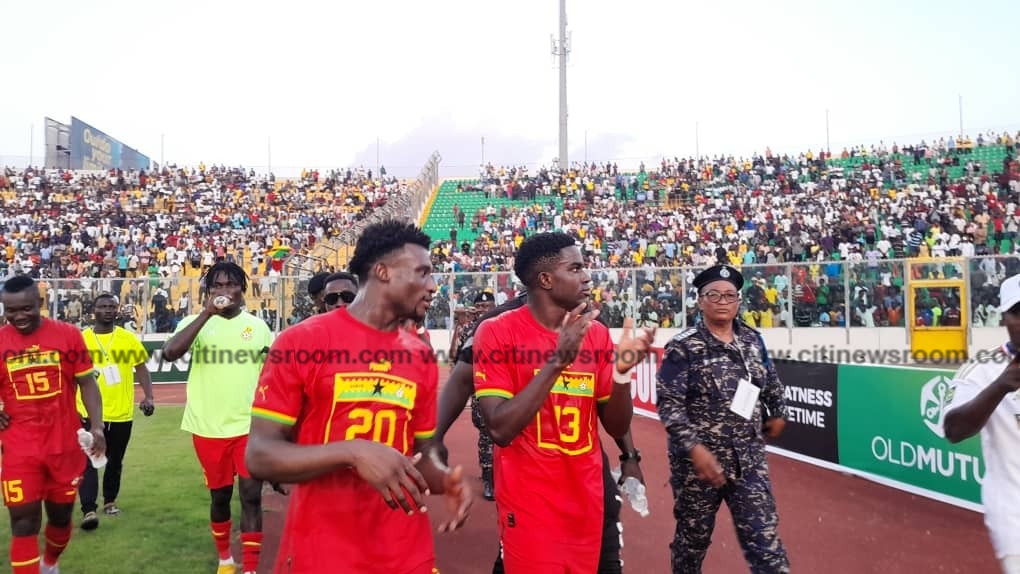
Ghana’s senior national team secured qualification for the 2026 FIFA World Cup, reigniting national football pride.
29. Deadly Stampede at Military Recruitment Drive
At least six people died during a chaotic recruitment exercise in Accra, exposing the desperation of youth unemployment and gaps in crowd control.

30. Death of Nana Konadu Agyeman-Rawlings (October 23)
Former First Lady and women’s rights icon Nana Konadu Agyeman-Rawlings passed away at age 76, prompting tributes across political divides.

31. Supreme Court Suspends Kpandai Rerun (December)
The Supreme Court halted preparations for the Kpandai parliamentary rerun scheduled for December 30, pending judicial review.
Conclusion
Ghana’s 2025 journey was turbulent yet transformative—a year that tested institutions, challenged leadership, and reaffirmed the resilience of its people. As the nation steps into 2026, the lessons, losses, and landmarks of 2025 will continue to shape the road ahead.