
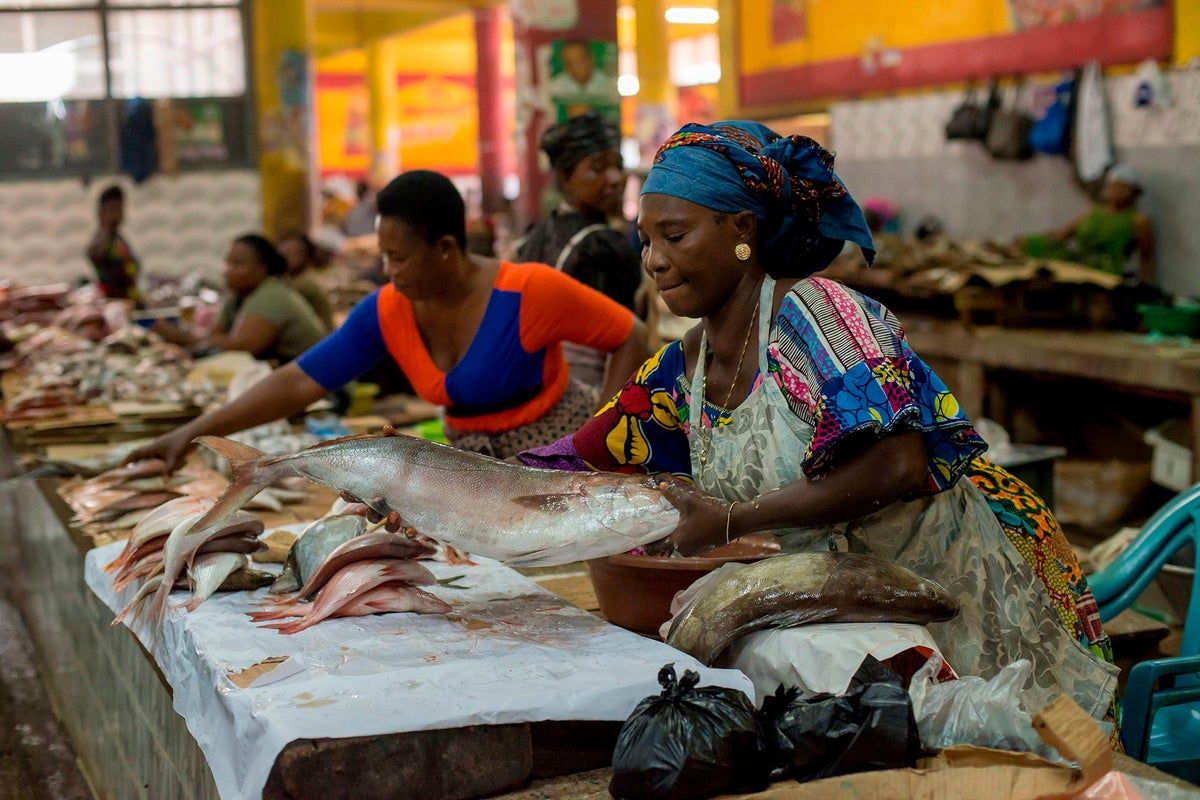

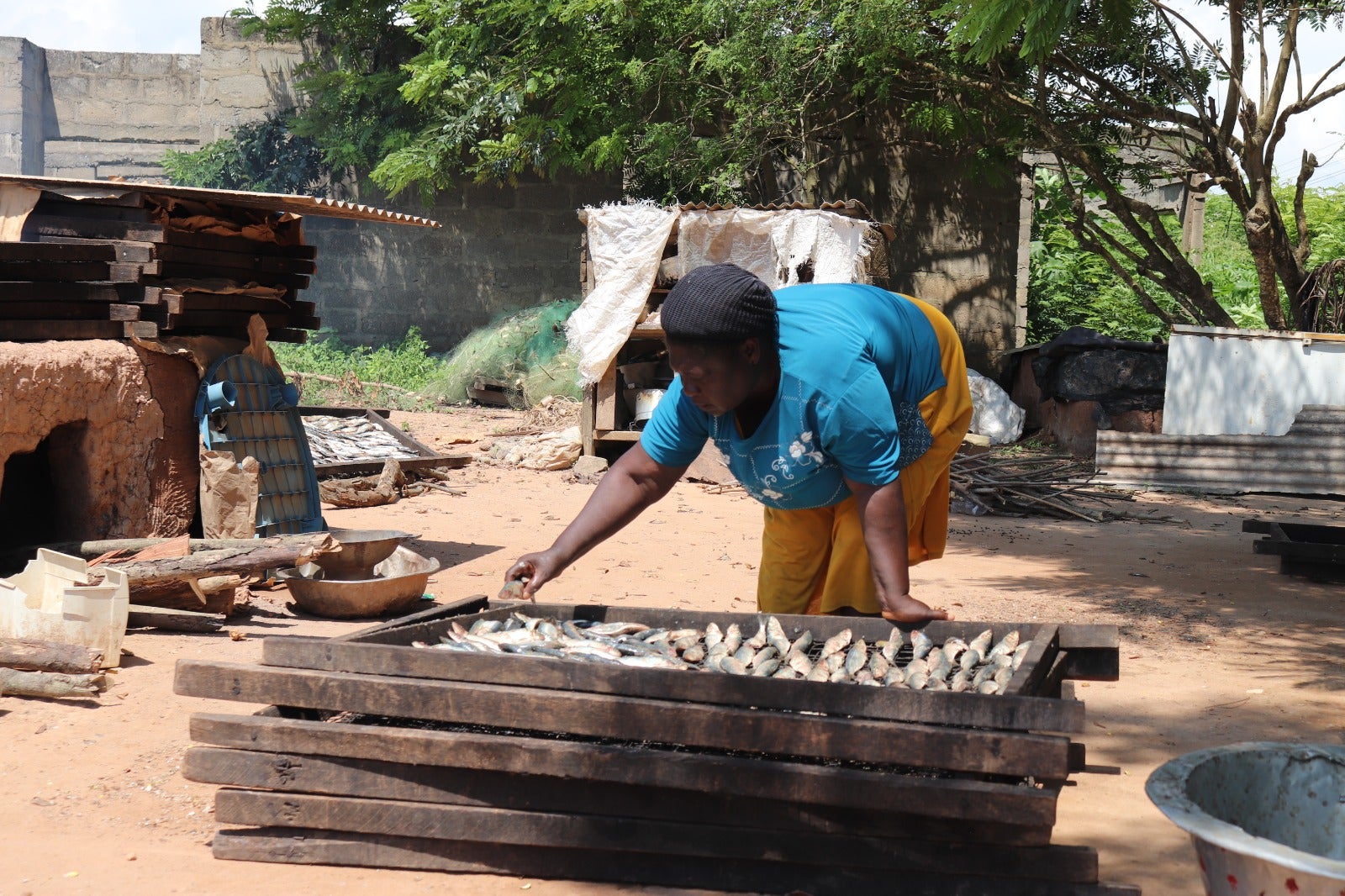
Every day Esi Akomade, a mother-of-five from Mumford in Central Ghana, heads down to the beach at 4am to purchase sardines, mackerel, and anchovies from the catch of fishermen arriving home in their canoes, which she then takes back to her home to clean, lays out on a wire mesh, and smokes.
It’s a job that her mother did before her, and one that she hopes that her children will do after her – but it is one that is becoming increasingly difficult as the climate warms, and weather patterns are becoming more volatile.
“Due to the fact that I do not have a shed, when there are excessive rains, it destroys my oven since it is made out of clay,” the 50-year-old says. “I have to move my belonging to another colleague’s shed and sometimes cover my fish with polyethene rubber and secure it with stones.
“Additionally, when it is extremely hot, it becomes very difficult to smoke the fish,” she adds, in comments that were recorded by aid workers and shared with The Independent.
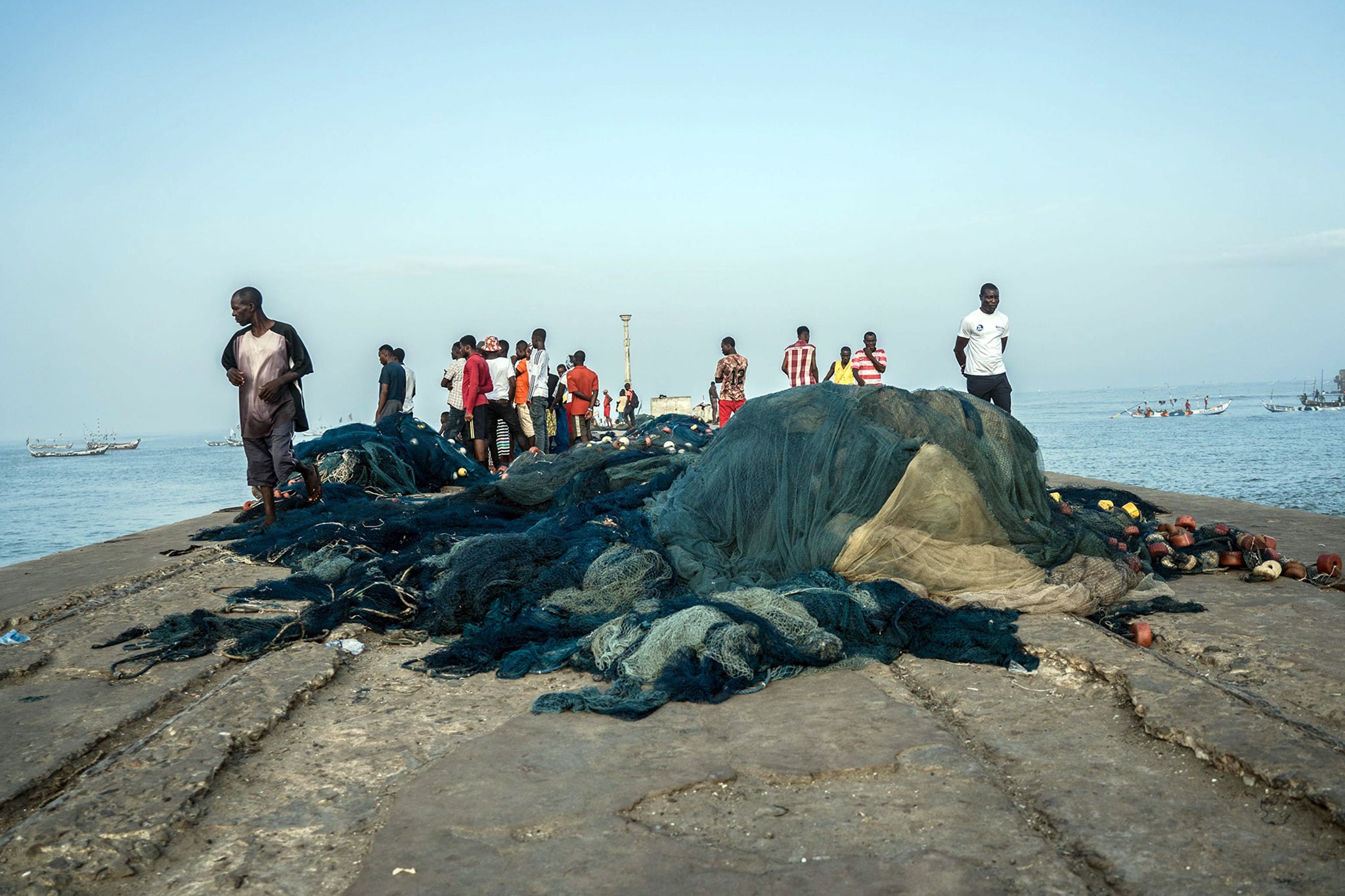
Artisanal fishing is big business in Ghana, employing or supporting some two million people, or around 10 per cent of the country’s population. It contributes around $1 billion (£748 million) to the country’s economy. Men usually work on the boats, which are small, wooden canoes, while women like Akomade typically work in post-harvest processing, storage and distribution.
Recent years, however, have seen a growing clamour of voices warning of threats faced by fishermen, perhaps most famously in the form of the destructive fishing methods of foreign industrial trawlers, which come from rich countries and hugely deplete fish stocks off Ghana’s coasts.

The impacts of the climate crisis are also a big problem, with a warming ocean resulting in some fish stocks declining, migrating, or becoming more vulnerable to disease. Speaking to The Independent, Ghanaian fisheries minister Emelia Arthur explains that more extreme weather conditions and sea level rises are also threatening the safety of fishermen and the viability of their boats.
“Coastal communities are experiencing tidal waves that are destroying their means of livelihood,” she says. The size of boat landing sites is also “reducing” as the sea level rises, she adds, while coastal walls are also disintegrating, with stones falling from the walls into the sea then damaging fishing vessels.
Protecting fisheries is also vitally important from a food security point of view, with key fish species making up around 60 per cent of the animal protein in Ghanaians’ diets. A large share of the fish that Ghana consumes is also currently imported, so anything that can be done to maximise the country’s catch could also have far-reaching impacts on the country’s economy and trade deficit.
’Not really paid attention to’
There was significant fanfare earlier this year, when the government signed into law its landmark Fisheries and Aquaculture Bill, which has been hailed by many as the saviour of the country’s troubled fishing sector.
At the heart of the new law is a promise to expand the fishing exclusion zone for foreign vessels from six to 12 nautical miles from the shoreline, to give Ghanaian artisanal fishermen priority over the fish close to the coast. The law also promises to establish an independent body to manage the country’s fisheries; to boost exports and strengthen regulations; and also to protect fisherfolk through “improved safety, security, and welfare standards for crew and workers on fishing vessels”.
“Artisanal fishermen are very happy with the extended inshore inclusion zone,” says Arthur, who explains that the government is now in the process of devising regulations that will ensure the aims of the bill are carried out on the ground.
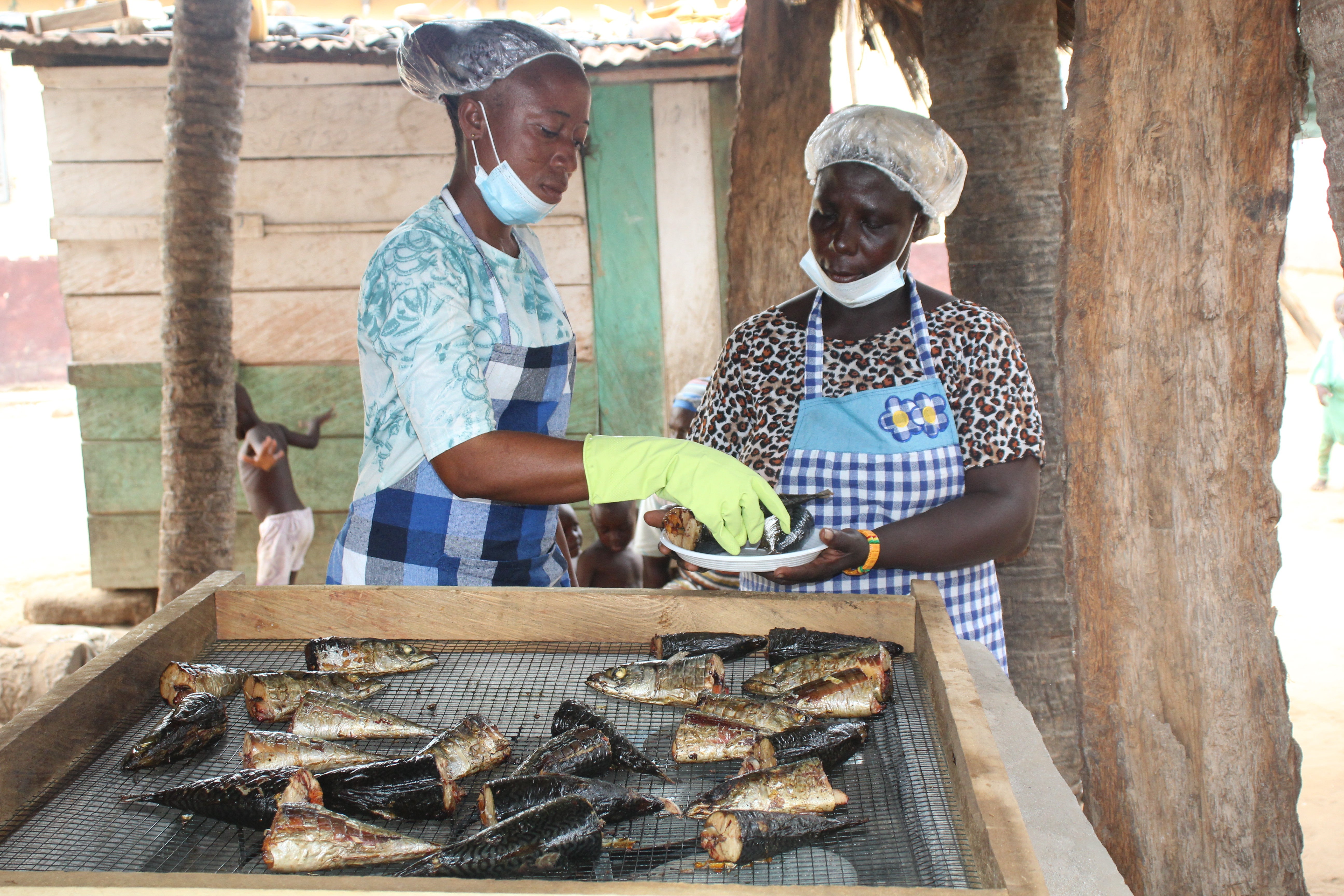
But not everyone is satisfied with the scope of the new law. Speaking exclusively to The Independent, an NGO that specialises in supporting women that work in Ghanaian fisheries – the CERATH Development Organization – has suggested that not enough is being done to support women in the sector, who in actual fact make up 60 per cent of the workforce.
“The bill solves a lot of problems for fish capture, which is great,” says Matilda Ababio, the acting country director at CERATH. “But the post-harvest, which is where a lot of women work, is not really paid attention to.”
Most of these women work directly under the sun or in spaces covered with metal sheets, and are constantly faced with high temperatures and suffocating smoke, Ababio explains. “Smoking technologies are inefficient, and they result in smoke and heat exposure, which is detrimental to their health and also to the environment,” she says.
CERATH currently works with 26 fishing communities, promoting and subsidising more efficient fish-processing ovens, which use less fuel and produce less smoke. The NGO also promotes alternative income sources for women including small-scale farming, and also helps women to organise and boost their voices so that they can become part of decision-making processes in the sector.
The new fisheries law – which has no prominent mention of women or post-harvest – represents the continuation of a dynamic where “women get overlooked”, according to Ababio. “When they were drafting the bill, we were present and we did speak about post-harvest, but in the end that was not the focus,” she says.
In response to these claims, the fisheries minister Arthur says that if there are advocates for greater inclusion of women in the regulations that are currently being devised around the bill, then she is open to listening. “If the point being made is that women in the fishery sector are not adequately catered for by the law, we will look at that and have it reflected in the regulations,” she says.
“We did use a very expensive, comprehensive stakeholder engagement process to develop the law,” she adds. “But I do agree that there are serious health concerns around the burning of firewood in smokeries, and I would be very happy if organisations come forward and work with us to improve regulations around the fish processing that women are involved in.”
The government will be devising these regulations until next August, which is a year after the bill was signed into law, according to Arthur.
A backdrop of foreign aid cuts
The need to get the new fisheries law right is all the more pressing as Ghana’s fishing sector was hit hard by foreign aid cuts that have devastated communities across countries in Sub-Saharan Africa this year.
Earlier this year, a $17.8 million programme funded by the United States Agency for International Development (USAID), called Ghana Fisheries Recovery Activity (GFRA), was terminated more than a year early following the USAID stop-work order from Donald Trump.
“USAID had been working with civil society organisations to carry out work to protect recover fish stocks, and when the cut came, it affected the development of the law as well,” explains Arthur. “As a country and as a sovereign nation, we are now looking for new partners and using resources from within our own budget to push forward this agenda.”
According to Awo Ablo, from the philanthropic organisation Co-Impact – which helps to fund CERATH – aid cuts have “disproportionately impacted women and girls” in Ghana, so it is important that programmes going forward should make a special effort to ensure their needs are reflected.
“Domestic resources need to be mobilised, and international resources must be channelled, to local organisations with proven solutions and a long-term commitment to shifting the underlying systems that produce poor outcomes in health and education, and hold back gender equality,” she says.
This article was produced as part of The Independent’s Rethinking Global Aid project