
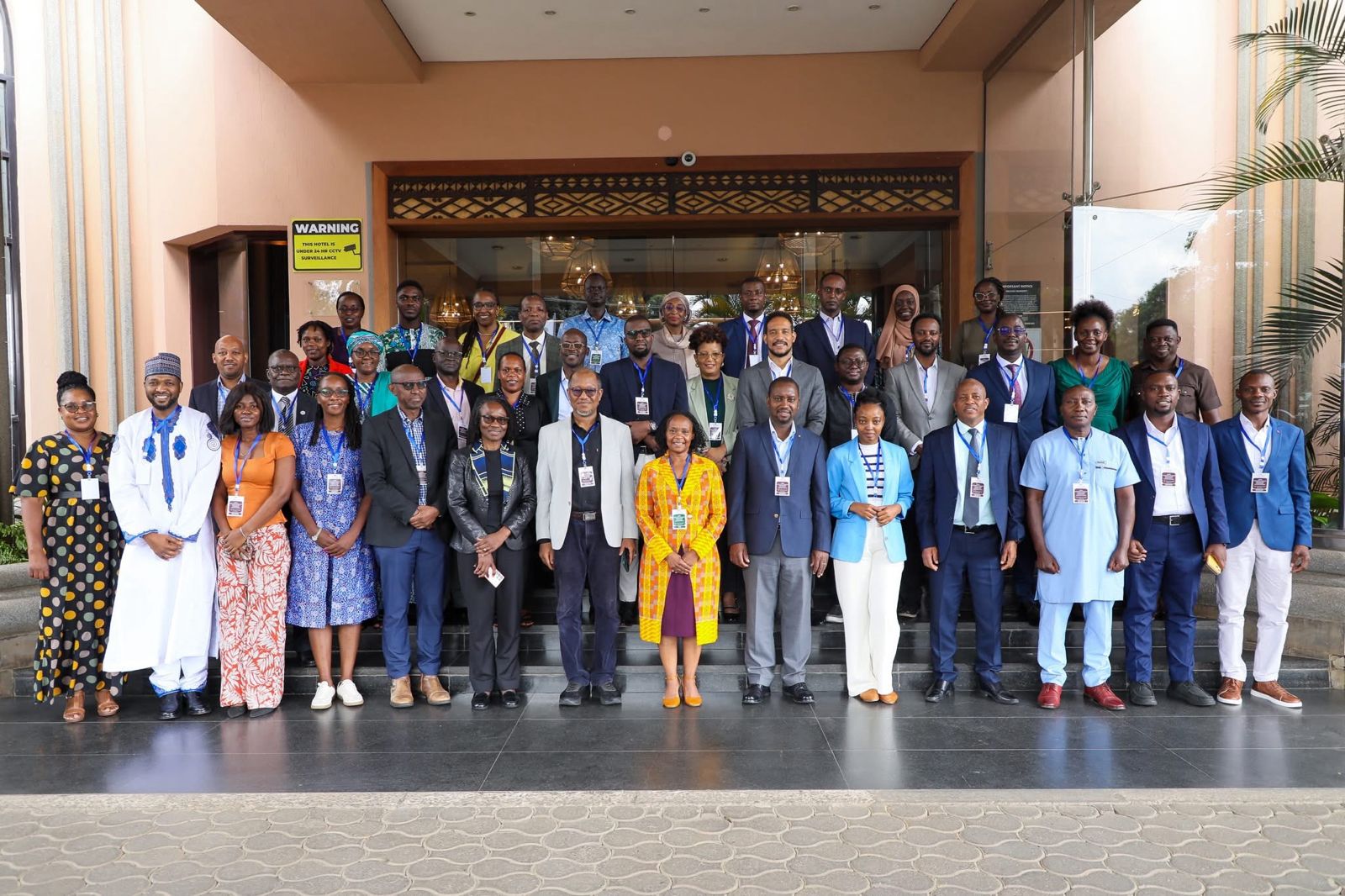

The Africa Continental Foresight Consultations for Resilient Agri-food Systems opened today in Nairobi with an atmosphere of optimism, urgency, and shared responsibility.
Convened by the African Union Commission (AUC-DARBE) in partnership with FARA, CGIAR/ILRI, AUDA-NEPAD, and a wide network of foresight partners across Africa and the United Kingdom, the workshop marks the beginning of a three-day journey to shape how Africa anticipates, prepares for, and strategically responds to emerging challenges in its agri-food systems.
The consultations build on the strong foundation laid by the Kampala CAADP Declaration (2025), which calls for anticipatory and evidence-driven approaches to deliver on continental commitments, including increased food production, resilience-building, gender equality, and inclusive market integration.


As noted in the Concept Note, Africa’s agri-food systems face escalating threats from climate impacts, demographic pressures, market disruptions, and transboundary shocks, making foresight indispensable for long-term governance, planning, and investment.
To set the scene for the engagement processes, Ms Beatrice Egulu of the African Union Commission’s Department of Agriculture, Rural Development, Blue Economy, and Sustainable Environment (AUC-ARBE) reminded participants that foresight is not merely a technical exercise but a strategic necessity for achieving Africa’s resilience agenda.
She emphasised its central role in the Food Systems Resilience Programme (FSRP) and in shaping future CAADP implementation cycles. Her message set the tone for the gathering: foresight must be embraced as a core capability across Member States, Regional Economic Communities, and continental institutions.
This message was reinforced by Dr. Abdulrazak Ibrahim of FARA, whose opening presentation traced the evolution of foresight in Africa, drawing on more than a decade of capacity-building efforts, methodological development, and the emergence of national foresight hubs.

His reflections, partly captured through platforms such as the Africa Foresight Academy, highlighted how far the continent has come and underscored FARA’s catalytic role in mobilising experts, strengthening tools, and connecting foresight practitioners across Africa.
His presentation reminded the audience that the continent is now ready to consolidate these experiences under a unified AUC-led foresight architecture, aligning closely with the objectives outlined in the Agenda 2063.
A compelling keynote by Dr Namukolo Covic of CGIAR/ILRI added scientific weight to the day’s discussions. Drawing on recent data from the Global Nutrition Report and food systems analyses, she illustrated the multiple burdens of malnutrition, the rise of diet-related diseases, and the widening gap in food insecurity across the continent.
She explained that Africa’s current transformation efforts must consider diet patterns, environmental pressures, market systems, socio-cultural drivers, and institutional dynamics, all of which shape nutrition and food system outcomes. Her message was clear: predictive foresight is essential for redirecting progress, guiding investments, and accelerating implementation across all six CAADP Kampala Commitments. She echoed the urgent call not to accept the current pace of progress, but instead to strengthen Africa’s ability to anticipate shocks, model scenarios, and craft long-term strategies that are resilient and inclusive.

The diversity of participants amplified the richness of the workshop, including foresight experts from across Africa, scholars from leading institutions, technical specialists from the CGIAR, practitioners from the Africa Foresight Academy, policymakers, and development partners, including teams from Oxford University in the United Kingdom.
Their presence underscores a shared ambition to establish a coherent and collaborative African foresight ecosystem that supports both continental and national decision-making.
Throughout the day, participants engaged deeply with Africa’s foresight journey, reflecting on what the continent has learned so far. Senior foresight practitioners, Julius Gatune, Olugbenga Adesida, Geci Karuki-Sebina, Wangeci Gitata-Kiriga and Godfrey Bahiigwa, among others, revisited earlier milestones, showcasing both successes and persistent gaps.
Their reflections reinforced the idea that while Africa possesses strong foresight expertise, the next frontier lies in building a permanent institutional home and governance framework to coordinate efforts across sectors and regions in support of the AU agenda for Africa. This aligns with the broader objectives of the workshop’s design, which is structured to move from vision-setting to technical co-design and roadmap development.
The first day concluded with a plenary, interactive brainstorming session, where participants began shaping Africa’s future foresight agenda. The discussions were professional, rich, and forward-looking, reflecting a collective belief that the continent must shape its future proactively rather than react to unfolding crises.
As the sun set over Nairobi’s Upper Hill, it was clear that Day 1 had set a strong foundation, one rooted in shared purpose, strategic alignment, and a renewed commitment to building a resilient African future.
The work continues tomorrow, with Commissioner H.E. Moses Vilakati delivering the official opening remarks, followed by advanced technical sessions and the first primary outputs from the thematic workgroups. The momentum is palpable, and Africa’s foresight community is ready to co-create a continental roadmap that will guide agrifood transformation for decades to come.
This initiative is a build-up of the work that was started under the Comprehensive Africa Agriculture Development Programme – Ex-Pillar Four (CAADP-XP4 Programme), a consortium of continental and regional agricultural research institutionscomprising the Forum for Agricultural Research in Africa (FARA), the Centre for Coordination of Agricultural Research and Development for Southern Africa (CCARDESA), the West and Central African Council for Agricultural Research and Development (CORAF), the Association for Strengthening Agricultural Research in Eastern and Central Africa (ASARECA), and the African Forum for Agricultural Advisory Services (AFAAS).
Explore the world of impactful news with CitiNewsroom on WhatsApp!
Click on the link to join the Citi Newsroom channel for curated, meaningful stories tailored just for YOU:
https://whatsapp.com/channel/0029VaCYzPRAYlUPudDDe53x
No spam, just the stories that truly matter! #StayInformed #CitiNewsroom #CNRDigital
Daniel Abugre Anyorigya