

By Philip Tengzu, GNA
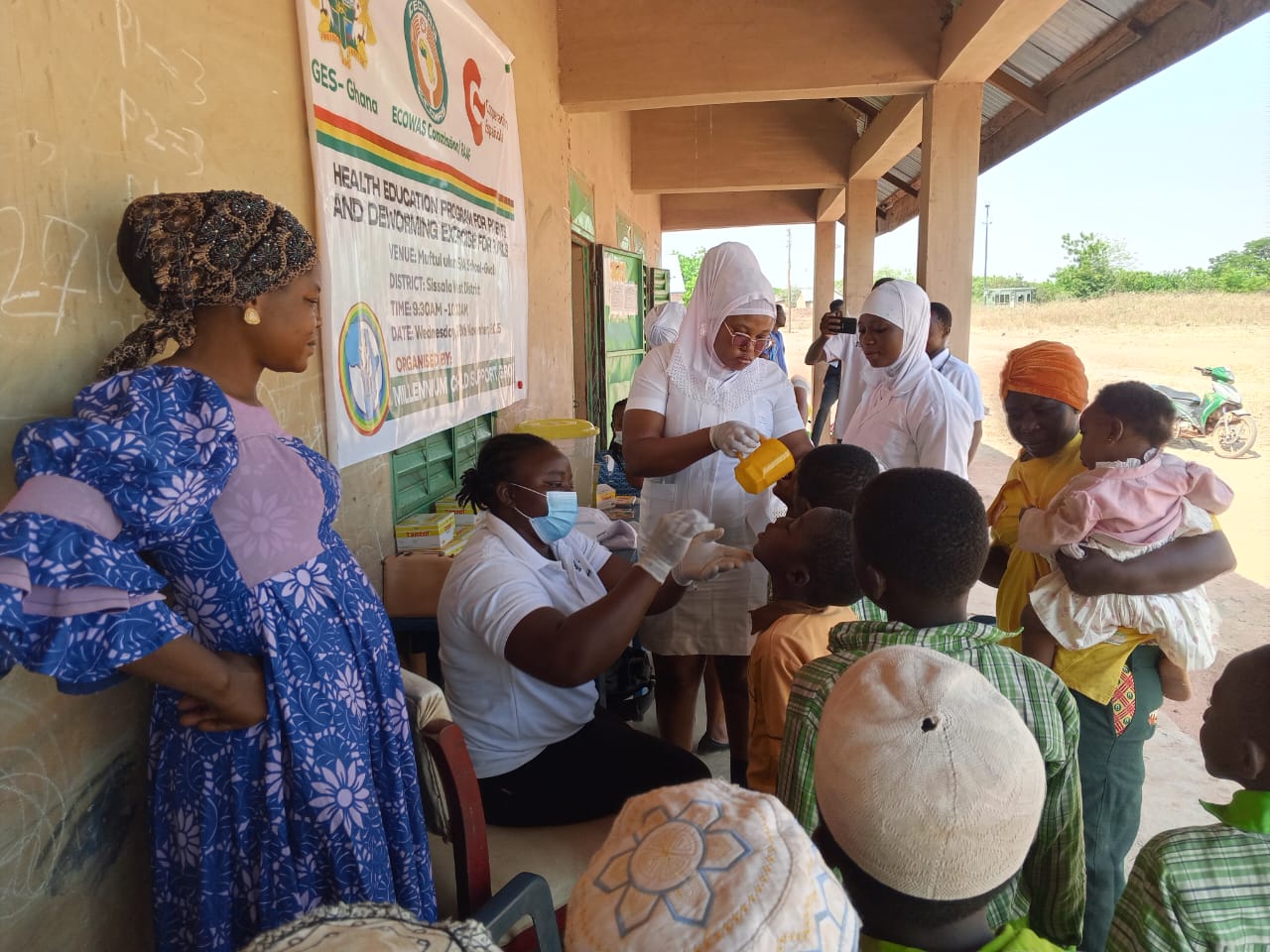
Gwollu (UW/R), Dec. 01, GNA – The Millennium Child Support Group (MCSG), with funding from the Spanish Cooperation through the ECOWAS Commission’s Regional Agency for Agriculture and Food (RAAF), has organised a deworming exercise aimed at improving child health and nutrition in Northern Ghana.
More than 420 pupils at Muftul Ulum and Nuriah English and Arabic Schools in Gwollu benefitted from the exercise, which formed part of the ongoing School Feeding and Child Nutrition Improvement Initiative.
This intervention is expected to reach at least 1,600 schoolchildren across eight basic schools in the Sissala West, Jirapa, Lawra and Nandom Municipalities.
The initiative sought to reduce malnutrition, prevent parasitic infections, improve cognitive development, and sustain high attendance and enrolment rates in beneficiary schools.
The Sissala West District Health Directorate led the deworming exercise alongside community sensitisation sessions targeting parents and caregivers on nutrition, sanitation, personal hygiene, and child healthcare practices.
Addressing the participants, Dr Godfrey Ato Parker, the Chief Executive Officer of MCSG, stated that the deworming exercise would be carried out every three months throughout the project lifecycle from 2024 to 2027.
He emphasised that maintaining child health was critical to improving learning performance, school retention, and long-term development outcomes.
“This intervention reinforces our commitment to ensure that every child grows healthy, learns well, and thrives. We encourage parents to sustain regular deworming at home and to adopt proper sanitation practices to safeguard their children’s health,” Dr Parker said.
Mr Chakurah Dramani, the Sissala West District Director of Education, expressed appreciation to ECOWAS, RAAF, the Spanish Cooperation and MCSG for their continuous investment in the welfare of schoolchildren.
He underscored the importance of deworming in improving concentration, physical growth, cognitive performance, and learning outcomes among schoolchildren.
“With improved feeding, access to clean water, and deworming, we are strengthening the foundation for quality education. These combined interventions are critical in ensuring learners remain healthy, motivated, and ready to learn,” Mr Dramani noted.
Mr Yakubu Benin, the Acting Sissala West District Director of Health Services, commended the partnership for advancing public health priorities in schools.
He urged families to ensure consistent hygiene behaviour, including handwashing with soap under running water, safe water consumption, and the use of toilet facilities, to prevent sanitation-related infections.
He advised parents and guardians to be proactive in protecting their children from preventable diseases.
This deworming activity is a key component of the broader school feeding programme, aimed contributing to higher enrolment, improving student attendance, and ensuring greater classroom participation in the targeted districts.
It further reinforces ECOWAS Commission and MCSG’s joint mission to strengthen child health, nutrition, and educational success across West Africa.
GNA
Edited by Caesar Abagali/ Christabel Addo