


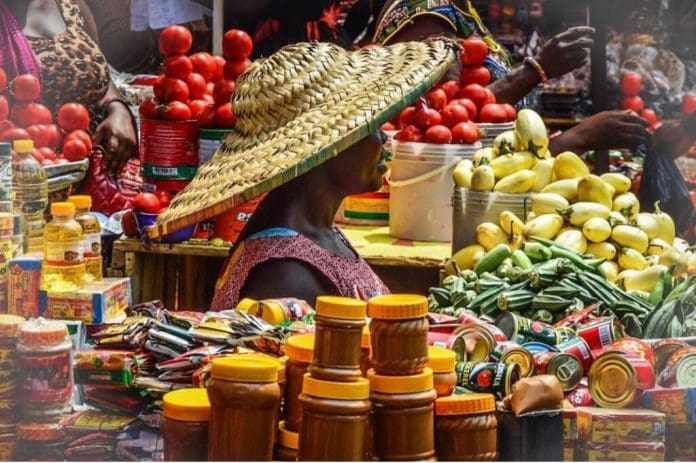
Ghana’s inflation battle faces a new complication, with official statistics confirming traders’ claims that locally produced goods, not imports, are now the primary drivers of persistent high prices.
Recent data from the Ghana Statistical Service (GSS) aligns with the Ghana Union of Traders Association’s (GUTA) stance, revealing a stark divide between imported and domestic inflation pressures. This convergence comes amid public frustration over the pace of price reductions despite improving macroeconomic indicators like cedi stability and slowing overall inflation.
GUTA President Joseph Obeng has consistently argued that traders have lowered prices on imported goods significantly. He contends public perception focuses heavily on stubbornly high costs for local staples like plantain and yam.
“For the imported goods… the prices have responded reasonably,” Obeng stated, challenging critics to verify market samples themselves. He emphasized that when Ghanaians complain, “about 70%” refer to these domestically produced food items, not imports.
The July 2025 GSS data vindicates this view. It shows locally produced goods dominated the top contributors to inflation, with staples like smoked herrings, yams, and ginger leading the list.
Only two imported items vegetable oil and rice featured in the top 20. Crucially, the data reveals a significant gap: year-on-year inflation for domestically produced goods stood at 12.9%, markedly higher than the 10% rate for imported items.
“The data reinforces the point that inflationary pressures are currently homegrown,” Government Statistician Dr. Alhassan Iddrisu noted.
This divergence underscores why many consumers feel little relief despite headline inflation easing. While imported goods benefit from cedi appreciation, local food inflation remains stubbornly high.
The GSS findings suggest the solution lies not just in exchange rates or trade policy, but in tackling domestic production challenges, supply chain inefficiencies, and distribution bottlenecks within Ghana’s agricultural sector.
Until targeted efforts address these local drivers, the cost-of-living squeeze fueled by everyday Ghanaian staples will persist. When will relief for local markets arrive?