

Former Minister of Tourism, Arts & Culture, Mark Okraku-Mantey, has expressed strong disapproval over the New Patriotic Party’s (NPP) decision to let Dr. Mahamudu Bawumia, the party’s flagbearer, dance to King Paluta’s trending song Makoma without his consent. According to Okraku-Mantey, the song contains profane lyrics, making it unsuitable for a high-ranking political figure like Dr. Bawumia to associate with at a public event.

Speaking on the matter, Okraku-Mantey, who has long been a key figure in Ghana’s creative industry, lamented that such decisions should have gone through consultations, particularly with individuals like himself who have expertise in the entertainment industry. “Did you know that some of the songs we played are profane? This party has people like myself and George Okye, who have a music background to advise, yet nobody will consult us on music. Then we will take a profane song for a brand like Dr. Mahamudu Bawumia to dance to it.”
The Makoma hit by King Paluta has become one of the most popular songs in Ghana, resonates with fans for its catchy beat and expressive lyrics. The phrase “Wo sisi fia no bi” was a particularly catchy verse in the song. However, some critics argue that the song’s lyrical content may not align with the values expected at a formal political event. Okraku-Mantey’s stance has ignited mixed reactions, with some supporting his concerns while others believe that music is universal and should not be overly scrutinized in political engagements.
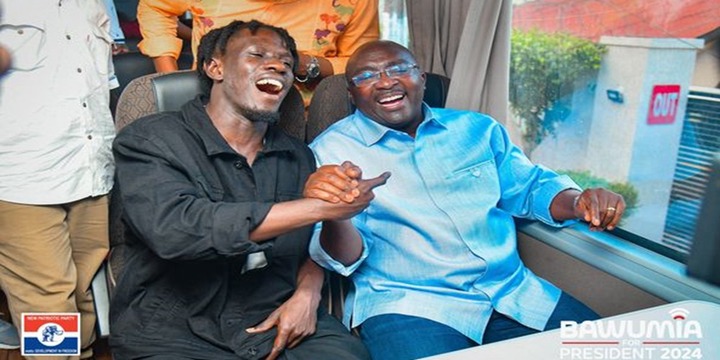

This controversy raises an important conversation about the intersection of politics and entertainment. Should political parties carefully vet the songs they endorse, or should they embrace popular culture without fear of backlash? While Okraku-Mantey may have a point regarding the need for proper vetting, others believe that connecting with the youth through music, regardless of its lyrics, is an essential strategy in modern politics.
As discussions continue, the NPP is yet to officially respond to Okraku-Mantey’s concerns. However, this incident highlights the ongoing debate about the role of entertainment in political branding and whether Ghanaian politicians should be more mindful of their musical choices during public events.
WATCH VIDEO HERE